
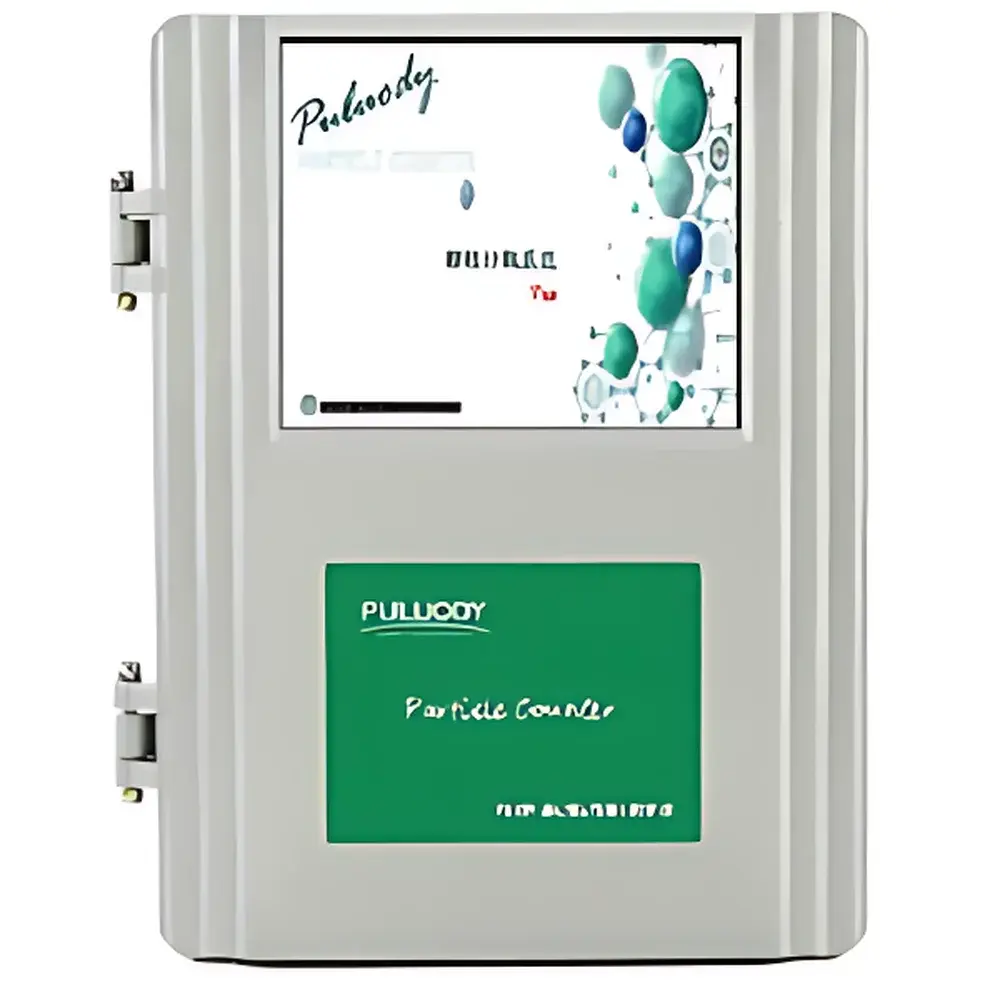
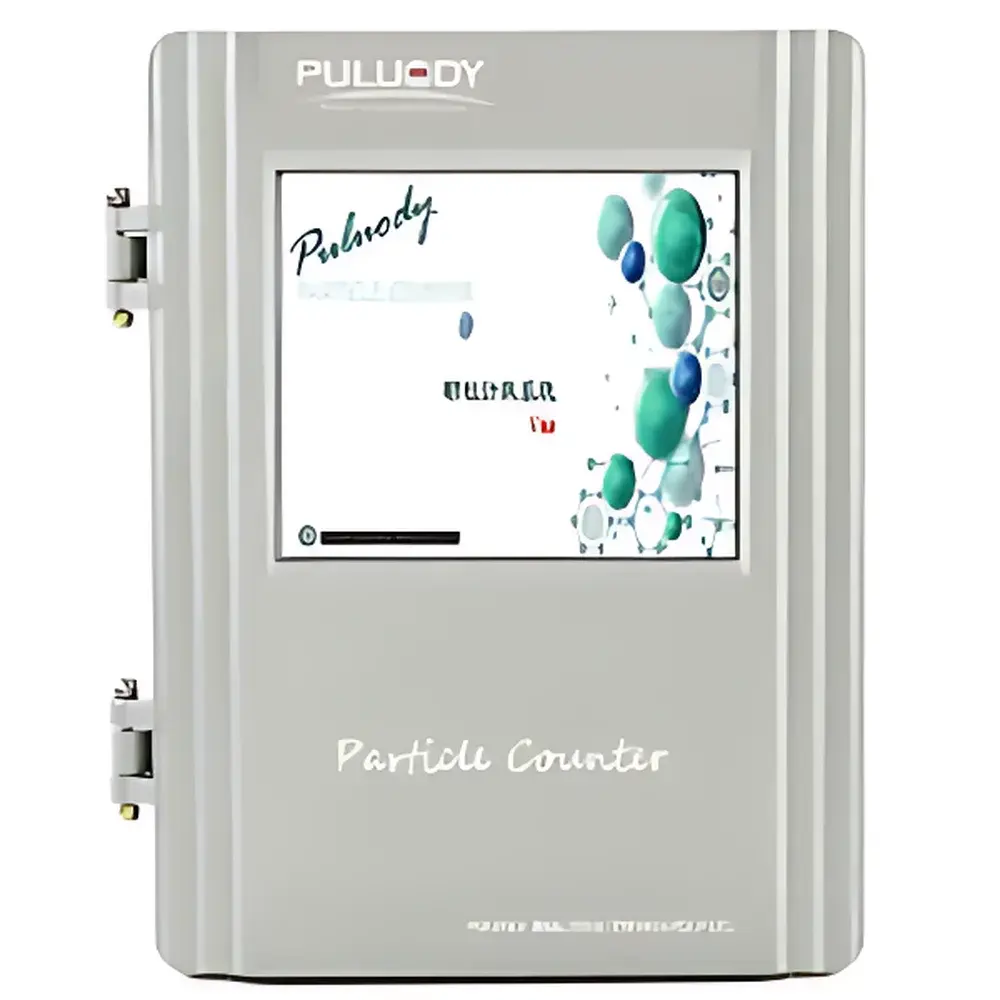
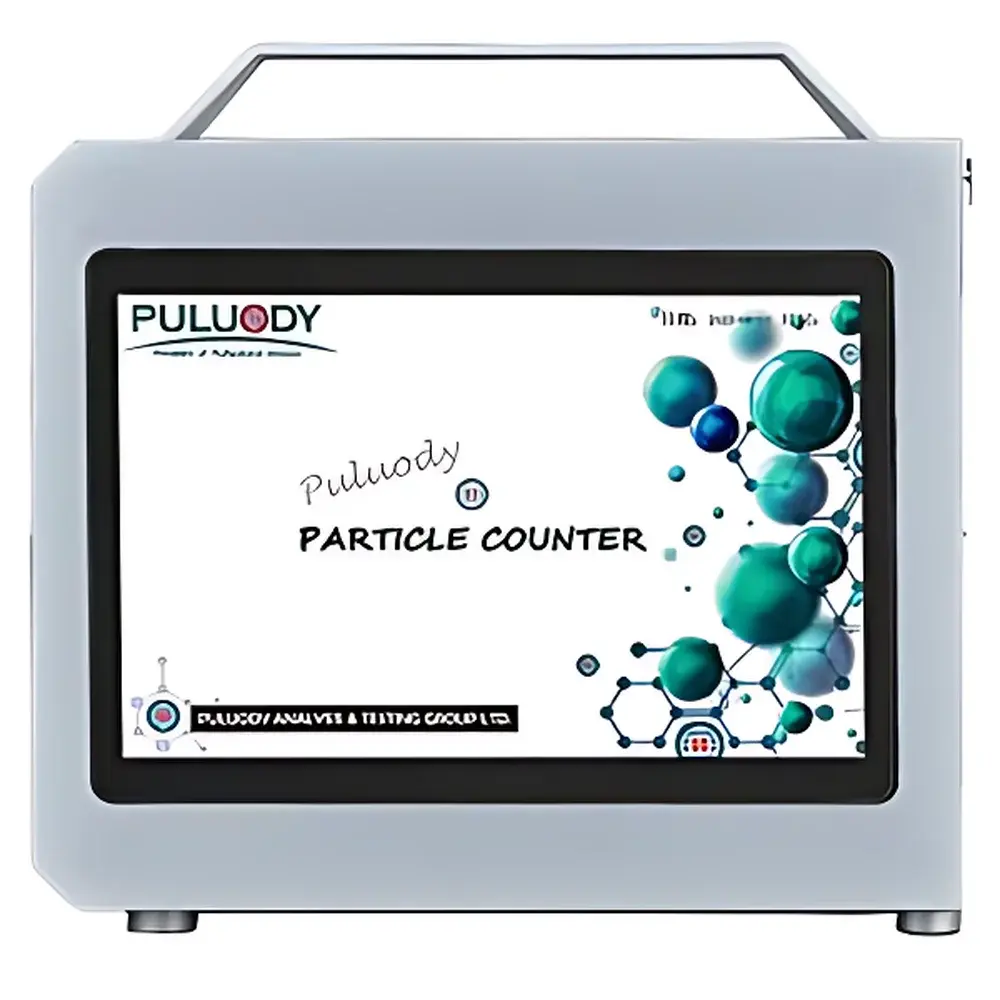
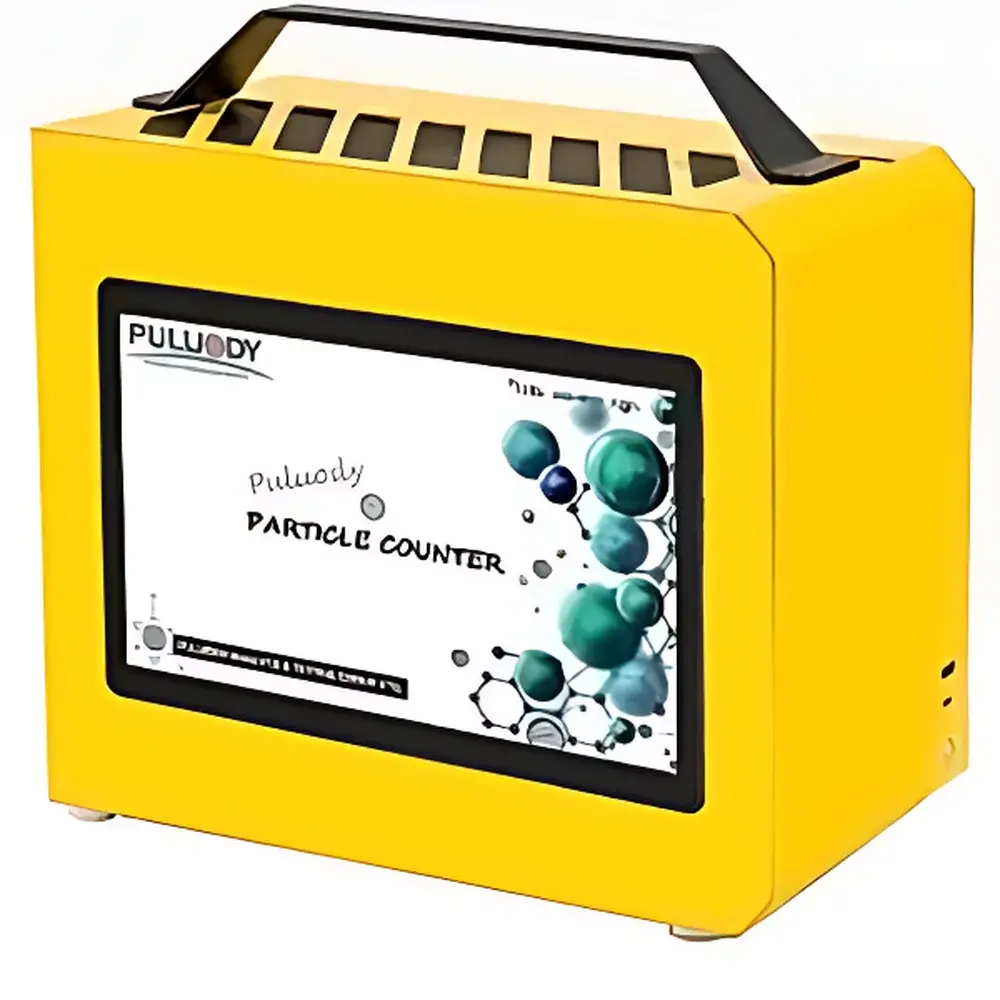
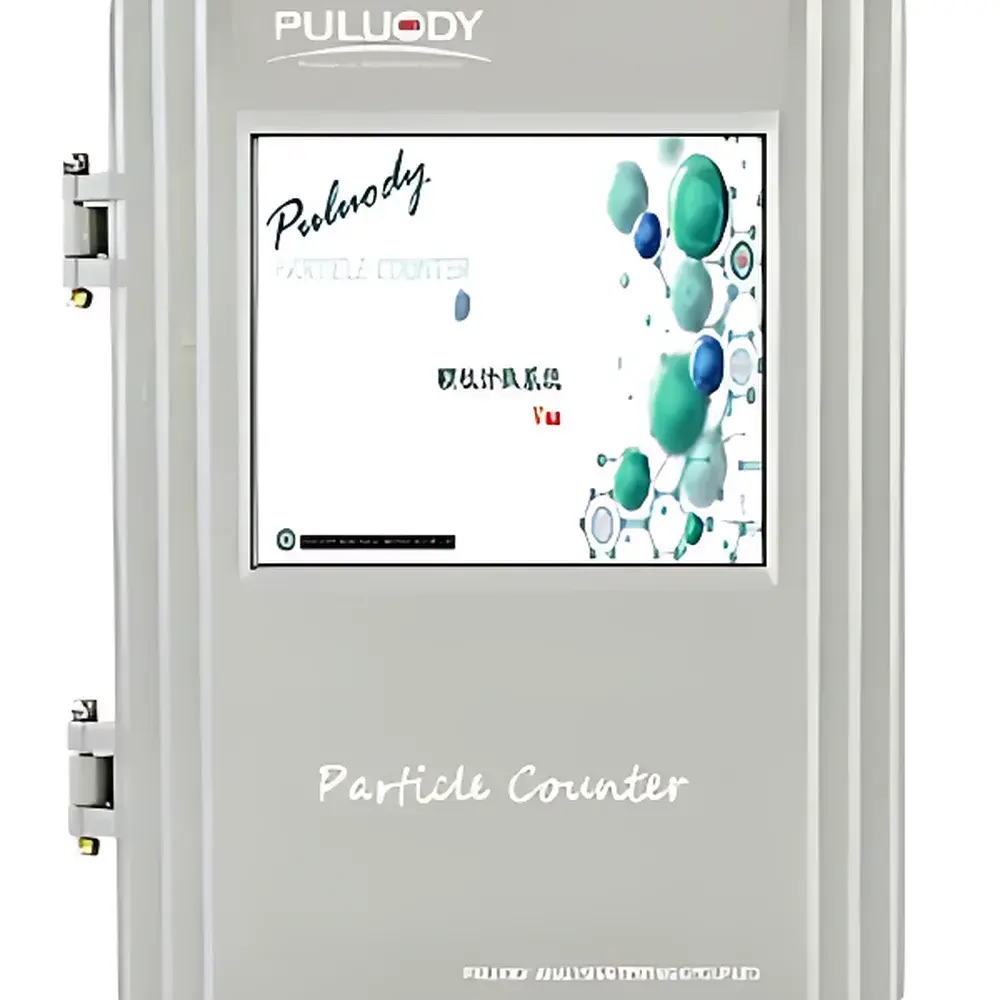
PULUODY OPC-2300M Online Liquid Particle Counter
| Brand | PULUODY |
|---|---|
| Origin | Shaanxi, China |
| Manufacturer Type | Authorized Distributor |
| Country of Origin | China |
| Model | OPC-2300M |
| Price | USD 13,800 (FOB) |
| Detection Principle | Light Obscuration (LO) with Dual-Laser Narrow-Beam Technology |
| Sensor Generation | 8th-Generation |
| Measuring Range | 2–750 µm (configurable up to 1000 µm) |
| Size Channels | 1000-user-definable channels, standard presets: 1–100 µm, 2–125 µm, 2–250 µm, 5–500 µm |
| Resolution | 0.1 µm |
| Resolution Accuracy | ±10% (per ISO 21501-4) |
| Counting Accuracy | <±3% typical (NIST-traceable calibration) |
| Coincidence Error | ≤5% at 9,999 particles/mL |
| Maximum Detectable Concentration | 9,999,999 particles/mL |
| Sampling Interval | 5 s – 9 h (programmable) |
| Flow Rate | 6–500 mL/min |
| Operating Pressure | 0–0.6 MPa (standard), 0–31.5 MPa (with optional pressure regulator) |
| Fluid Temperature Range | −10 °C to +80 °C |
| Calibration Standards | NIST-traceable polystyrene latex (PSL) spheres, AC fine test dust, MTD |
| Output Interfaces | 4–20 mA analog, RS232, RS485 |
| Data Storage | Internal non-volatile memory + external USB/SD logging |
| Display | Backlit LCD with membrane keypad |
| Enclosure Rating | IP65 (optional IP67) |
| Power Supply | 9–30 VDC or 220 VAC |
| Alarm Functions | Particle count threshold, sensor fault, flow interruption, temperature/pressure out-of-range |
Overview
The PULUODY OPC-2300M is an industrial-grade online liquid particle counter engineered for continuous, real-time monitoring of particulate contamination in aqueous process streams. It operates on the light obscuration (LO) principle—also known as the optical blockage or photometric blocking method—where particles suspended in a laminar fluid stream pass through a precisely collimated dual-laser narrow-beam sensing zone. Each particle generates a transient reduction in detected light intensity proportional to its cross-sectional area, enabling high-fidelity size classification and quantitative counting per unit volume (particles/mL). Developed under license from PULUODY Analytical Testing Group (UK), the OPC-2300M integrates the eighth-generation dual-laser optical architecture, delivering enhanced signal-to-noise ratio, improved pulse stability across wide dynamic ranges, and reduced sensitivity to refractive index variation compared to single-source systems. Designed for unattended operation in critical water infrastructure—including potable water treatment plants, wastewater reclamation facilities, beverage production lines, pharmaceutical water-for-injection (WFI) loops, and clean-in-place (CIP) validation systems—the instrument supports ISO 11171, ISO 4402 (legacy), ISO 21501-4, and USP compliant reporting when configured with appropriate calibration and audit trail protocols.
Key Features
- True online capability with continuous sampling at programmable intervals (5 seconds to 9 hours)
- Dual-laser narrow-beam optical sensor (8th-generation) optimized for aqueous media, minimizing Mie scattering artifacts and improving sizing fidelity for sub-5 µm particles
- Configurable detection ranges: standard options include 2–750 µm, extendable to 5–1000 µm; user-defined binning across 1000 channels
- High dynamic concentration range: validated linearity up to 9,999,999 particles/mL with ≤5% coincidence error
- Robust mechanical design: stainless steel wetted parts, IP65-rated enclosure (IP67 optional), operational at −10 °C to +80 °C and up to 31.5 MPa with integrated pressure regulation
- Multi-interface connectivity: isolated 4–20 mA analog output, RS232/RS485 serial communication, USB host port for data export and firmware updates
- Onboard LCD interface with tactile membrane keypad—no external PC required for basic operation or alarm configuration
- Comprehensive diagnostic suite: real-time sensor health monitoring, flow verification, temperature/pressure validation, and automatic self-check at power-up
Sample Compatibility & Compliance
The OPC-2300M is validated for use with low-viscosity, optically transparent aqueous fluids including municipal drinking water, filtered process water, ultrapure water (UPW), reverse osmosis permeate, bottled water, beer, soft drinks, and cleaning solutions. It is not intended for opaque, highly turbid, or viscous liquids (e.g., glycol-based coolants or slurries) without prior dilution or filtration. The system complies with key international standards governing particle measurement in water: ISO 21501-4 (determination of particle size distribution by light extinction), ISO 8573-4 (compressed air purity classes—adaptable via flow conditioning), and ASTM D7622 (standard practice for determining particle counts in water). When deployed in regulated environments—such as pharmaceutical Grade A/B water systems or food safety HACCP programs—the OPC-2300M supports GLP/GMP-aligned data integrity through time-stamped event logs, user-access controls (via optional password protection), and electronic records exportable in CSV or PDF formats compatible with LIMS integration. Optional 21 CFR Part 11-compliant software modules provide electronic signatures, audit trails, and change control documentation.
Software & Data Management
The integrated firmware supports autonomous operation without external computing hardware. All measurement data—including raw pulse histograms, binned counts per channel, cumulative distributions, and ISO 4406 / NAS 1638 contamination codes—are stored indefinitely in internal non-volatile memory. External storage via USB flash drive or SD card enables periodic archival and offline analysis. The optional PC-based OPC-View software (Windows 10/11 compatible) provides advanced visualization tools: real-time trend plots, multi-parameter overlay (e.g., particle count vs. temperature), statistical process control (SPC) charting, and automated report generation per customer-defined templates. Data exports conform to ASTM E2911 and ISO/IEC 17025 requirements for traceability, including instrument ID, calibration certificate reference, operator ID, and environmental metadata. Firmware updates are delivered via signed binary packages with SHA-256 checksum verification to ensure integrity and prevent unauthorized modification.
Applications
- Real-time integrity testing of membrane filtration systems (MF/UF/NF/RO) in municipal and industrial water treatment
- Monitoring of filter breakthrough events during rapid sand or multimedia filter backwash cycles
- Validation of sterilizing-grade filters (0.22 µm or 0.1 µm) in biopharmaceutical water distribution networks
- Assessment of microbial challenge indicators via correlation between particle spikes and ATP or colony-forming unit (CFU) data
- Process water quality assurance in breweries, dairy plants, and carbonated beverage bottling lines
- Contamination trending in closed-loop cooling towers and boiler feedwater systems
- Offline lab verification using the optional portable sampling chamber with calibrated syringe-driven flow control
FAQ
What calibration standards are supported?
NIST-traceable polystyrene latex (PSL) microspheres (e.g., Duke Scientific 3000 series), Air Cleaner (AC) fine test dust, and Modified Total Dust (MTD) are all supported. Calibration certificates must be maintained per ISO/IEC 17025 requirements.
Can the OPC-2300M measure particles below 2 µm?
No—the optical design and signal processing architecture are optimized for the 2–750 µm range. Sub-micron detection requires dedicated nanoparticle tracking analysis (NTA) or dynamic light scattering (DLS) instrumentation.
Is the system suitable for high-pressure boiler feedwater applications?
Yes—when equipped with the high-pressure option (0–31.5 MPa rating with integrated pressure-reducing valve), it meets ASME B31.1 and EN 13445 requirements for inline installation upstream of critical steam generators.
How is data security ensured during remote transmission?
Raw serial communication (RS485) is unencrypted by default; secure data transfer requires integration with customer-supplied industrial firewalls or TLS-enabled gateway devices. Local storage uses write-protected memory partitions to prevent accidental overwrites.
Does the device support automatic ISO 4406 coding?
Yes—contamination codes are calculated in real time per ISO 4406:2021 (using ≥4 µm(c) and ≥6 µm(c) thresholds) and displayed alongside raw particle counts on-screen and in exported reports.



