PULUODY PS8011+ Electronic-Grade Purified Sample Bottle
| Brand | PULUODY |
|---|---|
| Origin | Shaanxi, China |
| Manufacturer Type | Manufacturer |
| Country of Origin | China |
| Model | PS8011+ |
| Price Range | USD 135 – 525 |
| Material Options | PP, PE, PFA, PEEK, PFAD, High-Silica Borosilicate Glass |
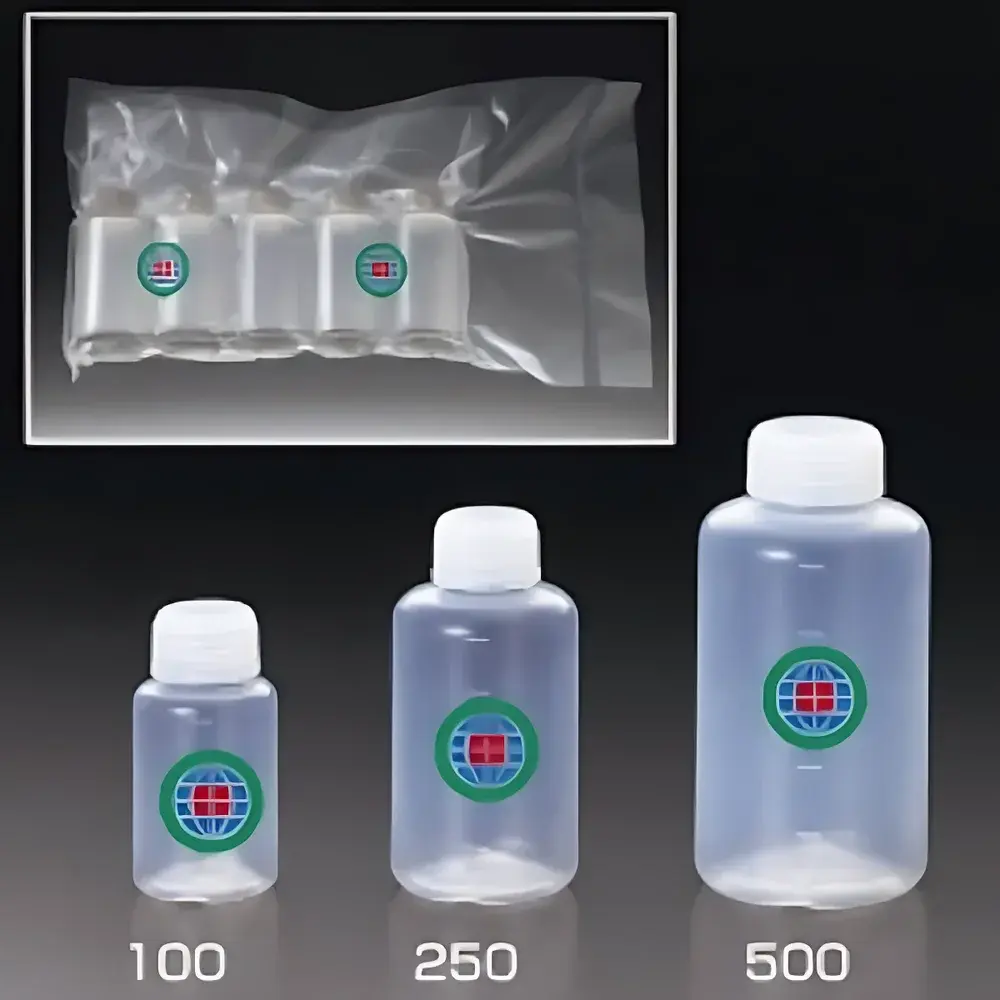
| Volume Options | 50 mL to 1000 mL |
| Particle Cleanliness Level | RCL < 15 particles per 100 mL |
| Certified Cleanliness Classes | ISO Class 1–9 (per ISO 14644-1) |
| Particle Detection Thresholds | 0.1 µm, 0.3 µm, 0.5 µm, 1.0 µm, 2.0 µm, 5.0 µm |
| Average Outgoing Quality Limit (AOQL) | 0.5% |
| Compliance Standards | ISO 3722, ISO 14644-1, GB/T 17484, GB 50073-2001, JIS B9925:1997, JIS K0554:1995 |
Overview
The PULUODY PS8011+ Electronic-Grade Purified Sample Bottle is a rigorously engineered container system designed for ultra-high-purity sampling and storage in semiconductor front-end manufacturing, advanced packaging, and microelectronics process development. Unlike conventional laboratory bottles, the PS8011+ is not merely a passive vessel—it is an integrated contamination control platform built around four validated, in-line purification sub-systems: Clean-in-Place (CIP), Ultra-High-Temperature + UV Composite Sterilization (UHTU), Turbo-Molecular Vacuum Sealed Drying (TMVSD), and Particle Counting & Online Particle Control (PC&OPC). Each bottle undergoes full traceable processing—starting from raw material qualification through multi-stage particulate monitoring—to ensure consistent compliance with Class 1–9 cleanroom requirements (ISO 14644-1) and fluid sample integrity standards (ISO 3722). The system is purpose-built for handling ultra-pure water (UPW), electronic-grade solvents (e.g., acetone, IPA, NMP), photoresists, etchants, CMP slurries, and display materials where sub-micron particle contamination directly impacts yield, defect density, and device reliability.
Key Features
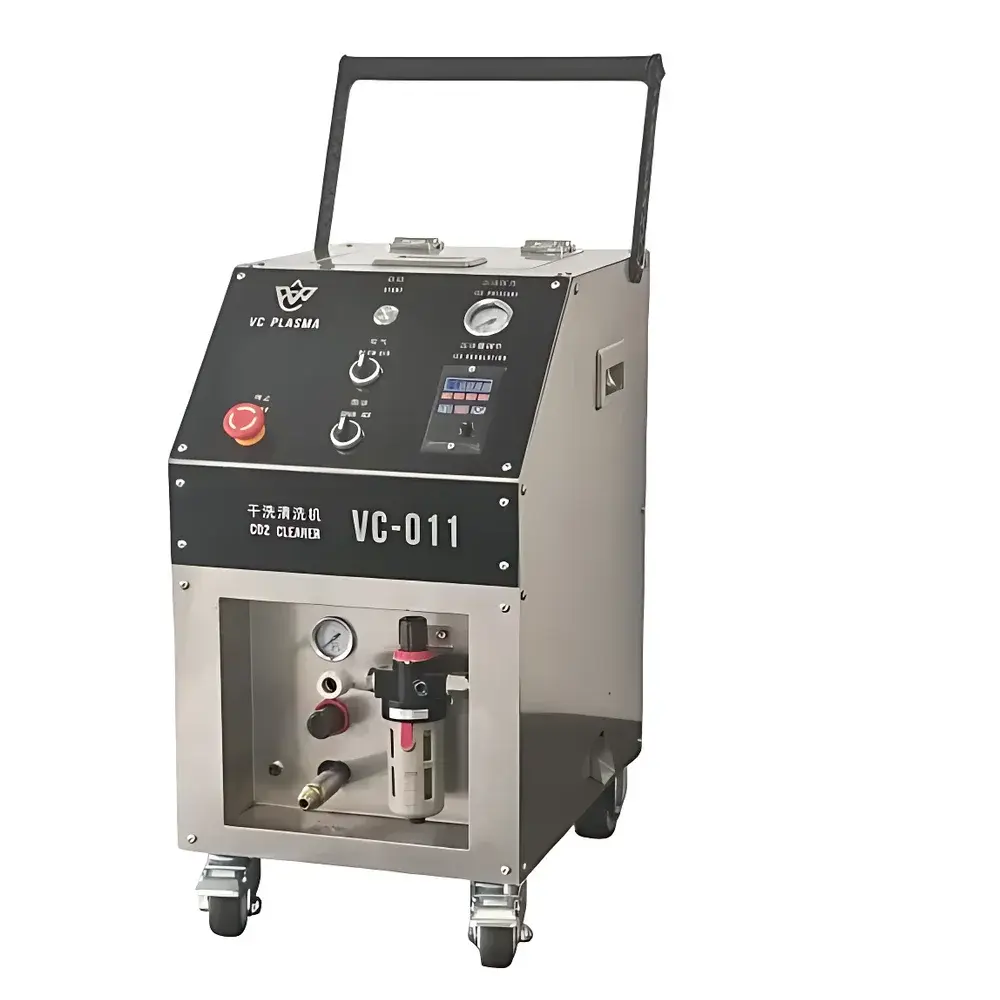
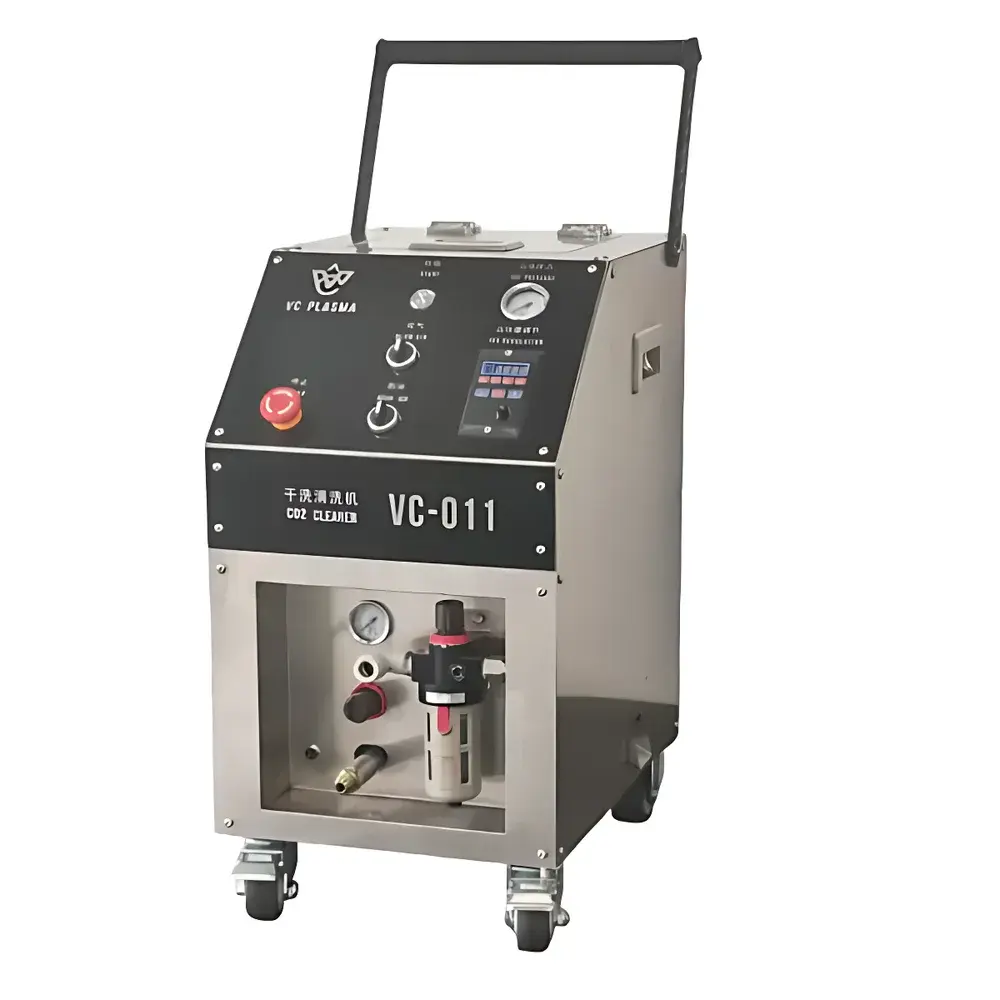
- Multi-stage certified cleaning architecture: CIP-enabled ultrasonic rinsing at resonant frequencies ensures removal of adsorbed organics, metal ions, and residual polishing agents without surface abrasion.
- UHTU sterilization: Dual-mode treatment combining transient thermal exposure (137–140 °C for ≤10 s) with broadband UV-C irradiation (254 nm) achieves ≥6-log reduction of viable bioburden and endotoxin denaturation.
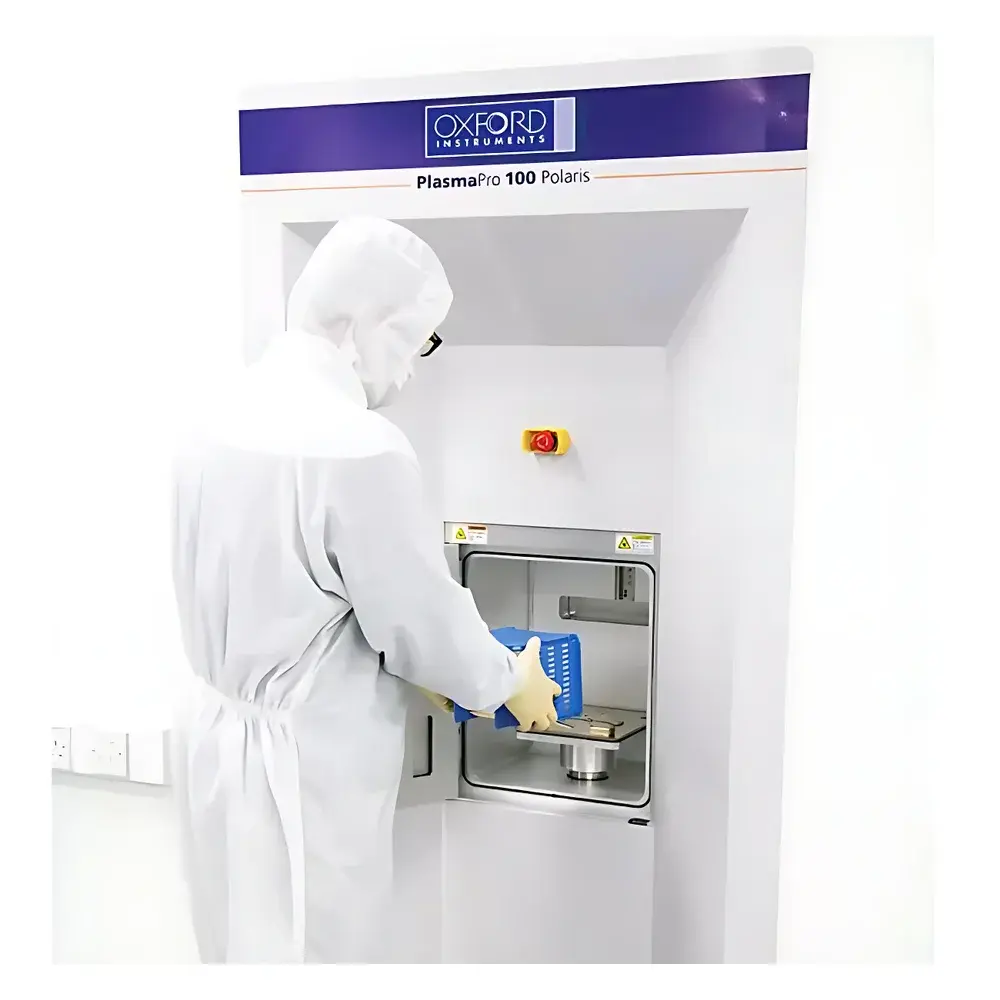
- TMVSD drying: Vacuum desiccation under <1×10⁻⁵ mbar pressure eliminates residual moisture while preventing recontamination via inert gas purging and hermetic crimp-seal integration.
- PC&OPC verification: Every production lot undergoes batch-level particle counting using calibrated light-scattering particle counters (per JIS B9925 and ISO 21501-4); individual units are subject to 100% online optical particle inspection prior to final packaging.
- Material-selective construction: Bottles are fabricated from chemically inert, low-leach polymers (PFA, PEEK, PP) or high-silica borosilicate glass—each qualified for extractables profiling per USP and SEMI F57.
- Configurable geometry: Available in wide-mouth and narrow-neck formats across 13 standard SKUs, supporting volumetric ranges from 50 mL to 1000 mL with precise dimensional tolerances (±0.3 mm) for automated handler compatibility.
Sample Compatibility & Compliance
The PS8011+ is validated for use with aggressive chemistries common in semiconductor wet processing—including ammonium hydroxide (NH4OH), hydrofluoric acid (HF), sulfuric acid (H2SO4), and organic solvents—without measurable leaching of fluorides, sodium, potassium, or transition metals (ICP-MS detection limit <10 ppt). All configurations meet ISO 3722 requirements for fluid sample containers, including cleaning method qualification, particulate residue limits (RCL <15 particles/100 mL ≥0.5 µm), and certification documentation per lot. Manufacturing adheres to ISO 9001:2015 and ISO 13485:2016 quality management systems. Traceability includes unique lot IDs, full Certificate of Conformance (CoC), and optional Certificate of Analysis (CoA) with particle count histograms and elemental impurity data. The system supports audit readiness for GMP, GLP, and FDA 21 CFR Part 11 environments when deployed with PULUODY’s validated LIMS-integrated reporting workflow.
Software & Data Management
While the PS8011+ is a hardware-certified consumable, its qualification lifecycle is fully digitized via PULUODY’s ParticleTrace™ Digital Batch Record System. Each bottle lot is assigned a QR-coded CoC containing real-time access to raw particle count logs (per ISO 21501-4), UHTU cycle parameters (temperature/time/UV dose), TMVSD vacuum profiles, and material lot traceability. Integration with enterprise LIMS or MES platforms is supported through RESTful API endpoints and ASTM E1578-compliant metadata schema. Audit trails comply with ALCOA+ principles, ensuring attributable, legible, contemporaneous, original, accurate, complete, consistent, enduring, and available records for regulatory review.
Applications
- Sampling and storage of ultrapure water (UPW) for resistivity monitoring and TOC analysis in fab utilities.
- Capture of post-clean rinse solutions for metallic contaminant screening (ICP-MS) and particle shedding assessment.
- Transport and preservation of photoresist formulations during lithography process qualification.
- Collection of CMP slurry samples for zeta potential, pH, and abrasive particle size distribution (PSD) analysis.
- In-line calibration reference for laser diffraction and light obscuration particle counters (e.g., HIAC, MET ONE, PAMAS).
- Reference standard containers for SEMI Standard Practice SECS-G22 (Particle Contamination Control for Fluid Containers).
FAQ
What cleanliness class does the PS8011+ achieve?
The PS8011+ is qualified to ISO Class 1–9 per ISO 14644-1, with typical RCL values <15 particles ≥0.5 µm per 100 mL. Specific class designation (e.g., CLASS 2) is assigned per order and verified by independent third-party testing.
Can I specify custom particle thresholds?
Yes. Custom AOQL targets (e.g., 0.1% instead of standard 0.5%) and extended particle sizing (down to 0.1 µm) are available under engineering change order (ECO) with additional validation protocol execution.
Are certificates provided with each shipment?
Every order includes a Lot-Specific Certificate of Conformance (CoC) with test date, operator ID, equipment calibration status, and pass/fail determination against ISO 3722 and customer-defined specifications.
Which materials are recommended for HF-based chemistries?
PFA and high-silica borosilicate glass configurations are approved for sustained contact with <5% HF solutions; PP and PE variants are restricted to non-corrosive solvents only.
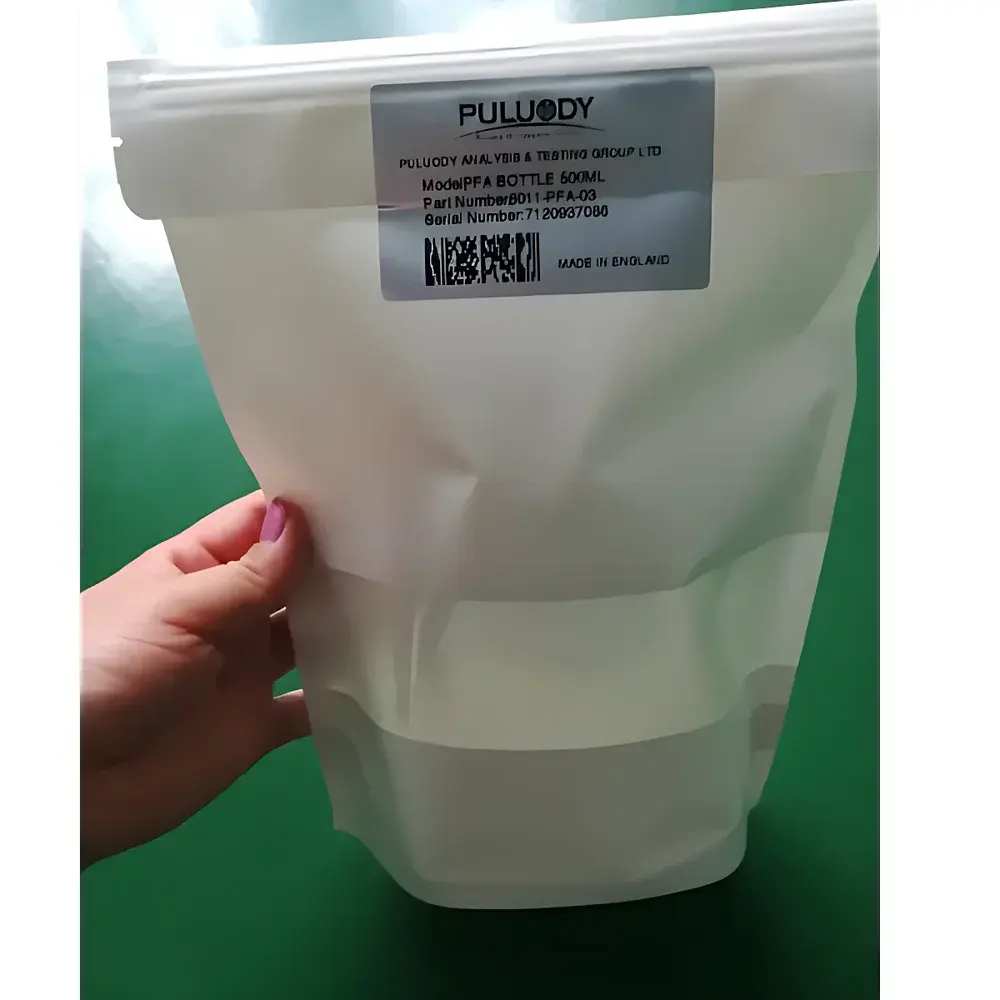
How is sterility assurance maintained during transport?
Bottles are double-bagged in ISO Class 5 laminar flow environments, sealed with tamper-evident heat-shrink film, and shipped in rigid, static-dissipative secondary packaging compliant with SEMI S2.