
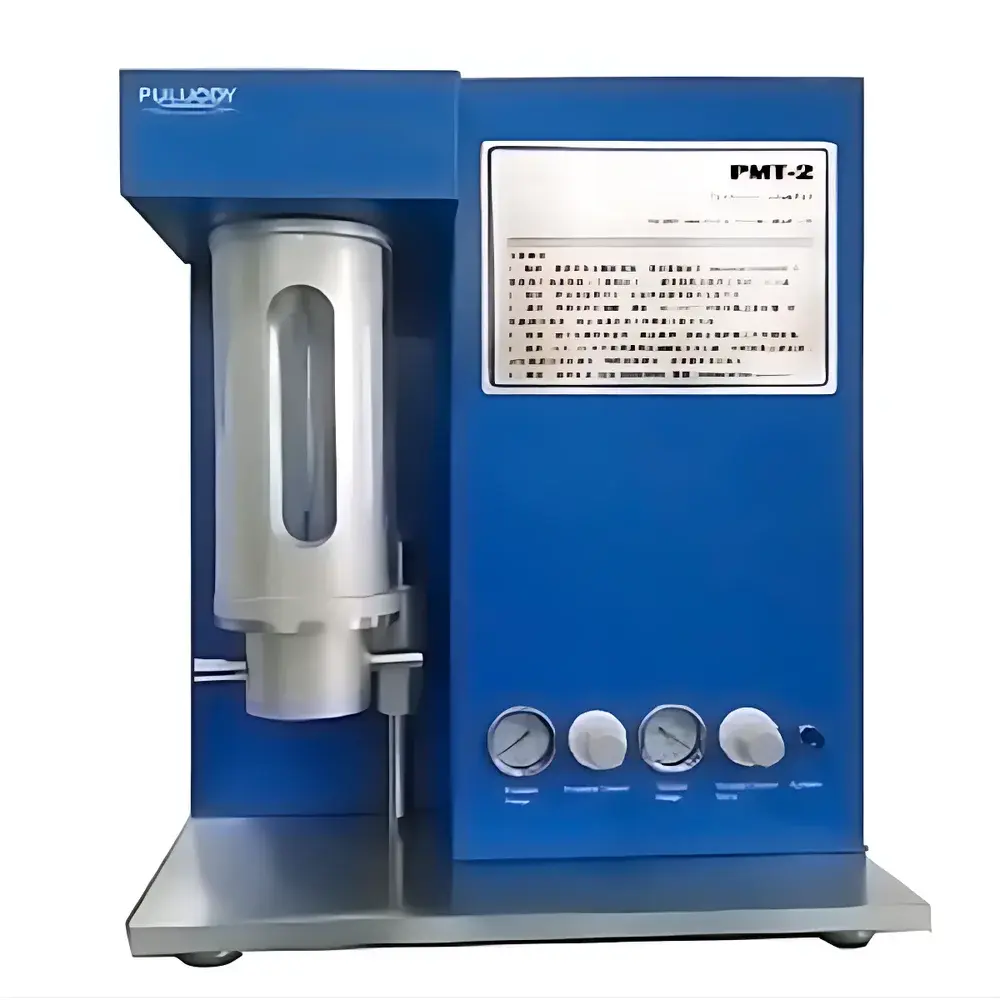
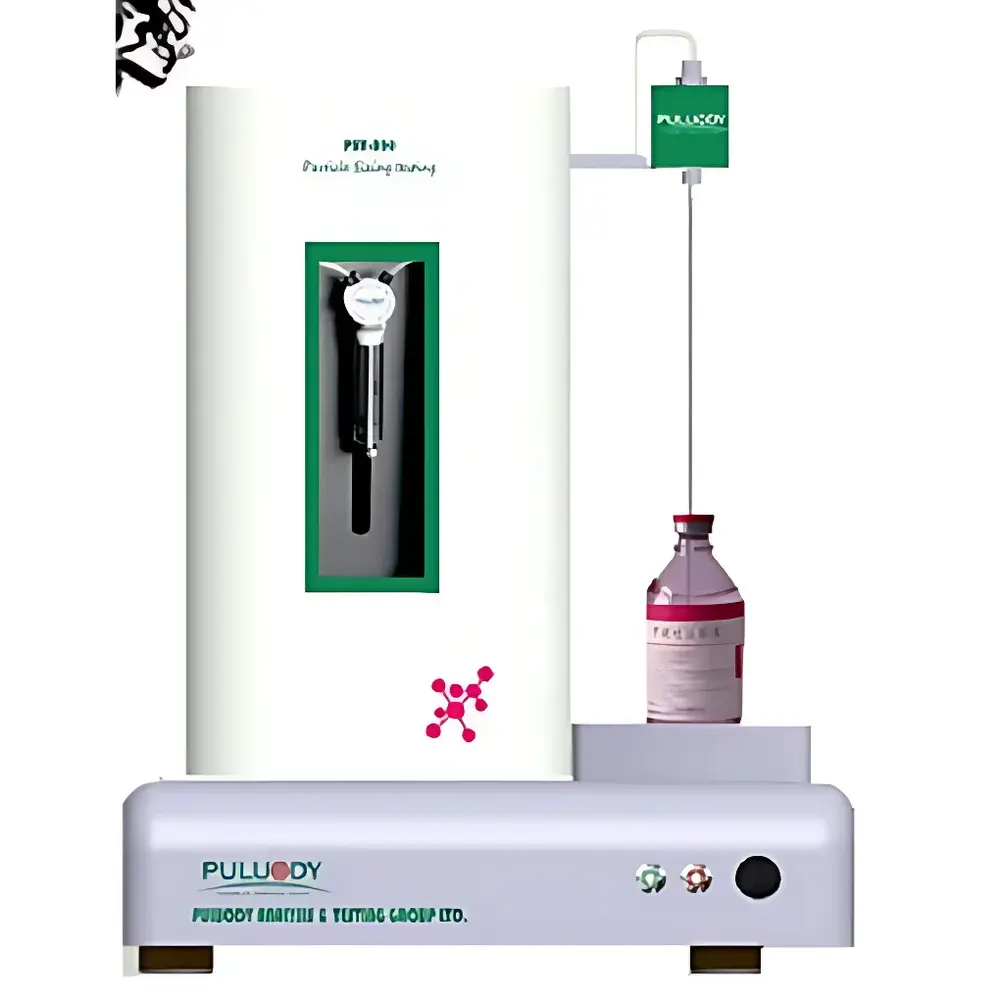
PULUODY PMT-2 Optical Liquid Particle Counter for Ultra-Pure Water and Filter Media Testing
| Brand | PULUODY |
|---|---|
| Origin | Shaanxi, China |
| Manufacturer Type | Authorized Distributor |
| Regional Category | Domestic (China) |
| Model | PMT-2 |
| Instrument Type | Optical Particle Counter |
| Detection Principle | Dual-Laser Narrow-Beam Light Scattering |
| Measuring Range | 0.03–3000 µm (sensor-configurable) |
| Calibration Standards | ISO 21501-4, USP <788>, EP 2.9.19, ChP 2015/2020, GB 8368 |
| Flow Control | Precision Plunger Pump + Electromagnetic Flow Regulation |
| Accuracy | ±3% typical |
| Sampling Precision | <±1% |
| Coincidence Limit | ≤2.5% at 1000 particles/mL |
| Output | 4–20 mA analog signal with customizable alarm threshold |
| Data Interface | iPad-compatible wireless acquisition |
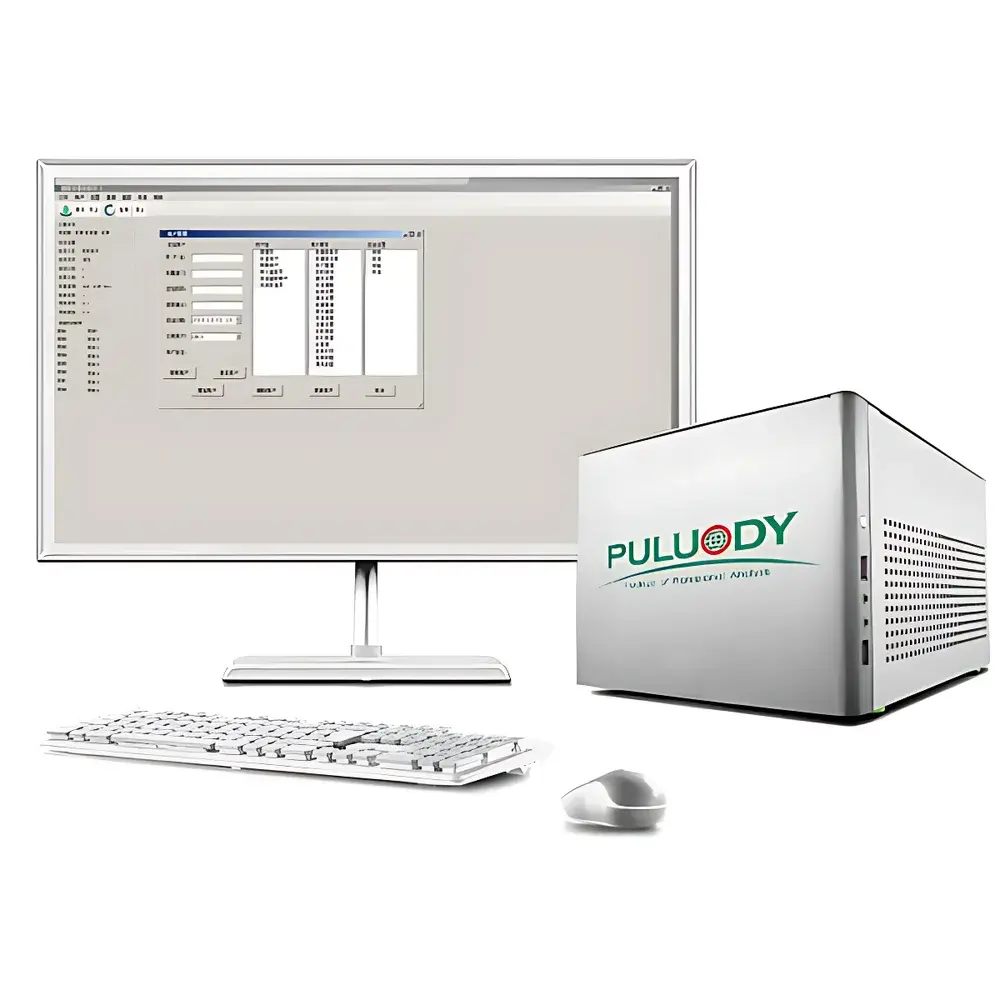
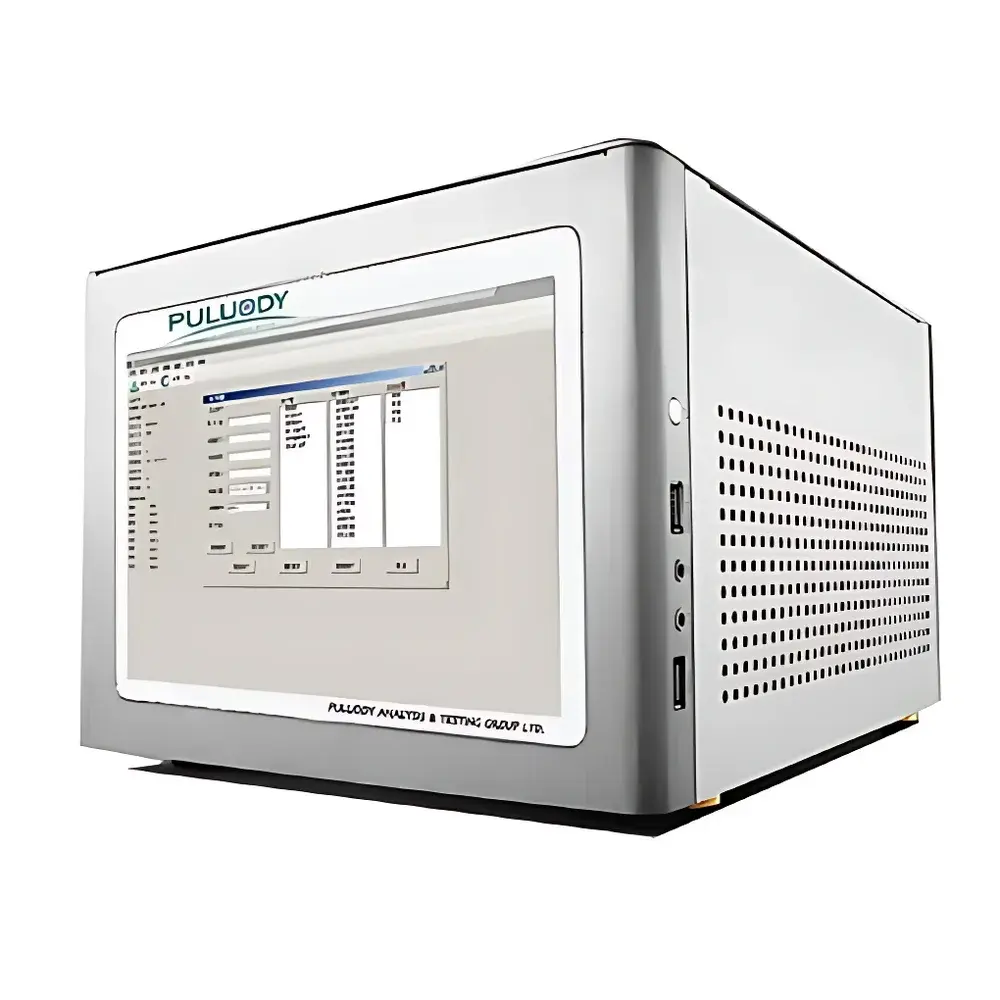
| Software | PULUODY V8.3 Integrated Analysis & Calibration Suite (PC + touchscreen) |
| Compliance Support | FDA 21 CFR Part 11 audit trail ready (optional), GLP/GMP reporting modules |
Overview
The PULUODY PMT-2 Optical Liquid Particle Counter is an advanced inline and offline particle monitoring system engineered for ultra-high-purity liquid environments—particularly ultra-pure water (UPW), semiconductor process chemicals, electronic cleaning agents, and nanofiltration effluents. It employs dual-laser narrow-beam light scattering technology—the eighth-generation sensor architecture developed by PULUODY Analytical Testing Group (UK)—to detect and size non-volatile particulate contaminants across a broad dynamic range of 0.03 µm to 3000 µm. Unlike conventional single-wavelength counters, the PMT-2 utilizes two synchronized laser sources with orthogonal optical paths and optimized detection geometry to minimize Mie scattering interference and improve resolution in sub-100 nm regimes. This design enables trace-level quantification of both intrinsic process particles (e.g., silica, metal oxides) and extrinsic contaminants (e.g., filter sheddings from PP melt-blown or activated carbon media), making it uniquely suited for validating filtration integrity, monitoring UPW distribution loops, and supporting ICH Q5A/Q5D compliance in biopharmaceutical manufacturing.
Key Features
- Dual-laser narrow-beam optical sensor with real-time background noise suppression and automatic gain compensation
- High-fidelity volumetric sampling via precision plunger pump coupled with electromagnetic flow regulation (±1% volumetric repeatability)
- Configurable detection thresholds: user-defined channels for 1–100 µm or 4–70 µm(c), including optional 0.1 µm(c) sensitivity mode
- Integrated touchscreen HMI (color LCD) with optional wireless keyboard/mouse support for lab or cleanroom deployment
- 4–20 mA analog output with programmable alarm thresholds for integration into SCADA or DCS systems
- V8.3 analysis software featuring dual-mode operation: segregated calibration mode (traceable to NIST-traceable latex standards per JJG 1061) and independent testing mode to eliminate software-induced bias
- Compliance-ready data management: optional 21 CFR Part 11-compliant electronic signatures, audit trails, and user-access hierarchy
Sample Compatibility & Compliance
The PMT-2 is validated for use with low-conductivity liquids (e.g., UPW, deionized water, IPA, acetone, TMAH, SC-1/SC-2 solutions) and viscous organic media (e.g., polymer solutions, glycol-based coolants). Its wetted path is constructed from chemically inert materials—including sapphire optical windows, PTFE fluidic manifolds, and 316L stainless steel sample cells—to ensure compatibility with aggressive solvents and prevent leaching artifacts. The instrument meets multiple pharmacopoeial requirements: USP , EP 2.9.19, JP 6.07, and ChP 2015/2020 for injectable-grade water and parenteral solutions. For industrial applications, it supports ISO 11171 (calibration), ISO 4406 (contamination coding), and MIL-STD-1246C (cleanliness verification). Optional GMP validation packages include IQ/OQ/PQ protocols aligned with Annex 11 and EU GMP Chapter 4.
Software & Data Management
PULUODY V8.3 software provides full lifecycle data control—from raw pulse processing to regulatory-grade reporting. It implements a strict separation between calibration configuration (requiring administrator privileges and digital signature logging) and routine measurement execution (operator-level access only). All particle counts are time-stamped, location-tagged, and stored with metadata including temperature, pressure, flow rate, and sensor health diagnostics. Export formats include CSV, PDF analytical reports, and XML for LIMS integration. The iPad-compatible wireless acquisition module allows remote monitoring without compromising network security—data remains encrypted end-to-end and never routes through public cloud infrastructure. Audit logs record every parameter change, report generation, and user login event, satisfying FDA 21 CFR Part 11 Subpart B requirements when enabled.
Applications
- Real-time monitoring of UPW distribution loops in semiconductor fabs (SEMI F57/F63 compliant)
- In-process verification of activated carbon and PP-meltblown filter cartridge integrity during production
- Validation of final rinse water quality in medical device manufacturing (ISO 13485)
- Quantification of insoluble microparticles in ophthalmic and injectable formulations per USP
- Trend analysis of particle shedding from silicon wafers, display glass substrates, and MEMS packaging materials
- Offline contamination mapping of nano/microfiltration membranes using portable sampling kits
- Supporting root-cause analysis in cleanroom environmental monitoring programs (ISO 14644-1 Class 1–5)
FAQ
What particle size ranges can the PMT-2 detect?
The standard configuration covers 0.03 µm to 3000 µm; however, users may select specialized sensor modules for high-resolution sub-100 nm analysis (e.g., 0.1 µm(c)) or coarse particulate screening (e.g., 4–70 µm(c)), depending on application-specific validation needs.
Is the system suitable for online installation in UPW loops?
Yes—the PMT-2 supports continuous inline operation with pressure-rated sample cells (up to 10 bar), integrated temperature/pressure compensation, and 4–20 mA alarm outputs compatible with facility-wide monitoring networks.
How is calibration traceability maintained?
Calibration is performed using NIST-traceable polystyrene latex (PSL) spheres per ISO 21501-4, with optional certification from CNAS-accredited labs (e.g., Zhongte Metrology Institute) and full documentation per JJG 1061.
Does the software support multi-user role-based access?
Yes—V8.3 includes configurable user profiles with tiered permissions (Admin, QA, Operator), mandatory electronic signatures for critical actions, and immutable audit trails meeting 21 CFR Part 11 requirements.
Can the PMT-2 analyze organic solvents like IPA or acetone?
Absolutely—the fluidic path is fully compatible with common semiconductor process solvents; material compatibility charts and chemical resistance test reports are available upon request.



