
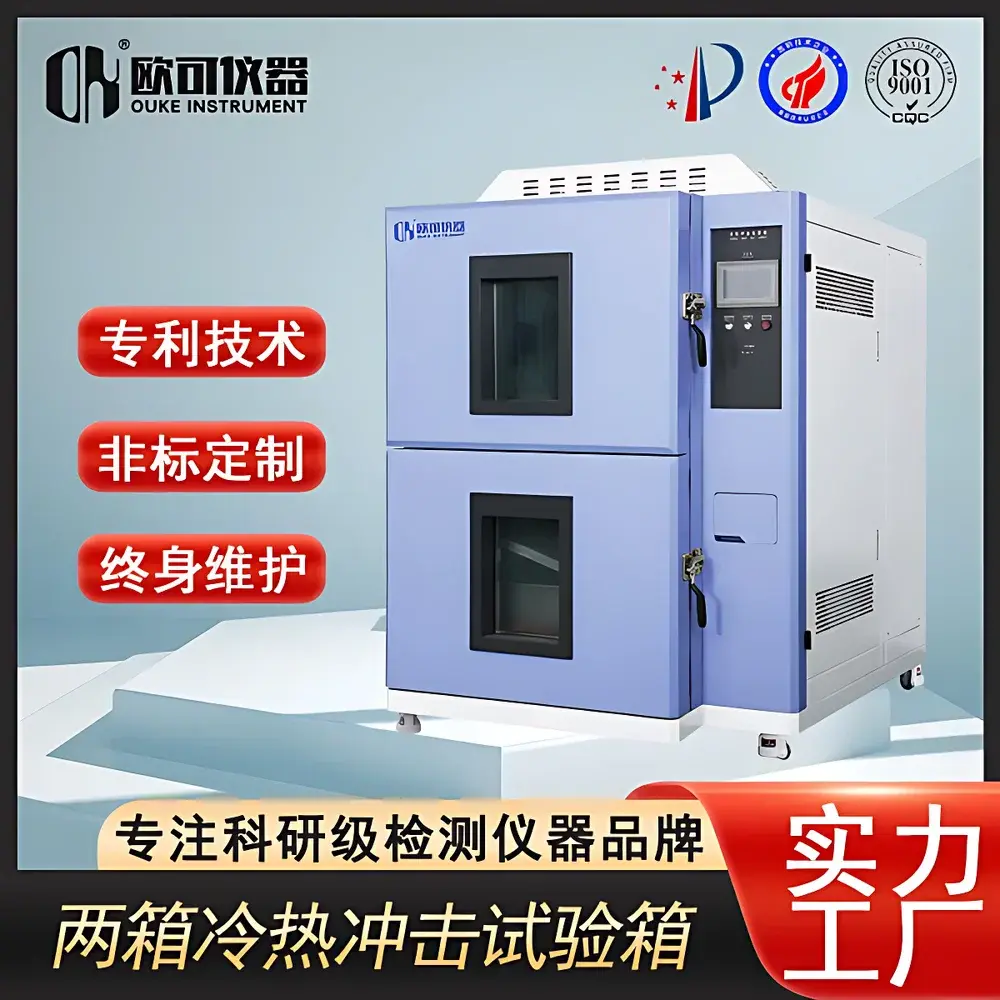
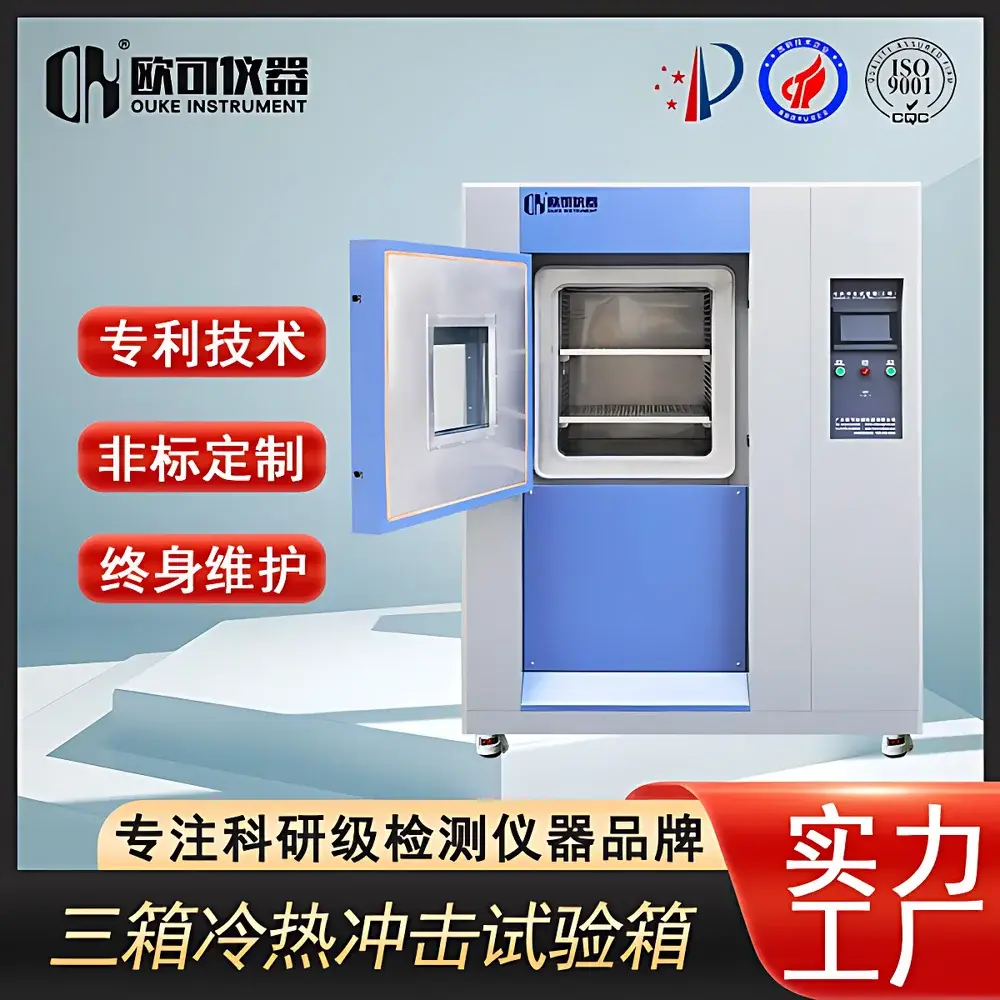
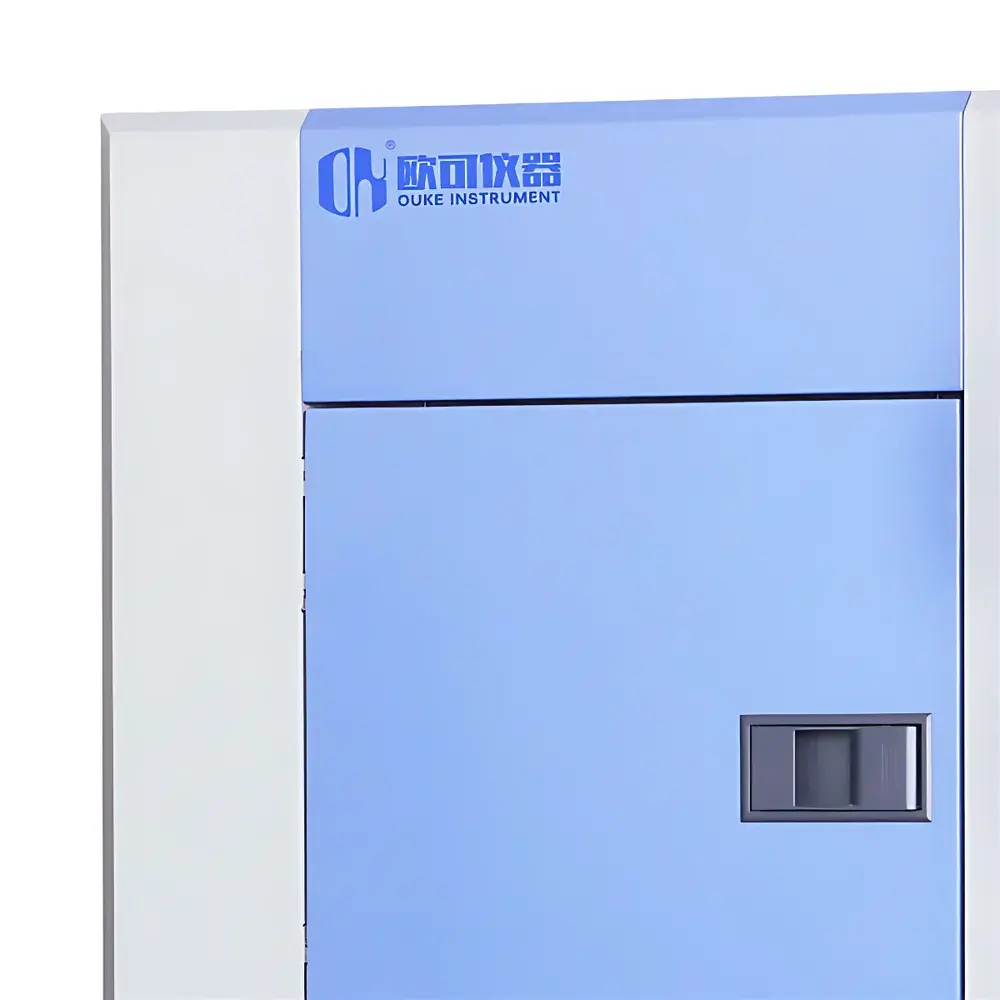
OK 0K-TS-49 Two-Zone Thermal Shock Test Chamber
| Brand | OK |
|---|---|
| Origin | Guangdong, China |
| Manufacturer Type | Direct Manufacturer |
| Product Origin | Domestic (China) |
| Model | 0K-TS-49 |
| High-Temperature Range | +150 °C |
| Low-Temperature Range | −40 °C |
| Thermal Shock Range | −40 °C to +150 °C |
| Temperature Stability | ±2 °C |
| Transfer Time | ≤5 s |
Overview
The OK 0K-TS-49 Two-Zone Thermal Shock Test Chamber is an engineered solution for accelerated environmental stress screening (ESS) and reliability validation under extreme thermal transients. It operates on the principle of mechanical sample transfer between two independently controlled, thermally isolated chambers — a high-temperature zone (+150 °C) and a low-temperature zone (−40 °C). Unlike single-chamber rapid temperature change (RTCS) systems, this dual-zone architecture eliminates reliance on dynamic heating/cooling of a shared chamber volume. Instead, thermal shock is induced by physically relocating the test specimen between pre-conditioned environments, achieving nominal transfer times of ≤5 seconds. This method ensures true step-change exposure with minimal thermal inertia, enabling precise simulation of real-world thermal cycling events such as automotive component transition from sub-zero ambient to heated cabin, or avionics power-up in desert-to-altitude operational profiles. The system complies with core test standard requirements for transition time fidelity, including IEC 60068-2-14 (equivalent to GB/T 2423.22), MIL-STD-883 Method 1010.8, and JESD22-A104.
Key Features
- Two independent, hermetically sealed chambers: high-temperature chamber (electrically heated, up to +150 °C) and low-temperature chamber (cascade refrigeration system, down to −40 °C)
- Pneumatically actuated specimen carrier (lift basket) with linear guide rails and position feedback sensors for repeatable, high-speed transfer (≤5 s typical)
- Active thermal isolation: motorized insulated doors seal each chamber immediately after basket transfer, minimizing cross-chamber heat exchange and maintaining temperature stability at ±2 °C during dwell phases
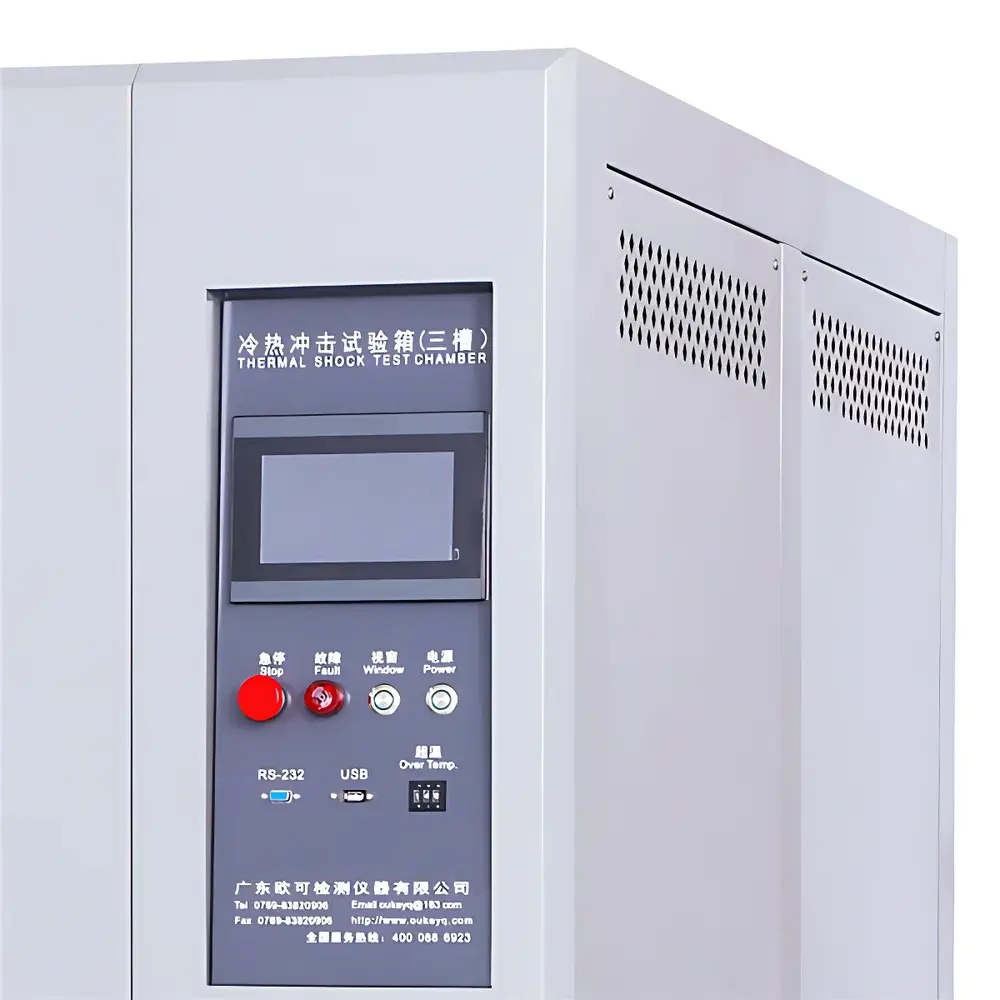
- Dedicated industrial PLC controller with 7-inch color touchscreen interface; supports programmable dwell times (1 min–999 h), cycle counts (1–9999), and automatic data logging of chamber temperatures and transfer events
- Structural frame fabricated from powder-coated steel; inner chamber walls lined with SUS304 stainless steel for corrosion resistance and long-term dimensional stability
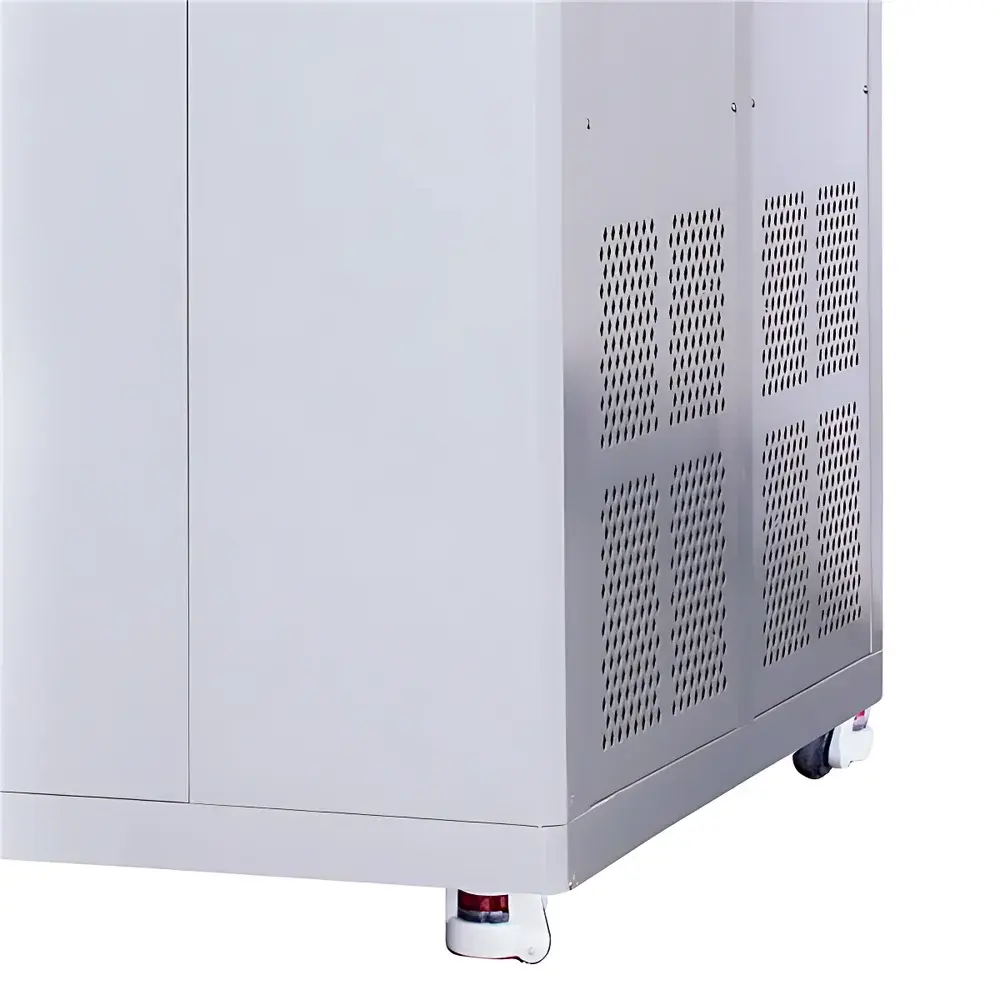
- No external water cooling required; air-cooled condenser design optimized for ambient operation up to 35 °C
Sample Compatibility & Compliance
The OK 0K-TS-49 accommodates specimens up to 300 mm × 300 mm × 300 mm (W×D×H) and 20 kg maximum load per cycle. Its mechanical transfer mechanism imposes constraints on sample rigidity and mounting integrity — parts must withstand brief inertial loads (<3 g peak) during acceleration/deceleration. The system meets essential safety and electromagnetic compatibility requirements per IEC 61000-6-2 (immunity) and IEC 61000-6-4 (emissions). All temperature setpoints, dwell durations, and cycle logs are timestamped and stored internally for traceability. While not natively 21 CFR Part 11 compliant, audit trails can be exported in CSV format for integration into GLP/GMP-aligned quality management systems where electronic record retention is mandated.
Software & Data Management
The embedded controller provides local configuration, real-time monitoring, and event-triggered logging without dependency on external PCs. Temperature readings from calibrated PT100 sensors (Class B, ±0.3 °C accuracy) in both chambers are sampled every 2 seconds and archived per test cycle. Export options include USB flash drive (FAT32 formatted) for raw CSV files containing time-stamped temperature values, basket position status, door open/close timestamps, and alarm history. Optional RS485 Modbus RTU interface enables integration with SCADA or MES platforms for centralized test fleet monitoring. Firmware updates are performed via USB; version history and calibration due dates are displayed in the system maintenance menu.
Applications
This chamber is routinely deployed in failure mode and effects analysis (FMEA) workflows across industries requiring validation of thermal robustness. In electronics manufacturing, it assesses solder joint integrity, die attach delamination, and coefficient-of-thermal-expansion (CTE) mismatch in PCB assemblies and stacked-die packages. Automotive Tier-1 suppliers use it to qualify connectors, ADAS sensors, and battery management modules per ISO 16750-4. Aerospace component suppliers apply it per SAE AS4798 for thermal cycling of optical housings and composite structural brackets. Materials science labs employ it to study interfacial adhesion loss in thermal barrier coatings and microcracking kinetics in ceramic matrix composites under repeated thermal strain.
FAQ
What standards does the OK 0K-TS-49 comply with for thermal shock testing?
It satisfies the environmental profile and timing requirements of IEC 60068-2-14, GB/T 2423.22, MIL-STD-883 Method 1010.8, and JESD22-A104. Compliance verification requires user-performed chamber mapping and transfer time validation per Annex A of IEC 60068-2-14.
Can this chamber perform humidity-controlled thermal shock?
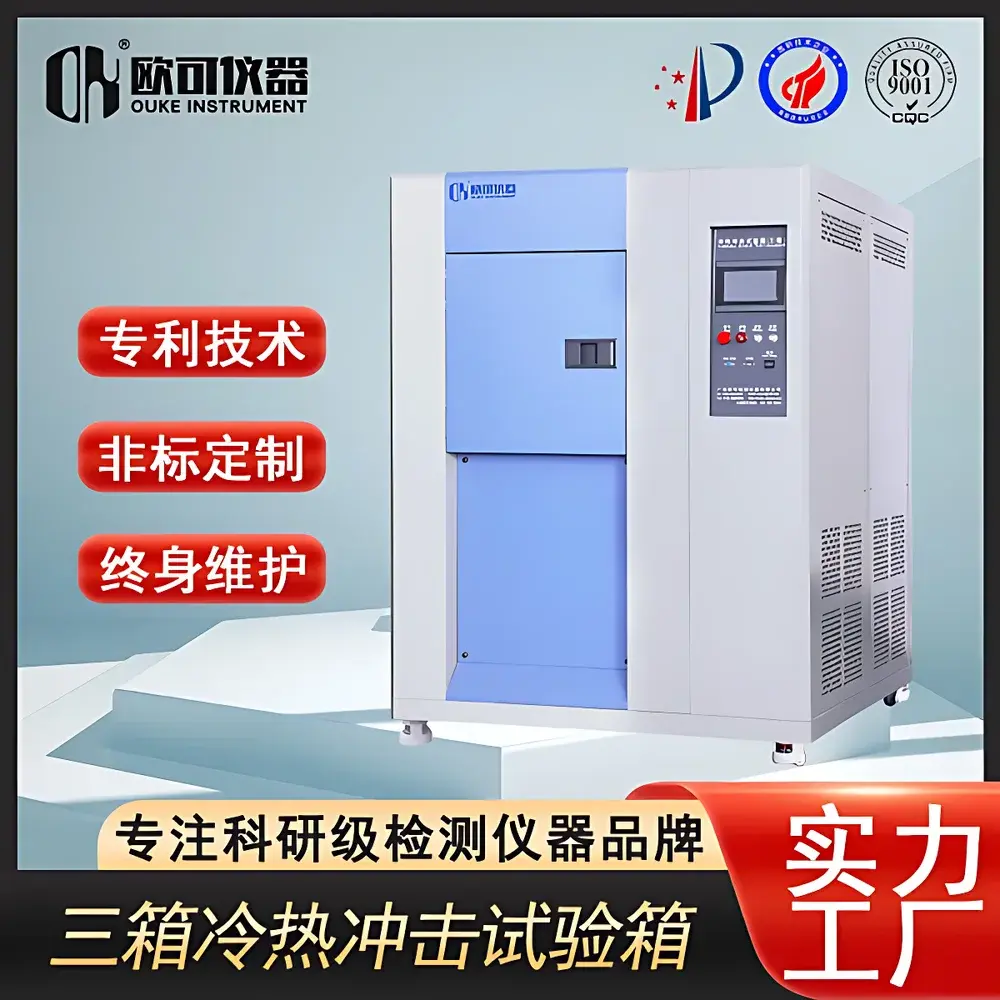
No. The two-zone architecture lacks integrated humidification or dehumidification subsystems. For combined temperature/humidity shock, a three-zone chamber with conditioned air injection or a separate climatic chamber is required.
Is the 5-second transfer time guaranteed under full load?
Yes — the pneumatic drive system is rated for ≤5 s transfer with maximum specified payload (20 kg) and worst-case basket positioning tolerance (±1 mm), verified during factory acceptance testing (FAT) with inert mass loading.
How often does the system require recalibration?
Temperature sensors should be verified annually against NIST-traceable references; full system calibration (including transfer timing and door sealing integrity) is recommended every 24 months or after major maintenance.
Does the chamber support remote monitoring or alarm notification?
Local audible/visual alarms are standard. Remote email/SMS alerts require optional Ethernet gateway hardware and third-party IoT platform integration — not included in base configuration.



