
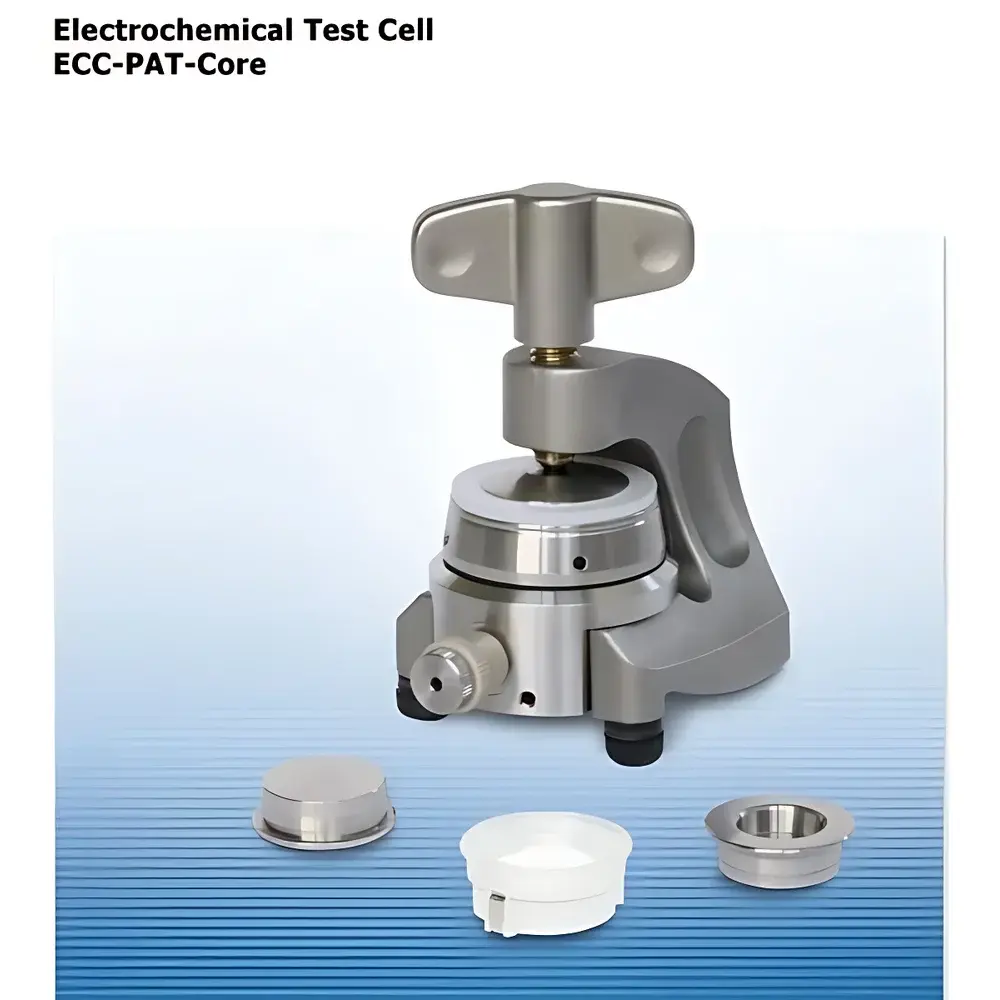
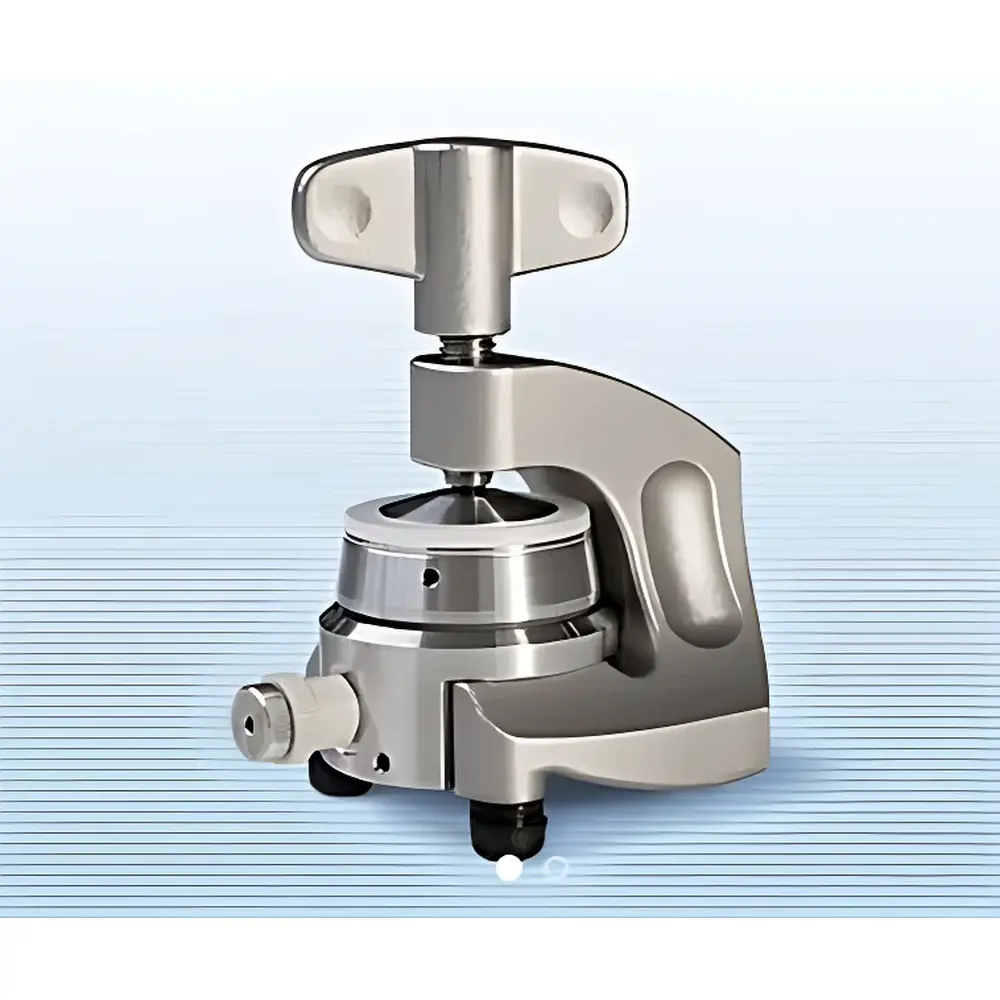
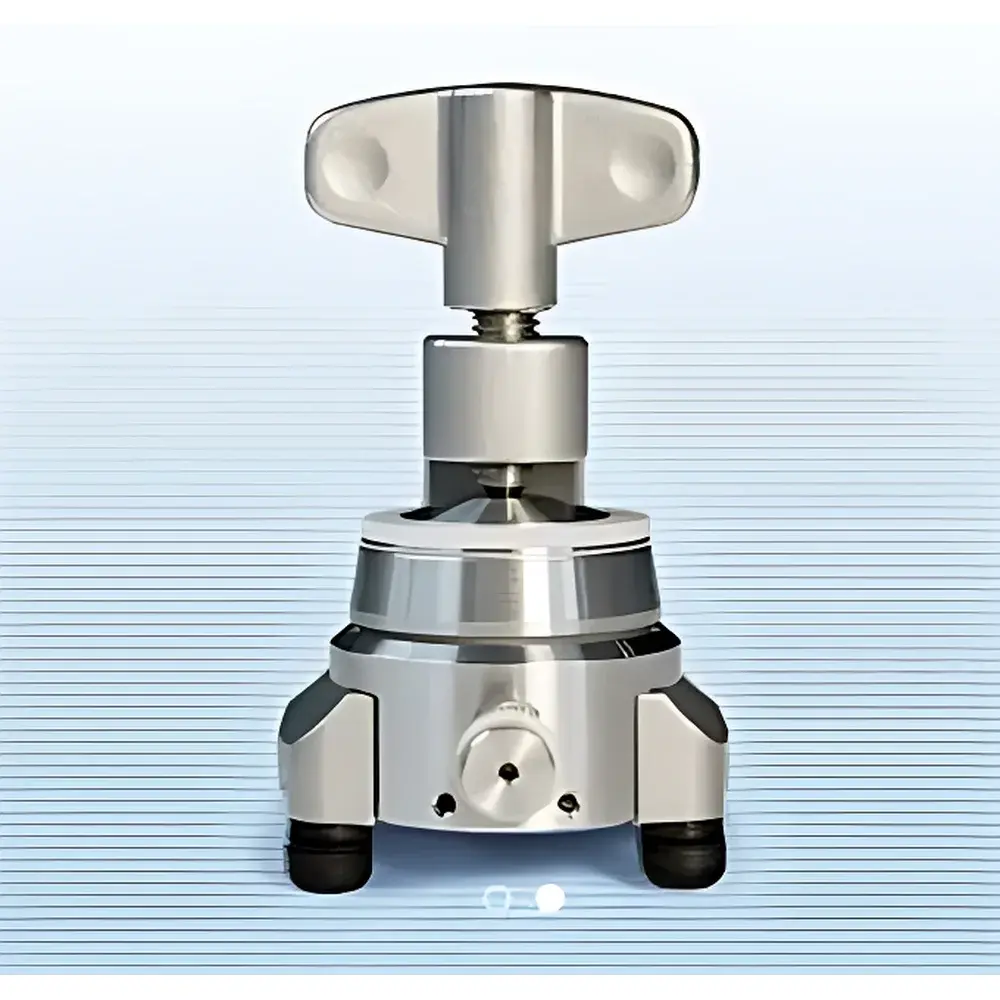
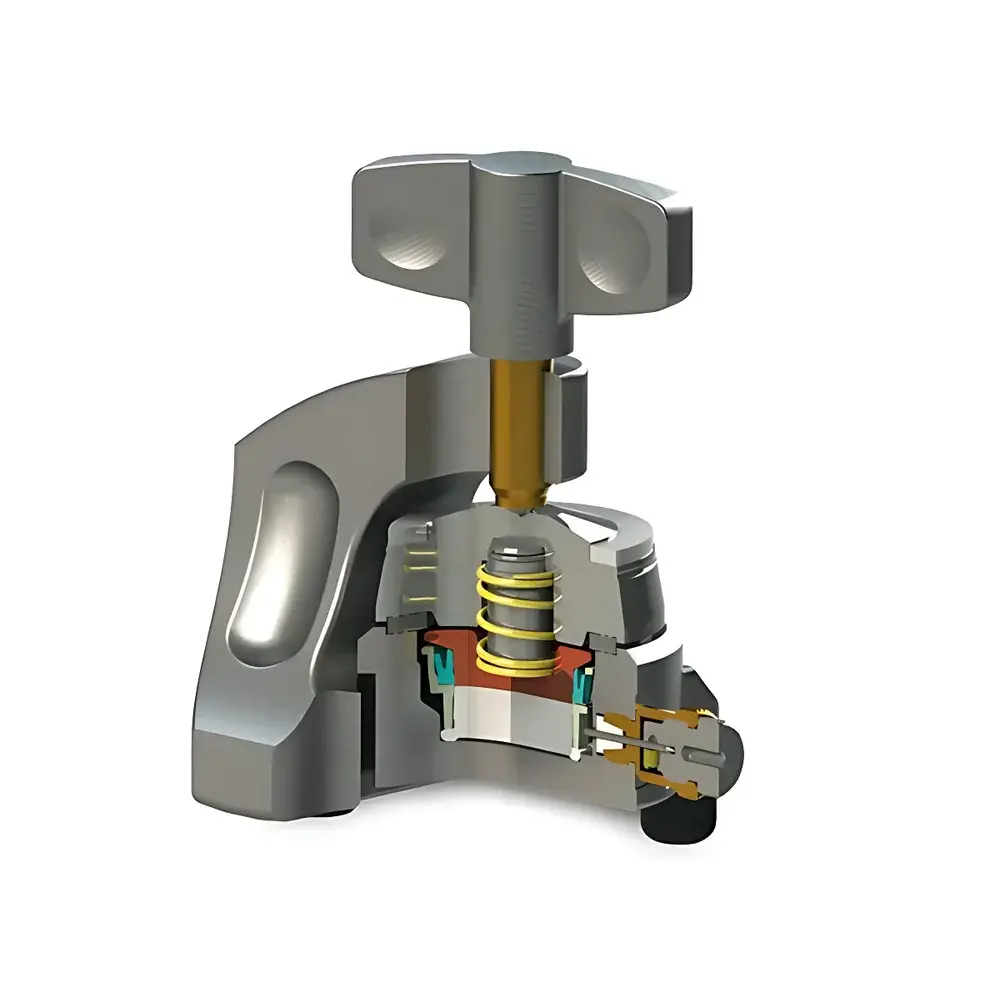
EL-Cell ECC-PAT-Core Single-Cell Electrochemical Testing Module
| Brand | EL-Cell |
|---|---|
| Origin | Germany |
| Model | ECC-PAT-Core |
| Dimensions | 90 × 54 × 70 mm (H × W × D) |
| Electrode Diameter | 18 mm |
| Electrolyte Volume | as low as 0.05 cm³ |
| Weight | 640 g |
| Separator Diameter | 18 mm |
| Material | Battery-grade Al (lower plunger), Cu (upper plunger), PP (insulation sleeve), optional 316L stainless steel current collectors |
| Compatible With | All PAT-series test cells, ECC-Std, ECC-Ref, ECC-Combi, ECC-Air, ECC-DEMS, ECC-Press, ECC-Opto-Std, ECD-o-DL, ECD-2-DL |
Overview
The EL-Cell ECC-PAT-Core is a precision-engineered, modular single-cell electrochemical testing module designed for controlled, reproducible half-cell and full-cell evaluation under laboratory conditions. Built upon the patented PAT-Core mechanical architecture, it implements a coaxial, compression-based cell configuration grounded in fundamental electrochemical measurement principles—specifically optimized for galvanostatic and potentiostatic cycling, impedance spectroscopy (EIS), and open-circuit voltage (OCV) monitoring. Its core function is to isolate electrode-electrolyte interfacial behavior while minimizing parasitic contributions from cell assembly variability. The module operates as a self-contained, drop-in unit that interfaces directly with standard potentiostats/galvanostats via standard banana or BNC connections—requiring no external pressure fixtures or custom cabling. This design enables rapid deployment in R&D labs focused on Li-ion, solid-state, or next-generation battery materials where sample throughput is moderate (<10 samples per batch) but data fidelity is non-negotiable.
Key Features
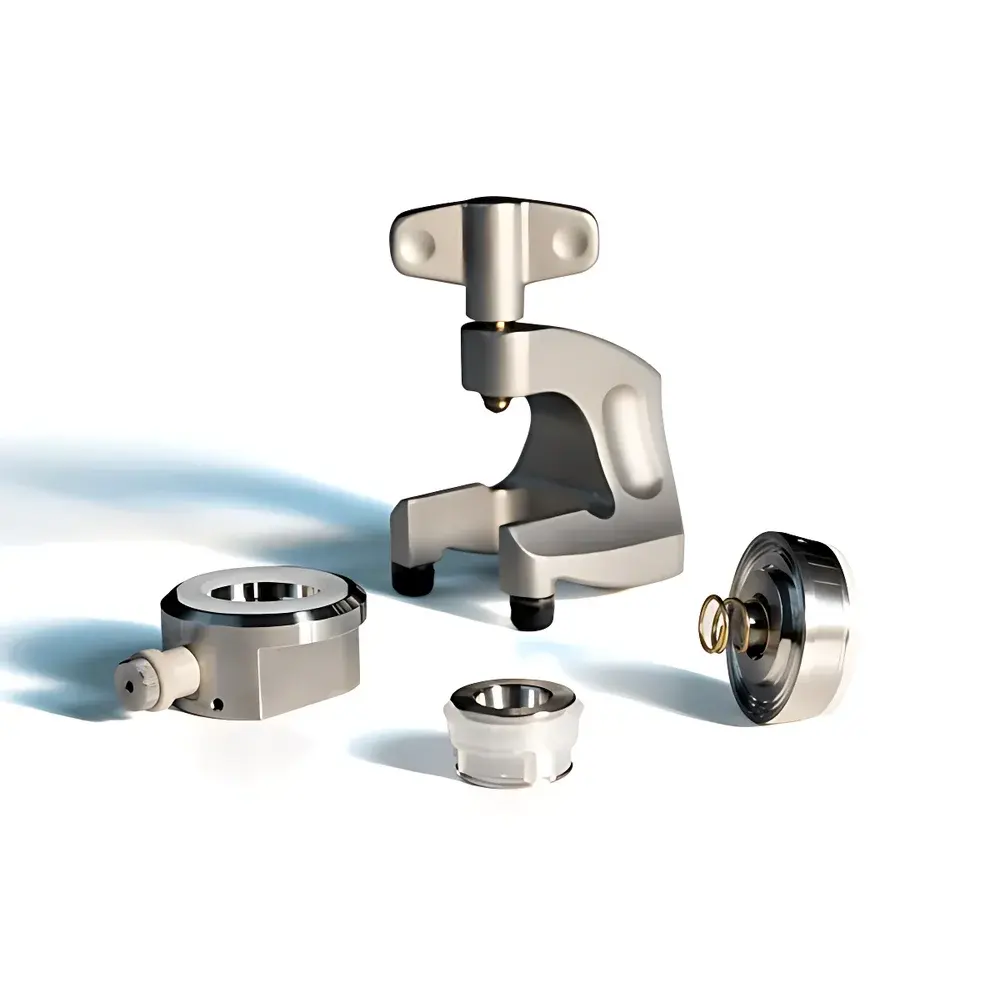
- Modular PAT-Core architecture comprising three precision-machined components: Al lower plunger (positive current collector), Cu upper plunger (negative current collector), and a pre-assembled PP insulation sleeve with integrated reference electrode contact point for true 3-electrode operation.
- Disposable-use concept minimizes carryover contamination between experiments and eliminates post-test cleaning, drying, or recalibration cycles.
- Battery-grade material construction (Al 1100, OFHC Cu, medical-grade polypropylene) ensures electrochemical inertness and compatibility with carbonate-, ether-, and sulfide-based electrolytes.
- Optional 316L stainless steel current collectors available for high-current-density or corrosive media applications (e.g., aqueous Zn-ion, Li–S).
- Dual-bevel PTFE sealing ring provides uniform radial compression and leak-tight sealing at electrolyte volumes as low as 50 µL—critical for minimizing side reactions and enabling accurate coulombic efficiency quantification.
- 18 mm concentric electrode geometry with <0.1 mm concentricity tolerance ensures consistent current distribution and eliminates edge effects during EIS measurements.
- Mechanical pressure application is repeatable within ±2% across assemblies, supporting quantitative correlation between stack pressure and interfacial resistance (e.g., SEI formation kinetics).
Sample Compatibility & Compliance
The ECC-PAT-Core accommodates standard 18 mm coin-type electrodes (anode/cathode discs), polymer or ceramic separators (18 mm diameter), and metallic counter/reference foils (Li, Na, Ag/Ag⁺). It supports both liquid and quasi-solid electrolytes and is compatible with glovebox-integrated workflows (O₂/H₂O < 0.1 ppm). All materials comply with ISO 10993-5 (cytotoxicity) and EU REACH Annex XIV restrictions. When used with GLP-compliant electrochemical workstations (e.g., BioLogic VSP-300, Gamry Interface 5000E), the module supports audit-ready data acquisition per FDA 21 CFR Part 11 when paired with timestamped, electronic signature-enabled software. Its mechanical repeatability and dimensional traceability align with ASTM D7232 (standard practice for evaluating battery electrode performance) and ISO 18563-1 (non-destructive testing — phased array ultrasonic testing).
Software & Data Management
No proprietary firmware or drivers are required—the ECC-PAT-Core functions as a passive electrochemical cell. Raw potential, current, and impedance data are acquired through the host potentiostat’s native software (e.g., EC-Lab®, Framework™, or NOVA). For advanced analysis, exported .mpt or .z files integrate seamlessly with Python-based libraries (e.g., impedance.py, PyBamm) or MATLAB toolboxes for equivalent circuit modeling, diffusion coefficient extraction, and mechanistic degradation mapping. Optional ECC-RefLoad syringe facilitates precise, air-free injection of reference electrode electrolytes (e.g., LiCl in propylene carbonate), enabling stable baseline potentials over multi-day tests (>1000 h continuous operation demonstrated with LFP|Li configurations).
Applications
- Half-cell characterization of novel anode materials (Si, Sn, Li-metal) vs. Li/Li⁺ under controlled stack pressure.
- Quantitative SEI growth kinetics via low-frequency EIS tracking (0.1 mHz–1 MHz) combined with dQ/dV analysis.
- Electrolyte screening for oxidative stability (vs. NMC811 at 4.5 V) and reduction onset (vs. graphite at 0.1 V).
- Pressure-dependent Li dendrite nucleation studies using in situ acoustic emission coupling.
- Validation of computational models requiring experimentally constrained boundary conditions (e.g., Butler–Volmer parameters, transfer coefficients).
- Pre-qualification of electrode slurries prior to Swagelok or CR2032-scale prototyping.
FAQ
Can the ECC-PAT-Core be used for full-cell testing?
Yes—by inserting both working and counter electrodes into the same chamber with an intervening separator; however, its primary design intent is half-cell and symmetric-cell evaluation where reference electrode integration is critical.
Is the 18 mm electrode diameter customizable?
No—the geometry is fixed to ensure mechanical compatibility with all PAT-series accessories and standardized data comparison across EL-Cell’s ecosystem.
What is the maximum recommended stack pressure?
The module is rated for continuous operation up to 10 MPa; typical use ranges from 0.5–3 MPa depending on separator compressibility and target interfacial contact resistance.
Does EL-Cell provide calibration certificates for the plungers?
Dimensional inspection reports (including concentricity, surface roughness Ra < 0.4 µm, and hardness verification) are available upon request for GMP-aligned validation protocols.
How does the ECC-LiPunch accessory improve experimental consistency?
It delivers flat, burr-free 18 mm Li discs with ±2 µm thickness tolerance—eliminating manual cutting artifacts that cause localized current hotspots and premature failure during plating/stripping.






