
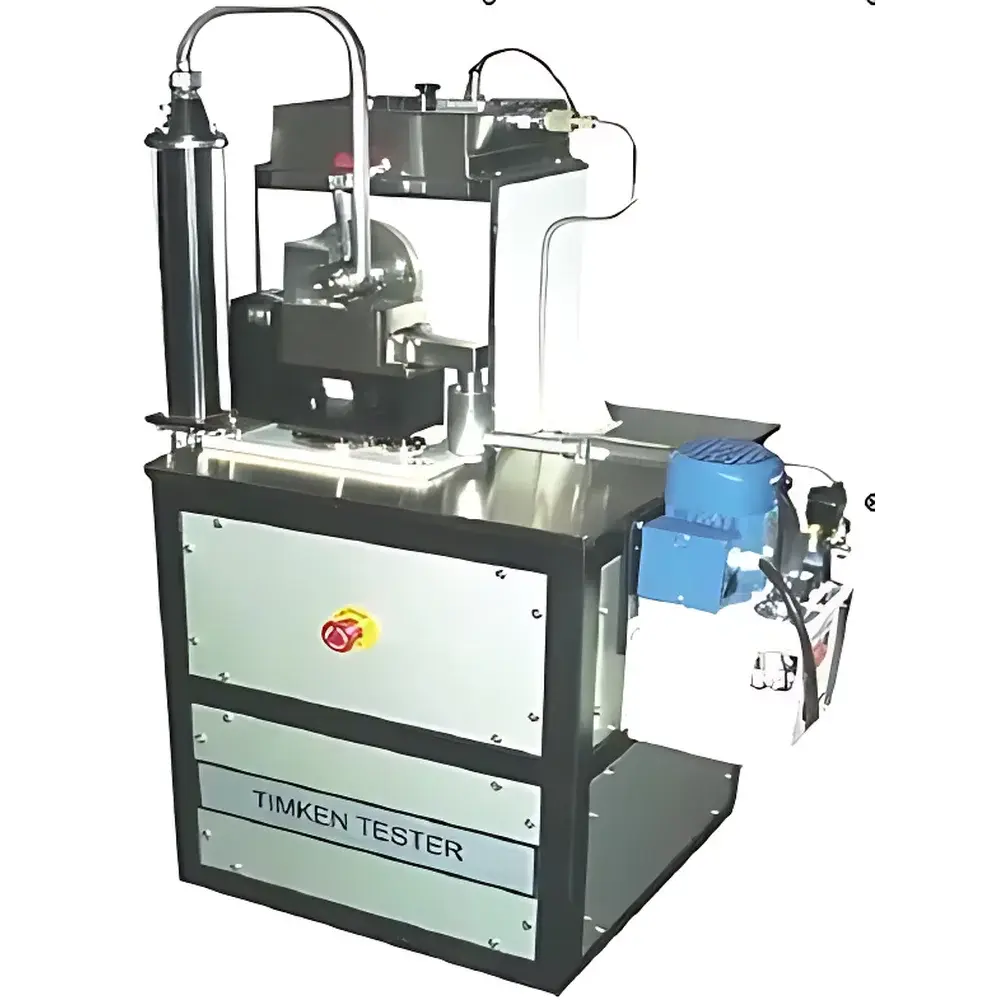
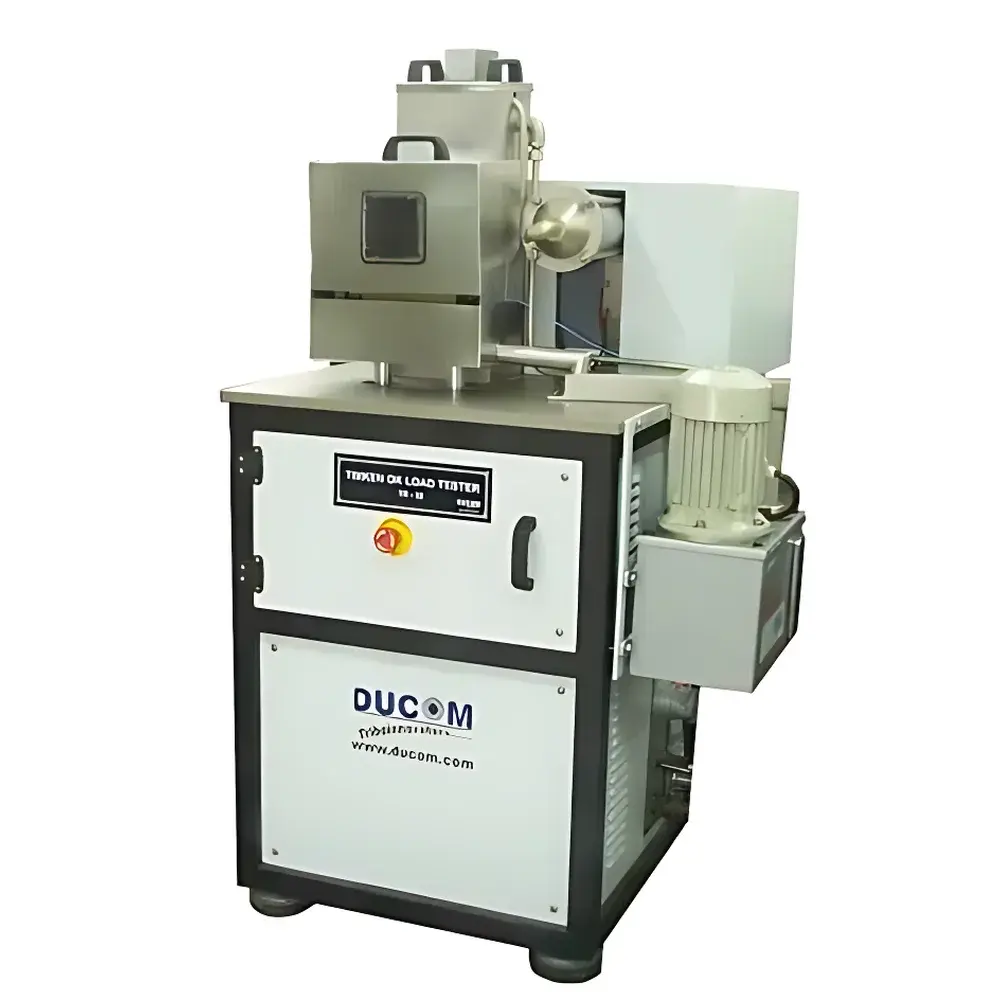
JHT ASTM D6079 Linear Reciprocating Tribometer
| Brand | JHT |
|---|---|
| Origin | USA |
| Model | ASTM D6079 |
| Maximum Friction Force | 20 N |
| Friction Force Resolution | 0.4 mN |
| Maximum Operating Temperature | 1000 °C |
| Compliance | ASTM D6079 |
| Control System | WinDucom 2010 Software |
| Data Output Format | ASCII-compliant |
| Sample Configuration | Ball-on-Disc (Oscillating Ball vs. Immersed Stationary Disc) |
| Optional Modules | High-Temperature Extension, Humidity Control, Electrical Contact Resistance (ECR) Measurement, Integrated Optical Microscopy Interface |
Overview
The JHT ASTM D6079 Linear Reciprocating Tribometer is an engineered solution for quantitative tribological evaluation under boundary lubrication conditions—specifically designed to replicate the high-load, low-speed, oscillatory contact mechanics encountered in internal combustion engines, fuel injection systems, and diesel lubricant formulations. Based on the internationally recognized ASTM D6079 standard, this instrument employs a controlled linear reciprocating motion between a spherical indenter (typically steel or ceramic) and a flat, horizontally mounted disc specimen fully immersed in test fluid (e.g., diesel fuel, biodiesel blends, or formulated lubricants). The system measures real-time friction force, calculates dynamic coefficient of friction (COF), and quantifies wear scar geometry post-test via optical microscopy integration. Its architecture supports thermally stable operation up to 1000 °C, enabling investigation of thermal degradation effects on lubricant film formation and tribofilm evolution under realistic engine-relevant thermal transients.
Key Features
- Precision linear actuation with continuously variable frequency (0.1–100 Hz) and amplitude (10–2000 µm), ensuring full compliance with ASTM D6079 test protocols
- High-resolution load cell with 0.4 mN friction force resolution and 20 N maximum capacity, calibrated traceably to NIST standards
- Integrated temperature control module supporting ramp-and-hold profiles from ambient to 1000 °C, with ±1 °C stability over 30-minute dwell periods
- Modular environmental chamber options including humidity regulation (10–95% RH, ±2% accuracy) and inert gas purging (N₂/Ar) for oxidation-sensitive testing
- Electrical contact resistance (ECR) measurement capability (optional) for in-situ monitoring of interfacial conductivity changes during sliding—critical for evaluating anti-wear additive film continuity
- Rigid granite base and kinematically constrained stage design minimizing parasitic vibrations and ensuring sub-micron positional repeatability
Sample Compatibility & Compliance
The tribometer accommodates standard ASTM D6079 specimens: 10 mm diameter balls (AISI 52100, WC, Si₃N₄) and 60 mm diameter discs (AISI 52100, stainless steel 440C, or custom-coated substrates). Fluid samples are held in a thermostatically regulated reservoir with precise immersion depth control. All mechanical, thermal, and data acquisition subsystems conform to ISO/IEC 17025 calibration requirements. Test execution and reporting align with ASTM D6079-22, ISO 19212 (tribological testing of lubricants), and support GLP-compliant documentation workflows—including audit-trail-enabled user authentication, electronic signatures, and version-controlled method templates compatible with FDA 21 CFR Part 11 readiness.
Software & Data Management
WinDucom 2010 is a Windows-based, modular software platform integrating instrument control, synchronized multi-channel data acquisition (temperature, normal load, friction force, ECR), and post-processing analytics. It features real-time graphical display of COF vs. time, automatic trigger-based test initiation upon target temperature stabilization, and customizable test sequences with parameterized loops (e.g., temperature ramp → dwell → oscillation → cooldown). Acquired datasets are stored in ASCII-delimited format (.txt), enabling direct import into MATLAB, Python (pandas), or Excel for statistical analysis. The CompariView module permits overlay of up to four independent test traces for comparative wear kinetics assessment. Raw wear scar images acquired via integrated optical microscopy (via C-mount interface) are georeferenced and linked to corresponding friction traces for correlative structure–property analysis.
Applications
- Evaluation of diesel fuel lubricity per ASTM D6079, particularly for ultra-low-sulfur diesel (ULSD) and renewable diesel blends
- Development and qualification of friction modifiers, anti-wear additives (e.g., ZDDP, ionic liquids), and surface-active agents
- Tribocorrosion studies of coated piston rings and cylinder liners under simulated combustion chamber environments
- Fundamental research on tribofilm formation kinetics, shear-induced phase transitions, and thermal runaway mechanisms in boundary films
- Validation of computational wear models (e.g., Archard wear law parameterization, Hertzian contact stress mapping)
- Quality control of functional coatings (DLC, MoS₂, TiN) for aerospace and powertrain components
FAQ
Does the system support automated wear scar measurement?
Yes—when coupled with an optional motorized optical microscope and image-analysis plugin, the system performs automated scar diameter quantification per ASTM D6079 Annex A1, with sub-pixel edge detection and ISO 11562-compliant roughness profiling.
Can test parameters be scheduled across multiple thermal cycles?
Yes—WinDucom 2010 supports nested test protocols with programmable temperature ramps, dwell times, and dynamic parameter sweeps (frequency, amplitude, load), all logged with timestamped metadata.
Is the data acquisition compliant with regulatory audit requirements?
All raw data files include embedded header metadata (operator ID, calibration certificate IDs, environmental conditions), and software logs record every user action with timestamps—fully supporting 21 CFR Part 11 and EU Annex 11 validation.
What materials are recommended for high-temperature disc specimens?
For tests above 600 °C, Inconel 718 or silicon carbide (SiC) discs are recommended; standard 440C steel is rated up to 500 °C in air and 600 °C in inert atmosphere.
How is friction force calibrated in situ?
Calibration is performed using traceable dead-weight standards applied directly to the ball holder assembly; WinDucom includes a dedicated calibration wizard with uncertainty propagation reporting per ISO/IEC 17025 guidelines.



