
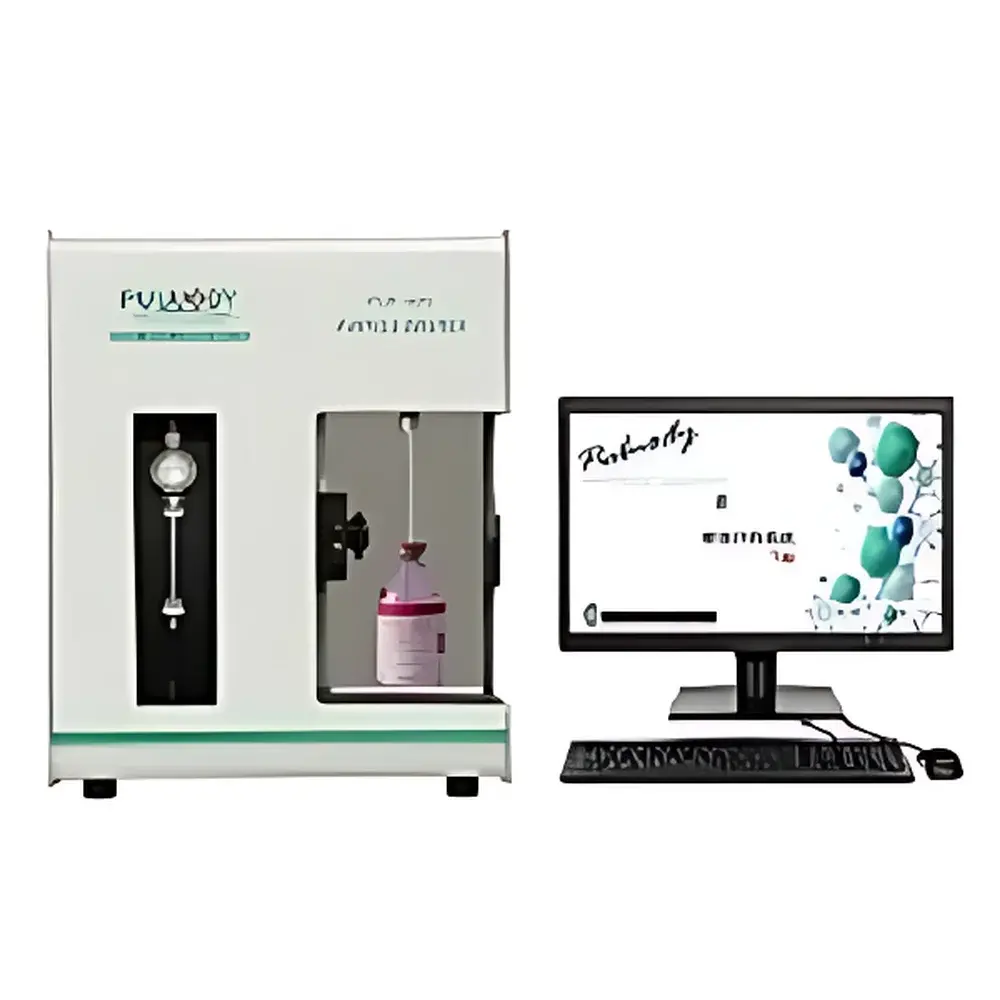
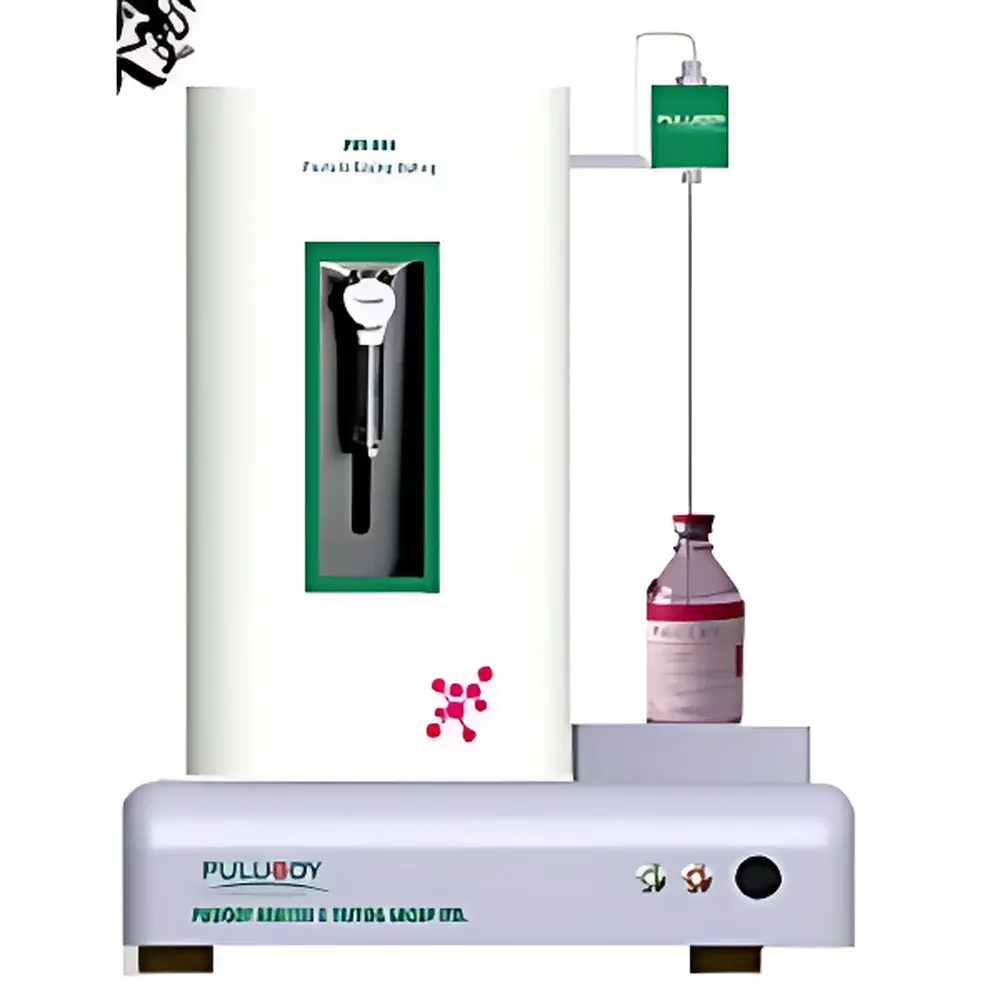
PULUODY PMT-2 Liquid Particle Counter for Cleaning Agents
| Brand | PULUODY |
|---|---|
| Origin | Shaanxi, China |
| Manufacturer Type | Authorized Distributor |
| Product Category | Domestic |
| Model | PMT-2 |
| Instrument Type | Optical Particle Counter |
| Detection Principle | Dual-Laser Narrow-Beam Light Scattering |
| Calibration Standards | ISO 21501-2, USP <788>, EP 2.9.19, ChP 2015/2020, GB 8368 |
| Sensor Generation | 8th-Generation Dual-Laser Narrow-Beam Detector |
| Measurement Range | 0.065–0.2 µm and 0.1–0.5 µm (standard) |
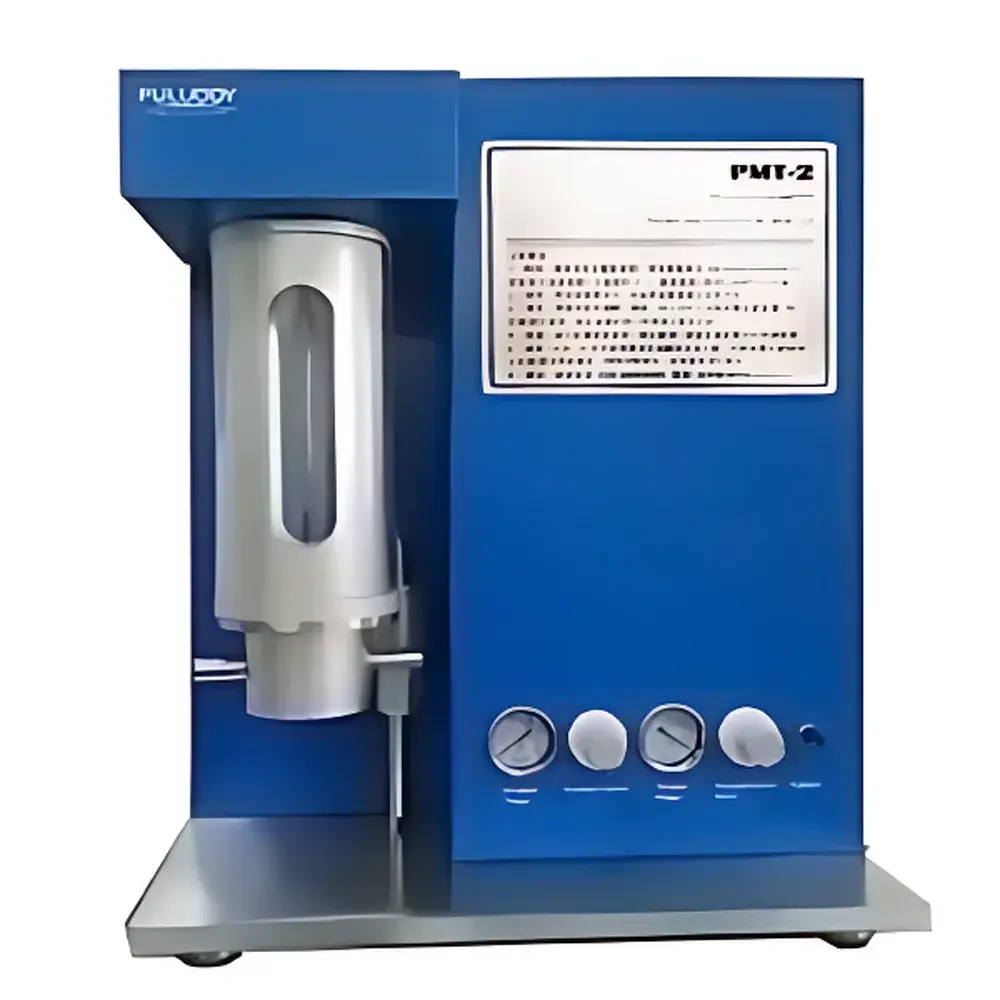
| Sampling Method | Precision Metering Piston Pump |
| Flow Control | Dual-Stage Electromagnetic + Precision Piston Pump |
| Accuracy | ±3% typical |
| Volume Accuracy | ±1% |
| Coincidence Limit | 10,000 particles/mL (2.5% coincidence error) |
| Output Interface | 4–20 mA analog output with configurable particle-count alarm |
| Data Acquisition | iPad-integrated wireless acquisition system |
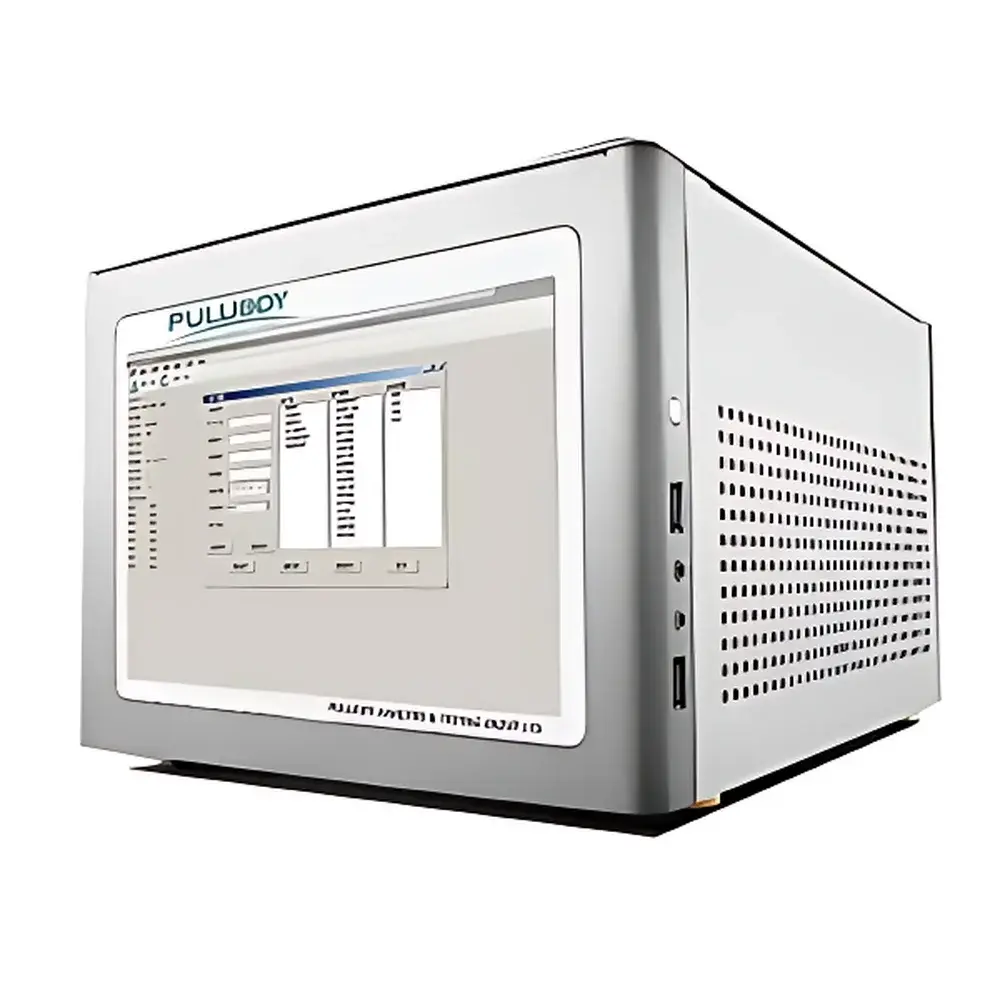
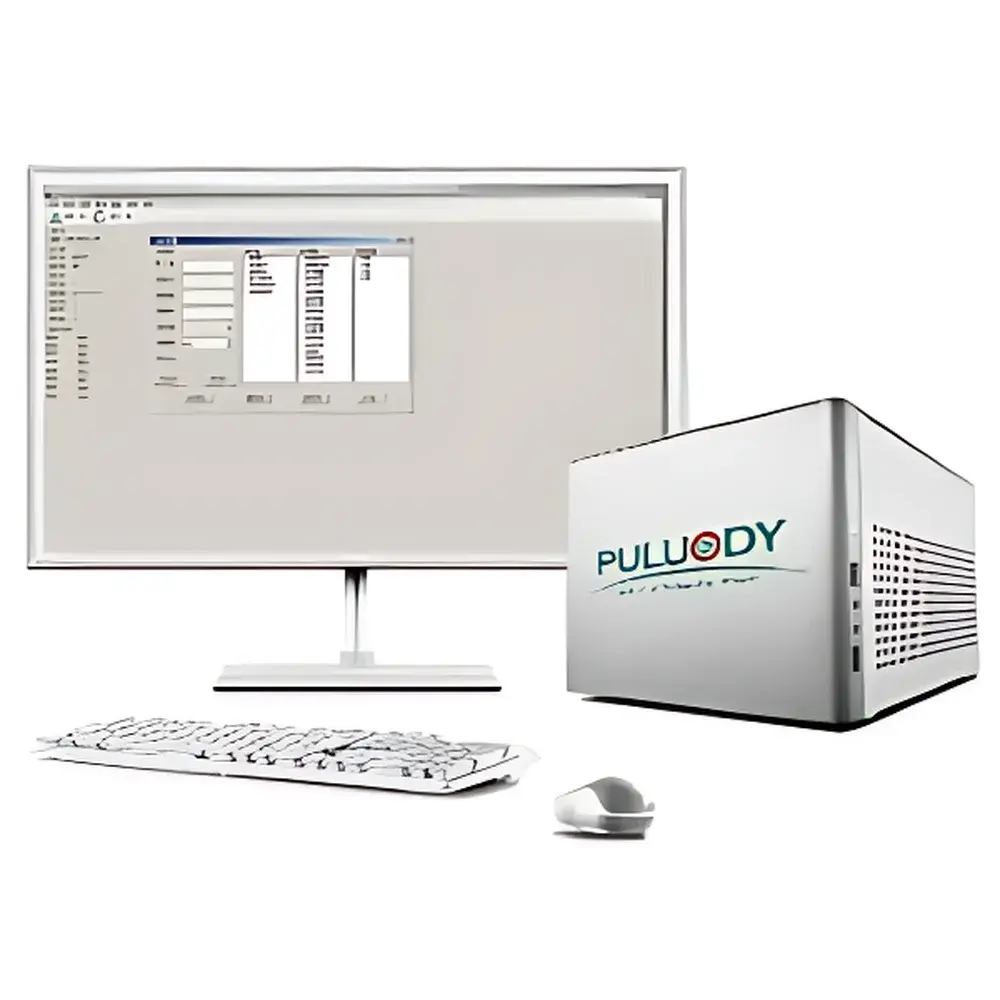
| Software | V8.3 Integrated Analysis & Calibration Software (PC + touchscreen GUI) |
| Display | Color LCD touch interface with optional wireless keyboard/mouse |
| Power Input | 100–265 VAC, 50–60 Hz |
| Compliance Mode | Separated civilian/military standard configuration |
| Regulatory Alignment | Supports 21 CFR Part 11 audit trail (software-configurable), GLP/GMP-compliant reporting templates |
Overview
The PULUODY PMT-2 Liquid Particle Counter is an optical particle counter engineered for high-sensitivity, real-time monitoring of submicron particulate contamination in ultra-clean process liquids—specifically formulated for cleaning agents used in semiconductor fabrication, flat-panel display manufacturing, photovoltaic cell production, and precision electronics cleaning. It operates on the principle of dual-laser narrow-beam light scattering, where two spatially separated laser sources generate orthogonal detection zones to minimize signal ambiguity and enhance sizing fidelity across overlapping particle populations. Unlike conventional single-beam instruments, the eighth-generation sensor architecture enables simultaneous discrimination of refractive-index-sensitive and size-dependent scattering signatures, improving classification reliability for polydisperse suspensions in low-conductivity media such as deionized water, aqueous cleaning formulations, and low-viscosity organic solvents. The instrument supports both online and offline configurations, integrating seamlessly into cleanroom-grade fluid handling systems via standardized 1/4″ Swagelok fittings and pressure-rated flow cells rated to 6 bar.
Key Features
- Dual-laser narrow-beam optical detection with independent gain calibration per channel, enabling robust sizing accuracy from 65 nm to 100 µm (c)
- Hybrid flow control system combining a precision metering piston pump (±1% volumetric repeatability) and electromagnetic flow regulation for stable, pulse-free delivery at rates from 1 to 100 mL/min
- V8.3 integrated software platform with segregated analysis and calibration modules—ensuring metrological traceability without operational interference
- Configurable reporting modes: particle count per milliliter, ISO 4406:2017 code, NAS 1638 class, and custom grading tables aligned with MIL-STD-1246C or JIS B 9921
- IPad-based remote data acquisition with encrypted Wi-Fi synchronization, supporting time-stamped event logging and automated report generation
- Modular hardware design compliant with IEC 61326-1 (EMC) and IEC 61010-1 (safety), certified for Class 100 (ISO 5) cleanroom environments
Sample Compatibility & Compliance
The PMT-2 is validated for use with aqueous cleaning solutions (e.g., SC1, SC2, piranha variants), low-surface-tension fluorinated solvents, polymer-based strippers, and ultrapure water matrices (resistivity ≥18.2 MΩ·cm). Its wetted path employs chemically inert materials—including sapphire flow cell windows, PEEK fluidic manifolds, and EPDM-free elastomer seals—to prevent leaching or adsorption artifacts. Regulatory compliance includes full alignment with pharmacopeial standards: USP , EP 2.9.19, ChP 2020 General Chapter 0903, and GB 8368 for medical device rinsates. Calibration traceability follows JJG 1061–2010 (Chinese national metrology verification regulation) and ISO 21501-2:2019 for light-scattering particle counters. Optional firmware modules support 21 CFR Part 11 electronic signature enforcement, ALCOA+ data integrity protocols, and GMP audit trail generation with user-level access controls.
Software & Data Management
The V8.3 software suite provides dual-mode operation: a standalone calibration workstation (requiring password-protected administrator access) and a locked-down analysis client for routine testing. All calibration events—including reference latex sphere validation (NIST-traceable 100 nm, 300 nm, 1.0 µm, 3.0 µm standards), background noise profiling, and coincidence correction curve derivation—are digitally signed and archived with immutable timestamps. Raw scatter pulse data is stored in HDF5 format with embedded metadata (operator ID, sample ID, environmental conditions, instrument firmware version). Export options include CSV, PDF analytical reports, XML for LIMS integration, and OPC UA server connectivity for MES-level process monitoring. Audit logs record all parameter modifications, report approvals, and user logins—retained for ≥36 months per internal QA policy.
Applications
The PMT-2 serves critical quality control functions across multiple high-precision industries. In semiconductor front-end manufacturing, it monitors post-CMP cleaning agent purity to ensure ≤5 particles/mL >0.1 µm prior to wafer spin-rinse-dry cycles. For flat-panel glass substrate processing, it verifies rinse water cleanliness after alkaline etch removal, preventing micro-scratches during coating deposition. Within pharmaceutical excipient manufacturing, it quantifies insoluble particles in purified water for injection (WFI) and cleaning validation rinse samples per USP . Additional applications include nanofiltration membrane integrity testing, qualification of solvent recovery streams in OLED material synthesis, and certification of ultrasonic bath replenishment fluids in MEMS packaging lines. Its mobility-enabled offline mode supports field audits of point-of-use dispensers and mobile cleanroom validation carts.
FAQ
What particle size ranges can the PMT-2 resolve with certified accuracy?
The instrument delivers NIST-traceable sizing performance across two primary channels: 0.065–0.2 µm and 0.1–0.5 µm. Custom firmware configurations support extended ranges up to 100 µm (c) or narrow-band detection at 0.1 µm (c), subject to application-specific validation.
Does the PMT-2 support automated pass/fail decision logic based on industry standards?
Yes—threshold-based alarms are programmable per ISO 4406, NAS 1638, or user-defined limits. Alarm triggers activate relay outputs, 4–20 mA signals, and on-screen visual alerts, with configurable hysteresis to prevent chatter during transient spikes.
Can the system be integrated into a centralized SCADA or MES platform?
It supports Modbus TCP, OPC UA, and HTTP REST API interfaces for bidirectional communication. Full integration documentation—including tag mapping, data schema definitions, and TLS 1.2 encryption setup—is provided with enterprise licenses.
Is validation documentation available for GMP-regulated environments?
IQ/OQ/PQ protocol templates, URS cross-references, and completed test records for a representative installation are included. Site-specific IQ/OQ execution support is available through PULUODY’s global service network.
How is sensor drift compensated during extended unattended operation?
The system performs automatic zero-background compensation every 24 hours and supports scheduled reference sphere injections for in-situ recalibration without disassembly—minimizing downtime while maintaining measurement continuity.



