
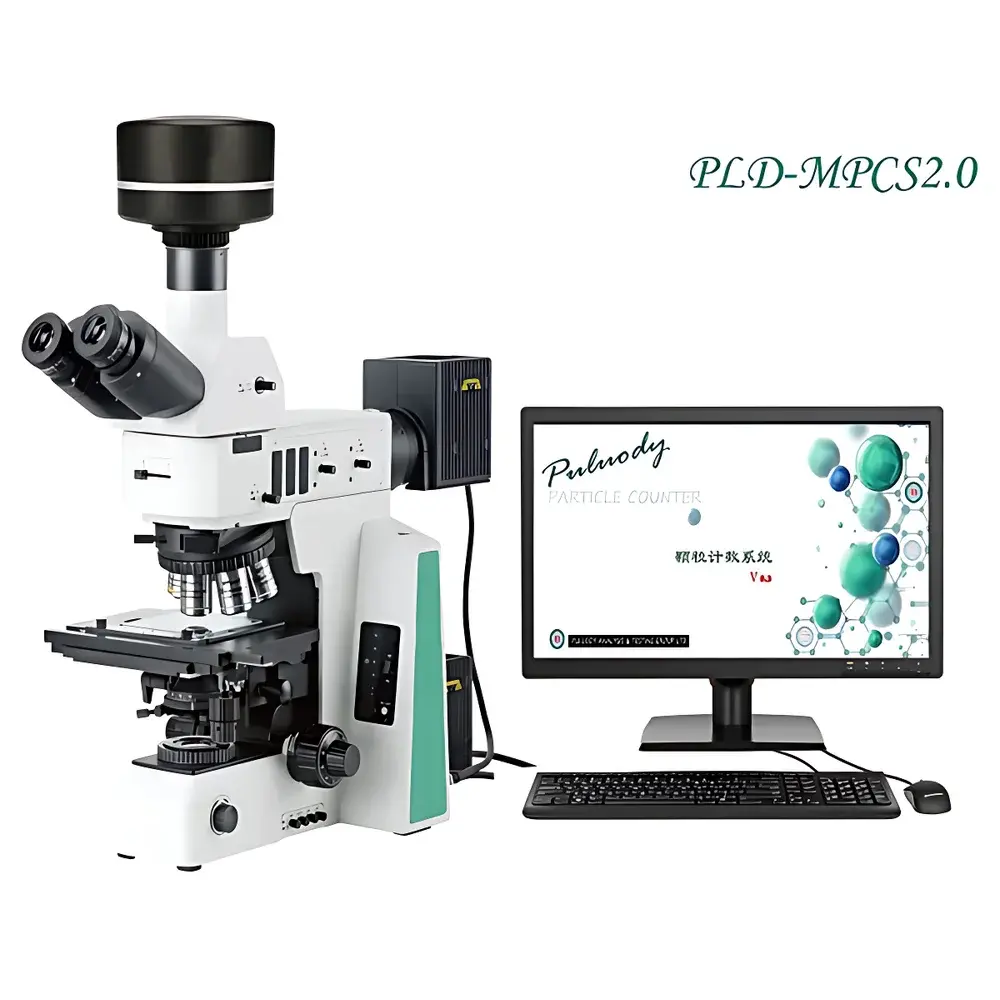
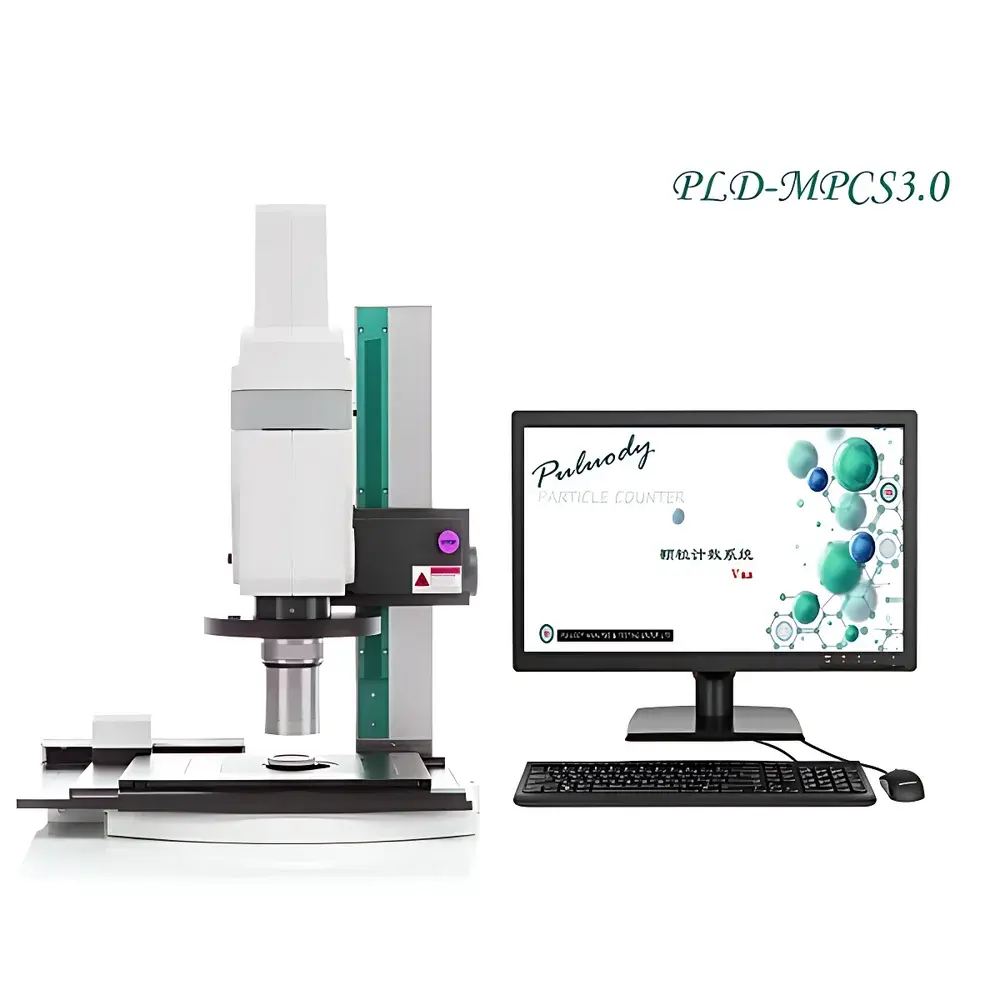
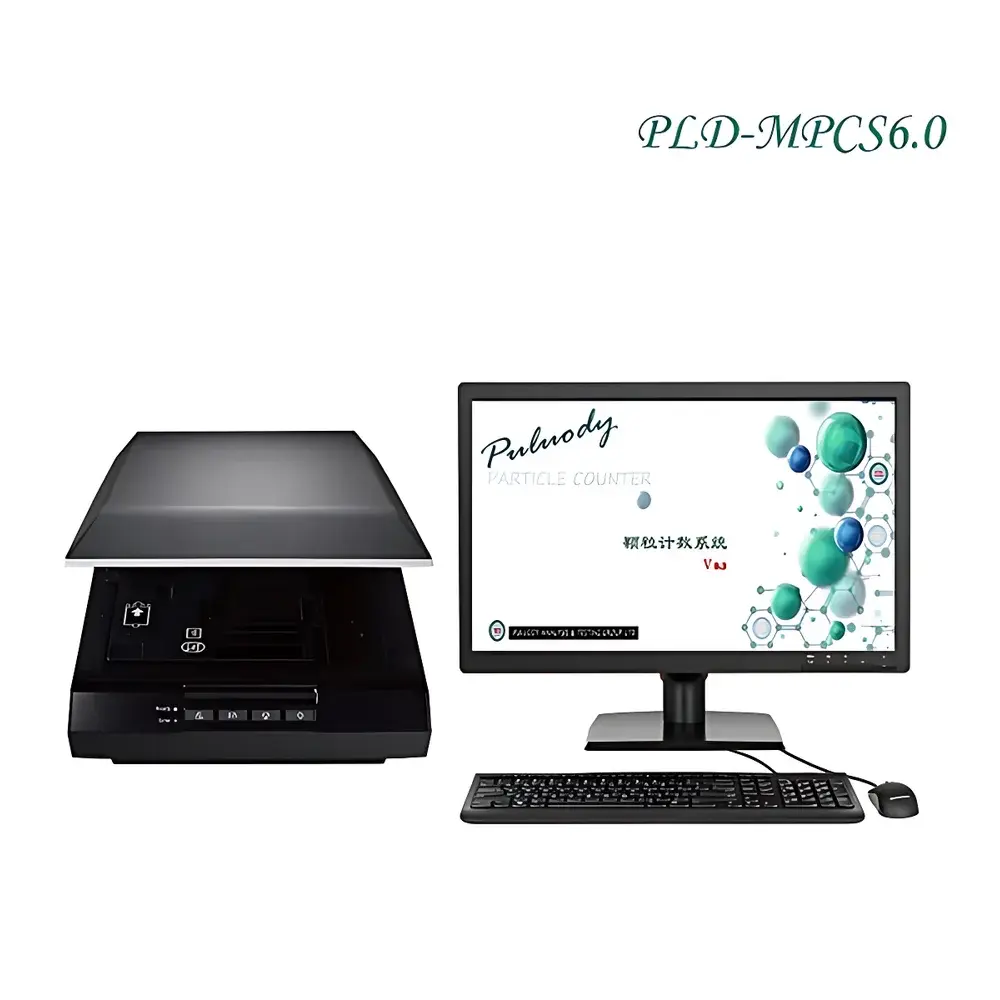
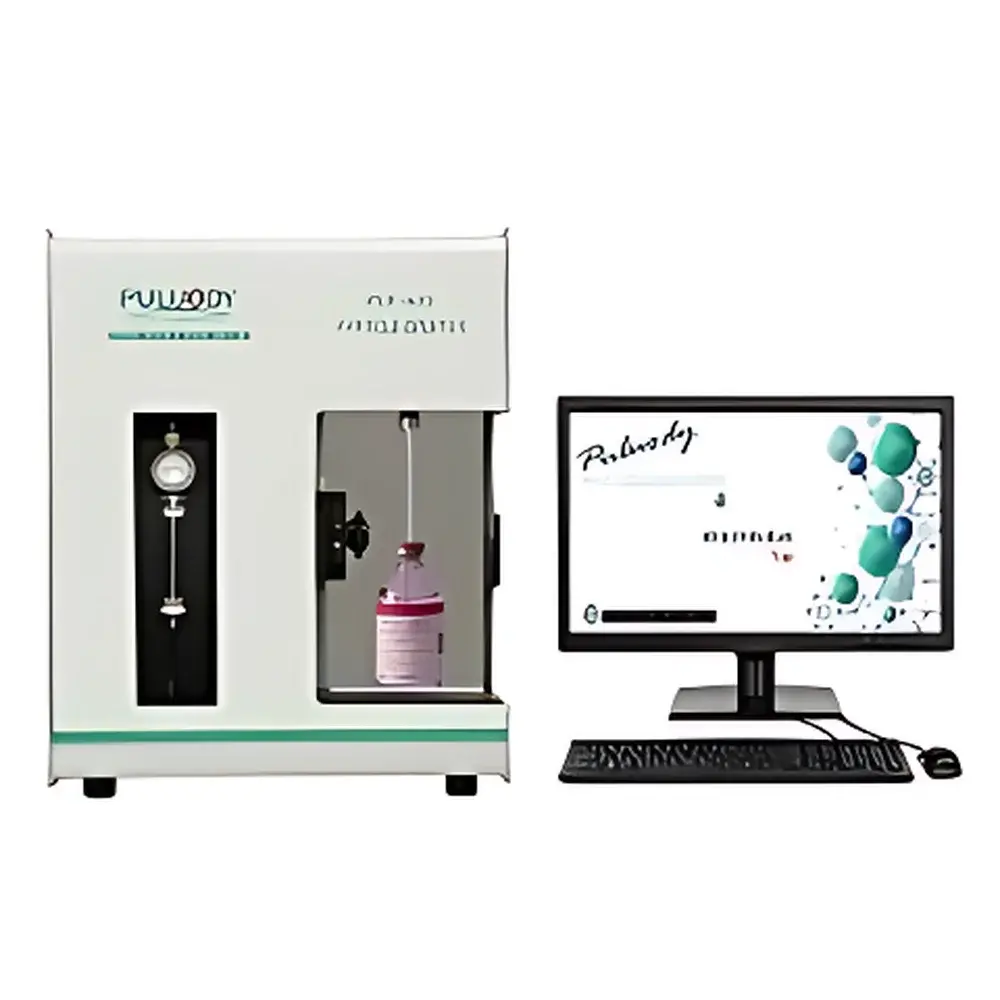
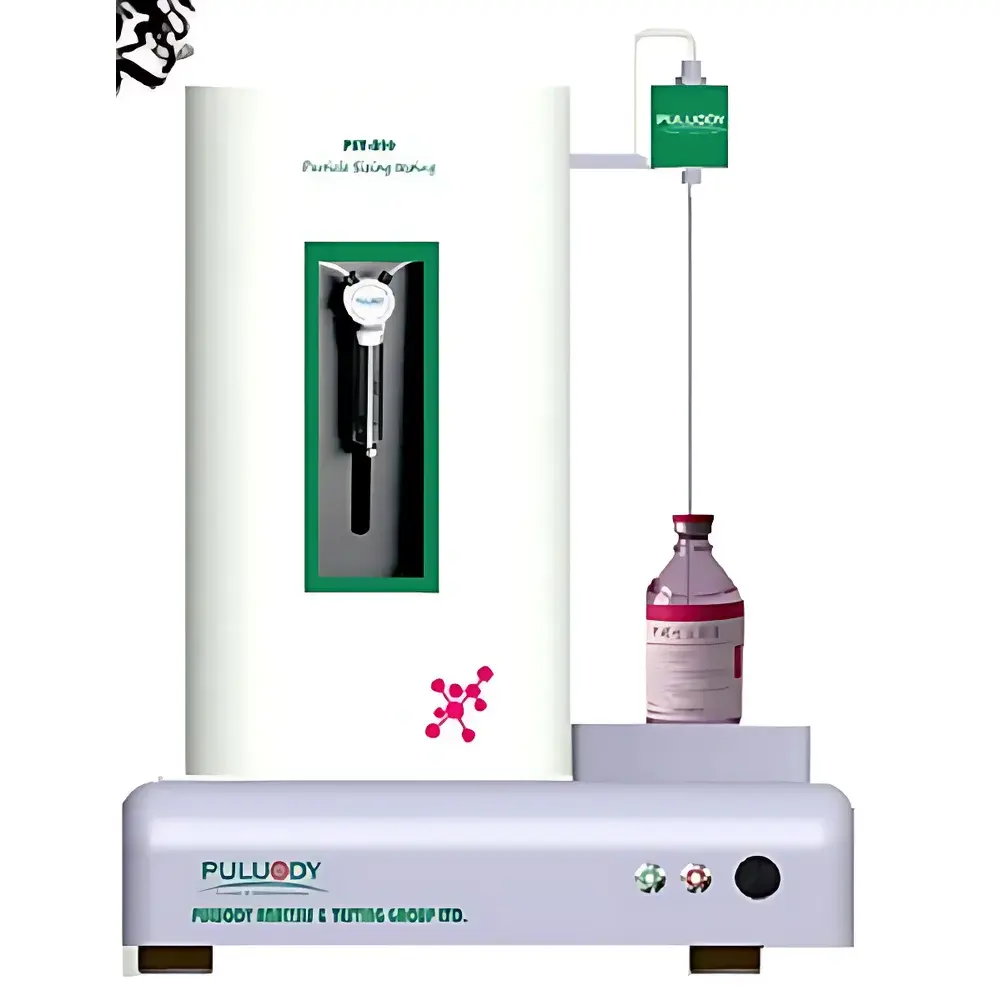
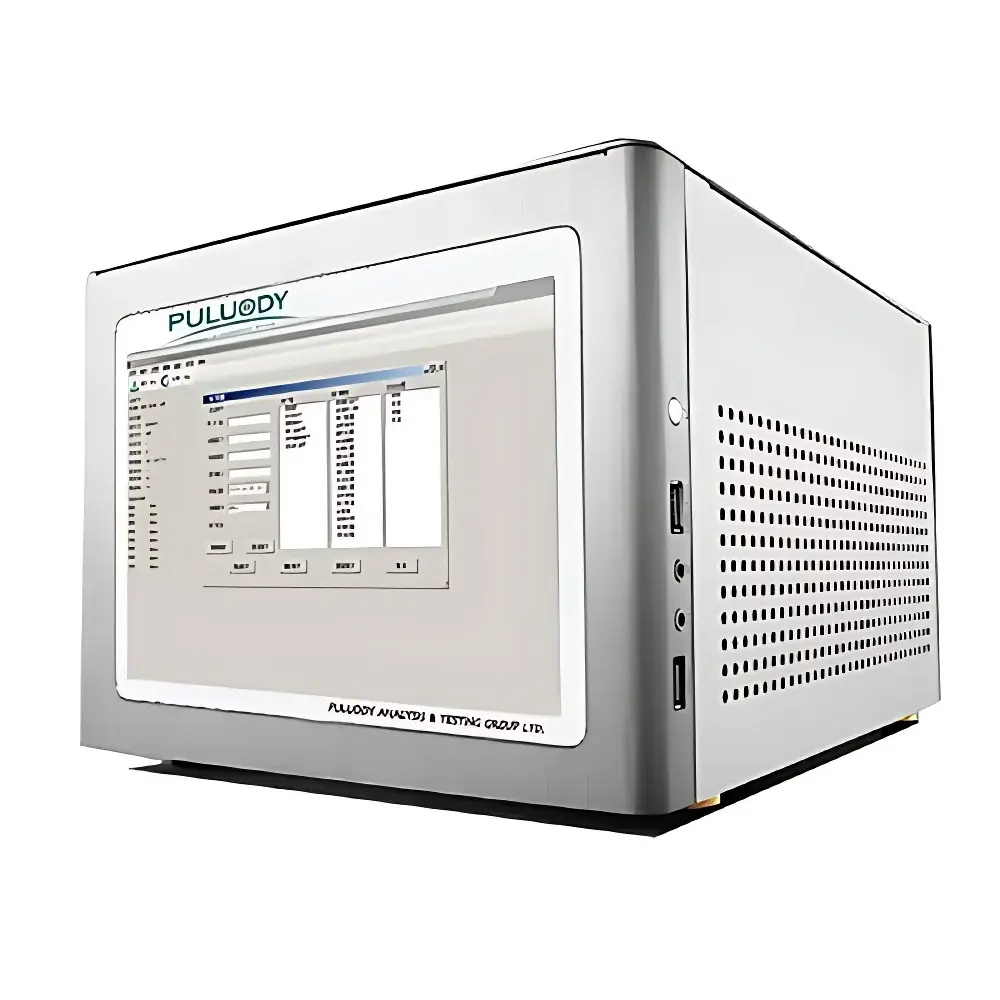
PULUODY PLD-MPCS2.0 Microscopic Particle Counting System for Insoluble Particulate Analysis in Pharmaceuticals
| Brand | PULUODY |
|---|---|
| Model | PLD-MPCS2.0 |
| Origin | Shaanxi, China |
| Microscope Magnification | 40×–1000× |
| Measurement Range | 1–500 µm |
| Resolution | 0.1 µm |
| Repeatability Error | <5% |
| CCD Camera | 3 MP |
| Particle Segmentation Speed | <1 s |
| Segmentation Success Rate | >93% |
| Accuracy | ±3% (typical) |
| Coincidence Limit | 10,000 particles/mL (5% coincidence error) |
| Resolution Compliance | >95% (ChP 2020), <10% (USP <788>, ISO 21501) |
| Interface | RS232 or USB |
| Software Platform | Windows 2000/XP |
Overview
The PULUODY PLD-MPCS2.0 Microscopic Particle Counting System is a regulatory-compliant, image-based instrumentation platform engineered for quantitative insoluble particulate analysis in parenteral pharmaceuticals and high-purity liquids. It implements the microscopic particle counting method as defined in Chinese Pharmacopoeia (ChP) General Chapter 0903 — Method 2, and aligns with internationally harmonized standards including USP , USP , EP 8.0, JP 16, and ISO 21501-1. Unlike light obscuration (LO) or laser diffraction techniques, this system relies on high-resolution optical microscopy coupled with digital image acquisition and morphological segmentation algorithms to deliver traceable, visually verifiable particle data—including size distribution, count per unit volume, aspect ratio, circularity, and spatial distribution across membrane filters. Its core architecture integrates a precision biological/industrial microscope, a calibrated 3-megapixel monochrome CCD camera, motorized XY stage with automated scanning, and a validated software suite designed for GLP/GMP-aligned workflows.
Key Features
- Regulatory-grade optical path: Standardized 40×–1000× magnification range with 0.1 µm scale calibration traceable to NIM-accredited reference standards.
- Automated membrane scanning: Motorized stage enables seamless tiling and stitching of filter fields-of-view; eliminates manual stage positioning errors and ensures full-filter coverage.
- Validated image segmentation engine: Achieves >93% successful particle isolation under ChP-specified illumination and contrast conditions; supports binary thresholding, watershed separation, and edge-preserving noise reduction.
- Multi-parameter morphometric analysis: Reports not only equivalent circular diameter (ECD) but also Feret length, maximum caliper, aspect ratio, convexity, and circularity—enabling root-cause assessment of particle origin (e.g., fiber shedding vs. crystalline precipitate).
- Operator access control & audit trail: Role-based user management (administrator, analyst, reviewer); full electronic record of parameter settings, image acquisition timestamps, manual interventions (e.g., focus adjustment, brightness tuning), and final report generation.
- Standard-compliant reporting: Preconfigured templates for ChP 2020, USP , ISO 21510, NAS 1638, and ISO 4406; automatic grade assignment per specified limits (e.g., ≤25 particles ≥25 µm per mL for large-volume parenterals).
Sample Compatibility & Compliance
The PLD-MPCS2.0 is validated for use with membrane-filtered samples from diverse liquid matrices, including aqueous injectables (e.g., saline, dextrose), lyophilized reconstitutes, ophthalmic solutions, vaccine suspensions, purified water (PW), water for injection (WFI), ultrapure water (UPW), CMP slurries, hydraulic fluids, and semiconductor process chemicals. Sample preparation follows ISO 8573-4, USP Section 4, and ChP 0903 protocols—typically involving vacuum filtration through 5.0 µm or 1.0 µm mixed-cellulose-ester (MCE) membranes, followed by controlled drying. The system complies with data integrity requirements of FDA 21 CFR Part 11 (when deployed with electronic signature-enabled software configuration), EU Annex 11, and WHO TRS 992 Annex 6. Calibration and performance verification are supported by certified reference microspheres (NIST-traceable, 5–100 µm) and documented against internal SOPs aligned with ISO/IEC 17025.
Software & Data Management
The proprietary MPCS Analysis Suite operates on Windows 2000/XP platforms and features a modular architecture supporting both standalone operation and networked deployment. Core modules include: (i) Acquisition Control (stage motion, exposure time, gain, white balance), (ii) Image Processing Engine (background subtraction, adaptive contrast enhancement, multi-threshold segmentation), (iii) Particle Database Manager (SQL-based storage of raw images, metadata, and measurement logs), and (iv) Reporting Generator (PDF/Excel export with embedded thumbnails, statistical summaries, and pass/fail determinations). All analytical actions generate immutable audit trails compliant with ALCOA+ principles. Raw image files (.TIF) and processed datasets (.CSV) are stored with hash-verified integrity; backup policies support off-site archival per GxP retention schedules.
Applications
This system serves critical quality control and development functions across regulated industries: In pharmaceutical manufacturing, it verifies compliance of sterile injectables, IV bags, and drug-device combination products (e.g., prefilled syringes, infusion sets) per USP and ChP 0903. In biologics and vaccine production, it characterizes subvisible particle populations linked to aggregation or leachables. In semiconductor fabrication, it quantifies slurry residue and wafer rinse contamination per SEMI F39. In aerospace hydraulics and power generation, it assesses fluid cleanliness per ISO 4406 and NAS 1638. Additional applications include evaluation of filter efficiency (e.g., terminal sterilizing filters), investigation of packaging extractables, and stability-indicating monitoring of suspension formulations during accelerated studies.
FAQ
Does the PLD-MPCS2.0 meet FDA requirements for electronic records and signatures?
Yes—when configured with password-protected user roles, timestamped audit logs, and electronic signature capability, the system satisfies 21 CFR Part 11 Subpart B requirements for closed systems.
Can the system analyze particles below 1 µm?
No—the validated lower detection limit is 1 µm under standard ChP/USP illumination and contrast conditions; submicron analysis requires complementary techniques such as nanoparticle tracking analysis (NTA) or tunable resistive pulse sensing (TRPS).
Is software validation documentation available?
Yes—IQ/OQ/PQ protocols, risk assessments, and traceability matrices are provided as part of the “OIL17 Service Star” support package.
How is microscope calibration verified?
Calibration is performed using NIST-traceable stage micrometers and certified polystyrene microsphere standards; certificate of calibration is issued by Northwest Metrology Testing Center (civilian division).
What sample volume is required for statistically valid results?
Per USP , minimum filtered volume is 10 mL for small-volume injections and 100 mL for large-volume parenterals; actual volume depends on expected particle concentration and filter capacity.





