
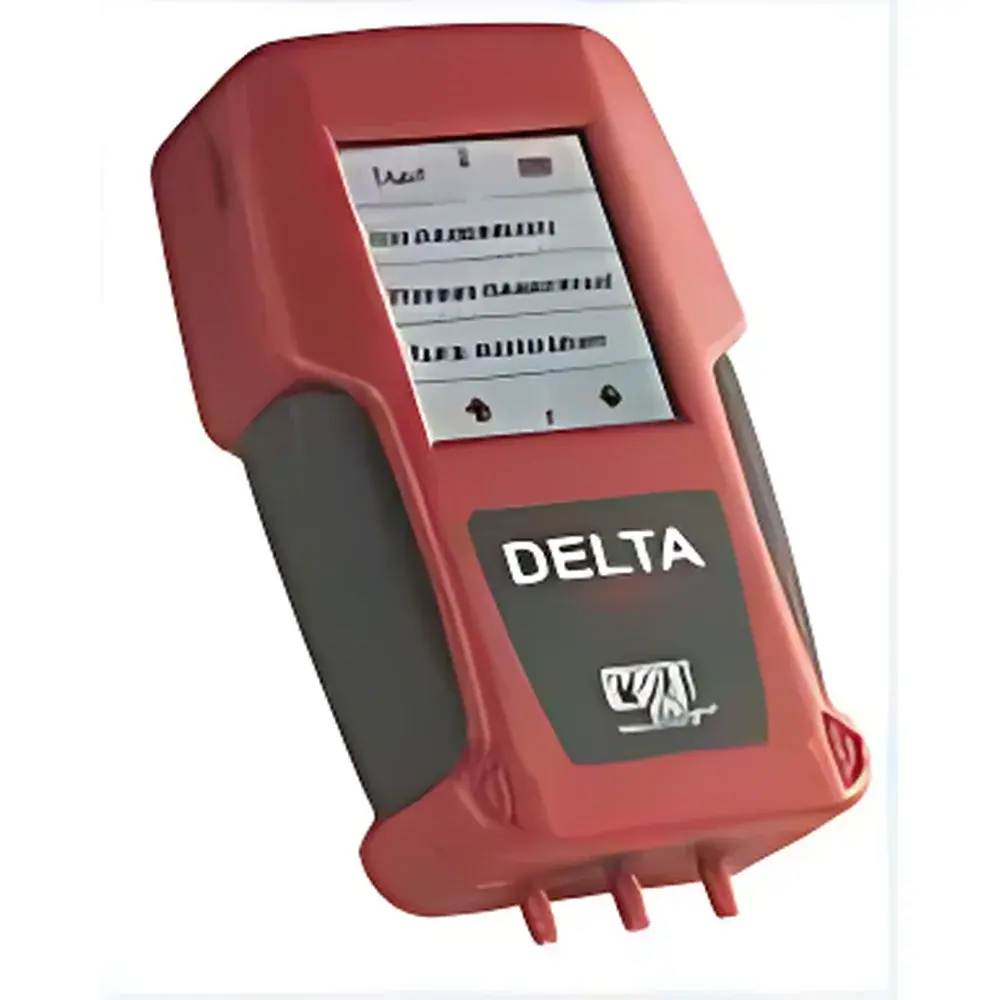
MRU DELTA65S Handheld Flue Gas Analyzer
| Brand | MRU (Germany) |
|---|---|
| Origin | Germany |
| Model | DELTA65S |
| Instrument Type | Portable Flue Gas Analyzer |
| Measurement Accuracy | ≤±5% FS |
| Repeatability | ≤2% FS |
| Response Time | ≤90 s |
| Stability | ≤5% FS/8 h |
| Measured Parameters | O₂, CO, NO, CO₂, Flue Gas Temperature |
| O₂ Range | 0–21.00% vol |
| CO Range | 0–4000 ppm |
| CO (H₂-compensated) | 0–10000 ppm |
| NO Range | 0–5000 ppm |
| Flue Gas Temperature Range | −40 to +1100 °C |
| Dimensions | 82 × 169 × 44 mm |
| Weight | ~390 g |
Overview
The MRU DELTA65S Handheld Flue Gas Analyzer is an engineered field instrument designed for precise, real-time combustion emission assessment in industrial boilers, heating systems, cogeneration units, and regulatory compliance audits. Based on electrochemical sensor technology with integrated thermocouple-based temperature measurement, the DELTA65S delivers trace-level detection of key combustion gases—including oxygen (O₂), carbon monoxide (CO), nitrogen oxide (NO), carbon dioxide (CO₂), and flue gas temperature—within a compact, ergonomically optimized chassis. Its modular sensor architecture supports factory-calibrated, plug-and-play replacement without recalibration downtime, ensuring long-term metrological integrity across extended field deployments. The analyzer complies with fundamental requirements of EN 50379-1 and EN 50379-2 for portable flue gas analyzers used in combustion efficiency evaluation and emissions verification.
Key Features
- High-resolution TFT touchscreen interface with intuitive, menu-driven navigation—designed for one-handed operation in confined or elevated access points.
- Dual-mode CO measurement: standard 0–4000 ppm range with optional H₂-compensated mode (0–10000 ppm) to mitigate cross-sensitivity in hydrogen-rich fuel environments.
- Integrated PTFE star filter and condensate trap assembly, minimizing particulate ingress and moisture interference during prolonged sampling.
- Onboard data logging capacity for up to 1000 measurement records, timestamped and tagged with ambient conditions, user ID, and calibration status.
- Magnetic backplate and ruggedized housing (IP54-rated) enable secure mounting on steel ducts, boiler casings, or service ladders during continuous monitoring.
- Extended battery life: rechargeable Li-ion pack supports >10 hours of continuous operation; USB-C charging compatible with universal 5 V power sources (90–240 VAC / 50–60 Hz adapter included).
- Multi-interface connectivity: Mini-USB for PC synchronization and firmware updates; SD card slot (microSDHC up to 32 GB) for bulk export; infrared port compliant with MRU’s certified thermal printers (e.g., MRU IRP-200).
Sample Compatibility & Compliance
The DELTA65S is validated for use with dry and moderately wet flue gases from natural gas, LPG, light oil, biomass, and coal-fired combustion systems. Its sampling train—comprising a 250 mm × Ø8 mm fixed stainless-steel probe, 1.5 m silicone tubing, and heated/filtered conditioning module—meets EN 15267-3 criteria for representative gas extraction under turbulent flow conditions. All electrochemical sensors are CE-marked and traceable to NIST-traceable reference standards. The device supports mandatory reporting parameters required by EU Directive 2010/75/EU (IED), US EPA Method 3A (O₂/CO), and ISO 12039 for CO and NO quantification in stationary source emissions. Optional configuration enables GLP-compliant audit trails when paired with MRU’s PC software suite.
Software & Data Management
Data acquisition and post-processing are managed via MRU’s proprietary DeltaSoft v5.x application (Windows 10/11 compatible), which provides automated calculation of combustion efficiency, excess air ratio (λ), CO₂ concentration, flue gas heat loss (%), and CO/CO₂ ratio—all aligned with DIN EN 12952-15 and VDI 2066 methodologies. Export formats include CSV, PDF reports (with configurable header fields), and XML for integration into enterprise LIMS or CMMS platforms. Firmware updates preserve calibration history and support 21 CFR Part 11-compliant electronic signatures when deployed in regulated QA/QC environments.
Applications
- Routine combustion tuning and optimization of industrial burners and packaged boilers.
- Pre-commissioning and periodic performance verification per EN 12953-10 and ASME PTC 4.
- Emissions spot-checking for environmental agencies and third-party auditors conducting stack testing.
- Technical training and vocational education in energy engineering and HVAC-R maintenance programs.
- Field diagnostics of incomplete combustion, air leakage, and heat exchanger fouling based on multi-parameter trend analysis.
FAQ
Can the DELTA65S measure CO₂ directly, or is it calculated?
The DELTA65S includes a dedicated electrochemical CO₂ sensor (0–20% vol range); CO₂ values are measured directly—not inferred—ensuring accuracy independent of stoichiometric assumptions.
Is H₂ compensation for CO measurement user-configurable?
Yes—H₂ compensation can be enabled or disabled via the instrument’s setup menu, allowing adaptation to fuel types such as biogas or hydrogen-blended natural gas.
What is the recommended calibration interval under typical field use?
MRU recommends functional verification with certified span gas every 30 days and full electrochemical sensor calibration annually—or after exposure to sensor-poisoning compounds (e.g., Cl₂, SO₂ >100 ppm, or silicones).
Does the device support differential pressure measurement for draft assessment?
Yes—the DELTA65S integrates a piezoresistive differential pressure sensor (±100 hPa range) for flue draft and burner pressure drop evaluation, referenced to ambient barometric pressure.
Are SD card logs compatible with common spreadsheet software?
All exported .csv files adhere to RFC 4180 formatting standards and open natively in Microsoft Excel, LibreOffice Calc, and Python pandas without parsing errors.







