
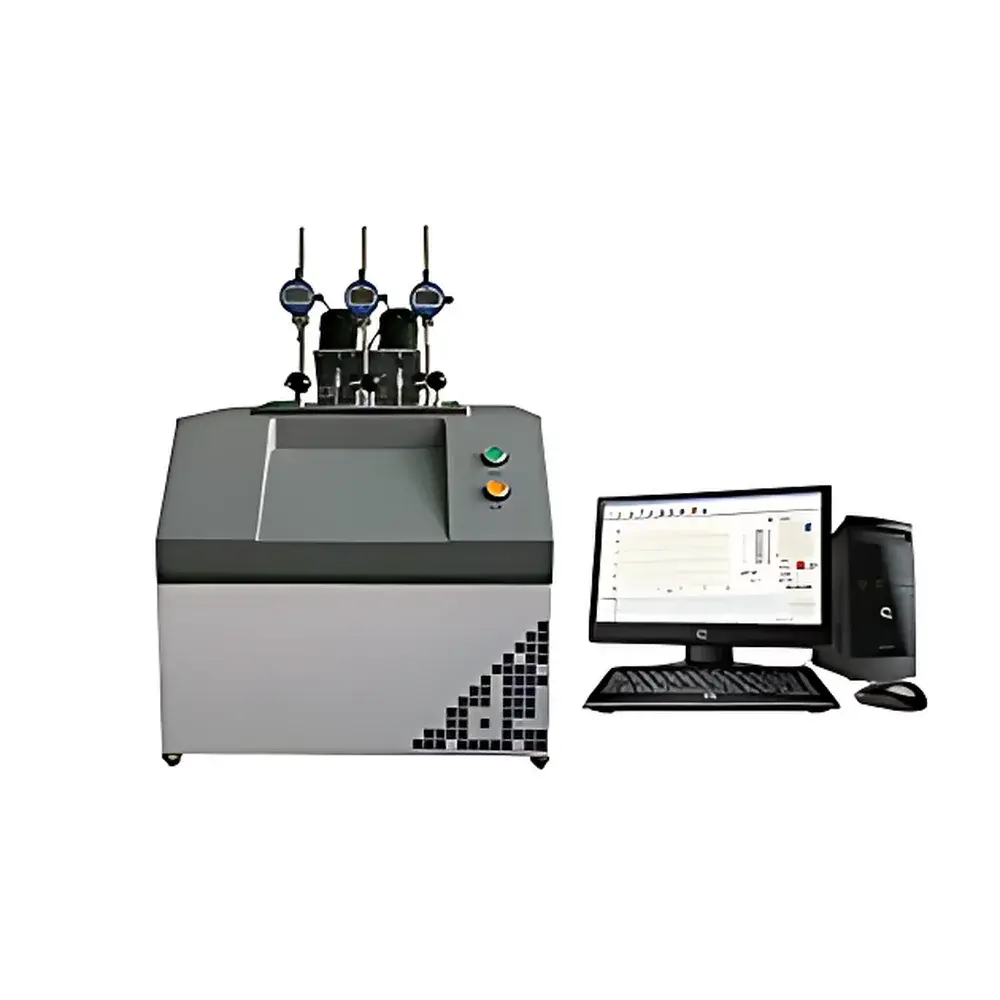
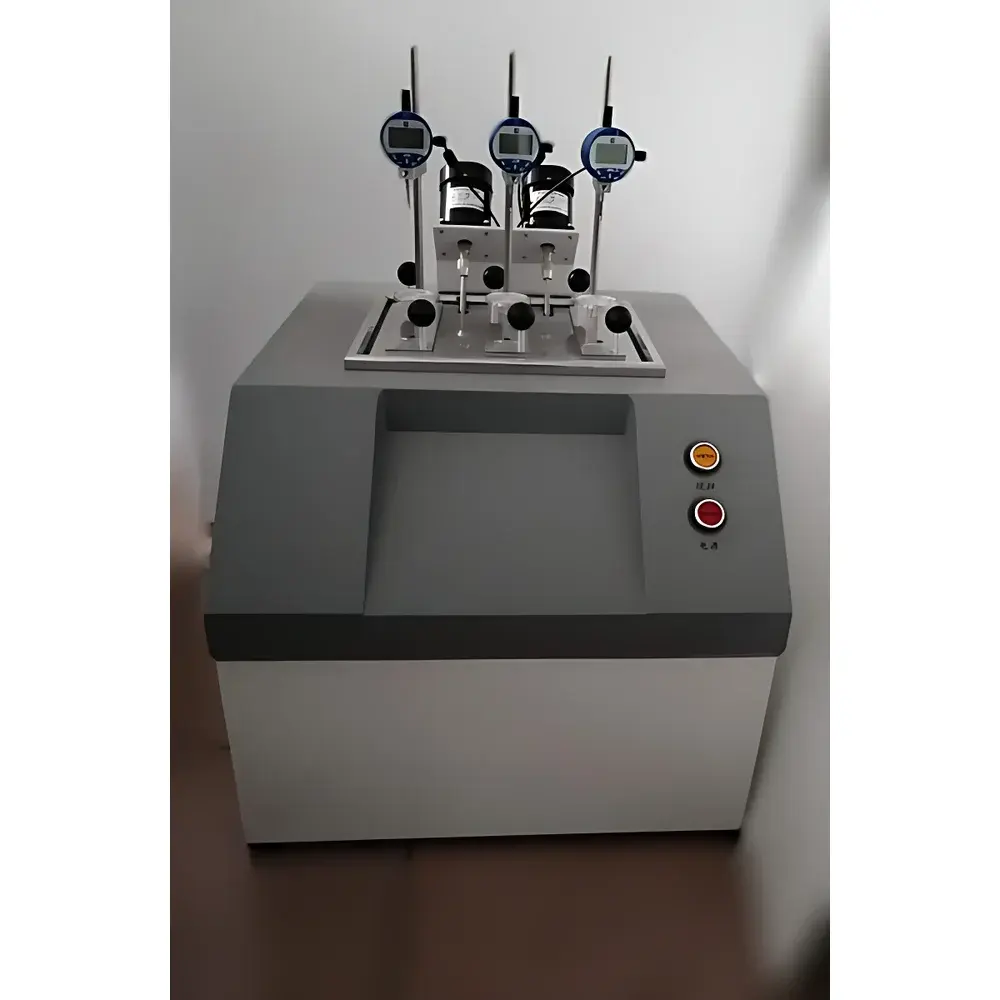
TianYuan TY-5006HA Heat Deflection Temperature (HDT) and Vicat Softening Temperature (VST) Tester
| Brand | TianYuan |
|---|---|
| Origin | Jiangsu, China |
| Manufacturer Type | Direct Manufacturer |
| Model | TY-5006HA |
| Temperature Control Range | RT–300 °C |
| Heating Rate Options | (120±10) °C/h or (50±5) °C/h |
| Temperature Resolution | 0.1 °C |
| Deformation Measurement Range | 0–1.5 mm |
| Deformation Accuracy | ±0.001 mm |
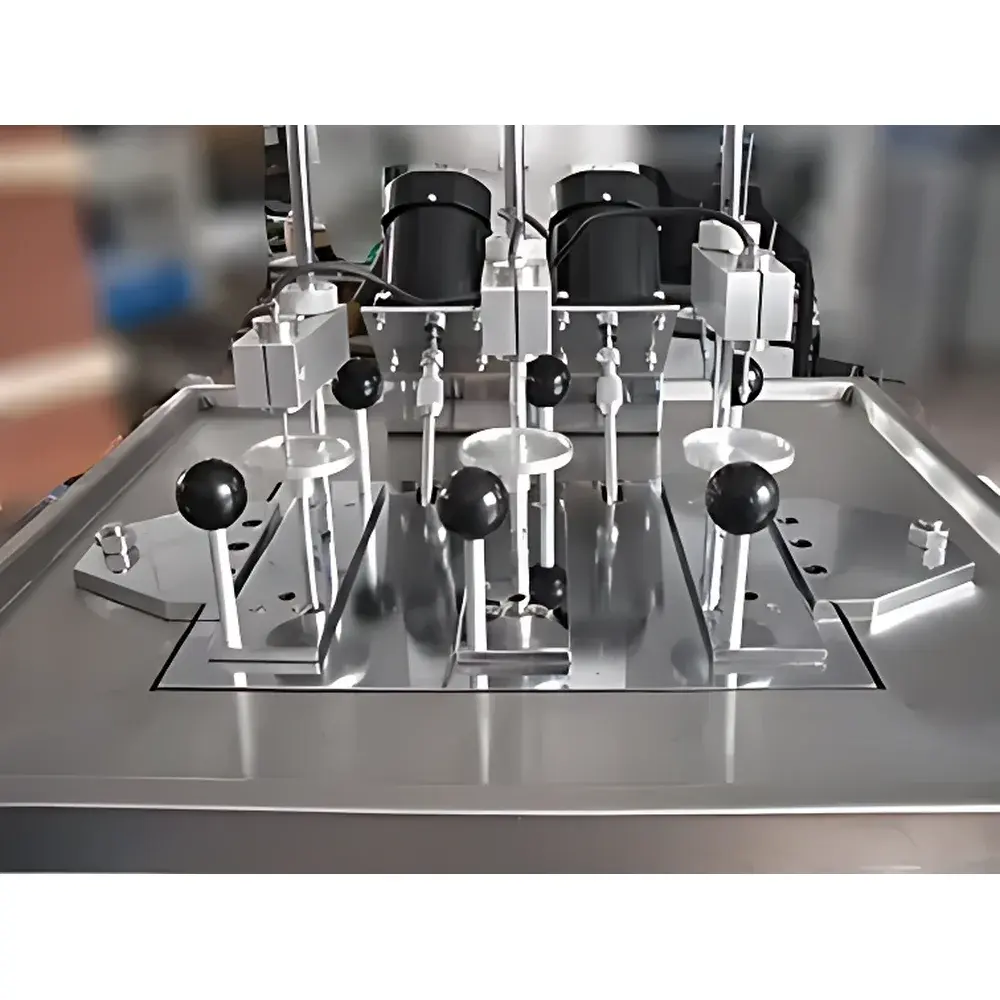
| Sample Supports | 3 independent test stations |
| Support Span Options | 64 mm or 100 mm |
| Load Rod Mass | 68 g |
| Heating Power | 2.4 kW |
| Dimensions | 540 × 520 × 970 mm |
| Calibration Medium | Methyl silicone oil (200 cSt) or transformer oil |
Overview
The TianYuan TY-5006HA Heat Deflection Temperature (HDT) and Vicat Softening Temperature (VST) Tester is a precision-engineered instrument designed for standardized thermal performance evaluation of thermoplastics, thermosets, elastomers, and fiber-reinforced composites. It operates in strict accordance with ISO 306:2013, ISO 75-1/2/3:2003, ASTM D1525 and D648, GB/T 1633, GB/T 1634.1–3, and GB/T 8802—enabling laboratories to determine two critical thermal transition parameters under controlled load and heating conditions: (1) the Vicat Softening Temperature (VST), defined as the temperature at which a flat-ended needle penetrates 1 mm into a specimen under specified load and heating rate; and (2) the Heat Deflection Temperature (HDT), defined as the temperature at which a standardized test bar deflects 0.25 mm under a specified flexural stress. The system employs a dual-mode thermal ramp control architecture, supporting both high-rate (120 °C/h) and low-rate (50 °C/h) heating profiles to accommodate material-specific testing protocols across regulatory and R&D environments.
Key Features
- Triple-station independent test configuration enables concurrent evaluation of up to three specimens under identical thermal and mechanical conditions—improving throughput without compromising inter-test reproducibility.
- Dual-range programmable heating control: selectable rates of (120±10) °C/h (equivalent to 12±1 °C/6 min) or (50±5) °C/h (5±0.5 °C/6 min), each traceable to NIST-traceable reference standards.
- High-stability temperature regulation via PID algorithm with Σ-Δ 16-bit error-free ADC acquisition, delivering real-time temperature resolution of 0.1 °C and long-term thermal drift < ±0.2 °C over 24 h at 200 °C.
- Three-axis calibrated digital dial indicators (0–1.5 mm range, ±0.001 mm accuracy) mounted on low-expansion fixtures (< 0.005 mm/100 °C), minimizing parasitic thermal artifact in deformation measurement.
- ARM Cortex-M3-based embedded controller (120 MHz, 32-bit) with CRC-secured master-slave communication protocol ensures deterministic I/O response, audit-ready data logging, and immunity to electromagnetic interference in industrial lab settings.
- Integrated safety logic automatically terminates heating upon test completion or thermal overshoot detection, and initiates appropriate cooling sequence—natural convection above 150 °C; water-assisted or natural cooling below 150 °C.
Sample Compatibility & Compliance
The TY-5006HA supports standardized specimen geometries per ISO 75-2 and ASTM D648, including rectangular bars (e.g., 80 × 10 × 4 mm) and cylindrical pipes/fittings per GB/T 8802. Compatible materials include polypropylene (PP), polycarbonate (PC), polyamide (PA6/66), polyethylene terephthalate (PET), epoxy laminates, phenolic resins, vulcanized rubber, and long-fiber-reinforced thermoset composites. All mechanical loading components—including A–I class weights (2 g to 1000 g), W-class load rods (60 g), and interchangeable needles (1 mm² and 3.18 mm diameter)—conform to dimensional tolerances specified in ISO 306 Annex B and ASTM D1525 Section 7. The instrument’s firmware and calibration documentation support GLP/GMP compliance, with full traceability to national metrology institutes. Data export formats (CSV, PDF report, PNG curve) are compatible with LIMS integration and FDA 21 CFR Part 11–aligned electronic record workflows when paired with validated laboratory software.
Software & Data Management
Bundled Windows-based control software provides real-time visualization of temperature vs. time and deformation vs. time curves, synchronized acquisition from all three test stations. Each test session generates a timestamped dataset containing raw sensor values, calculated VST/HDT endpoints, operator ID, environmental ambient logs, and instrument calibration status. Audit trail functionality records all parameter changes, manual overrides, and calibration events with user attribution and ISO 8601 timestamps. Export options include CSV for statistical analysis in JMP or Minitab, PDF reports with embedded digital signatures, and vector-based SVG plots suitable for inclusion in regulatory submissions. Firmware updates are delivered via signed binary packages with SHA-256 verification to ensure integrity and prevent unauthorized modification.
Applications
- Quality assurance of incoming polymer resins and compounded pellets in automotive and electronics supply chains.
- Material screening during formulation development of flame-retardant, high-heat, or electrically insulating plastics.
- Validation of thermal stability in structural composites used in aerospace secondary structures and wind turbine blades.
- Regulatory compliance testing for medical device housings (ISO 10993-12) and food-contact packaging (FDA 21 CFR 177).
- Educational use in polymer engineering curricula for hands-on instruction in thermomechanical behavior and standard test methodology.
- Failure analysis labs investigating premature softening or warpage in molded parts subjected to elevated service temperatures.
FAQ
What standards does the TY-5006HA fully support for VST and HDT testing?
It complies with ISO 306:2013, ISO 75-1/2/3:2003, ASTM D1525–22 and D648–21, GB/T 1633–2000, GB/T 1634.1–2004, and GB/T 8802–2001.
Can the instrument perform both VST and HDT tests without hardware reconfiguration?
Yes—the modular fixture design allows rapid switching between Vicat needle and HDT test bar configurations using standardized clamps and alignment jigs; no recalibration is required between modes.
Is the temperature control system validated for ISO/IEC 17025 accredited laboratories?
The system includes factory-issued calibration certificates for temperature sensors and deformation transducers, with uncertainty budgets provided per ISO/IEC 17025 Clause 6.4; users may perform in-house verification using certified reference materials (e.g., indium, zinc, tin ITS-90 fixed points).
What cooling methods are supported, and how is cooling mode selected?
Above 150 °C: forced-air or natural convection only; below 150 °C: user-selectable between water-cooled heat exchanger (via external chiller interface) or passive air cooling—selected per test method requirements in ASTM D648 Annex A3.
Does the software support multi-user role-based access control for regulated environments?
Yes—administrator, technician, and reviewer roles can be assigned with differential permissions for test execution, result approval, and audit log review; password policies enforce minimum length and complexity per NIST SP 800-63B.






