
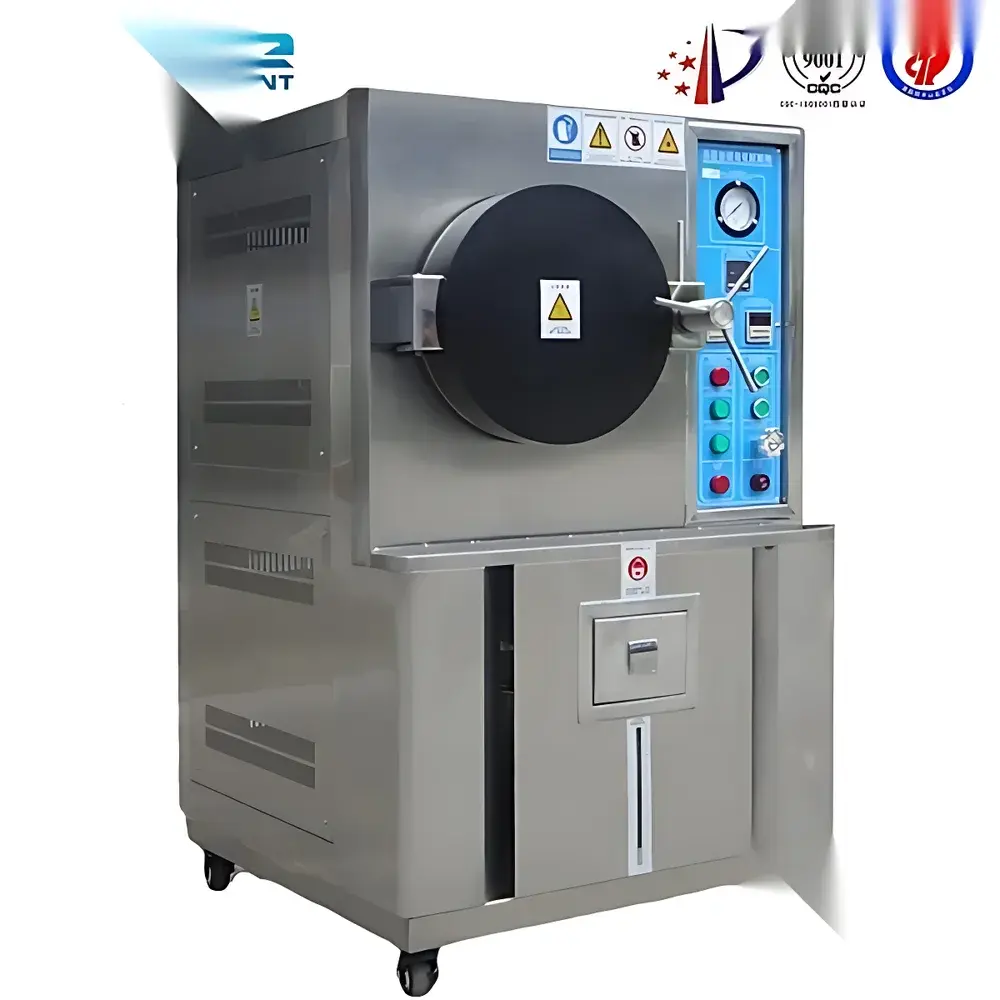
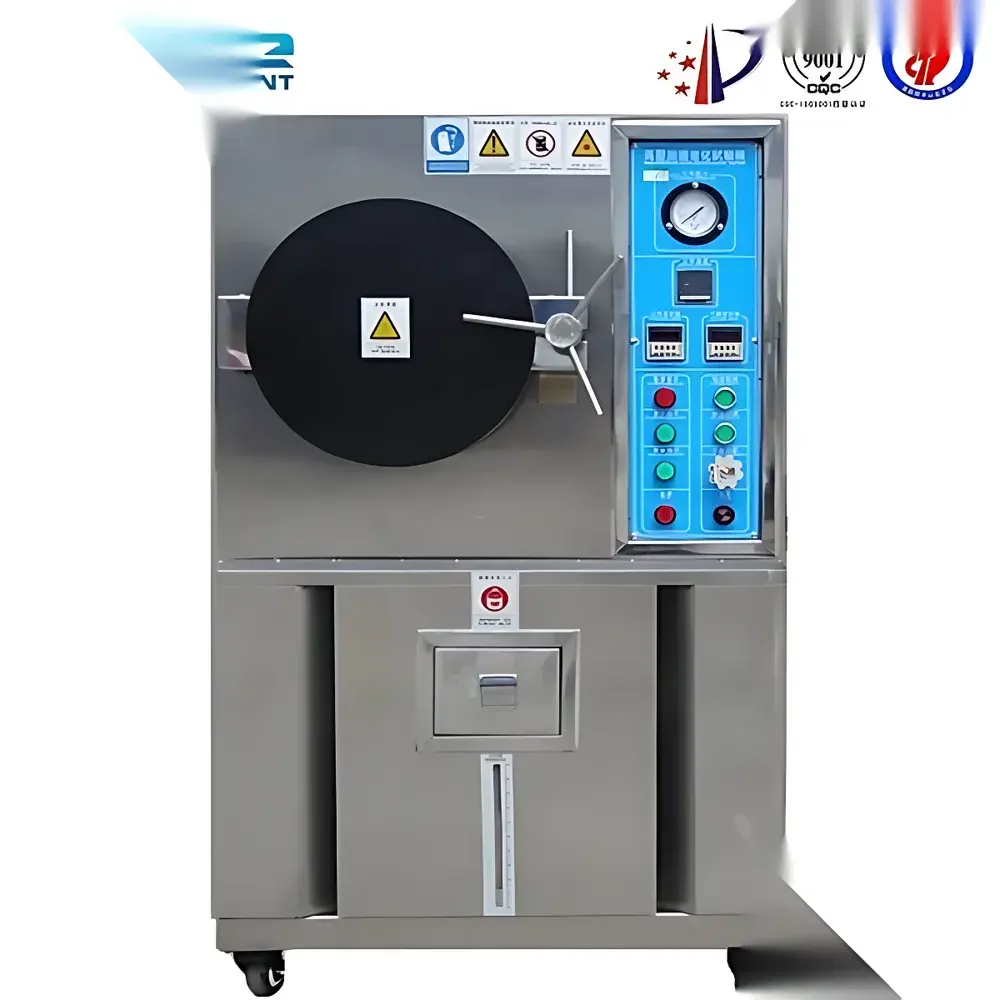
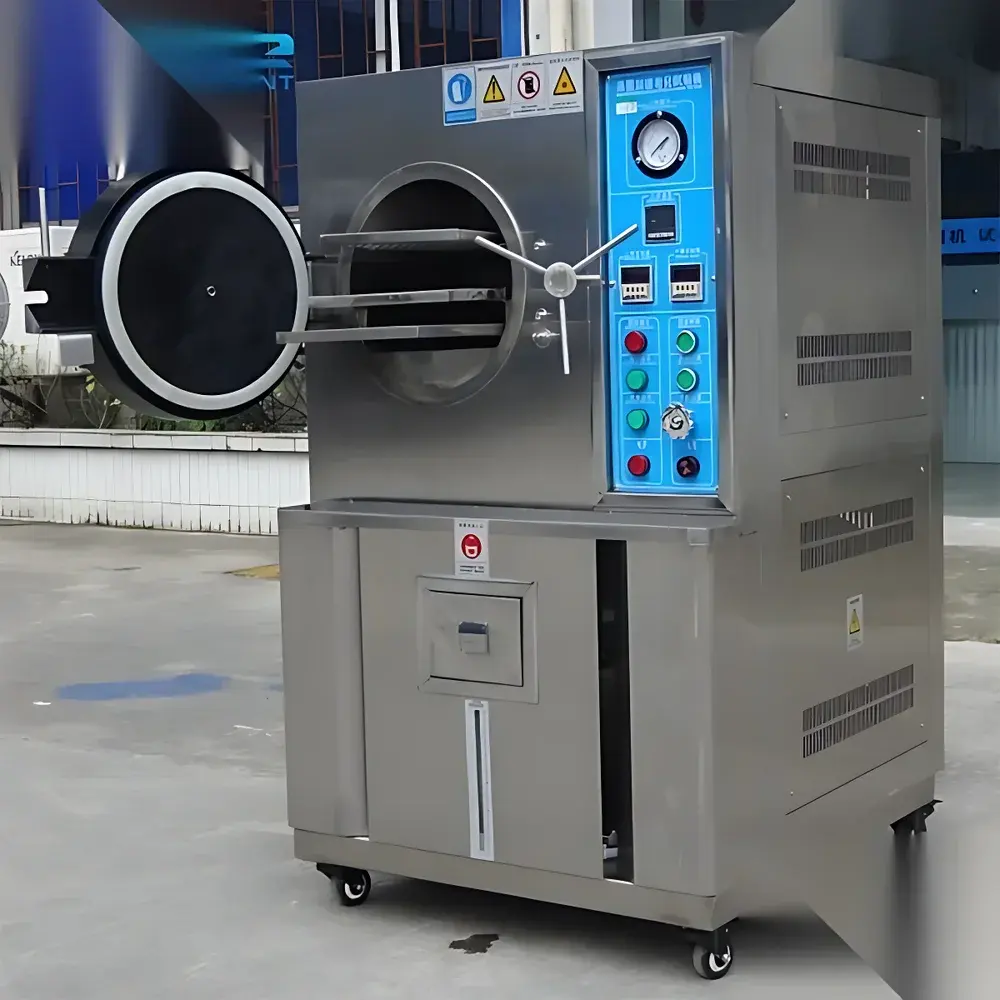
Small-Sized PCT High-Pressure Aging Chamber
| Brand | OEM |
|---|---|
| Origin | Imported |
| Manufacturer Type | Authorized Distributor |
| Price | USD 4,100 (FOB) |
Overview
The Small-Sized PCT High-Pressure Aging Chamber is an engineered environmental test system designed for accelerated reliability evaluation of electronic components, packaging materials, and hermetic seals under saturated steam, elevated temperature, and controlled pressure conditions. Operating on the principle of Pressure Cooker Test (PCT) per JEDEC JESD22-A102 and IEC 60068-2-66, it subjects specimens to simultaneous high humidity (100% RH), elevated temperature (up to 132 °C), and pressurized saturated steam environments—enabling rapid detection of moisture ingress, delamination, corrosion, and popcorning failure mechanisms in semiconductor devices, PCBAs, and molded plastic enclosures.
Key Features
- Two standard internal chamber configurations: Ø250 × 450 mm (OK-PTC-25) and Ø350 × 500 mm (OK-PTC-35), optimized for benchtop integration and sample throughput scalability.
- Precise thermal control with ±0.5 °C setpoint accuracy and ±1.5 °C uniformity across the working volume, achieved via PID-regulated SSR-driven heating and platinum RTD (Pt100) sensing.
- Full-range pressure regulation from ambient (0.0 kg/cm² gauge) up to 2.8 kg/cm² gauge (equivalent to ~3.8 bar absolute), with maximum safety-rated capacity of 4.0 kg/cm² gauge (5.0 bar abs).
- Integrated vacuum-assisted air purge system ensures residual oxygen removal prior to steam saturation, minimizing oxidation and enabling reproducible, contamination-controlled aging cycles.
- Circular horizontal chamber geometry minimizes condensate accumulation and eliminates direct steam jet exposure to operators during loading/unloading.
- Multi-layer safety architecture includes dual redundant pressure/temperature interlocks, automatic depressurization on fault detection, vacuum break function, and fail-safe door latching—where sealing force increases proportionally with internal pressure.
- Self-sustaining water supply system supports continuous operation for up to 100 hours per fill; optional fully automated make-up water module available upon request.
Sample Compatibility & Compliance
This chamber accommodates a wide range of non-volatile, non-explosive test specimens—including IC packages (QFP, BGA, CSP), ceramic substrates, MEMS sensors, conformally coated assemblies, and polymer-based encapsulants. It meets the mechanical and operational requirements of multiple international standards including ASTM F1876, IEC 60068-2-66, JEDEC JESD22-A102, MIL-STD-202 Method 108, ISO 16750-4, and NACE TM0177 Annex A. Its design supports GLP-compliant test execution when paired with validated procedures and audit-ready data logging.
Software & Data Management
The chamber employs a microprocessor-based LED controller with real-time display of chamber temperature, relative humidity (inferred from saturated steam equilibrium), and absolute/gauge pressure. All operational parameters—including ramp rates, dwell times, pressure hold profiles, and safety event logs—are timestamped and stored internally. Optional RS-485 or Ethernet interface enables integration with laboratory LIMS or SCADA platforms for centralized monitoring, remote alarm notification, and 21 CFR Part 11–compliant electronic record retention when used with qualified software extensions.
Applications
- Qualification testing of moisture sensitivity level (MSL) rated components per JEDEC J-STD-020.
- Reliability screening of wafer-level chip-scale packages (WLCSP) and fan-out wafer-level packages (FOWLP).
- Evaluation of adhesive bond integrity and underfill performance under thermo-hygro-mechanical stress.
- Accelerated aging of medical device housings and implantable electronics per ISO 10993-12.
- Corrosion resistance validation of automotive ECUs exposed to under-hood thermal/humidity cycling.
- Process development and qualification of vapor-phase reflow soldering atmospheres.
FAQ
What is the maximum allowable operating pressure, and how is overpressure protection implemented?
The chamber is rated for a maximum working pressure of 2.8 kg/cm² gauge (3.8 bar absolute), with a certified safety margin up to 4.0 kg/cm² gauge (5.0 bar abs). Overpressure protection is enforced through dual independent pressure transducers, hardware-based cut-off relays, and a mechanical burst disc calibrated at 4.5 kg/cm² gauge.
Does the system support programmable multi-step PCT profiles (e.g., ramp-hold-depressurize cycles)?
Yes—the controller supports user-defined sequences with up to 99 segments, including temperature ramping, pressure ramping, dwell periods, and controlled depressurization rates. Each segment can be assigned individual time, setpoint, and tolerance parameters.
Is calibration documentation provided, and does the unit comply with ISO/IEC 17025 traceability requirements?
Factory calibration certificates are supplied for temperature (RTD) and pressure (digital transducer) sensors, traceable to NIST standards. Full ISO/IEC 17025 accreditation requires on-site verification by an accredited third-party lab, which can be arranged as an add-on service.
Can the chamber be configured for inert gas purging instead of steam-based aging?
Standard configuration is optimized for saturated steam environments. Inert gas compatibility (e.g., N₂ or dry air) is possible only with modification of the humidification system and pressure control algorithm—and must be validated separately for each application.
What maintenance intervals are recommended for long-term operational reliability?
Routine inspection of door gasket integrity, pressure relief valve functionality, and water tank cleanliness is advised every 200 operating hours. Annual recalibration of temperature and pressure sensors is recommended, along with biannual verification of vacuum pump oil and filter condition.
Related Products



