
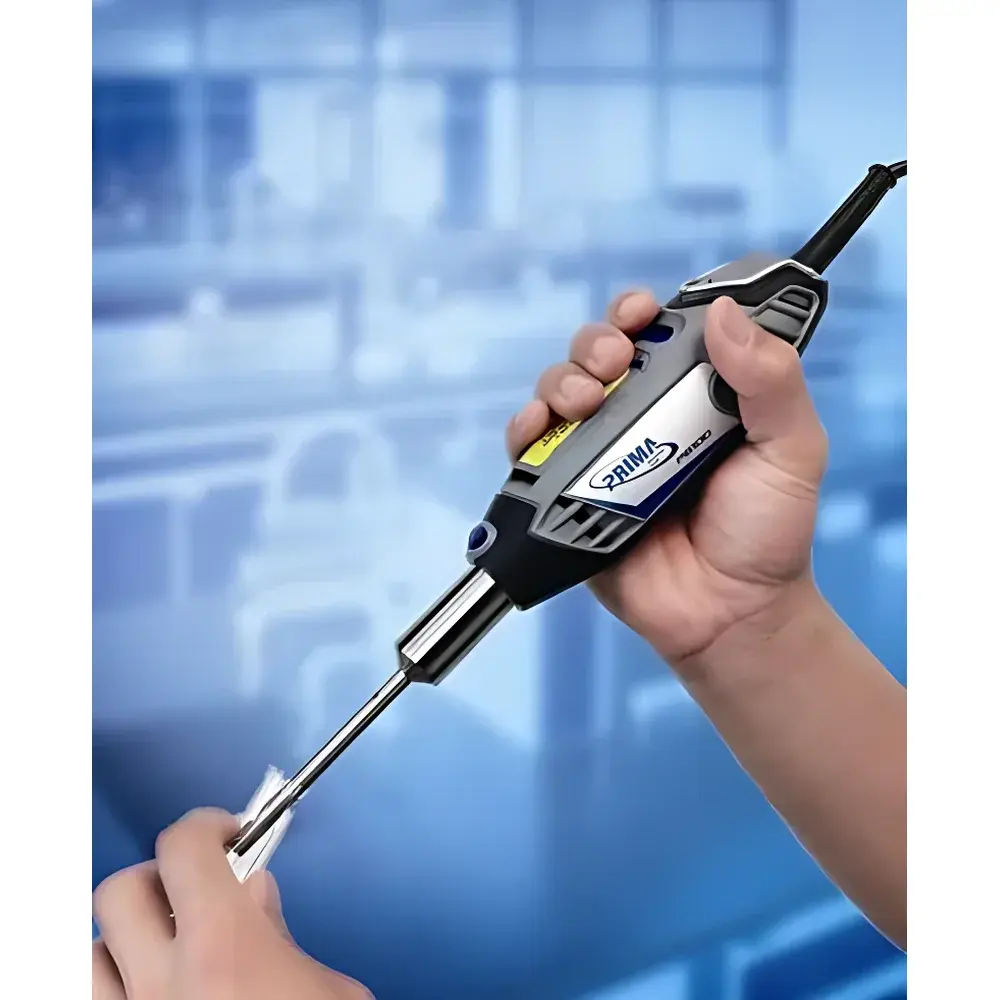
PRIMA PB100 Handheld Homogenizer
| Brand | PRIMA (UK) |
|---|---|
| Origin | Mexico |
| Manufacturer Type | Authorized Distributor |
| Product Origin | Imported |
| Model | PB100 |
| Instrument Type | Handheld Homogenizer |
| Instrument Category | Tissue Disruption Homogenizer |
| Sample Volume Range | 0.2–200 mL |
| Output Power | 20 W |
| Speed Range | 5,000–35,000 rpm (6 adjustable steps, 5,000 rpm increments) |
| Probe Material | ASTM F138-certified 316 stainless steel |
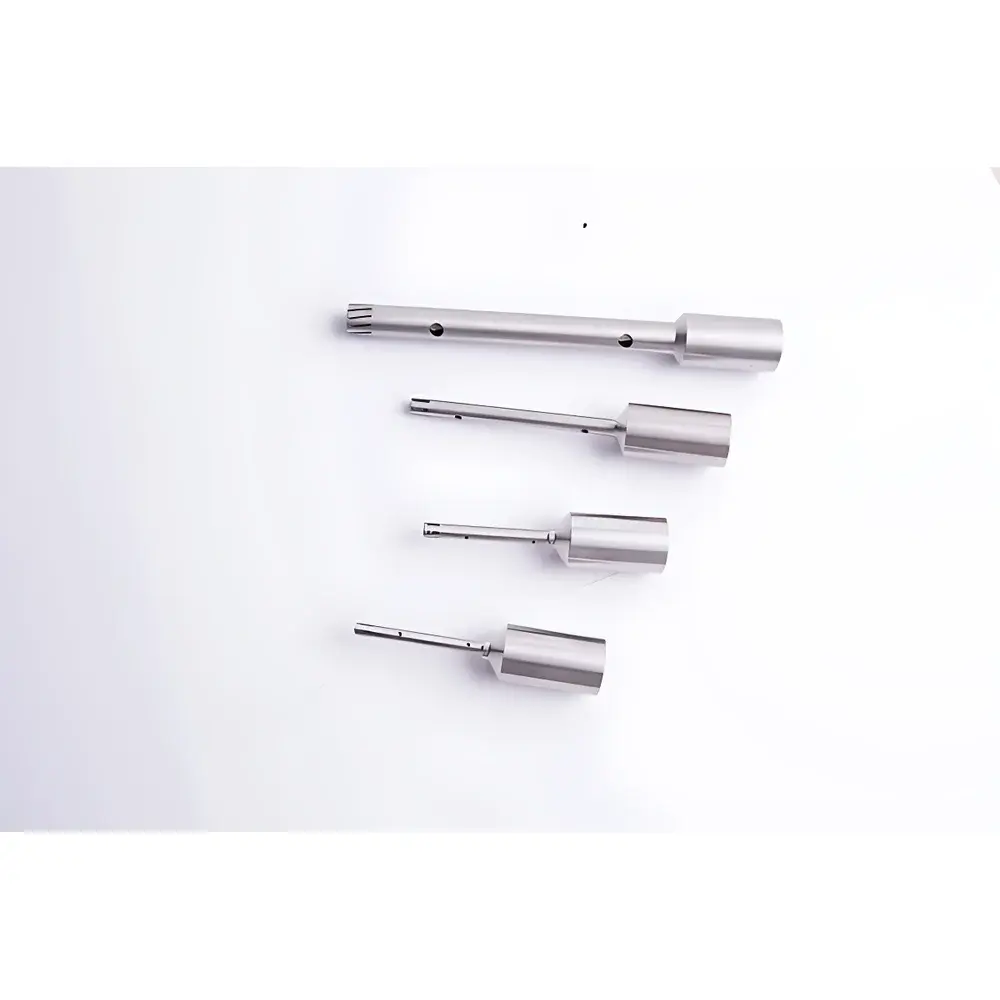
| Probe Options | SP04 (Ø4 mm, 42 mm), SP06 (Ø6 mm, 48 mm), SP08 (Ø8 mm, 85 mm), SP10 (Ø10 mm, 140 mm) |
| Weight | 0.75 kg |
| Electrical Safety | Double-insulated Class II construction |
| Sterilization Compatibility | Autoclavable at 121°C, 2 bar for ≥20 min |
| Compliance | IEC 61000-6-3 (EMC), IEC 60529 IPX0, ISO 13485-aligned design principles |
Overview
The PRIMA PB100 Handheld Homogenizer is an engineered solution for high-shear mechanical disruption of biological and chemical samples in laboratory environments where precision, reproducibility, and operational flexibility are critical. Based on rotor-stator fluid dynamics, the device generates intense hydrodynamic shear forces through rapid rotation of a precision-machined stainless-steel probe within a fixed stator sleeve—inducing cavitation, turbulent flow, and laminar shearing to achieve efficient cell lysis, emulsification, dispersion, and homogenization. Designed specifically for low-volume sample preparation (down to 0.2 mL), it serves as a primary tool in molecular biology workflows—including RNA/DNA extraction, protein solubilization, microbiological suspension preparation, and formulation development for pharmaceuticals and cosmetics. Its compact, ergonomic form factor supports both handheld operation and benchtop mounting via standard clamps, enabling seamless integration into GLP-compliant workflows requiring minimal footprint and maximum adaptability.
Key Features
- High-speed brushless motor delivering stable rotational speeds from 5,000 to 35,000 rpm across six discrete settings (5,000 rpm increments), optimized for scalable shear intensity without torque drop-off
- Double-insulated Class II electrical architecture meeting IEC 61011 safety requirements—eliminating need for grounding and enhancing operator safety during wet-lab procedures
- Interchangeable rotor-stator probes manufactured from medical-grade 316 stainless steel (ASTM F138 compliant), resistant to corrosion, pitting, and thermal degradation under repeated autoclaving cycles (121°C, 2 bar, ≥20 min)
- Ergonomic, balanced housing with non-slip grip surface and integrated cable strain relief—designed for prolonged single-hand use while maintaining control over viscous or foaming samples
- Modular probe compatibility across four standardized geometries (SP04 to SP10), each calibrated for defined volume ranges and viscosity profiles to ensure consistent energy input per unit mass
- Low thermal load design: 20 W nominal power draw minimizes sample heating during short-duration processing (<60 s), preserving thermolabile biomolecules and enzymatic activity
Sample Compatibility & Compliance
The PB100 accommodates a broad spectrum of sample matrices including soft animal tissues (liver, spleen), plant leaves, bacterial pellets, yeast cultures, polymer dispersions, and oil-in-water emulsions. Probe selection directly governs minimum and maximum processable volumes: SP04 enables sub-milliliter homogenization ideal for biopsy fragments or microfluidic prep; SP10 supports bulk homogenization up to 200 mL in beakers or centrifuge tubes. All probes meet USP and ISO 13485-aligned cleaning validation protocols when subjected to standard alkaline detergent washes followed by steam sterilization. The system does not require calibration certificates per ISO/IEC 17025 but supports traceable documentation of speed setting, duration, probe type, and batch number for internal QA records—fully compatible with FDA 21 CFR Part 11–enabled LIMS environments when paired with external logging devices.
Software & Data Management
As a standalone analog-controlled instrument, the PB100 operates without embedded firmware or digital interfaces—ensuring electromagnetic immunity in sensitive instrumentation zones (e.g., near NMR spectrometers or mass analyzers). Speed selection is executed via tactile rotary dial with detented feedback, eliminating software dependencies and reducing failure modes associated with firmware updates or driver conflicts. For laboratories implementing electronic lab notebooks (ELN) or quality management systems (QMS), manual entry of operational parameters (probe ID, speed, time, sample ID) satisfies ISO 17025 clause 7.7.1 for method traceability. Optional third-party timers with RS232 output can be integrated externally to log runtime events for audit trails.
Applications
- Tissue homogenization for nucleic acid isolation (e.g., TRIzol-based RNA extraction from murine brain tissue)
- Preparation of uniform microbial suspensions for colony-forming unit (CFU) enumeration per ISO 4833-1
- Dispersion of nanomaterials (e.g., graphene oxide, silica nanoparticles) in aqueous or organic media
- Emulsification of vaccine adjuvants and liposomal drug carriers
- Routine QC homogenization of food allergen reference materials (e.g., peanut protein in matrix blanks)
- Cell lysis optimization studies under controlled shear stress conditions for bioprocess development
FAQ
Is the PB100 suitable for sterile applications in a biosafety cabinet?
Yes—the double-insulated housing and autoclavable probes allow full decontamination between uses; operation inside Class II cabinets is routinely performed without interference.
Can the PB100 be used with corrosive solvents such as chloroform or phenol?
Only with appropriate probe selection and post-use cleaning; 316 stainless steel resists short-term exposure, but extended contact with halogenated organics requires immediate neutralization and passivation.
Does PRIMA provide probe calibration certificates or metrological traceability?
No—probe geometry and material compliance are verified per manufacturing specifications; users are responsible for verifying performance against internal SOPs using reference standards.
What maintenance is required beyond routine probe cleaning?
Annual inspection of motor brush wear (if applicable), verification of dial accuracy against tachometer, and visual inspection of housing integrity—no scheduled lubrication or recalibration is mandated.
Is the PB100 compliant with EU RoHS and REACH directives?
Yes—material declarations confirm absence of restricted substances per Annex XIV and XVII of Regulation (EC) No 1907/2006; full declaration available upon request.
Related Products



