
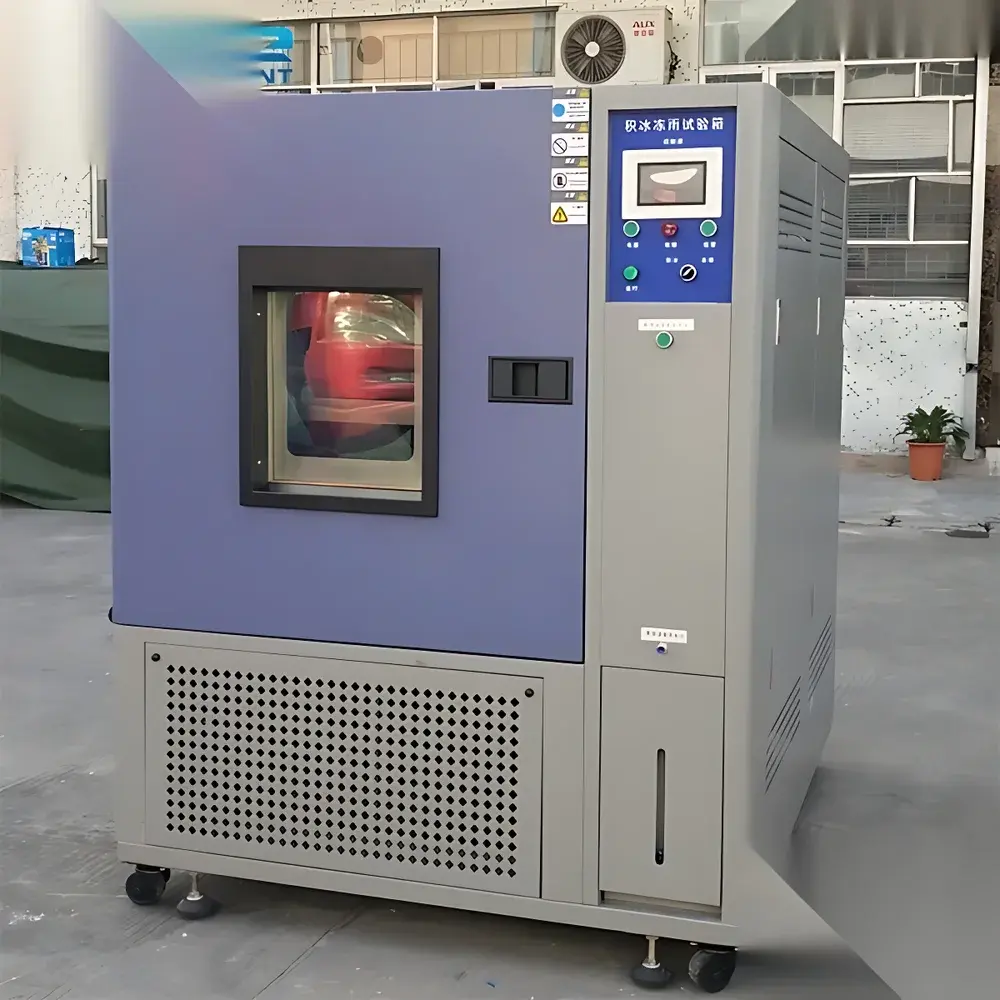
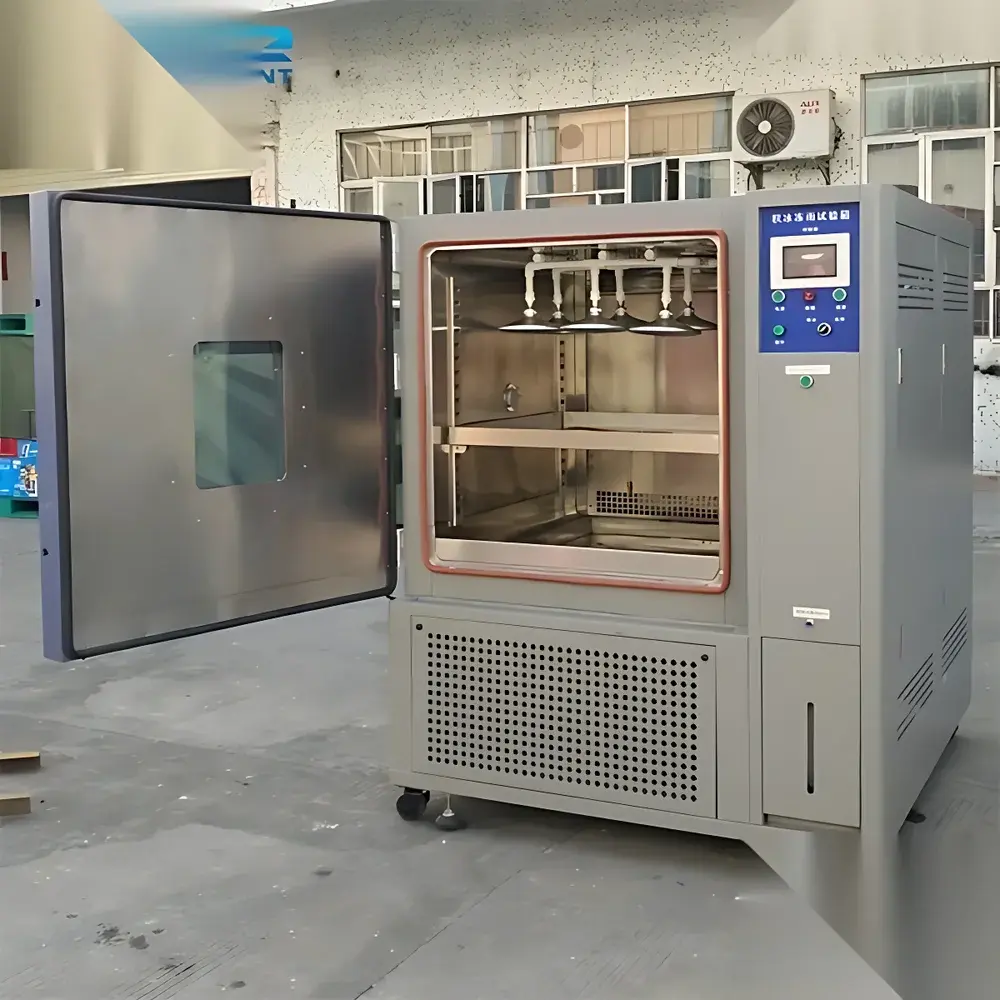
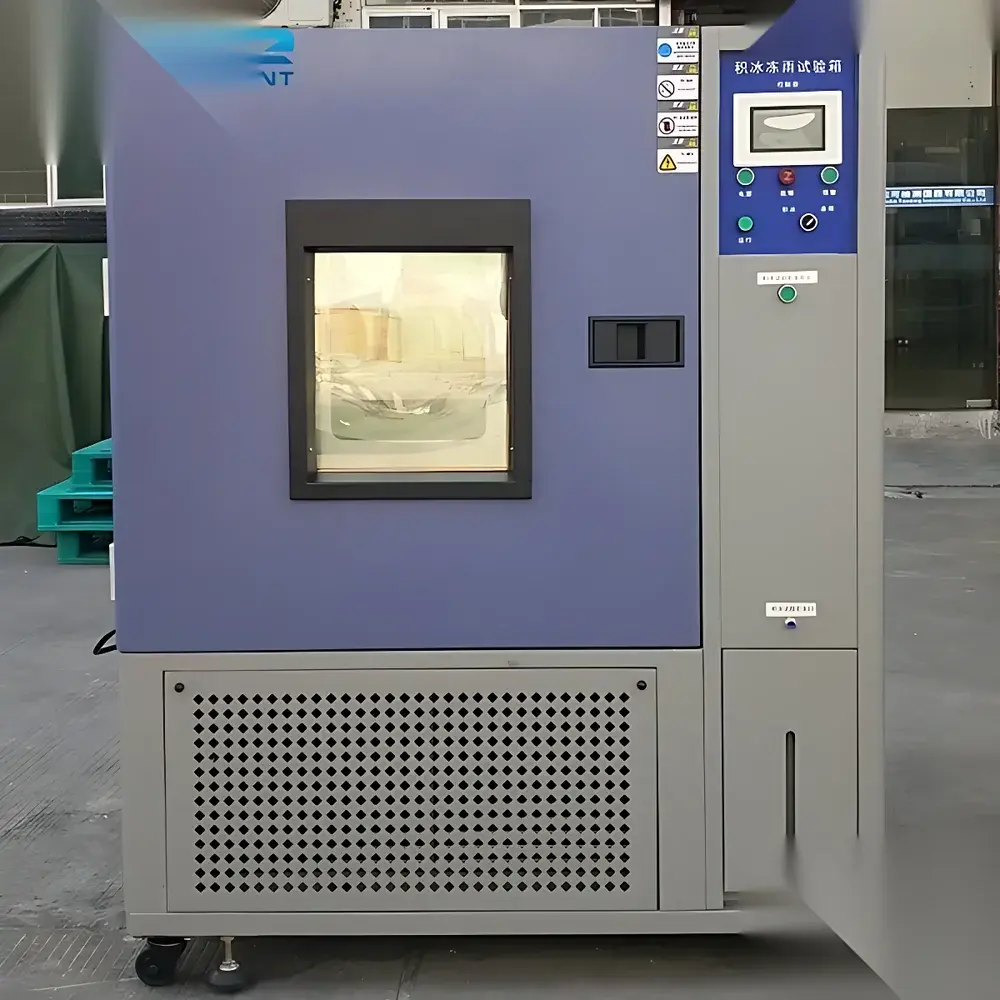
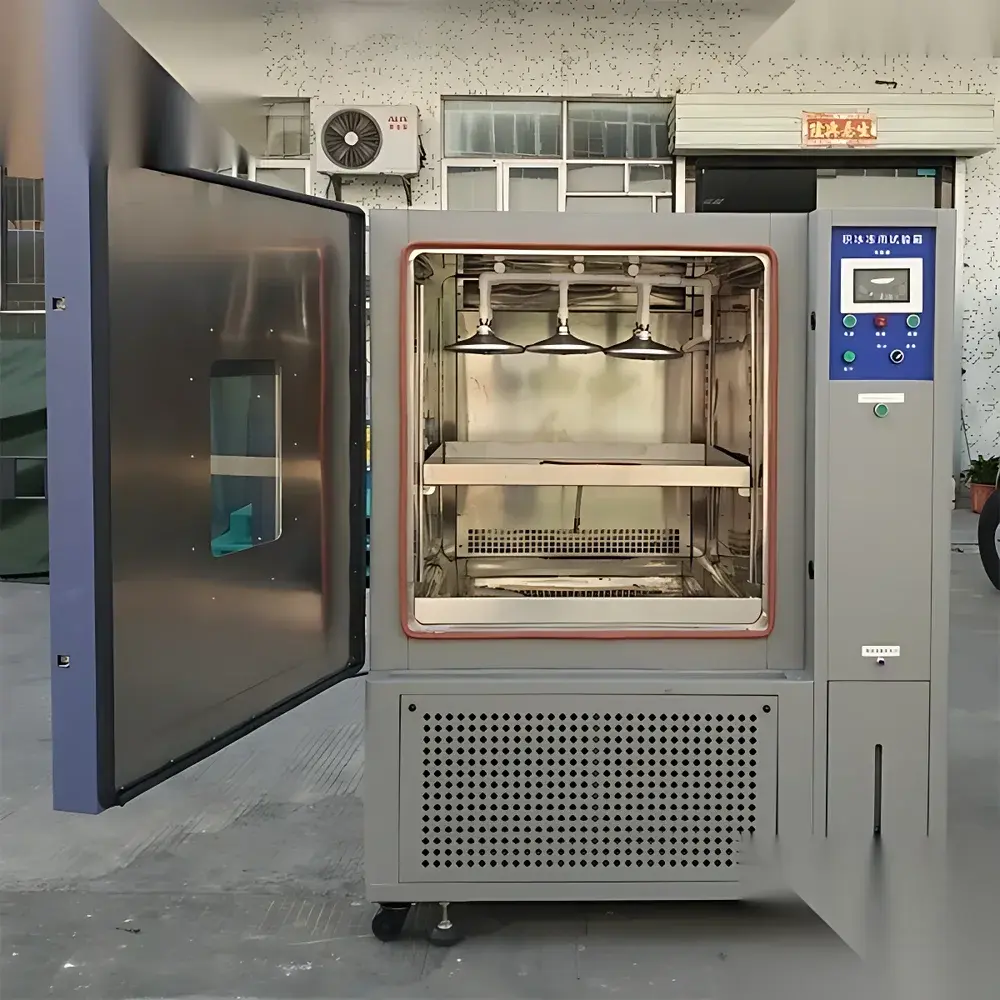
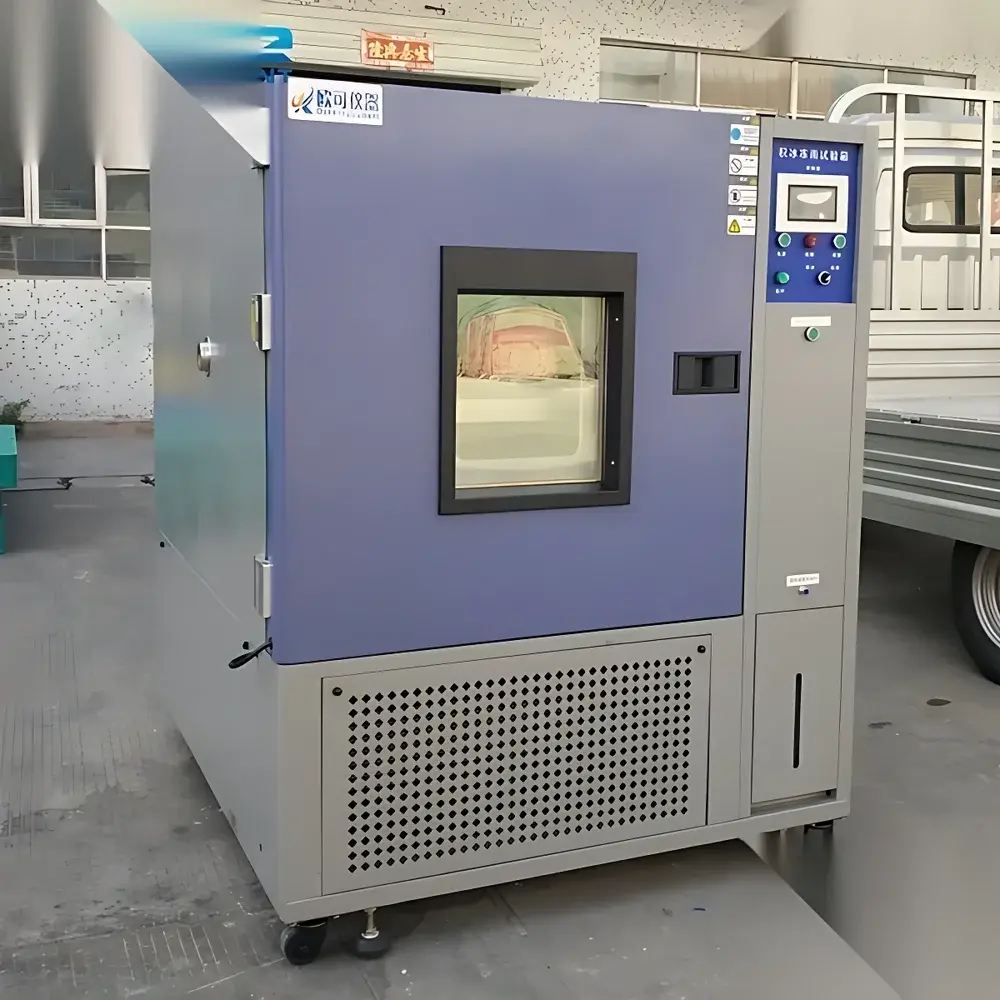
Compact Ice Accretion & Freezing Rain Test Chamber
| Origin | Imported |
|---|---|
| Manufacturer Type | Authorized Distributor |
| Price | USD 14,500 (FOB) |
Overview
The Compact Ice Accretion & Freezing Rain Test Chamber is a purpose-built environmental simulation system engineered for laboratory-scale evaluation of equipment performance under controlled icing and freezing rain conditions. It operates on the principle of dynamic water droplet impingement onto test specimens maintained at sub-zero temperatures—mimicking natural in-flight or maritime exposure to supercooled liquid precipitation (SLP), drizzle, fog, or sea spray. The chamber integrates precise temperature control (−20 °C to +80 °C), calibrated droplet generation (1.0–1.5 mm diameter, 25 mm/h rainfall intensity), and programmable ice accretion profiles (6–75 mm thickness, density 0.2–0.9 g/cm³) to replicate standardized icing severity levels defined in military and aerospace test protocols. Designed for compliance with GJB 150.22A–2009 (China’s Military Standard for Environmental Testing — Part 22: Icing/Freezing Rain), it supports functional verification of de-icing systems, structural integrity assessment under ice load, and operational reliability validation of avionics, sensors, antennas, and marine electronics.
Key Features
- Modular chamber configurations: Four standard internal volumes (150 L to 1000 L) with customizable dimensions to accommodate diverse DUT footprints—from UAV components to radar housings.
- High-fidelity droplet delivery system: Precision-machined φ0.4 mm nozzles ensure uniform 1.0–1.5 mm droplet size distribution at a repeatable 25 mm/h precipitation rate, aligned with GJB 150.22A–2009 Section 4.3.2 requirements.
- Stable thermal environment: Dual-range refrigeration (−20 °C to +80 °C) powered by hermetic French or Tecumseh compressors; temperature uniformity ±2.0 °C and stability ±0.5 °C over full operating range.
- Controlled ice formation parameters: Adjustable ice thickness (6 / 13 / 37 / 75 mm), ice density (0.2–0.9 g/cm³), and chilled water supply (0–5 °C) enable reproducible simulation of glaze, rime, or mixed-phase ice morphologies.
- Rugged construction: Interior chamber fabricated from SUS#304 stainless steel (electropolished finish); exterior options include powder-coated galvanized steel or full SUS304 cladding for corrosion resistance in high-humidity or salt-laden test cycles.
- Intuitive human-machine interface: 5.7-inch TFT color LCD touchscreen controller with bilingual (English/Chinese) menu navigation, real-time graphing, and multi-segment profile programming for temperature, humidity, and spray timing.
Sample Compatibility & Compliance
The chamber accommodates test articles up to 1000 × 1000 × 1000 mm (W × D × H) with optional internal mounting rails and adjustable stainless-steel sample racks. A single 50 mm-diameter cable/port access hole facilitates signal routing and power feedthrough without compromising thermal or hydraulic integrity. All models are designed to meet the mechanical, electrical, and environmental safety provisions of IEC 61000-6-2 (immunity) and IEC 61000-6-4 (emissions). While primarily validated against GJB 150.22A–2009, the system’s controllability and traceable calibration pathways support cross-referencing to MIL-STD-810H Method 521.4 (Icing) and RTCA DO-160G Section 22 (Icing Conditions) when operated within defined parameter envelopes. Documentation includes factory calibration certificates for temperature sensors and flow meters, traceable to NIST standards.
Software & Data Management
The embedded controller logs time-stamped temperature, spray activation status, and chamber pressure at user-selectable intervals (1 s to 60 min). Data export is supported via USB flash drive in CSV format for post-test analysis in MATLAB, Python, or Excel. Optional Ethernet connectivity enables remote monitoring and alarm notification via SMTP or Modbus TCP. Audit trails—including operator login, profile edits, and emergency stop events—are retained onboard for GLP-compliant testing. No proprietary software installation is required; raw data files are fully interoperable with third-party LIMS or quality management platforms. Firmware updates are delivered via secure HTTPS download and verified with SHA-256 checksums.
Applications
- Aerospace: Validation of wing leading-edge de-icing boots, pitot-static probe heating, and electrothermal anti-ice systems per DO-160G.
- Defense: Functional testing of naval radar domes, infrared seekers, and UAV propulsion intakes under simulated arctic maritime icing.
- Renewable Energy: Evaluation of wind turbine blade ice shedding efficiency and sensor drift in cold-humid environments.
- Transportation: Certification of railway signaling optics, automotive ADAS cameras, and traffic sensor housings per EN 60068-2-30 (damp heat) and custom icing protocols.
- Research: Controlled study of ice adhesion strength, thermal conductivity of accreted layers, and effectiveness of hydrophobic/icephobic coatings.
FAQ
Does this chamber comply with international aviation icing standards such as RTCA DO-160G?
Yes—when configured with −20 °C minimum temperature, calibrated 1.0–1.5 mm droplets, and 25 mm/h precipitation rate, it satisfies the physical boundary conditions specified in DO-160G Section 22 for Appendix A (Light Icing) and Appendix B (Moderate Icing) test points.
Can the chamber simulate mixed-phase (supercooled fog + drizzle) icing?
The system delivers liquid water content (LWC) equivalent to 0.2–0.8 g/m³ via controlled droplet flux and chilled water temperature (0–5 °C), enabling representative mixed-phase accretion when combined with appropriate airspeed simulation (requires external wind tunnel integration).
Is calibration documentation provided with shipment?
Each unit ships with a factory calibration report covering PT100 temperature sensors (±0.2 °C accuracy), volumetric flow meter (±1.5% full scale), and pressure transducer (±0.5% FS), all traceable to national metrology institutes.
What maintenance is required for long-term reliability?
Recommended quarterly maintenance includes nozzle inspection/cleaning, refrigerant oil level check, drain pan disinfection, and verification of door gasket compression force—procedures documented in the English-language service manual included with the system.



