
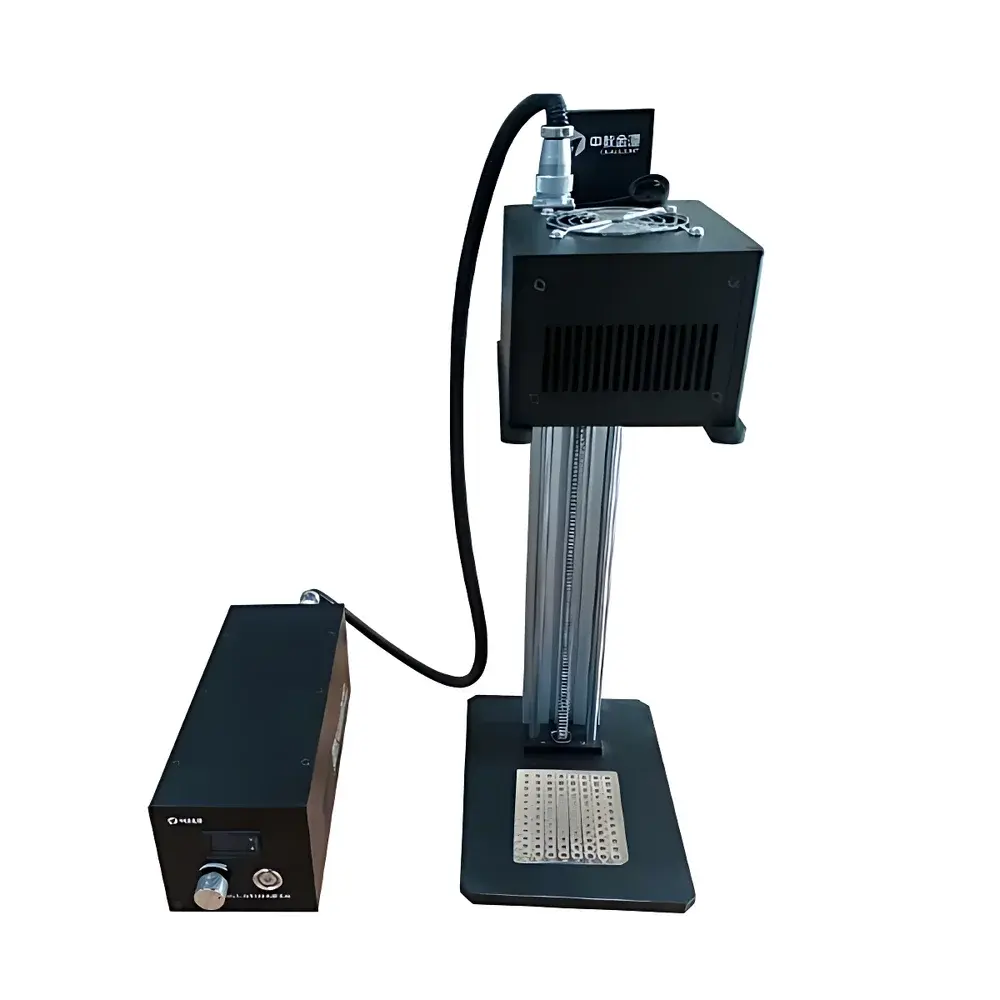
CEL-LED100HA-96 Large-Area High-Uniformity LED Illumination System
| Brand | CEAULIGHT (CEL) |
|---|---|
| Model | CEL-LED100HA-96 |
| Light Source Type | High-Power Monochromatic LED Array |
| Illumination Mode | External Irradiation |
| Emission Area | 108 mm × 90 mm |
| Spectral Options | 365 nm, 395 nm, 405 nm, 420 nm, 455 nm, 470 nm, 500 nm, 520 nm, 590 nm, 620 nm, 660 nm, 740 nm, 850 nm, 940 nm (FWHM ≤ 20 nm) |
| Standard Emission | White LED |
| Power Consumption | < 200 W (LED), Total Input: 240 W AC 220 V ±0.01% |
| Max Irradiance | < 200 mW/cm² (measured with CEL-NP2000 radiometer) |
| Irradiance Uniformity | < 5% (over 108 mm × 90 mm area) |
| Operating Current | < 5.0 A (0.01 A resolution) |
| Lifetime | ≥ 10,000 h (except 365 nm LEDs) |
| Cooling | Separated Forced-Air Cooling (optical path isolated from airflow) |
| Control Interface | Digital Display (simultaneous voltage & current readout) |
| Included Accessories | LMP400 Motorized Dual-Axis Positioning Platform (horizontal + vertical irradiation, 400 mm travel), LED Light Box (180 mm × 140 mm × 103 mm), Power Supply Unit (313 mm × 128 mm × 118 mm) |
Overview
The CEL-LED100HA-96 is a high-precision, large-area LED illumination system engineered for quantitative photochemical and photobiological experimentation. Unlike broadband arc lamps or filtered halogen sources, this system employs a densely packed, spatially uniform array of high-power monochromatic LEDs—each individually selected and calibrated—to deliver spectrally narrowband (FWHM ≤ 20 nm), spatially homogeneous irradiance across a defined 108 mm × 90 mm emission window. This optical architecture eliminates spectral contamination and thermal drift inherent in xenon or mercury discharge lamps, enabling reproducible photon flux delivery critical for kinetic studies in photocatalysis, photodynamic therapy screening, and high-throughput optoelectronic material characterization. Its external irradiation configuration supports integration into custom reaction chambers, gloveboxes, and inverted microscope stages while maintaining strict separation between optical and thermal pathways—ensuring long-term radiometric stability without wavelength-dependent thermal lensing.
Key Features
- Monolithic LED array architecture with precise mechanical alignment to achieve <5% irradiance non-uniformity across the full 108 mm × 90 mm output plane—validated per ISO/IEC 17025-compliant radiometric mapping procedures.
- Modular spectral selection: 15 discrete center wavelengths—from UV-A (365 nm) through near-infrared (940 nm)—all with consistent FWHM ≤ 20 nm and calibrated spectral irradiance traceable to NIST-traceable reference detectors.
- Dual-axis motorized positioning platform (LMP400) enables repeatable angular control (±0.1° resolution) and programmable z-axis translation (0–400 mm range), supporting oblique irradiation, multi-angle photoreactor coupling, and automated assay staging.
- Isolated forced-air cooling system maintains junction temperature within ±1°C over continuous operation, decoupling thermal management from optical output—essential for time-resolved quantum yield measurements.
- Digital constant-current driver with real-time voltage/current monitoring (0.01 A resolution) ensures stable photon flux during intensity ramping or pulsed modulation protocols.
- Compliance-ready design: All firmware logs timestamped operational parameters (current, voltage, runtime, temperature), supporting GLP/GMP audit trails and FDA 21 CFR Part 11 electronic record integrity requirements.
Sample Compatibility & Compliance
The CEL-LED100HA-96 is routinely deployed in standardized 96-well microtiter plate configurations (e.g., Corning Costar plates), Petri dishes (up to 100 mm diameter), and custom microfluidic chips with planar optical access. Its flat-field illumination profile satisfies ASTM E308-22 requirements for uniform irradiance distribution in photobiological safety testing and ISO 10993-17 for light-induced cytotoxicity assessment. The system conforms to IEC 61000-6-3 (EMC emissions) and IEC 61000-6-2 (immunity), and its electrical insulation meets UL 61010-1 safety standards for laboratory equipment. Optional calibration certificates include spectral irradiance (W·m⁻²·nm⁻¹), radiant exposure (J·m⁻²), and photon flux density (µmol·m⁻²·s⁻¹) referenced to CIE S 026/E:2019 photobiological action spectra.
Software & Data Management
The embedded controller supports RS-232 and USB-C communication for integration with third-party automation platforms (e.g., LabVIEW, Python via PySerial, MATLAB Instrument Control Toolbox). A vendor-provided SDK enables remote triggering, intensity ramping profiles (linear/logarithmic), and synchronized data logging of drive current, heatsink temperature, and cumulative operating hours. All parameter changes are logged with ISO 8601 timestamps and user ID fields; exportable CSV files include metadata compliant with MIAME and MIAPE reporting guidelines. Audit trail functionality records operator-initiated modifications—including wavelength switching, power level changes, and emergency shutdown events—with immutable hash signatures for regulatory review.
Applications
- High-throughput photocatalytic screening using TiO₂, g-C₃N₄, or MOF-based catalysts in 96-well format under controlled monochromatic excitation.
- Photodynamic therapy (PDT) dose-response studies in adherent and suspension cell lines, leveraging wavelength-specific activation of porphyrin and phthalocyanine photosensitizers.
- Stability testing of perovskite solar cells and organic photovoltaics under accelerated irradiation conditions per IEC 61215-2 MQT 10.1.
- Time-resolved luminescence decay analysis in phosphor materials, requiring stable, jitter-free excitation pulses with sub-millisecond rise times.
- Photoelectrochemical water splitting experiments with dual-beam illumination setups (e.g., bias + actinic light) enabled by modular spectral pairing.
- UV-curable resin polymerization kinetics quantified via in-situ FTIR or Raman spectroscopy under precisely dosed 365 nm irradiation.
FAQ
What spectral calibration documentation is provided with the system?
Each unit ships with a NIST-traceable spectral irradiance certificate covering all installed wavelengths, measured at the output plane using a calibrated CCD spectroradiometer (Ocean Insight QE Pro) and validated against PTB reference standards.
Can the system be integrated into a Class 100 cleanroom environment?
Yes—the LMP400 platform and LED light box are constructed from anodized aluminum and stainless steel with no outgassing elastomers; optional HEPA-filtered recirculation kits are available for ISO 5 environments.
Is remote firmware update supported?
Yes—field-upgradable firmware (v2.1+) supports secure OTA updates via signed binary packages verified using ECDSA-256 digital signatures.
How is irradiance uniformity verified during factory acceptance testing?
A 10 × 12 grid scan is performed using a calibrated silicon photodiode array (Hamamatsu S1337-66BR) mounted on a motorized XY stage; raw data and uncertainty budgets (k=2) are included in the FAT report.
Does the system meet laser safety classification requirements for non-laser optical radiation?
It complies with IEC 62471:2006 (Photobiological Safety of Lamps) as Risk Group 1 (Exempt) for all wavelengths except 365 nm, which is classified as Risk Group 2 (Low Risk) under continuous exposure conditions.




