
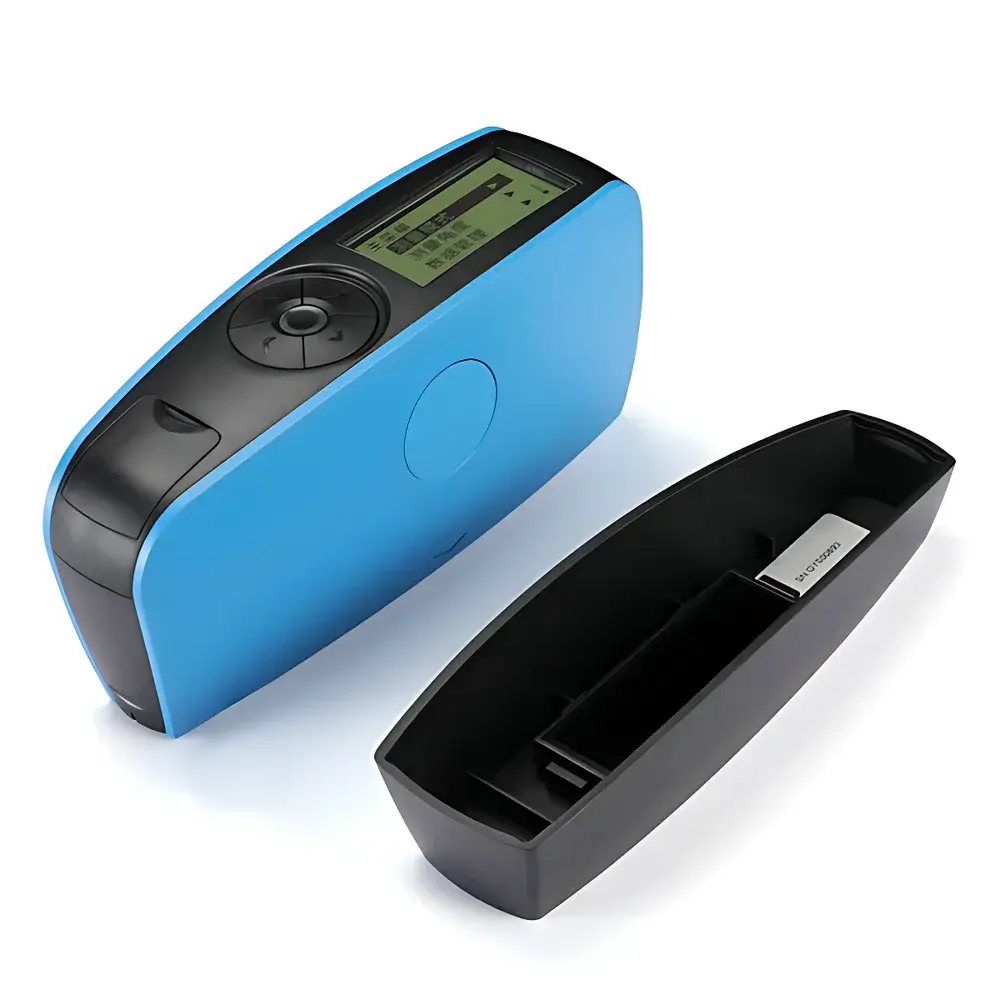
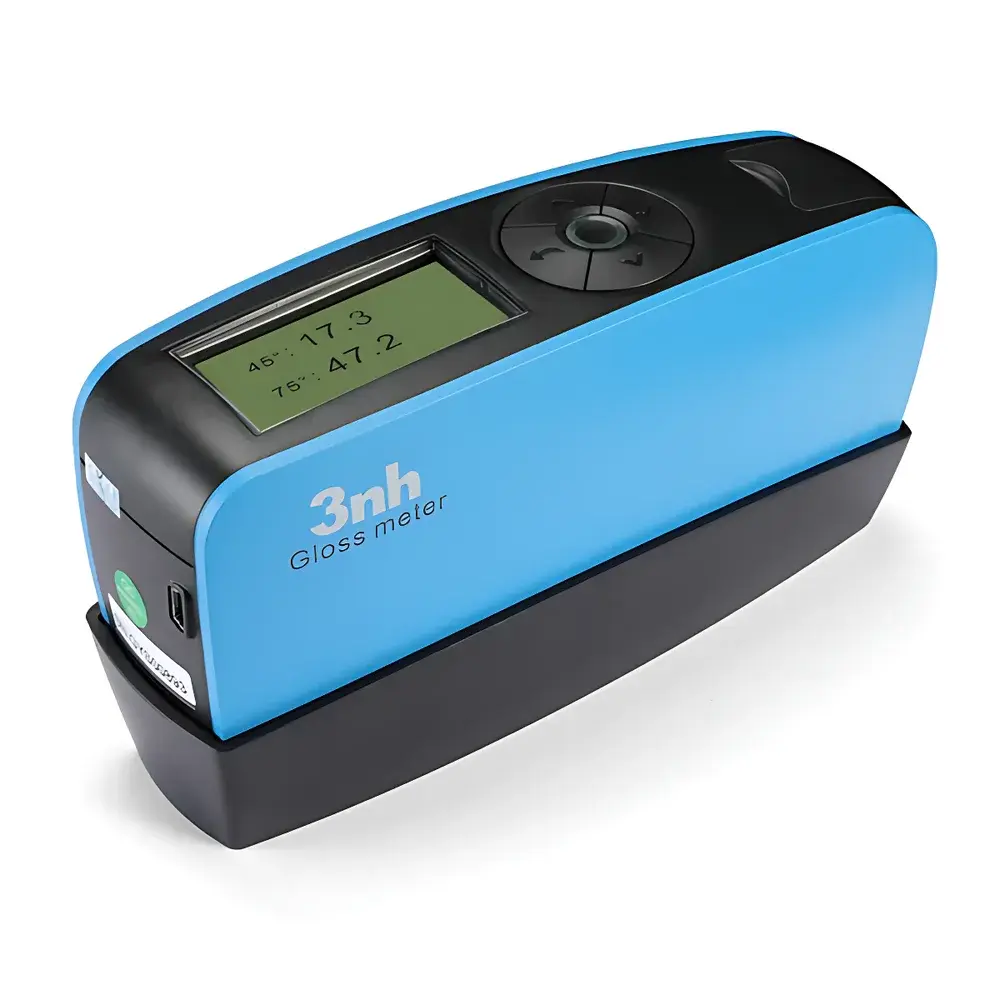
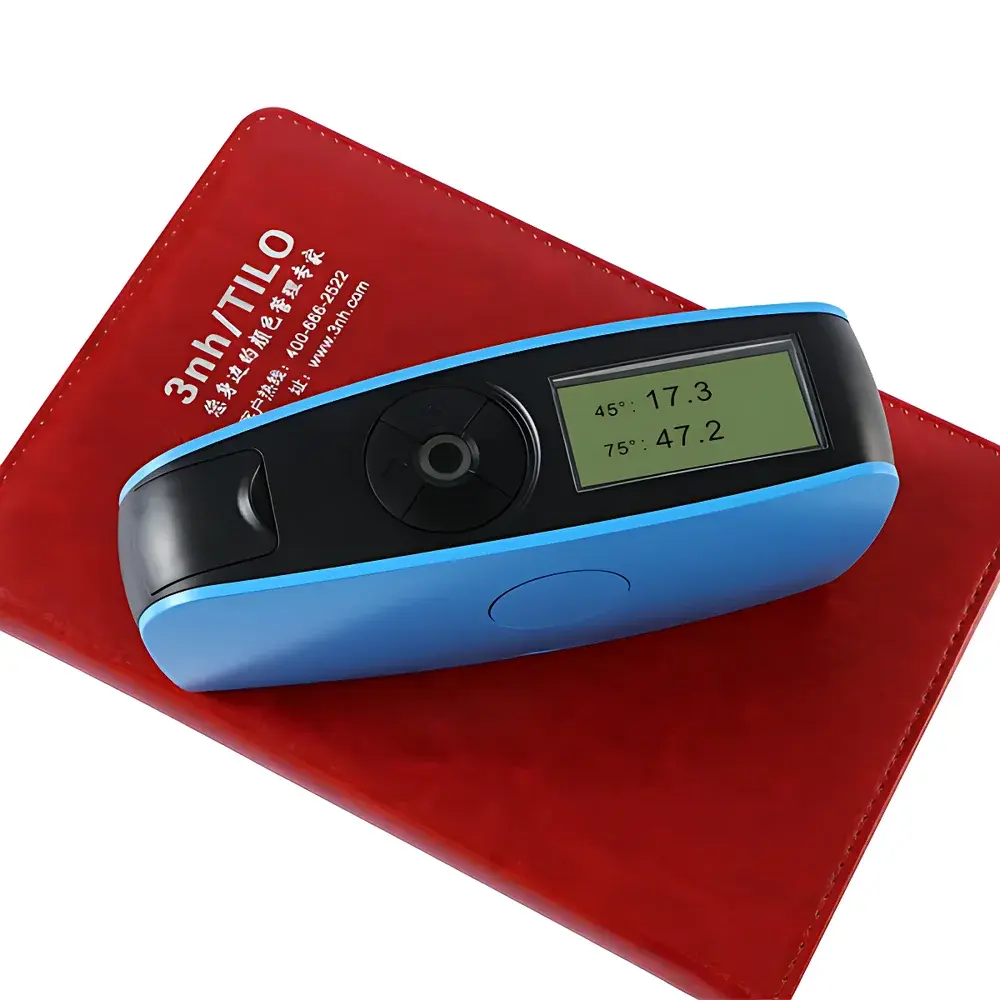
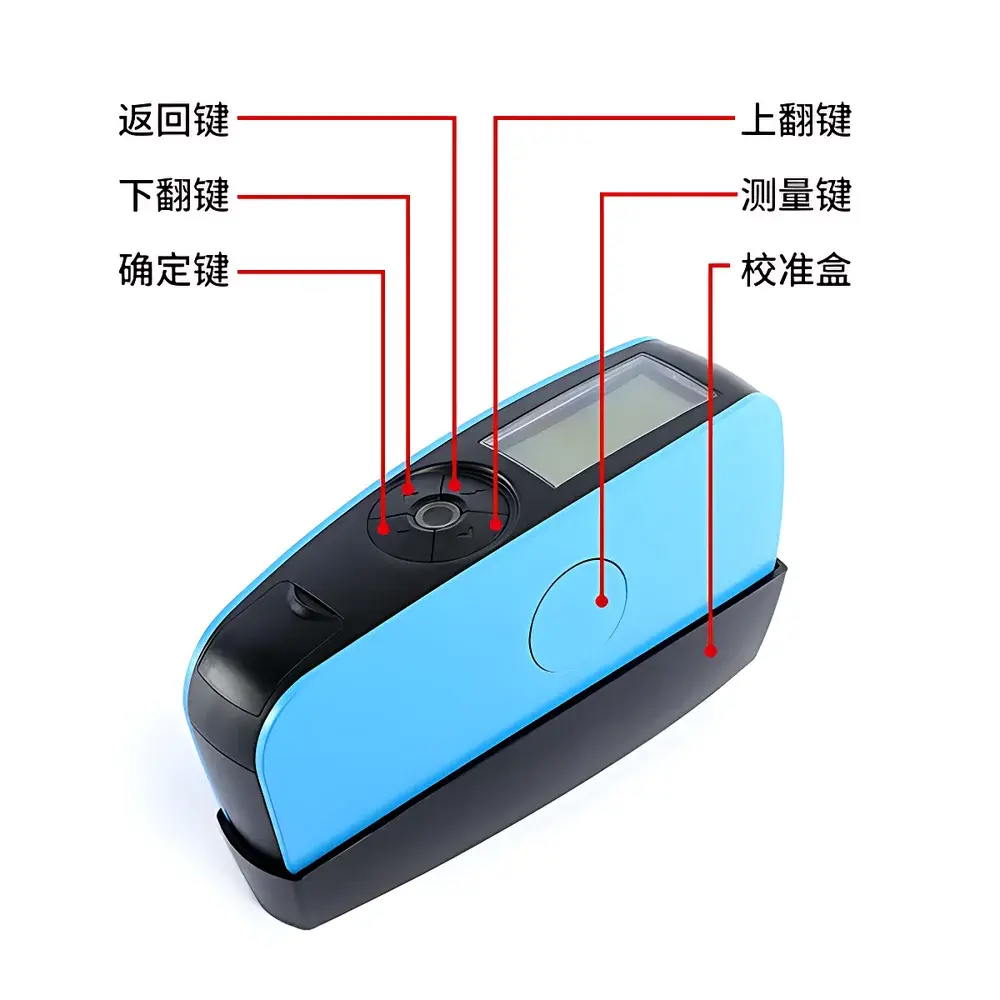
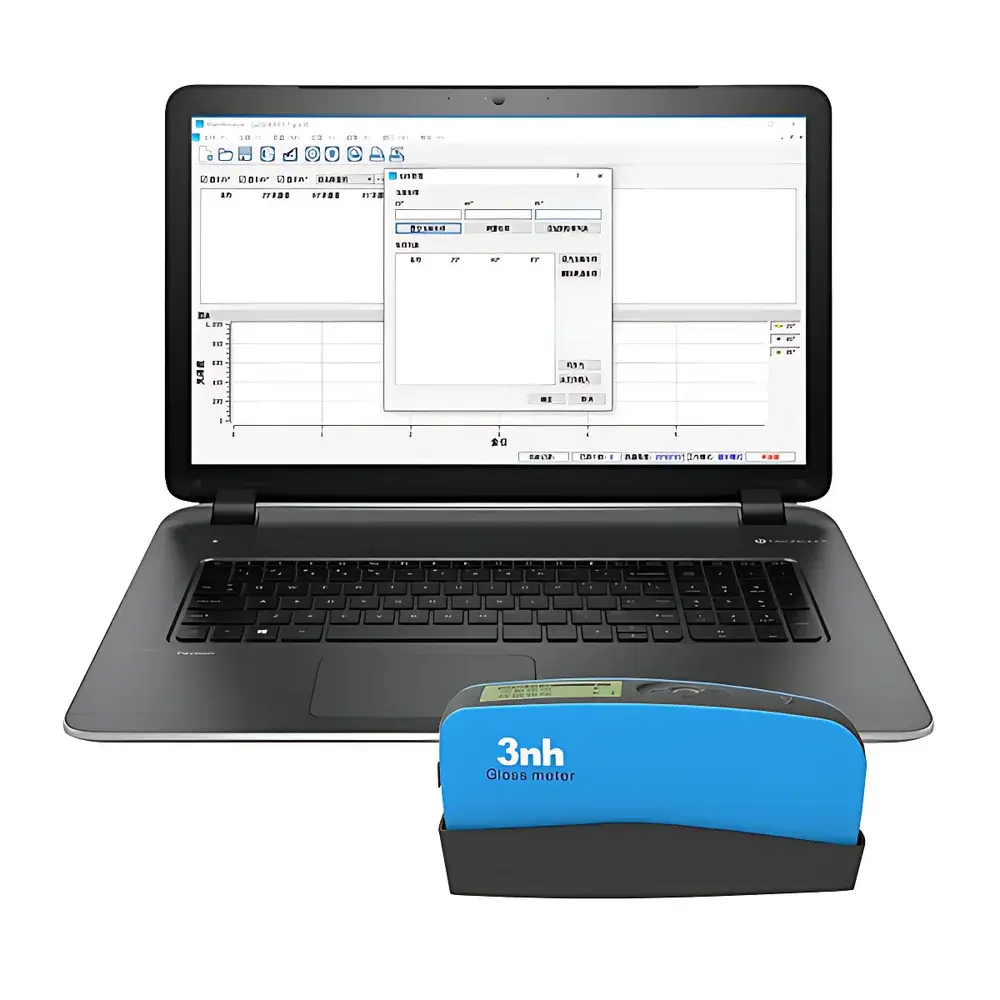
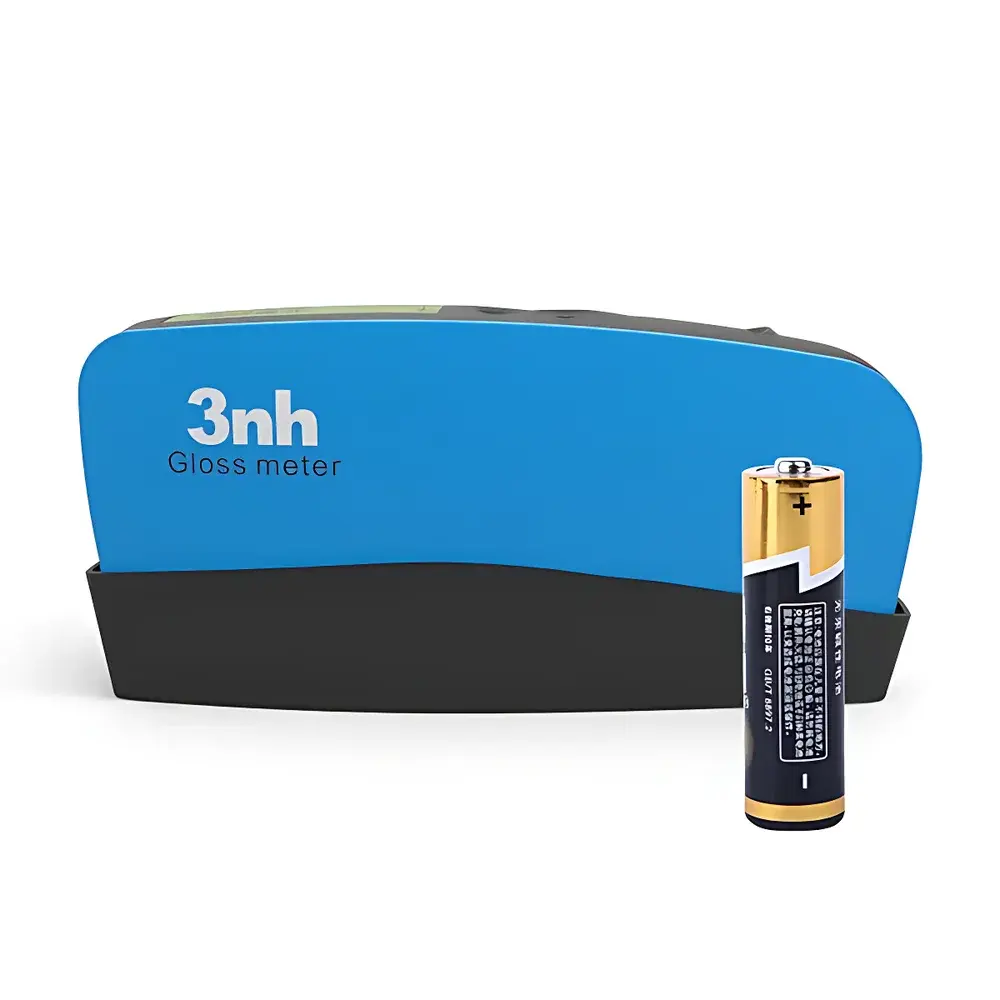
3nh YG47 Dual-Angle Precision Gloss Meter
| Brand | 3nh |
|---|---|
| Origin | Guangdong, China |
| Manufacturer Type | OEM/ODM Manufacturer |
| Product Origin | Domestic (China) |
| Model | YG47 |
| Price | USD 560 (FOB Guangdong) |
| Type | Manual Portable Gloss Meter |
| Measurement Angles | 45° and 75° |
| Spot Size | 45°: 10 × 13 mm |
| 75° | 4 × 6 mm |
| Range | 45°: 0–800 GU |
| 75° | 0–150 GU |
| Resolution | 0.1 GU (0–100 GU) |
| Repeatability | ±0.2 GU (0–100 GU) |
| Accuracy | Compliant with JJG 696–2015 “Verification Regulation for Working Gloss Meters” |
| Measurement Time | 0.5 s per angle |
| Operating Temperature | 0–40 °C |
| Storage Temperature | −20–50 °C |
| Relative Humidity | <85% RH, non-condensing |
| Display | 2.3-inch monochrome LCD |
| Data Storage | 35,000 readings (Basic/Continuous: 15,000 |
| QC Mode | 10,000 |
| Statistics Mode | 10,000) |
| Power | 1 × AA alkaline or Ni-MH rechargeable battery (≥10,000 measurements per charge) |
| Auto-off | 30–120 s adjustable |
| Dimensions | 160 × 52 × 84 mm |
| Weight | ~300 g (including calibration plate and battery) |
| Interface | USB 2.0 |
| Software | GQC6 Quality Control Software (Windows-compatible, supports report generation, audit trail export, and GLP-compliant data logging) |
| Optional Accessories | Thermal mini-printer, Bluetooth 5.0 adapter |
Overview
The 3nh YG47 Dual-Angle Precision Gloss Meter is a manually operated, portable optical instrument engineered for high-reproducibility specular gloss measurement across two standardized geometries: 45° and 75°. It operates on the principle of specular reflectance—measuring the ratio of reflected luminous flux from a sample surface to that from a reference black glass standard (defined per ISO 2813 and ASTM D523), under controlled illumination and viewing conditions. Unlike single-angle gloss meters, the YG47 enables concurrent or independent evaluation at both angles, supporting comparative analysis critical for quality control in materials where surface finish varies with incident geometry—such as textured ceramics, embossed films, or matte-finish coatings. Its optical design complies with national metrological verification requirements (JJG 696–2015), ensuring traceability to national standards and enabling use in regulated manufacturing environments requiring documented instrument performance.
Key Features
- Dual-angle capability: Simultaneous or selective measurement at 45° and 75°—optimized for detecting subtle differences in surface microstructure and coating uniformity.
- High metrological fidelity: Optical path calibrated against certified reference standards; repeatability of ±0.2 GU (0–100 GU range) meets JJG 696 Class I specifications for working gloss meters.
- Multi-mode operational flexibility: Supports Basic (instant readout), Continuous (real-time trend capture), Statistical (mean, max/min, SD calculation over batch), and QC Mode (user-defined upper/lower tolerance limits with pass/fail flagging).
- Robust calibration management: Integrated automatic standard plate detection verifies calibration status prior to measurement; manual recalibration supported via included black glass reference tile (certified 100 GU at 60°, traceable to NIM).
- Extended field usability: Powered by a single AA cell (alkaline or Ni-MH), delivering >10,000 measurements per charge; ergonomic housing (160 × 52 × 84 mm, ~300 g) ensures fatigue-free handling during extended production-line audits.
- GLP-ready data infrastructure: 35,000 internal storage capacity segmented by mode; USB 2.0 interface enables secure, timestamped data transfer to GQC6 software with configurable audit trails, electronic signatures, and PDF report generation compliant with internal QA protocols.
Sample Compatibility & Compliance
The YG47 is validated for non-destructive gloss assessment of flat or gently curved opaque and translucent surfaces—including glazed ceramic tiles, laminated polymer films, coated paperboard, painted metal substrates, anodized aluminum, and marble cladding. It is unsuitable for highly curved, fibrous, or optically heterogeneous samples (e.g., woven textiles, frosted glass) where beam divergence exceeds spot size constraints. The instrument satisfies functional equivalence to ISO 2813 (plastics), ASTM D523 (coatings), and GB/T 9754 (Chinese national standard for paints). While not FDA 21 CFR Part 11–validated out-of-box, GQC6 software supports configuration for electronic record retention aligned with GLP/GMP documentation expectations when deployed within validated laboratory information management systems (LIMS).
Software & Data Management
GQC6 Quality Control Software (Windows 10/11 compatible) provides full bidirectional communication with the YG47 via USB. Key capabilities include real-time graphing of sequential measurements, batch-level statistical summaries (Cp/Cpk, histogram distribution), customizable report templates (with company logo, test ID, operator ID, and environmental metadata), and CSV/Excel export for integration into enterprise SPC platforms. Audit logs record all user actions—including calibration events, mode changes, and data deletions—with immutable timestamps. Software updates and calibration certificate templates are available via 3nh’s secure customer portal; no cloud synchronization or remote access functionality is implemented, preserving data sovereignty.
Applications
- Ceramic manufacturing: Quantifying glaze consistency across kiln batches to prevent visual rejection due to inconsistent specular reflection.
- Packaging film production: Monitoring extrusion-coating gloss uniformity across web width, identifying die-lip contamination or chill-roll temperature drift.
- Automotive interior trim: Verifying gloss match between injection-molded PP components and adjacent painted surfaces per OEM color & appearance specifications.
- Printing & converting: Validating varnish gloss level post-curing to ensure tactile and visual parity with brand guidelines.
- Architectural stone finishing: Documenting batch-to-batch gloss variation in polished granite or quartzite slabs prior to installation.
FAQ
Does the YG47 comply with international gloss measurement standards?
Yes—the optical geometry, detector spectral response, and calibration methodology conform to ISO 2813, ASTM D523, and JJG 696–2015. Reference standards are traceable to China’s National Institute of Metrology (NIM).
Can the YG47 measure curved or irregular surfaces?
It is designed for flat or low-curvature surfaces (radius >100 mm). Measurements on highly contoured parts may yield non-representative values due to beam deflection outside the defined acceptance angle.
Is GQC6 software validated for regulated industries?
GQC6 supports configuration for ALCOA+ data integrity principles (Attributable, Legible, Contemporaneous, Original, Accurate); however, site-specific validation (IQ/OQ/PQ) remains the responsibility of the end user per ISO/IEC 17025 or FDA guidance.
What is the recommended recalibration interval?
Annual verification against certified reference standards is advised; more frequent checks (e.g., daily pre-shift verification) are required in high-precision QC workflows or after mechanical shock.
Does the instrument support multi-language UI beyond English and Chinese?
No—only Simplified Chinese, Traditional Chinese, and English firmware languages are embedded. No third-party language packs are available.



