
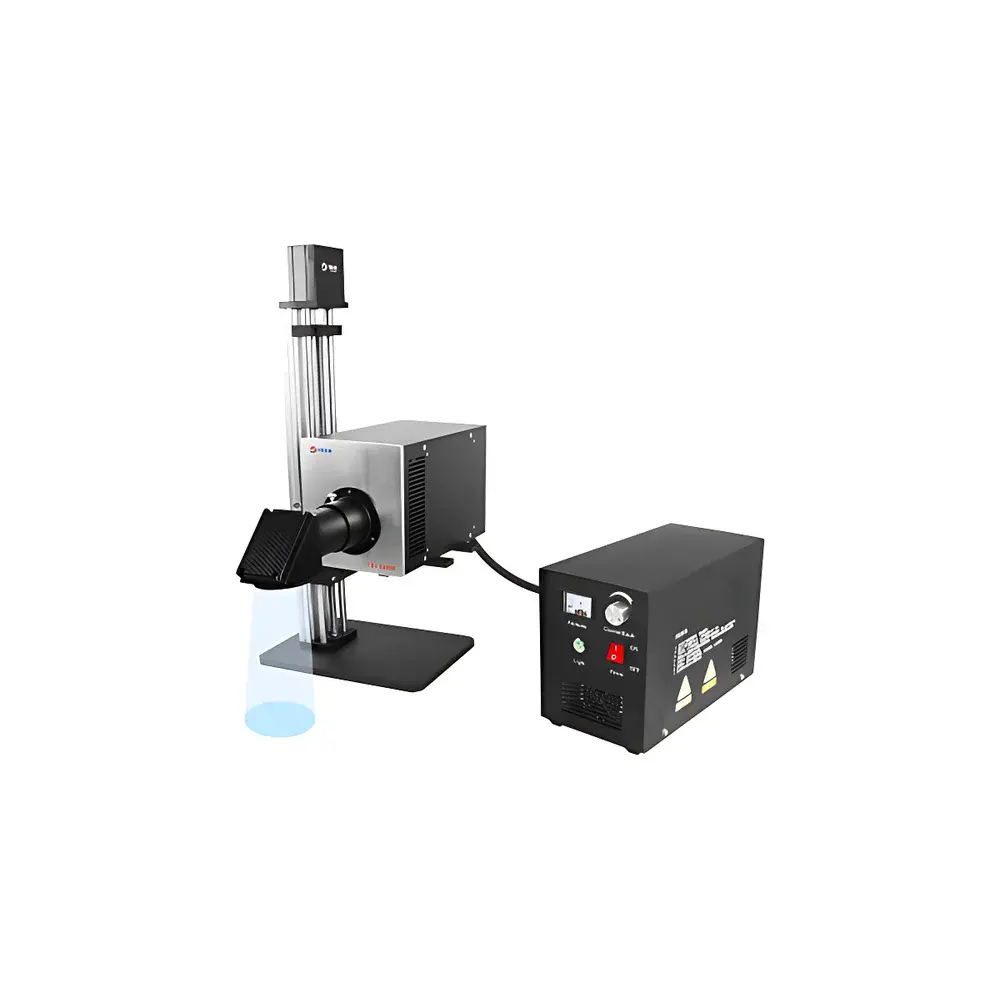
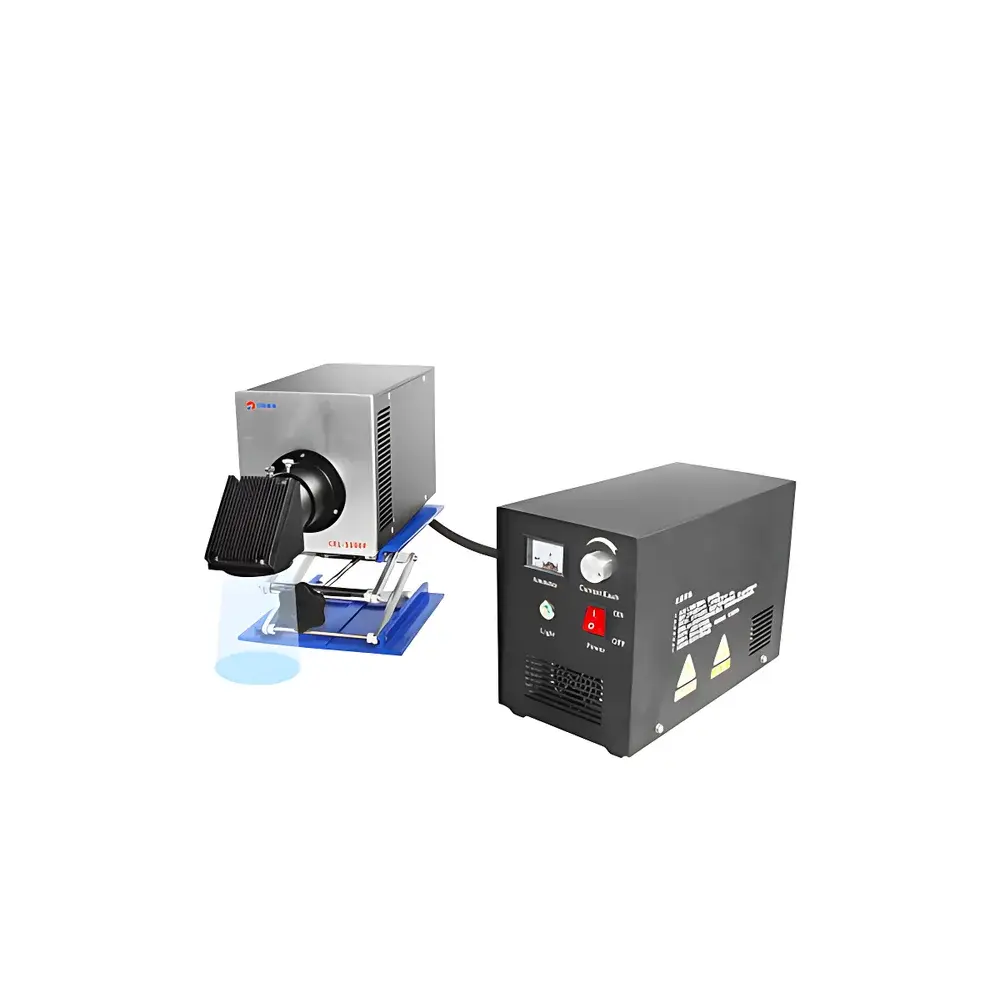
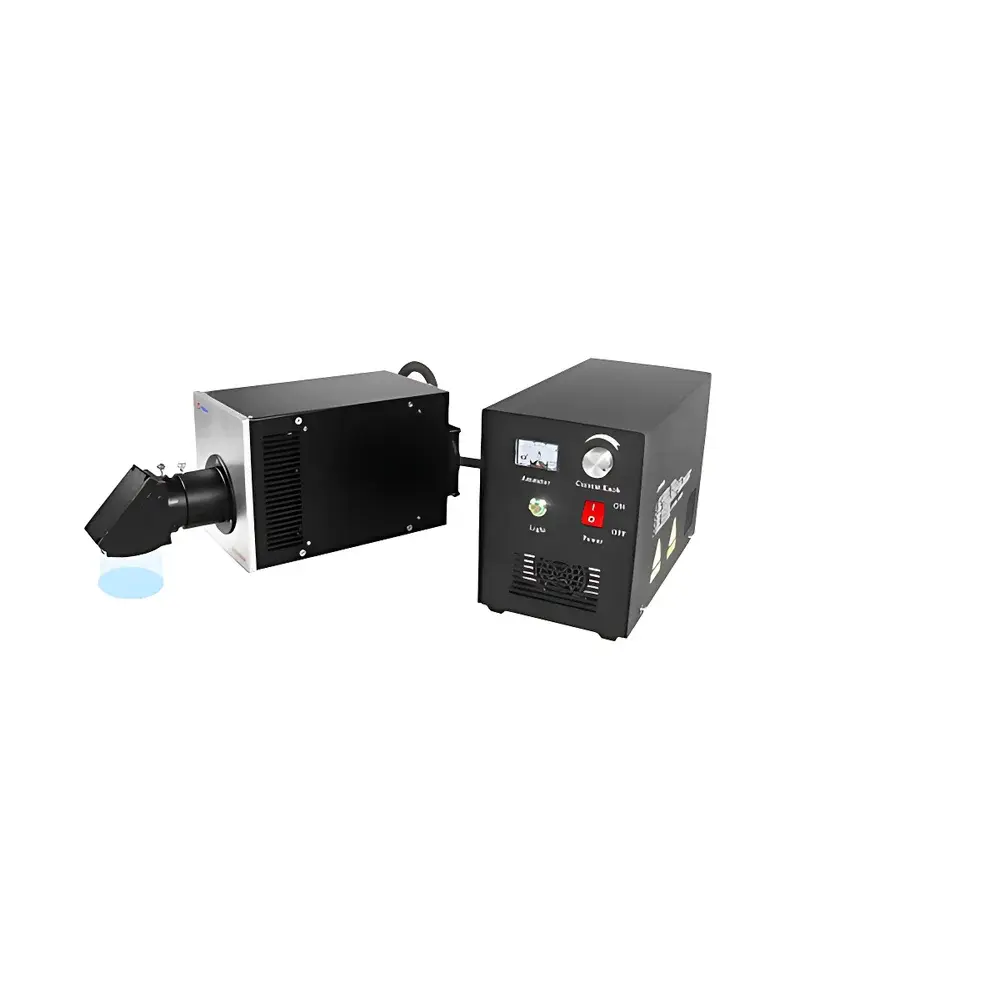
CEL-S500F Photocatalytic Xenon Light Source by CEAULIGHT
| Brand | CEAULIGHT |
|---|---|
| Model | CEL-S500F |
| Light Source Type | 500 W Short-Arc Spherical Xenon Lamp |
| Illumination Mode | External Irradiation |
| Spectral Range | 300–1100 nm |
| Max. Power Density | 500–1500 mW/cm² (up to 2500 mW/cm² at focused spot) |
| Optimal Spot Diameter | 50 mm |
| Adjustable Spot Size | 20–100 mm via Lens Assembly |
| Spot Uniformity | High |
| Current Regulation Range | 15–25 A (300–500 W output) |
| Cooling Method | Forced Air Cooling |
| Lamp Housing Dimensions | 150 × 175 × 345 mm (W×H×L) |
| Power Supply Unit Dimensions | 155 × 205 × 300 mm (W×H×L) |
| Operating Ambient Temperature | −10 °C to +40 °C |
| Compliance | Compatible with CEAULIGHT M62 Series Optical Filters |
| Optional Accessories | LMP400 Motorized Height Adjustment Stage |
Overview
The CEL-S500F Photocatalytic Xenon Light Source is a high-stability, externally irradiating broadband light source engineered for reproducible and quantifiable photochemical experimentation. It utilizes a domestically manufactured 500 W short-arc spherical xenon lamp—operating on the principle of high-frequency, high-voltage arc discharge between tungsten electrodes—to generate continuous, daylight-mimicking radiation across the ultraviolet, visible, and near-infrared spectrum (300–1100 nm). Its spectral energy distribution closely approximates natural solar irradiance (AM1.5G), enabling rigorous simulation of sunlight-driven processes without reliance on imported lamps. The system delivers calibrated optical power densities ranging from 500 to 1500 mW/cm² under standard collimation, with peak intensities exceeding 2500 mW/cm² achievable in tightly focused configurations—making it suitable for demanding applications such as quantum yield determination, action spectrum analysis, and accelerated photocatalytic screening.
Key Features
- Externally mounted illumination architecture enables flexible integration into custom reactor setups—including top-, side-, or bottom-irradiated quartz reactors, gas-phase flow cells, and multi-compartment photoelectrochemical cells.
- Integrated rotating lens assembly permits precise, tool-free adjustment of irradiation spot diameter from 20 mm to 100 mm, with optimal uniformity achieved at 50 mm—supporting both high-flux localized excitation and wide-area homogeneous exposure.
- Dual-axis articulating optical head (standard) allows full 360° rotational freedom and ±90° tilt, facilitating horizontal, vertical, or oblique incidence alignment without mechanical realignment of the entire system.
- Infrared-filtering condenser optics minimize thermal load on samples while preserving UV–vis photon flux—critical for temperature-sensitive catalytic systems and biological specimens.
- High-efficiency forced-air cooling maintains stable lamp operation over extended duty cycles (>12 h continuous), with thermal management validated across ambient temperatures from −10 °C to +40 °C.
- Modular compatibility with the full CEAULIGHT M62 filter series—including bandpass (e.g., 365 nm, 420 nm), long-pass (e.g., >400 nm, >420 nm), and cut-on filters—enables spectral isolation per ASTM E2938 and ISO 105-B02 protocols.
- Stable current-regulated power supply (15–25 A range) ensures consistent radiometric output independent of line voltage fluctuations, supporting GLP-compliant experimental repeatability.
Sample Compatibility & Compliance
The CEL-S500F is routinely deployed in ISO/IEC 17025-accredited laboratories for standardized photocatalytic activity testing (e.g., ISO 22197-1 for NO degradation, ISO 10678 for TiO₂ film evaluation). Its spectral fidelity and spatial uniformity meet the requirements of USP for photostability testing instrumentation qualification. The system supports direct coupling to quartz immersion wells, fiber-optic light guides (SMA905 interface), and monochromator input slits. All optical components comply with RoHS Directive 2011/65/EU and are CE-marked for laboratory use within the European Economic Area. No hazardous mercury vapor or ozone generation occurs during operation.
Software & Data Management
While the CEL-S500F operates as a standalone analog-controlled instrument, its electrical interface (0–5 V analog input for current setpoint; TTL-ready status outputs) allows integration with third-party data acquisition platforms (e.g., LabVIEW, MATLAB, Python-based DAQ systems) for synchronized irradiance logging, time-resolved kinetic triggering, and automated protocol sequencing. Optional LMP400 motorized height adjustment stage includes RS-485 Modbus RTU support for programmable Z-axis positioning—enabling closed-loop irradiance calibration via external photodiode sensors traceable to NIST SRM 2222.
Applications
- Quantitative H₂ evolution studies using Pt/TiO₂, g-C₃N₄, or MOF-based photocatalysts under simulated solar irradiation.
- Photodegradation kinetics of organic pollutants (e.g., rhodamine B, methyl orange, tetracycline) in aqueous and heterogeneous systems.
- Photoinduced charge carrier dynamics characterization via time-resolved microwave conductivity (TRMC) and transient absorption spectroscopy.
- UV–vis spectroelectrochemical monitoring of interfacial electron transfer at semiconductor–electrolyte junctions.
- Standardized phototoxicity assays in ecotoxicology (OECD Test No. 201, 202) requiring spectrally defined irradiance profiles.
- Accelerated aging tests for polymer coatings and photovoltaic encapsulants per IEC 61215-2 MQT10.
FAQ
What is the typical lifetime of the included 500 W xenon lamp?
Rated average life is ≥1000 hours at nominal current (22 A), with gradual lumen depreciation <15% over rated life—verified per IES LM-65-17 test methodology.
Can the CEL-S500F be used with liquid light guides?
Yes—equipped with an SMA905-compatible output port; maximum input NA 0.55, core diameter ≤6 mm recommended for optimal coupling efficiency.
Is radiometric calibration available with purchase?
CEAULIGHT provides optional NIST-traceable spectral irradiance calibration (300–1100 nm, ±3% uncertainty) performed in accordance with ISO/IEC 17025:2017 by an accredited metrology lab.
Does the system support remote control via digital interface?
Analog control only (0–5 V); digital communication requires optional LMP400 stage or external PLC integration via dry-contact I/O signals.
How is spectral stability maintained during extended operation?
Constant-current regulation, active thermal stabilization of lamp envelope, and IR-reflective optics collectively limit spectral drift to <0.5% ΔE* over 8 h at 22 A.




