
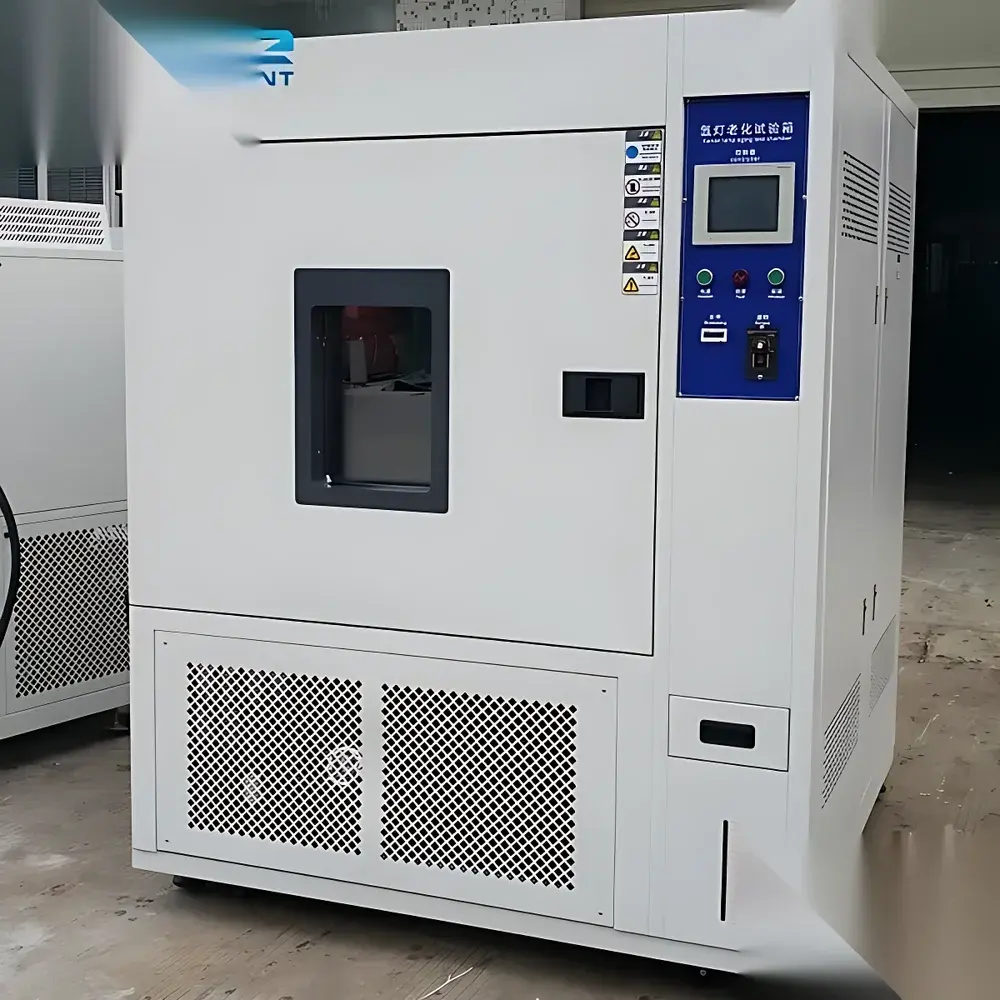
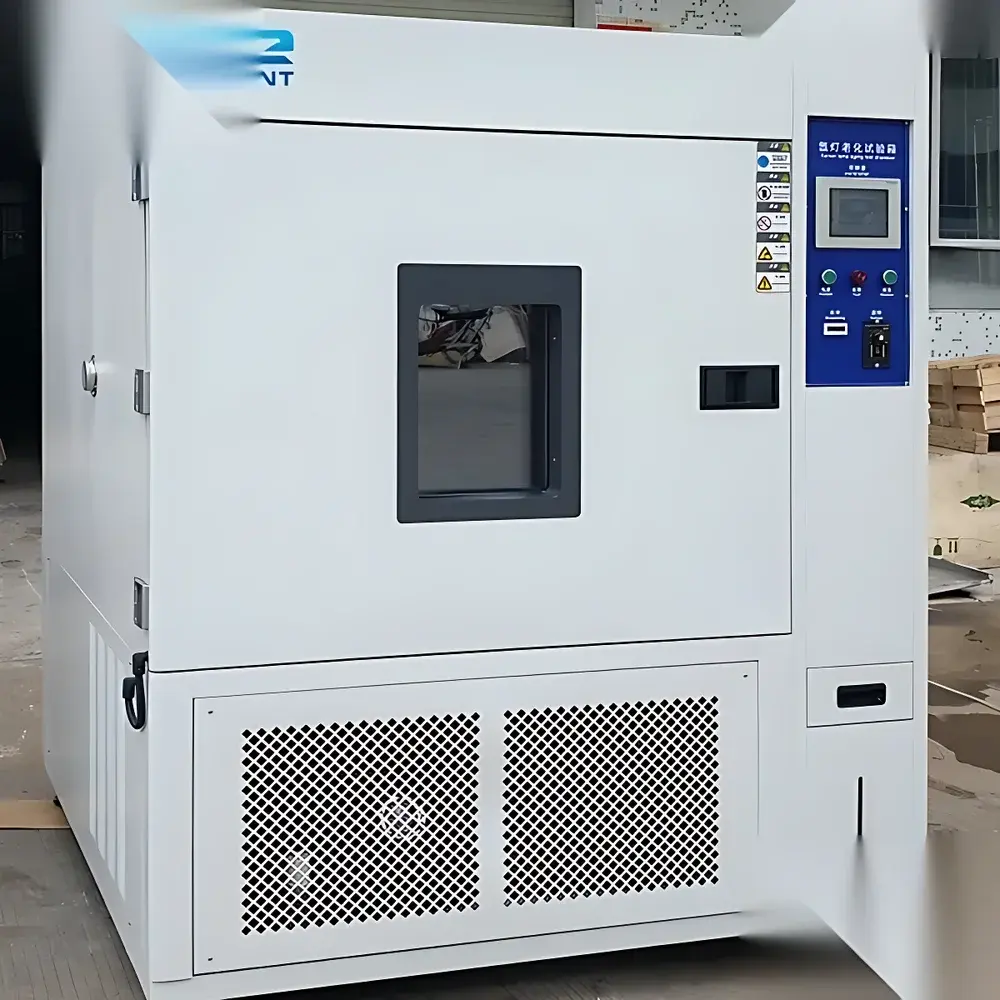
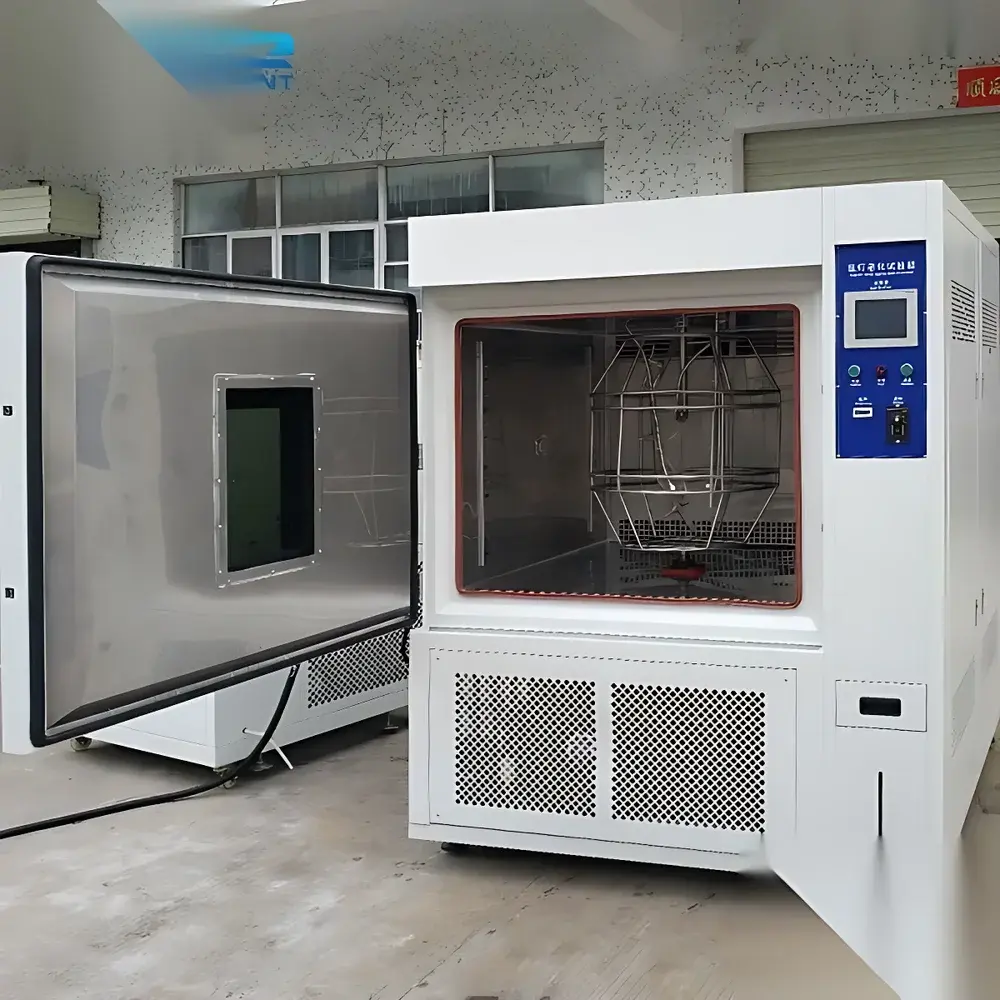
Xenon Arc Weathering Test Chamber – OK-XD Series (OK-XD-100 / OK-XD-225 / OK-XD-500 / OK-XD-1000)
| Brand | OK Instruments |
|---|---|
| Origin | Imported |
| Manufacturer Type | Authorized Distributor |
| Price | USD 5,300–15,800 (FOB, varies by model and configuration) |
| Internal Dimensions (W×D×H, cm) | 50×50×40 |
| Temperature Range | 0–150°C (chamber), 40–85°C (black panel) |
| Humidity Range | 20–75% RH (light cycle), 20–98% RH (dark cycle) |
| Control Accuracy | ±0.5°C / ±2.0% RH |
| Uniformity | ±2.0°C / ±3.0% RH |
| Irradiance | 550 W/m² ±10% (300–800 nm) or 1000 W/m² ±10% (300–1200 nm) |
| Xenon Lamp Power | 1.8 kW / 2.5 kW / 6 kW |
| Lamp Life | ≈1,500 h |
| Spray Duration | 1–999 min (intermittent or continuous) |
| Spray Pressure | 70–127 kPa |
| Sample Mounting | Dual-layer flat mesh rack or 500 mm diameter rotating turntable (0–3 rpm) |
| Construction | Interior – SUS304 stainless steel |
| Power Supply | AC 380 V ±5%, 50 Hz ±0.5 Hz |
Overview
The OK-XD Series Xenon Arc Weathering Test Chamber is an engineered environmental simulation system designed to replicate the full spectrum of terrestrial solar radiation—including UV, visible, and near-infrared wavelengths—under controlled temperature, humidity, and moisture conditions. Based on ASTM G155, ISO 4892-2, and GB/T 16422-2 standards, it employs long-arc, air-cooled xenon lamps with precision spectral filters to deliver photometrically stable irradiance across 300–1200 nm. Unlike UV fluorescent or metal halide sources, xenon arc technology provides the closest approximation to natural sunlight, enabling accurate assessment of photochemical degradation mechanisms such as polymer chain scission, pigment fading, coating chalking, and textile chromatic shift. The chamber supports both light-only and light/dark cycles with synchronized spray, humidity, and thermal modulation—critical for evaluating synergistic weathering effects in automotive trim, architectural coatings, outdoor textiles, and composite materials.
Key Features
- Full-spectrum xenon lamp system with calibrated optical filtering to maintain spectral match to CIE Standard Illuminant D65 and daylight exposure profiles.
- Integrated water spray function with adjustable duration (1–999 min), pressure control (70–127 kPa), and programmable intermittent/continuous modes for realistic rain simulation.
- Dual-mode humidity control: precise regulation between 20–75% RH during irradiation and 20–98% RH during dark cycles, compliant with ISO 4892-2 humidity ramping requirements.
- Black panel thermometer (BPT) and chamber air temperature sensors independently monitored and controlled to ±0.5°C accuracy, supporting ASTM D7869 and ISO 11341 test protocols.
- Modular sample mounting: configurable flat mesh racks (2-tier) or motor-driven rotating turntables (Ø500 mm, 0–3 rpm) to ensure uniform irradiance exposure across irregularly shaped specimens.
- Robust SUS304 stainless steel construction for interior chamber walls and critical wetted components, ensuring corrosion resistance under repeated condensation and spray exposure.
- Intuitive touchscreen HMI with preloaded test profiles for GB/T 8427, ISO 105-B02, ASTM D2565, and other widely adopted weathering standards.
Sample Compatibility & Compliance
The OK-XD chamber accommodates diverse specimen geometries—from flat fabric swatches and painted panels to 3D automotive grilles and extruded plastic profiles—via its adaptable fixture design. Its internal volume options (100 L to 1000 L) allow scalability from R&D screening to full-size component validation. All models meet essential regulatory framework requirements for material qualification in regulated industries: compliance with ISO/IEC 17025 calibration traceability pathways, support for GLP audit trails (including operator ID, parameter lockout, and event logging), and compatibility with FDA 21 CFR Part 11–compliant software add-ons for electronic signature and data integrity management. Test reports generated are directly referenced in automotive OEM specifications (e.g., GMW14872, Ford CETP 00.00-L-467), textile industry standards (AATCC TM16, ISO 105-B02), and building product certifications (EN 927-6).
Software & Data Management
Standard firmware includes real-time irradiance monitoring with automatic lamp output compensation, multi-segment cycle programming, and onboard data logging at user-defined intervals (minimum 1-min resolution). Optional PC-based software enables remote monitoring, automated report generation (PDF/CSV), historical trend analysis, and deviation alerts triggered by out-of-spec irradiance, temperature, or humidity excursions. Audit logs record all parameter changes, start/stop events, and maintenance actions—including lamp usage hours and filter replacement timestamps—supporting ISO 9001 and IATF 16949 quality system documentation requirements. Exported datasets retain metadata (test standard, specimen ID, operator, calibration certificate number) to facilitate cross-laboratory reproducibility assessments.
Applications
- Accelerated aging of automotive exterior plastics, elastomers, and coated substrates per SAE J2527 and ISO 4892-2.
- Colorfastness evaluation of dyed textiles and nonwovens under simulated daylight + moisture (GB/T 8427, ISO 105-B02).
- Photostability testing of architectural coatings and sealants exposed to cyclic UV/rain/humidity (ASTM D4587, EN 927-6).
- Lightfastness qualification of printing inks, signage films, and outdoor advertising media (ISO 105-B04, AATCC TM16).
- Material screening for solar reflectance index (SRI) degradation in cool roof membranes and façade systems.
- Validation of UV stabilizers and HALS additives in polyolefin compounds and PVC formulations.
FAQ
What spectral range does the OK-XD chamber simulate, and how is spectral fidelity maintained?
It delivers irradiance across 300–1200 nm using filtered xenon arc lamps, with optional bandpass filters to target UV-A (315–400 nm), UV-B (280–315 nm), or full-spectrum daylight. Long-life optical filters and real-time irradiance feedback ensure spectral stability within ±10% over lamp lifetime.
Can the chamber operate without water spray or humidity control?
Yes—each environmental parameter (irradiance, temperature, humidity, spray) is independently programmable, allowing dry-heat, UV-only, or dark-cycle-only test configurations per specific standard requirements.
How is lamp calibration and replacement managed?
Lamp irradiance output is continuously monitored via a calibrated broadband sensor; when output drops below 90% of setpoint, the system triggers a maintenance alert. Replacement requires no tools and takes <5 minutes, with factory-certified lamps traceable to NIST standards.
Is third-party certification available for chamber performance verification?
Yes—optional IQ/OQ/PQ documentation packages are provided, including as-installed temperature/humidity uniformity mapping, irradiance spatial homogeneity testing, and compliance verification against ISO 4892-2 Annex B acceptance criteria.
Does the system support custom test profiles beyond published standards?
Absolutely—the controller accepts user-defined multi-step cycles with variable ramp rates, dwell times, and conditional logic (e.g., “activate spray if chamber RH exceeds 80%”), enabling proprietary aging protocols and failure-mode acceleration studies.



