
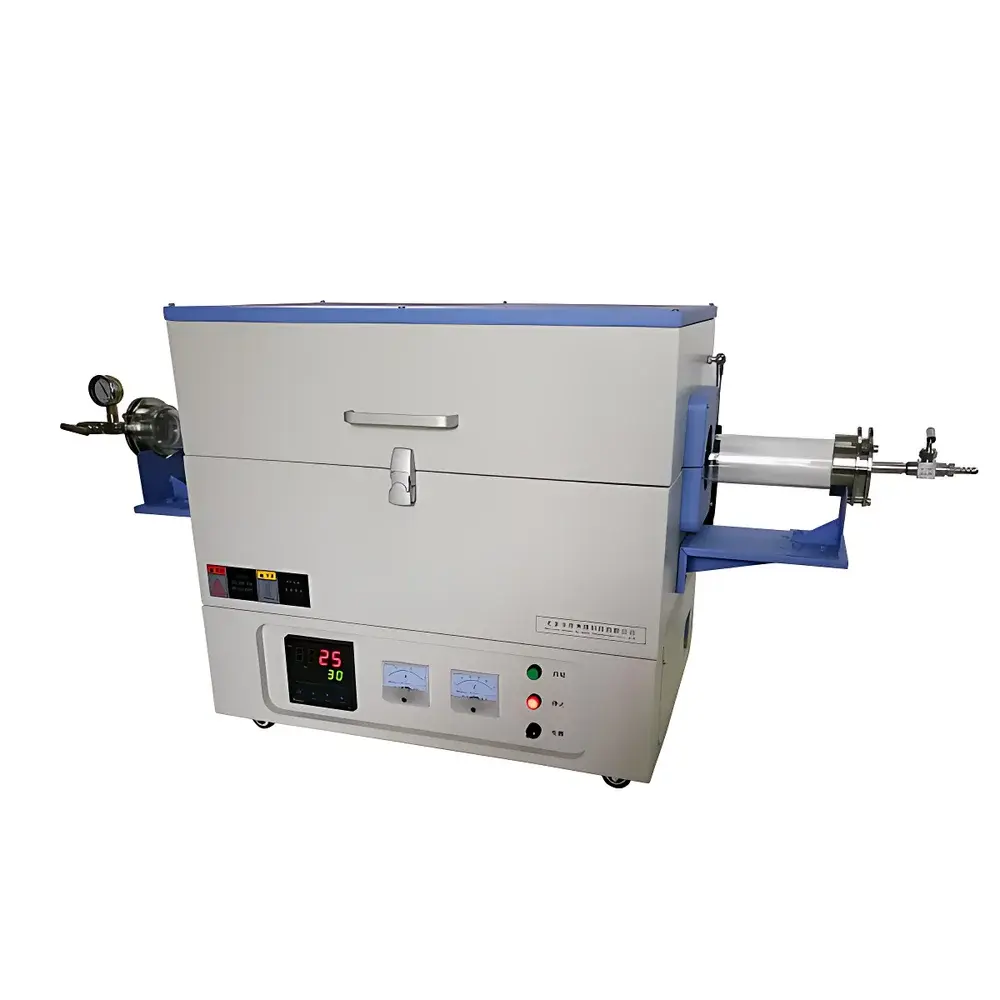
Zhongke Aobo GL0614 1400°C Vacuum Tube Furnace
| Brand | Zhongke Aobo |
|---|---|
| Origin | Beijing, China |
| Model | GL0614 |
| Maximum Temperature | 1400°C |
| Control Accuracy | ±1°C |
| Rated Power | 5 kW |
| Heating Rate (to Max Temp) | 20°C/min |
| Heating Element | Silicon Carbide Rods |
| Internal Chamber Dimensions | 60 mm ID × 300 mm L |
| Furnace Type | Horizontal Vacuum/Atmosphere Tube Furnace |
| Tube Material | 99% Alumina Ceramic (Al₂O₃) |
| Sealing | 304 Stainless Steel KF Flanges with Dual Viton/Silicone O-Rings |
| Temperature Sensor | Type S Thermocouple |
| Control System | 30-Stage Programmable PID Controller with Auto-Tuning & Power-Fail Recovery |
| Insulation | Polycrystalline Molybdenum Fiber Blanket |
| Cooling | Dual-Layer Shell with Active Air-Cooling Fan (Auto-activated at surface temp ≥45°C) |
| Gas Compatibility | Inert (N₂, Ar), Oxidizing (O₂, CO₂), Non-Flammable/Non-Toxic Gases Only |
| Compliance | Designed for ISO/IEC 17025 laboratory environments |
Overview
The Zhongke Aobo GL0614 is a horizontally oriented, vacuum-capable tube furnace engineered for precise high-temperature thermal processing under controlled or inert atmospheres. It operates on the principle of resistive heating via silicon carbide (SiC) rod elements embedded within a polycrystalline mullite fiber insulation matrix—delivering rapid thermal response, exceptional energy efficiency, and uniform axial temperature distribution across its 300 mm heating zone. With a maximum operating temperature of 1400°C and rated stability of ±1°C, the GL0614 meets stringent requirements for materials synthesis, annealing, sintering, and thermal treatment in academic research labs, semiconductor process development, and advanced ceramic R&D facilities. Its robust mechanical architecture—including dual-layer stainless steel housing, active surface cooling, and modular KF-flanged sealing—ensures long-term operational safety and repeatability in both vacuum (<10⁻² mbar, with optional pump integration) and gas-purged configurations.
Key Features
- High-efficiency polycrystalline alumina fiber insulation reduces thermal mass and enables heating rates up to 20°C/min while maintaining low external surface temperatures.
- Horizontally mounted 99% alumina ceramic tube (60 mm inner diameter × 300 mm usable length) offers superior thermal shock resistance, chemical inertness, and dimensional stability at elevated temperatures.
- Dual-seal KF flange system with redundant elastomeric gaskets ensures leak-tight integrity under vacuum and positive-pressure gas flow conditions—validated per ASTM E471 for static leakage rate ≤1×10⁻⁷ mbar·L/s.
- Intelligent 30-segment programmable controller with adaptive PID tuning, fuzzy logic compensation, and power-fail parameter retention enables reproducible thermal profiles across multiple experimental cycles.
- Integrated safety architecture includes over-temperature cutoff (hardware-limited at 1450°C), automatic fan activation upon shell surface reaching 45°C, and mechanically interlocked door latching compliant with IEC 61000-6-4 electromagnetic compatibility standards.
Sample Compatibility & Compliance
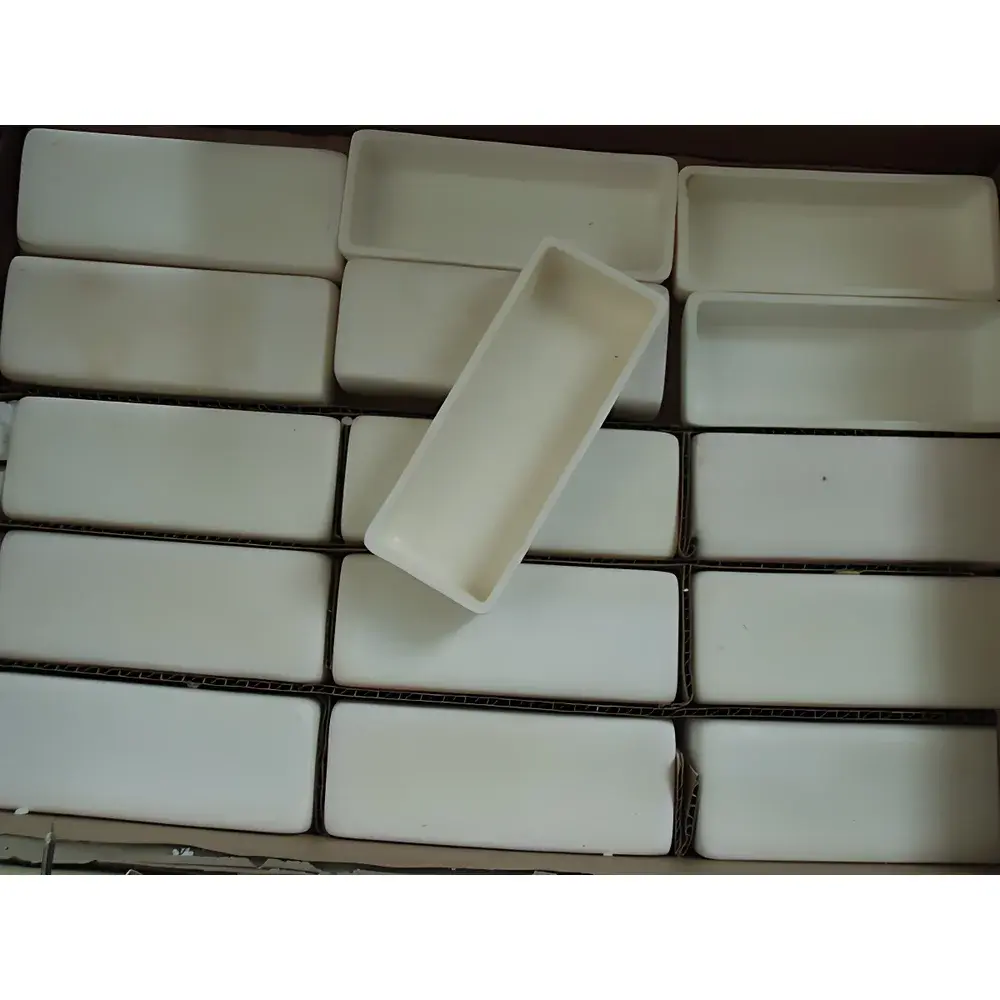
The GL0614 accommodates cylindrical samples, powder compacts, thin films, and fiber substrates within its centrally aligned alumina tube. Sample holders (e.g., graphite, molybdenum, or ceramic boats) are compatible with standard 60 mm ID geometry. The furnace conforms to structural and electrical safety requirements outlined in UL 61010-1 and EN 61000-6-2. While not intrinsically rated for hazardous gas environments, it supports operation with non-toxic, non-flammable gases—including N₂, Ar, O₂, and CO₂—when used with externally regulated mass flow controllers and pressure relief systems. For GLP/GMP applications, the controller supports optional RS485 Modbus RTU output for traceable data acquisition and audit-ready event logging.
Software & Data Management
The built-in controller provides local setpoint programming and real-time temperature display but does not include proprietary PC software. However, its analog 4–20 mA output and digital Modbus interface allow seamless integration with third-party SCADA platforms (e.g., LabVIEW, Ignition, or DeltaV) for time-stamped temperature recording, alarm notification, and electronic batch record generation. When deployed in regulated environments, users may configure external data loggers compliant with FDA 21 CFR Part 11 requirements—including user authentication, audit trail, and electronic signature functionality—to satisfy documentation rigor for quality assurance protocols.
Applications
- Controlled-atmosphere sintering of oxide ceramics (e.g., YSZ, Al₂O₃, BaTiO₃) and non-oxide systems (SiC, Si₃N₄).
- Vacuum annealing of metal alloys and transition metal dichalcogenides (TMDs) to remove adsorbed contaminants and induce crystallinity.
- Thermal decomposition studies of precursors in catalyst synthesis (e.g., NiO, Co₃O₄, MnO₂).
- Graphitization and heat treatment of carbon nanofibers and biochar under inert nitrogen or argon.
- Calibration and reference testing of thermocouples and pyrometers per ASTM E230/E230M Annex A2 procedures.
FAQ
What vacuum level can the GL0614 achieve?
With an external two-stage rotary vane pump and proper KF seal maintenance, typical base pressures range from 1×10⁻² to 5×10⁻³ mbar. For lower pressures, a turbomolecular pumping station may be integrated.
Is the furnace suitable for hydrogen atmosphere operation?
No. Hydrogen is excluded due to embrittlement risks in SiC heating elements and potential flammability hazards. Only non-reactive or oxidizing gases are approved per safety documentation.
Can the heating zone length be customized?
Yes. Standard heating zone is 300 mm, but extended zones up to 600 mm are available as OEM options with recalibrated thermocouple placement and power redistribution.
Does the unit include a vacuum gauge or gas flow meters?
No. These are optional accessories; standard configuration includes only KF ports, flange hardware, and pressure indicator port for user-supplied gauges.
What is the expected service life of the silicon carbide heating rods?
Under continuous operation at ≤1300°C with periodic thermal cycling, SiC rods typically maintain functional integrity for 1,500–2,000 hours before measurable resistance drift exceeds ±5% of nominal value.



