
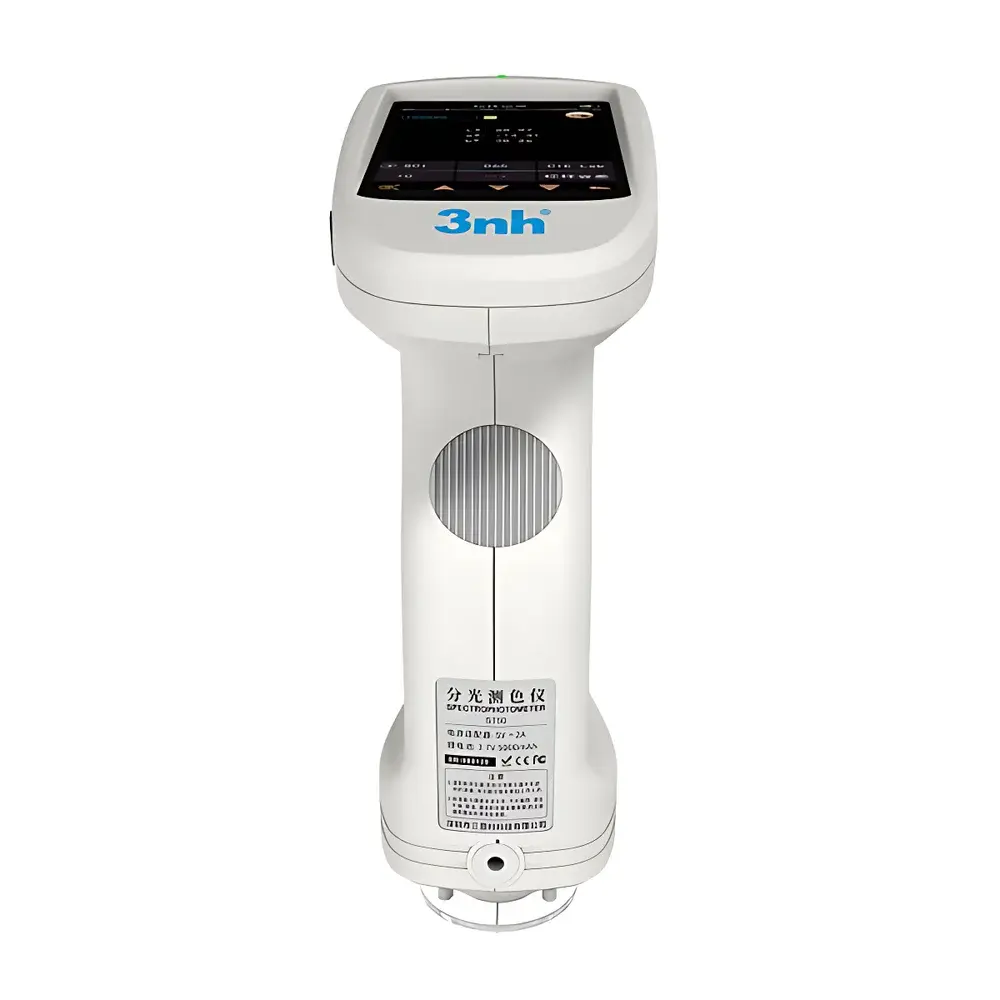
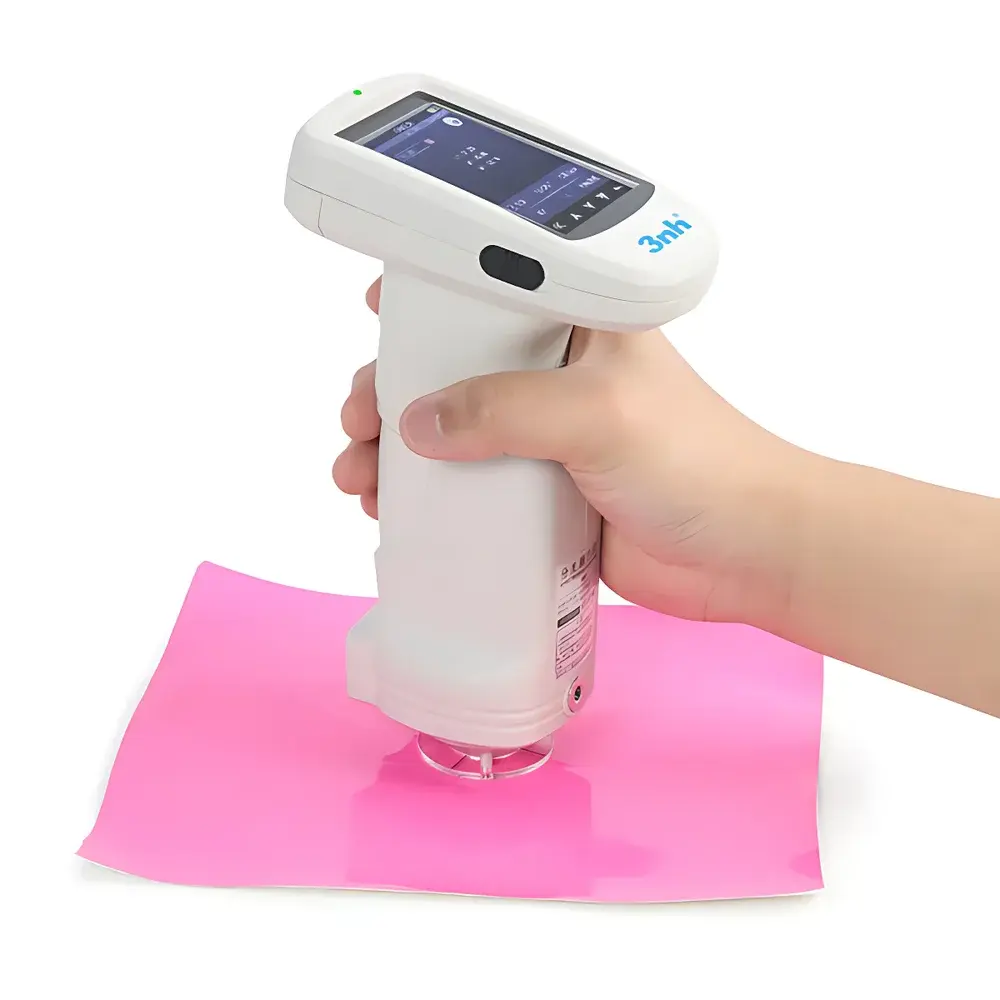
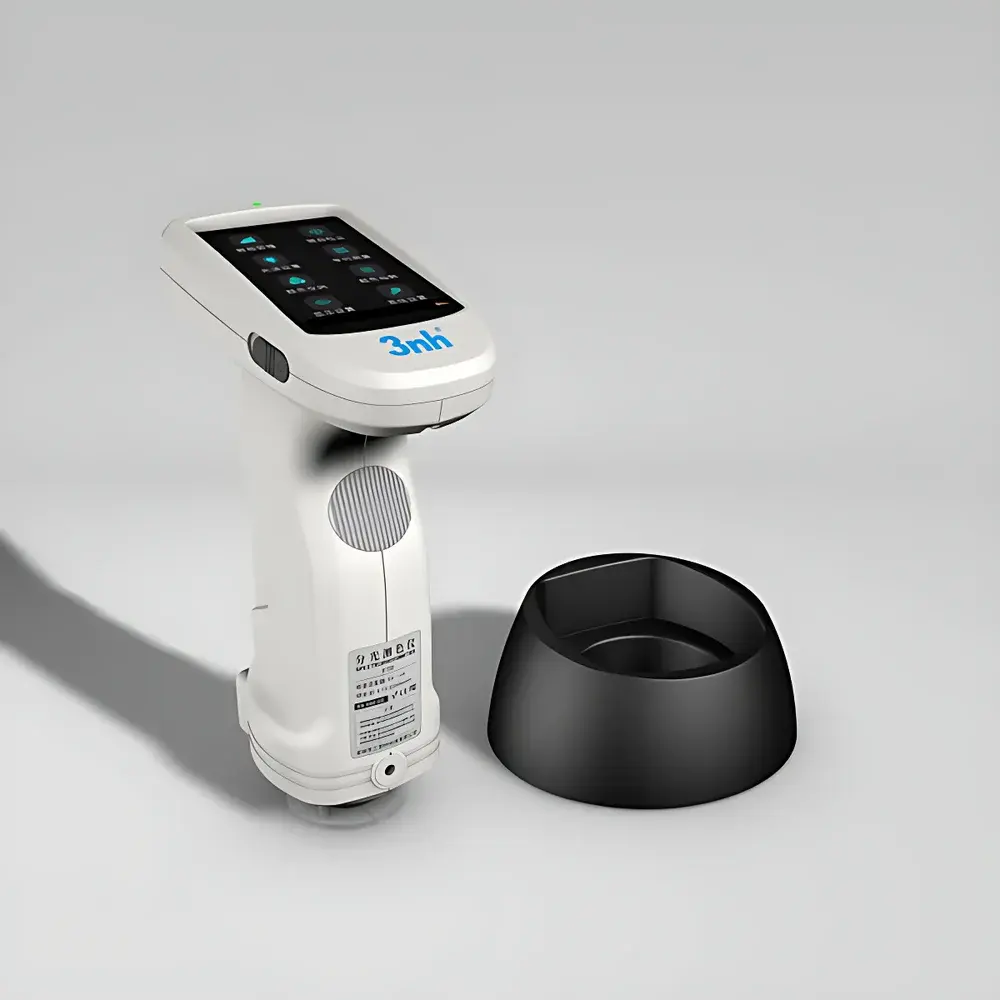
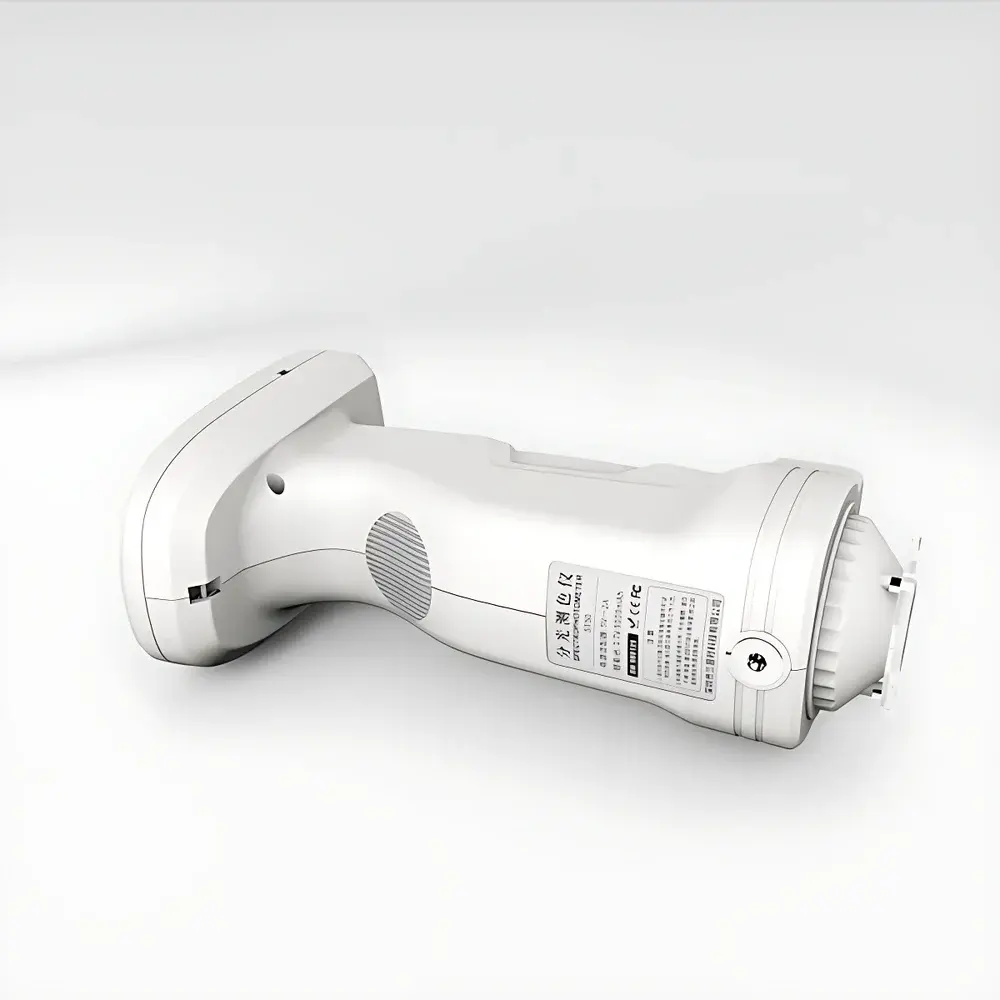
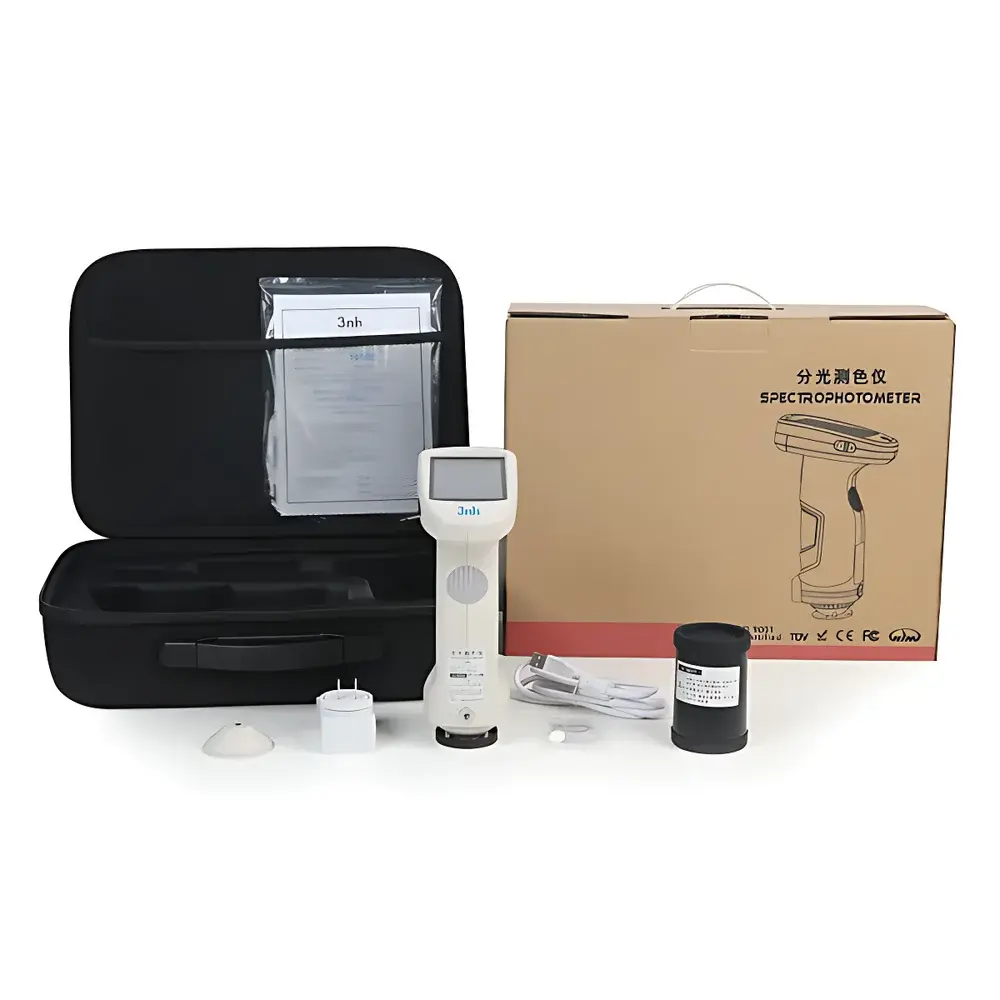
3nh Titan ST50 Spectrophotometric Colorimeter
| Brand | 3nh |
|---|---|
| Origin | Guangdong, China |
| Manufacturer Type | Direct Manufacturer |
| Product Category | Domestic |
| Model | ST50 |
| Product Type | Spectrophotometric Colorimeter |
| Instrument Form Factor | Portable |
| Optical Geometry | d/8° Integrating Sphere |
| Light Source | Full-Spectrum LED Array (400–700 nm) with UV Capability |
| Spectral Range | 400–700 nm |
| Wavelength Interval | 10 nm |
| Repeatability | ΔE*ab ≤ 0.03 (MAV/SCI, after warm-up and white calibration |
| Spectral Reflectance Reproducibility | ≤0.1% std dev (400–700 nm), ≤0.2% std dev across full range |
| Inter-instrument Agreement | ΔE*ab ≤ 0.2 (BCRA Series II, MAV/SCI) |
| Detector | Dual-row 20-element silicon photodiode array |
| Aperture Options | Ø8 mm or Ø4 mm |
| Measurement Time | ~1.5 s (SCI + SCE simultaneous) |
| Observer Angle | 2° / 10° |
| Color Spaces | CIE LAB, XYZ, Yxy, LCh, CIE LUV, s-RGB, βxy, Munsell (C/2) |
| Color Difference Formulas | ΔE*ab, ΔE*uv, ΔE*94, ΔE*cmc (1:1 & 2:1), ΔE*00 |
| Compliance | CIE No. 15, GB/T 3978, GB/T 18833, ISO 7724-1, ASTM E1164, DIN 5033-7 |
Overview
The 3nh Titan ST50 Spectrophotometric Colorimeter is a portable, high-precision instrument engineered for industrial color measurement and quality assurance in production environments where repeatability, inter-instrument agreement, and spectral fidelity are critical. Based on 3nh’s proprietary Titan dual-array spectrophotometric platform, the ST50 employs a d/8° integrating sphere optical geometry compliant with ISO 7724-1 and CIE No. 15, enabling both Specular Component Included (SCI) and Specular Component Excluded (SCE) measurements—simultaneously—in approximately 1.5 seconds. Its core optical architecture features a plane diffraction grating and a dual-row 20-element silicon photodiode array, delivering stable spectral acquisition across the visible spectrum (400–700 nm at 10 nm intervals). Unlike filter-based tristimulus meters, the ST50 captures full reflectance spectra, enabling accurate calculation of color values under multiple standard observers (2° and 10°), illuminants, and color difference formulas—essential for cross-supplier color matching and regulatory compliance in global supply chains.
Key Features
- Dual-Array Photodiode Detection: A custom-engineered 2×20-element silicon photodiode array ensures high signal-to-noise ratio, wide dynamic range (0–200% reflectance), and resistance to saturation under intense illumination while maintaining sensitivity to low-reflectance samples.
- Simultaneous SCI/SCE Measurement: The d/8° sphere design supports concurrent capture of both surface-inclusive and surface-excluded reflectance data—critical for evaluating texture-sensitive materials such as textured plastics, coated metals, and woven textiles.
- Full-Spectrum LED Illumination: A calibrated, thermally stabilized LED array covering 400–700 nm provides uniform spectral power distribution without gaps or spikes, eliminating metamerism risks associated with narrow-band or xenon-pulsed sources. Optional UV output enables fluorescence compensation for optical brighteners in paper, textiles, and detergents.
- Real-Time Camera-Assisted Targeting: An integrated 2-megapixel CMOS camera displays the measurement area on the 3.5-inch capacitive touchscreen, allowing operators to verify sampling location prior to acquisition—reducing misregistration errors common in curved or patterned surfaces.
- Non-Contact Auto-Calibration: Uses a certified, abrasion-resistant ceramic white reference tile with traceable NIST-traceable reflectance values. Calibration is performed automatically upon lid closure, minimizing drift and operator dependency.
- Multi-Platform Software Integration: Native support for Android, iOS, Windows, HarmonyOS, and WeChat Mini Programs ensures seamless deployment across lab, QC floor, and remote auditing workflows. All firmware and spectral data are encrypted and timestamped per measurement.
Sample Compatibility & Compliance
The ST50 accommodates solid, liquid, and powdered samples via standardized apertures (Ø4 mm and Ø8 mm), with optional accessories including a powder test box and non-contact stand. It meets requirements for routine color control in industries regulated under ISO 9001, IATF 16949, and GMP-aligned processes. While not FDA 21 CFR Part 11–certified out-of-the-box, its audit trail functionality—including user ID, timestamp, instrument serial number, calibration status, and raw spectral data—supports validation protocols for pharmaceutical packaging, automotive paint, and food-grade plastics. Compliance with ASTM E1164, GB/T 18833 (traffic sign retroreflectivity), and AATCC TM173 (textile whiteness index) is verified through factory calibration against BCRA Series II ceramic tiles and NPL/NIST-traceable standards.
Software & Data Management
The ST50 stores up to 1,000 standard references and 20,000 sample readings internally, each containing both SCI and SCE spectral datasets. Data export supports CSV, XML, and CxF/XRGA formats for integration into LIMS, SAP QM, and enterprise color management systems (e.g., X-Rite Color iMatch, Datacolor Match Textile). The included QC software (freely downloadable from 3nh.com) enables statistical process control (SPC) charting, tolerance zone definition (ellipsoidal or rectangular), pass/fail flagging, and batch-level reporting. All spectral files retain embedded metadata—illuminant, observer, aperture, measurement mode—ensuring reproducibility during third-party review or regulatory inspection.
Applications
The ST50 serves as a primary color verification tool in manufacturing segments requiring tight visual tolerances and material consistency: injection-molded consumer electronics housings; automotive interior trim; solvent- and water-based coatings for OEM and refinish applications; reactive dye formulations in textile mills; ceramic glaze development; and flexographic/gravure printing ink formulation. Its portability and battery life (up to 8,800 measurements per charge) make it suitable for on-site supplier audits, incoming raw material inspection, and line-side process monitoring without reliance on fixed lab infrastructure.
FAQ
What is the inter-instrument agreement specification for the ST50?
Inter-instrument agreement is validated using the BCRA Series II 12-tile set under MAV/SCI conditions, with mean ΔE*ab ≤ 0.2.
Does the ST50 support fluorescence compensation?
Yes—the full-spectrum LED source includes controlled UV emission, and the instrument applies built-in fluorescence correction algorithms when measuring optically brightened samples.
Can spectral data be exported for third-party analysis?
Yes—raw reflectance spectra (400–700 nm, 10 nm intervals) are exportable in CSV and CxF format, preserving all acquisition metadata.
Is the white calibration tile NIST-traceable?
The included ceramic white tile is certified by an ILAC-accredited metrology lab; full calibration certificate is available upon request.
How does the ST50 handle gloss or texture variation?
By supporting simultaneous SCI/SCE acquisition, users can isolate bulk color (SCI) from surface appearance effects (SCE), enabling independent evaluation of pigment dispersion versus topcoat uniformity.






