
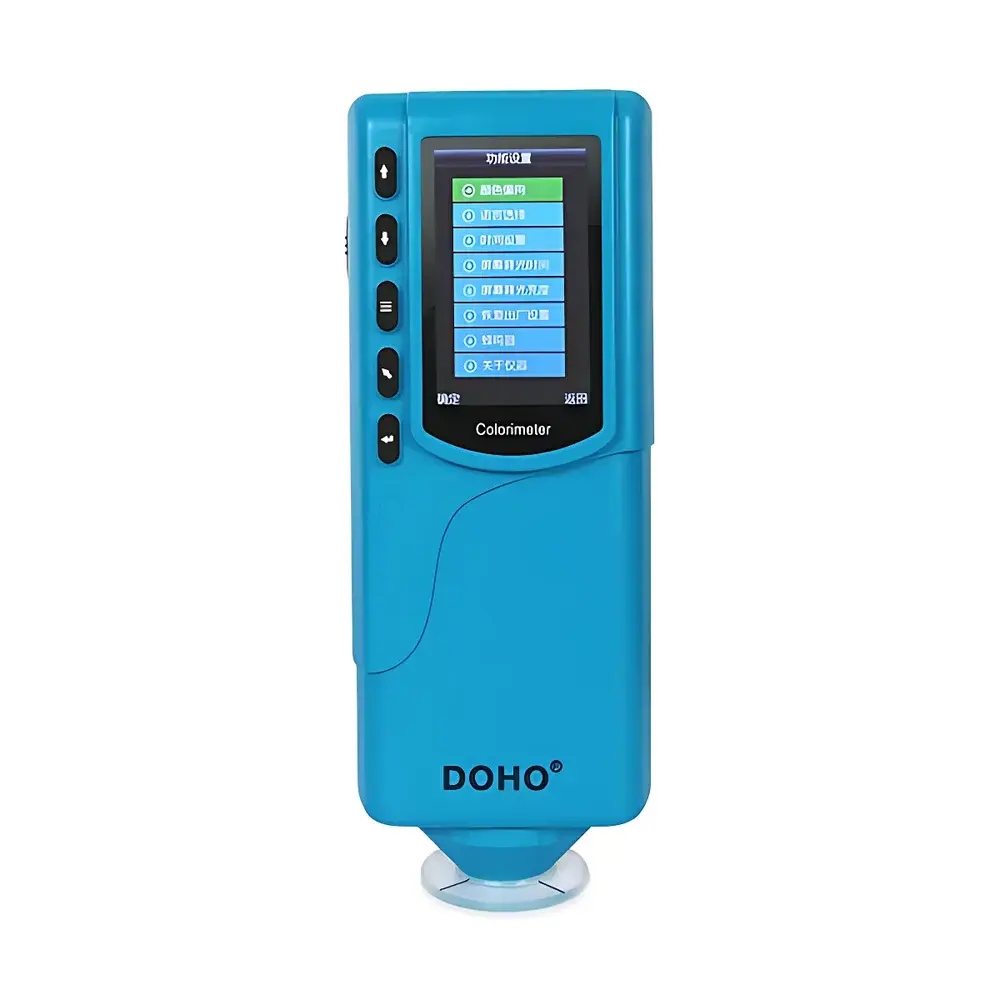
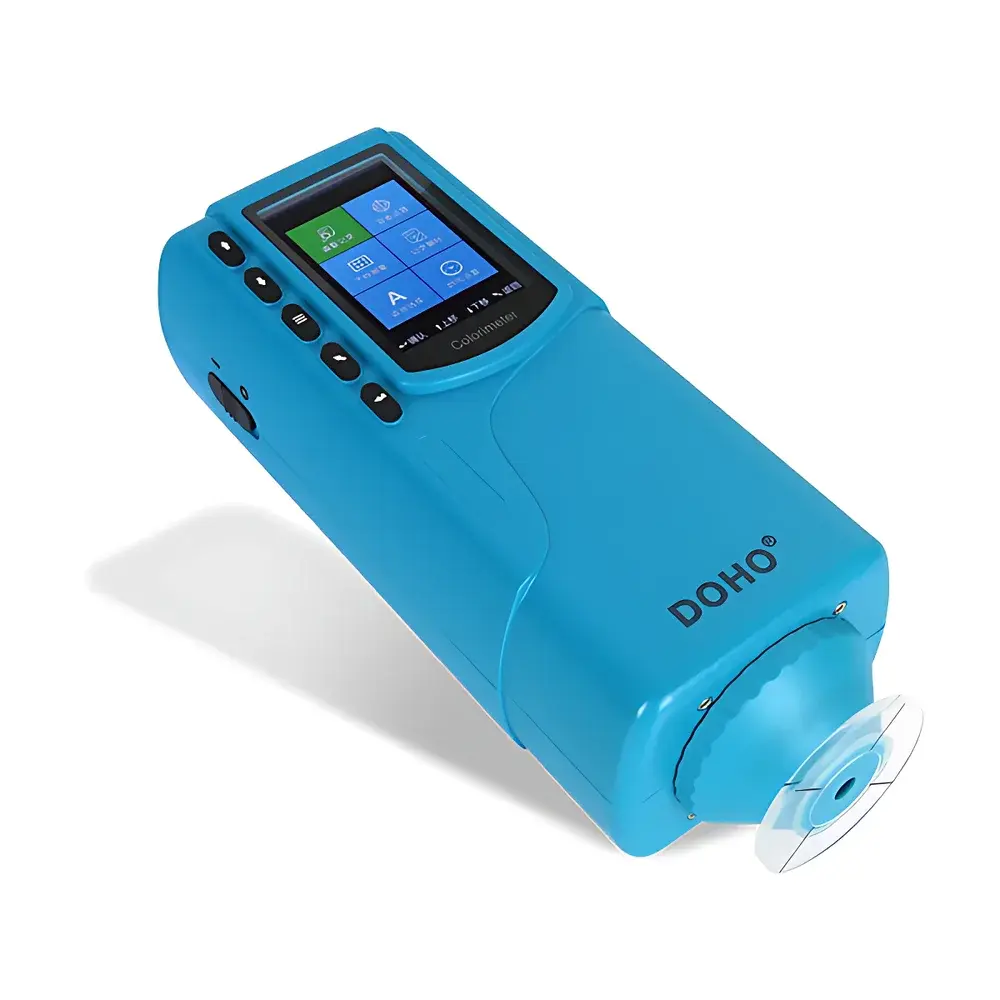
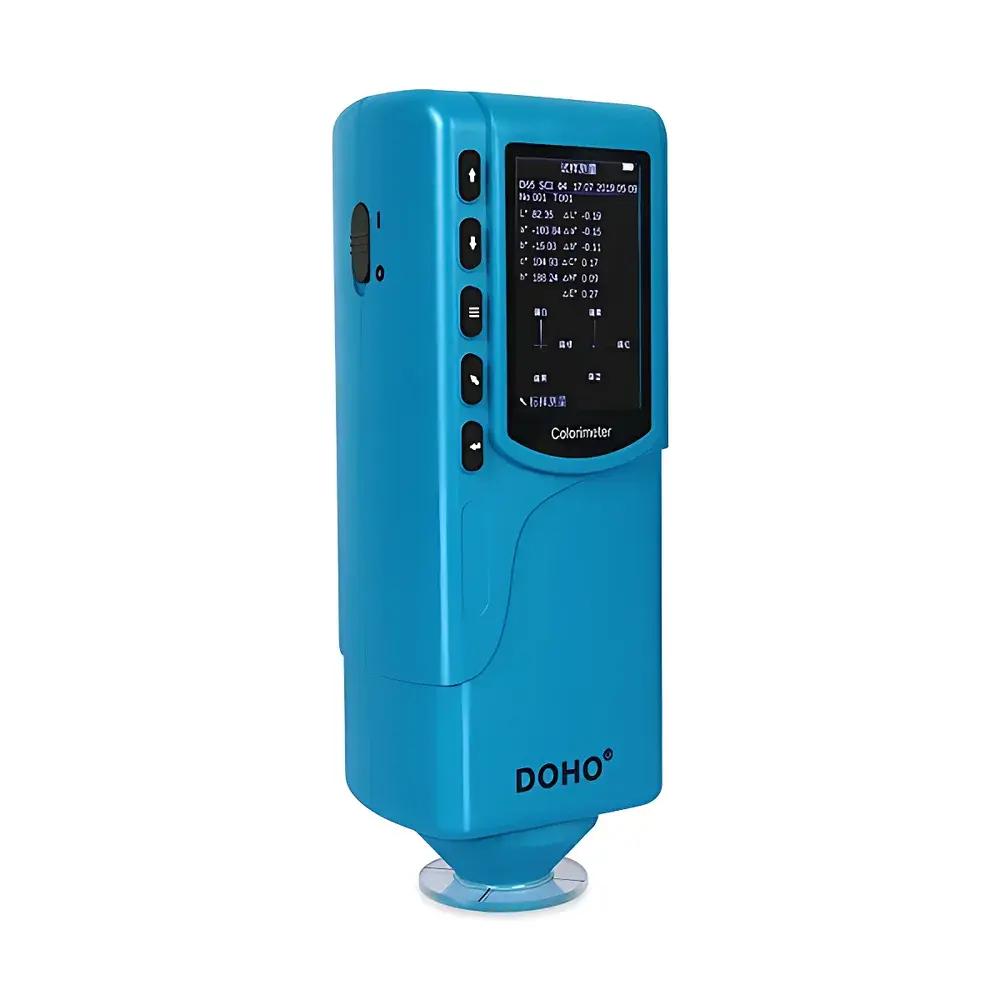
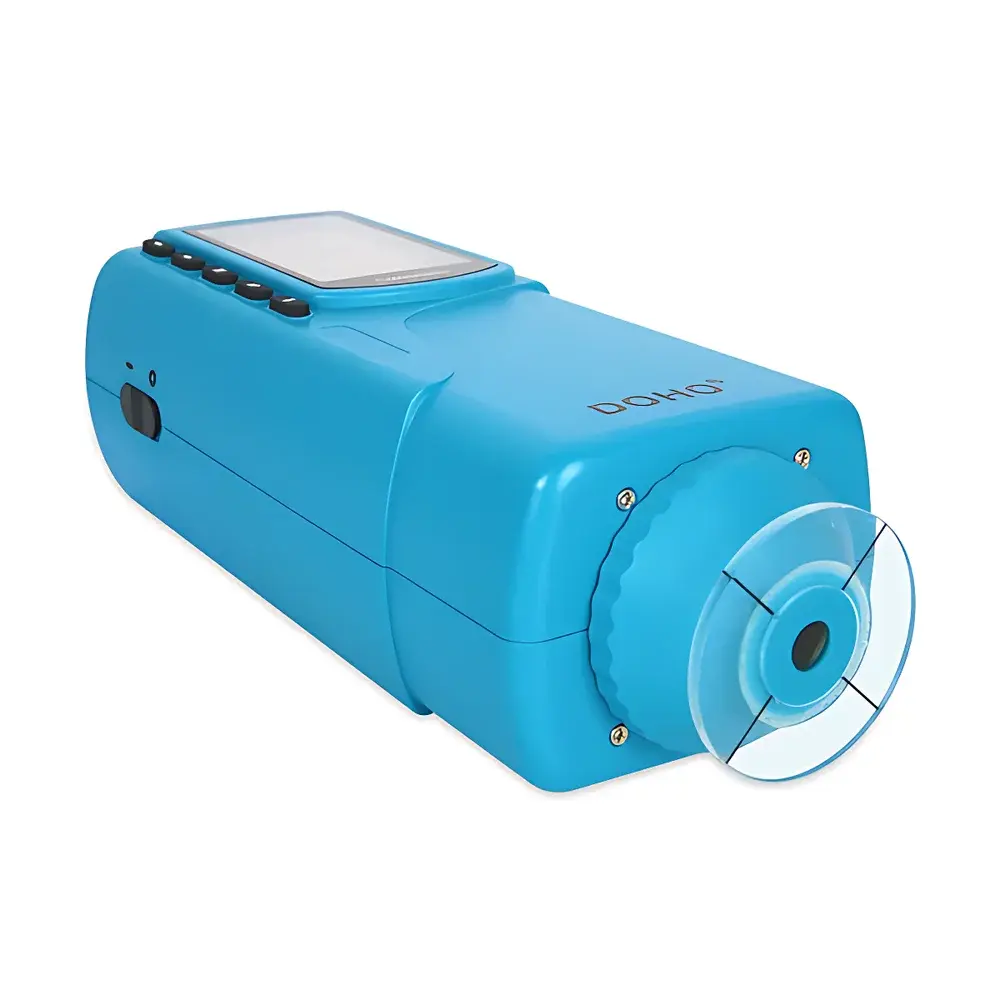
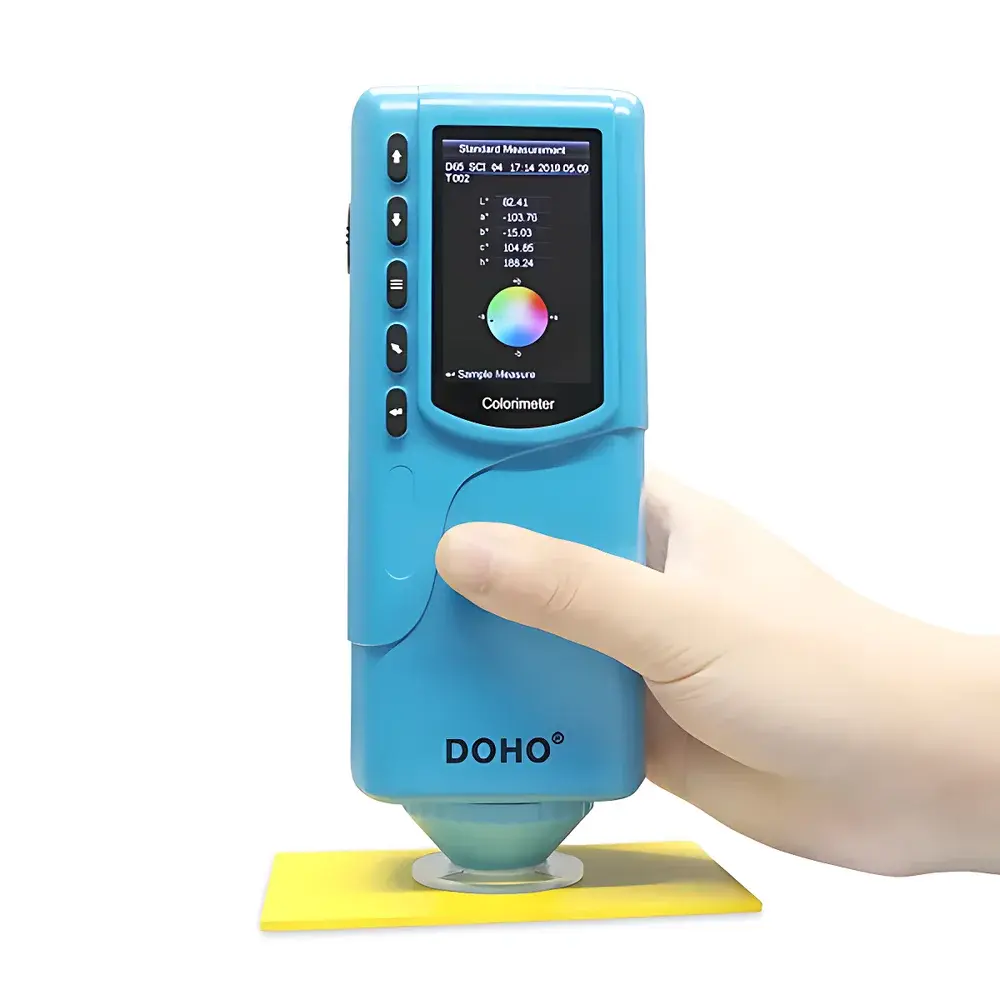
3nh DR-11 Portable Color Difference Meter
| Brand | 3nh |
|---|---|
| Origin | Guangdong, China |
| Manufacturer Type | Manufacturer |
| Product Category | Color Difference Meter |
| Instrument Type | Portable |
| Optical Geometry | 8°/d (8° illumination / diffuse viewing) |
| Light Source | LED |
| Spectral Range | 400–700 nm |
| Repeatability | Φ8 mm aperture / ΔE*ab ≤ 0.06 (after instrument warm-up and calibration, average of 30 measurements on white tile at 5 s intervals) |
| Inter-instrument Agreement | ΔE*ab ≤ 0.4 (BCRA Series II 12-color tile set) |
| Display | 2.8″ TFT true-color screen (16:9 aspect ratio) |
| Battery | Rechargeable Li-ion, 3.7 V @ 3200 mAh |
| Measurement Time | ≤1.5 s |
| Data Storage | 100 standard samples + 10,000 test samples |
| Operating Temperature | 0–40 °C |
| Storage Temperature | −20–50 °C |
| Software | CQCS3 Quality Management Software |
| Compliance | CIE No. 15, GB/T 3978, CIE 10° Standard Observer, D65 Illuminant |
Overview
The 3nh DR-11 Portable Color Difference Meter is an entry-level, domestically engineered color measurement instrument designed for routine color quality control in industrial environments where portability, operational simplicity, and cost-effectiveness are prioritized. It operates on the fundamental principle of spectrophotometric reflectance measurement using an 8°/d optical geometry—where incident light strikes the sample at 8° from the normal and diffusely reflected light is collected over a hemispherical solid angle. This geometry conforms to ISO/CIE standards for colorimetric evaluation under controlled illuminant conditions (D65), ensuring compatibility with widely accepted color spaces including CIE LAB and associated ΔE*ab calculations. The device integrates a stable LED light source covering the visible spectrum (400–700 nm), paired with silicon photodiode sensors calibrated against traceable reference standards. Its compact form factor (205 × 67 × 80 mm, 400 g), combined with a high-capacity 3200 mAh lithium-ion battery, supports extended field or production-line use without frequent recharging.
Key Features
- High repeatability performance: ΔE*ab ≤ 0.06 (Φ8 mm aperture, measured on certified white tile after warm-up and calibration)
- ETC (Every Test Calibration) technology: Internal standard white reference board enables automatic optical recalibration prior to each measurement, minimizing drift and enhancing long-term stability
- Dual-targeting system: Simultaneous crosshair alignment and LED-assisted illumination targeting ensures rapid, accurate positioning on heterogeneous or curved surfaces
- Ergonomic handheld design: Contoured chassis fits naturally in the palm, reducing operator fatigue during sequential measurements across large batches
- True-color 2.8″ TFT display: Provides real-time visualization of L*a*b* values, ΔE*ab deviation, pass/fail status, and directional color shift indicators (e.g., +a* = redder, −b* = bluer)
- Robust data architecture: Stores up to 100 reference standards and 10,000 test readings onboard; supports USB export for traceable audit trails
Sample Compatibility & Compliance
The DR-11 accommodates flat, textured, and moderately curved surfaces via its fixed Φ8 mm measurement aperture. It is validated for use with opaque, non-fluorescent materials including plastics, painted metal, coated paper, textiles, ceramic glazes, and cosmetic formulations. While not intended for transparent or translucent media (e.g., films, liquids), it meets essential metrological requirements defined in CIE Publication No. 15:2018, GB/T 3978–2008 (Chinese national standard for colorimetry), and ISO 7724-1 for reflectance-based color difference assessment. Its D65-simulated illumination and 10° standard observer function align with ASTM D2244 and ISO 11664-4 for quantitative color difference reporting. Although not certified for GLP/GMP-regulated workflows out-of-the-box, its ETC-driven consistency and software audit capabilities support implementation within documented quality systems requiring basic color verification.
Software & Data Management
The included CQCS3 Quality Management Software provides a Windows-based interface for centralized color data handling. Users can import, organize, and compare spectral datasets across multiple instruments; define custom tolerances per product line; generate compliant test reports (PDF/Excel); and track historical trends using statistical process control (SPC) charts. All measurements retain timestamps, operator IDs (manually entered), and environmental metadata (temperature/humidity if logged externally). The software supports 21 CFR Part 11–compatible configurations—including electronic signatures, user access levels, and immutable audit logs—when deployed on validated IT infrastructure. Raw data export is available in CSV and XML formats for integration with enterprise LIMS or ERP platforms.
Applications
The DR-11 serves as a practical solution for incoming raw material inspection, in-process batch verification, and final product release testing across diverse sectors. In plastics manufacturing, it verifies pigment dispersion uniformity before molding. Electronics assemblers use it to confirm housing color consistency across OEM suppliers. Printing facilities deploy it for spot-checking CMYK ink matches against brand guidelines. Textile mills apply it to assess dye lot conformity pre-cutting. Automotive Tier-1 suppliers rely on it for interior trim component matching. Additionally, food packaging producers utilize it to monitor label print fidelity under standardized lighting, while pharmaceutical companies employ it for primary container cap color verification—provided samples meet opacity and surface flatness criteria.
FAQ
What is the recommended calibration frequency for the DR-11?
Daily zero and white calibration is advised before critical measurements; ETC technology performs automatic white reference correction before each reading, but manual recalibration using the supplied white tile is recommended after temperature shifts >5°C or every 8 hours of continuous operation.
Can the DR-11 measure metallic or pearlescent finishes?
No—it lacks multi-angle geometry (e.g., goniospectrophotometry) required for gonioapparent effect quantification; results on such surfaces reflect only one viewing angle and may not represent visual appearance under varying illumination.
Is firmware upgrade supported?
Yes—firmware updates are distributed via the official DOHO website (doho.cn) and applied through the CQCS3 software; version history and release notes are publicly archived.
Does the instrument comply with FDA color tolerance requirements?
It provides ΔE*ab output traceable to CIE standards, which forms the basis for many FDA-recognized color specifications (e.g., USP ); however, regulatory acceptance depends on method validation per ICH Q2(R2) within the user’s specific application context.
How is inter-instrument agreement maintained across a fleet of DR-11 units?
Each unit ships with individual characterization data; CQCS3 includes a “multi-instrument harmonization” module that applies offset corrections based on BCRA Series II tile measurements, achieving inter-unit ΔE*ab ≤ 0.4 as specified.





