
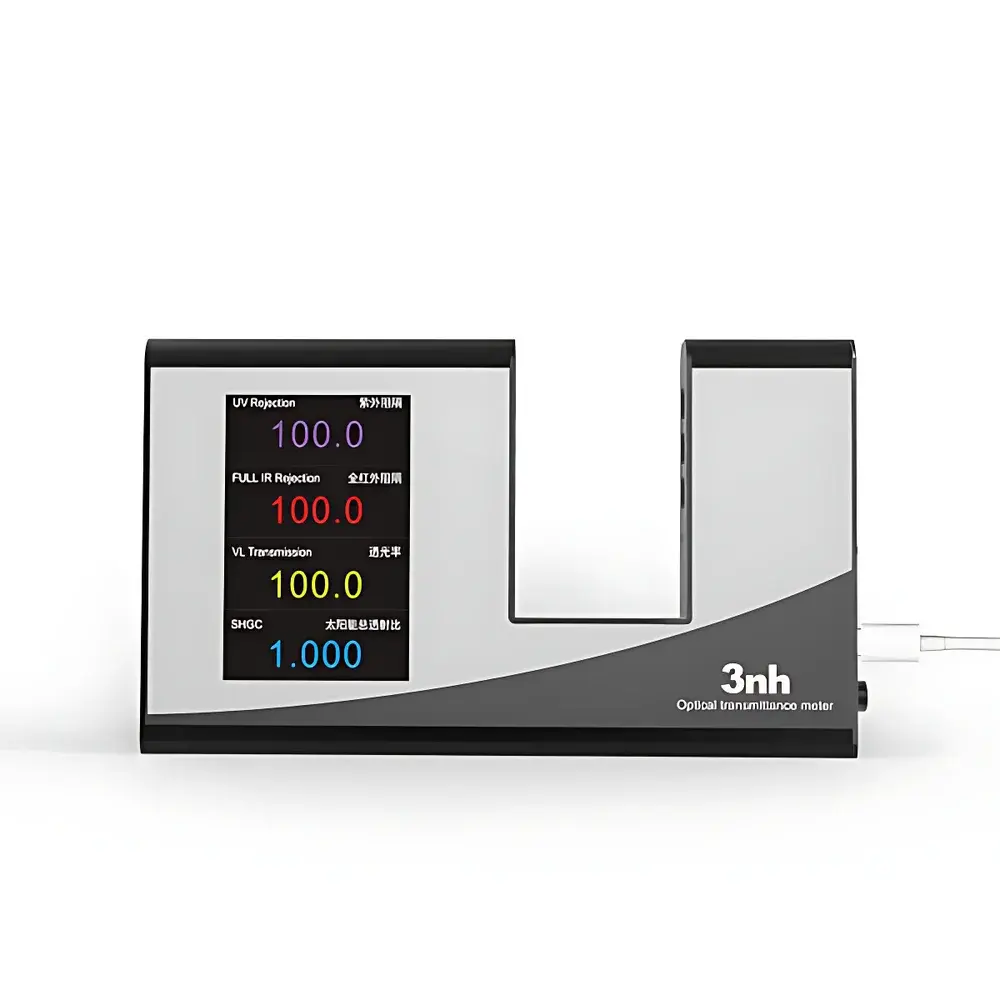
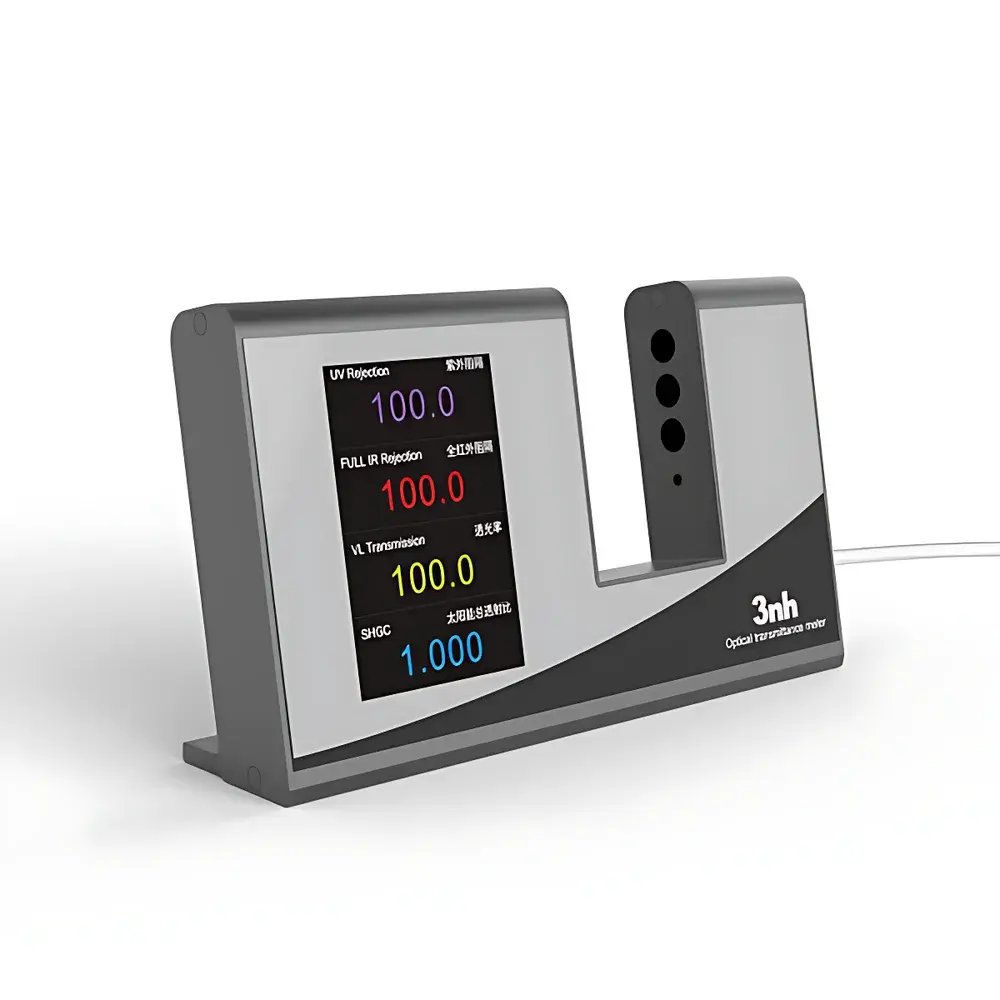
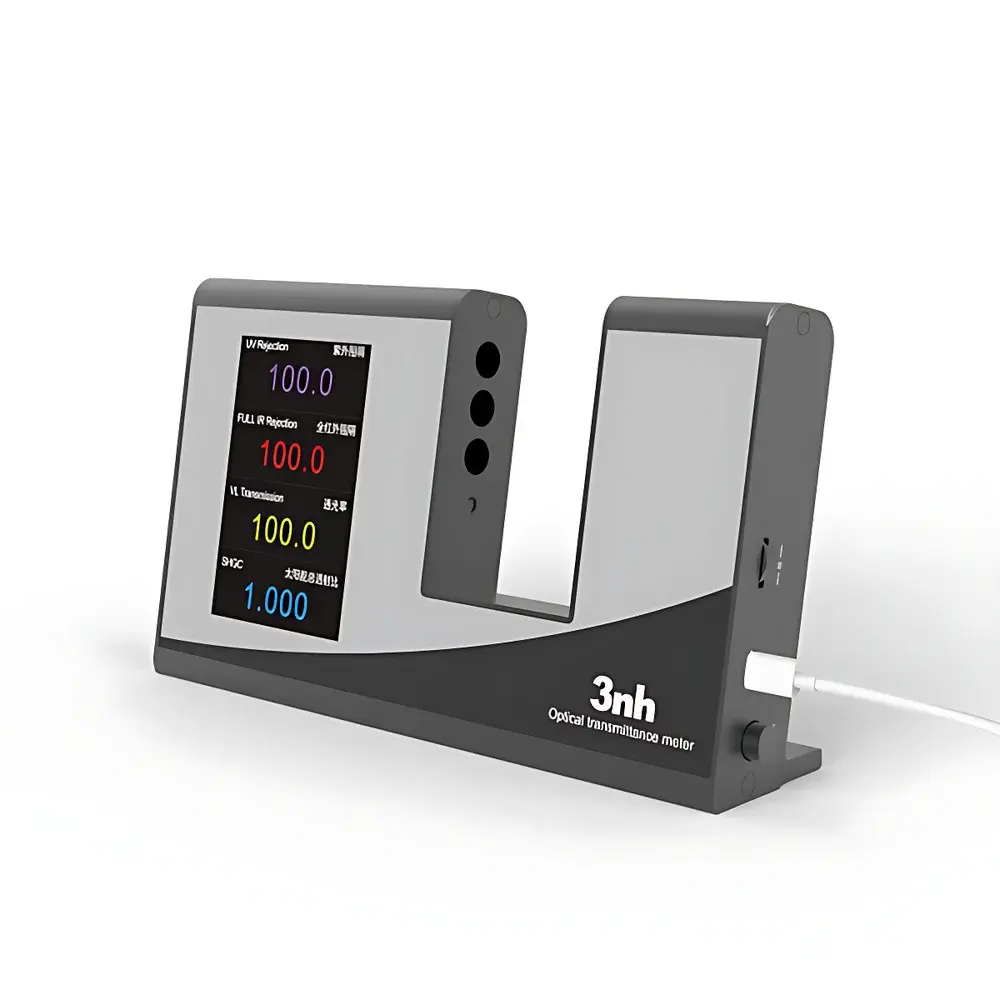
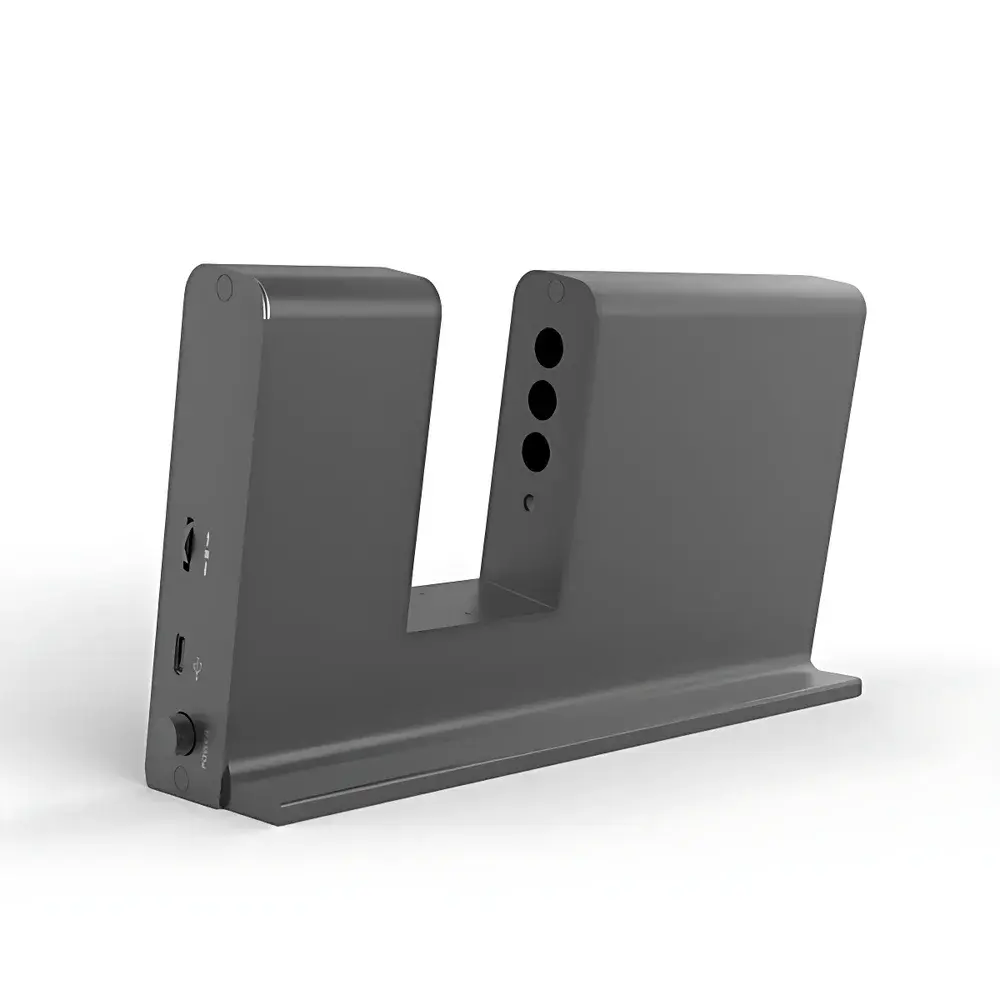
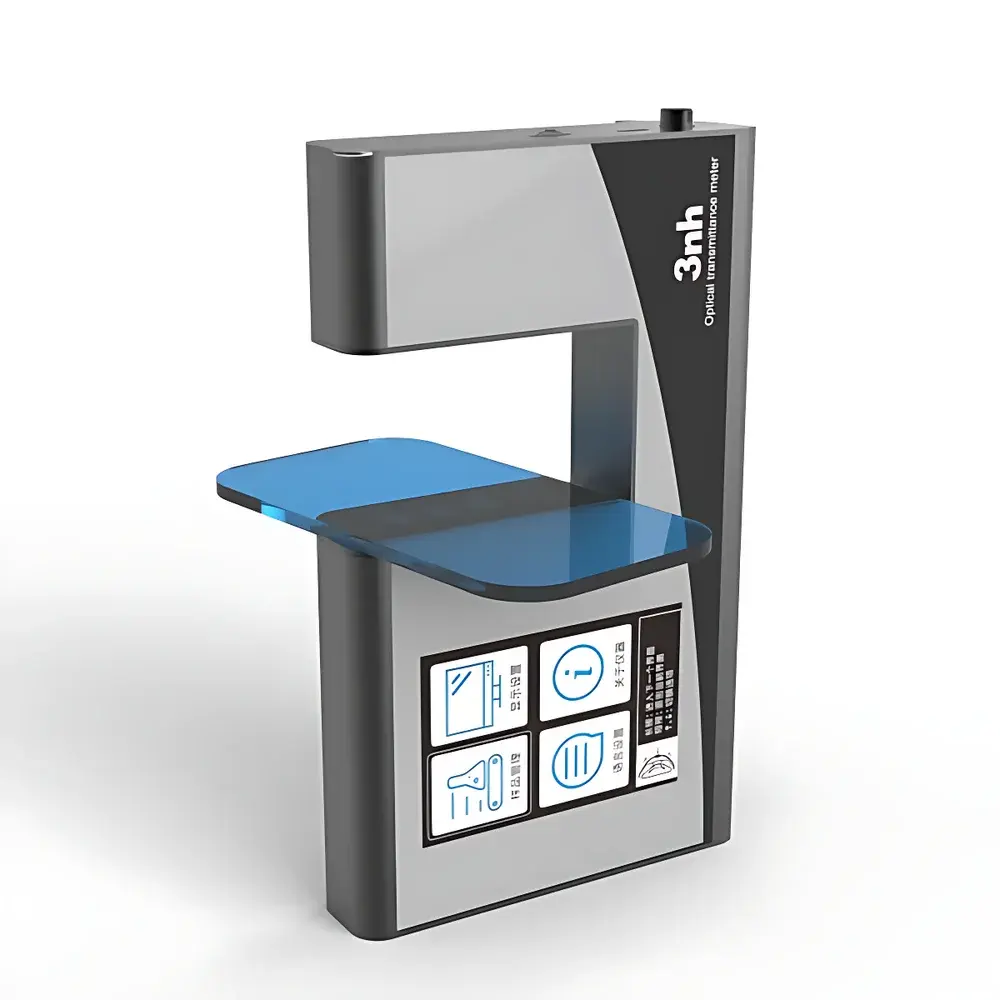
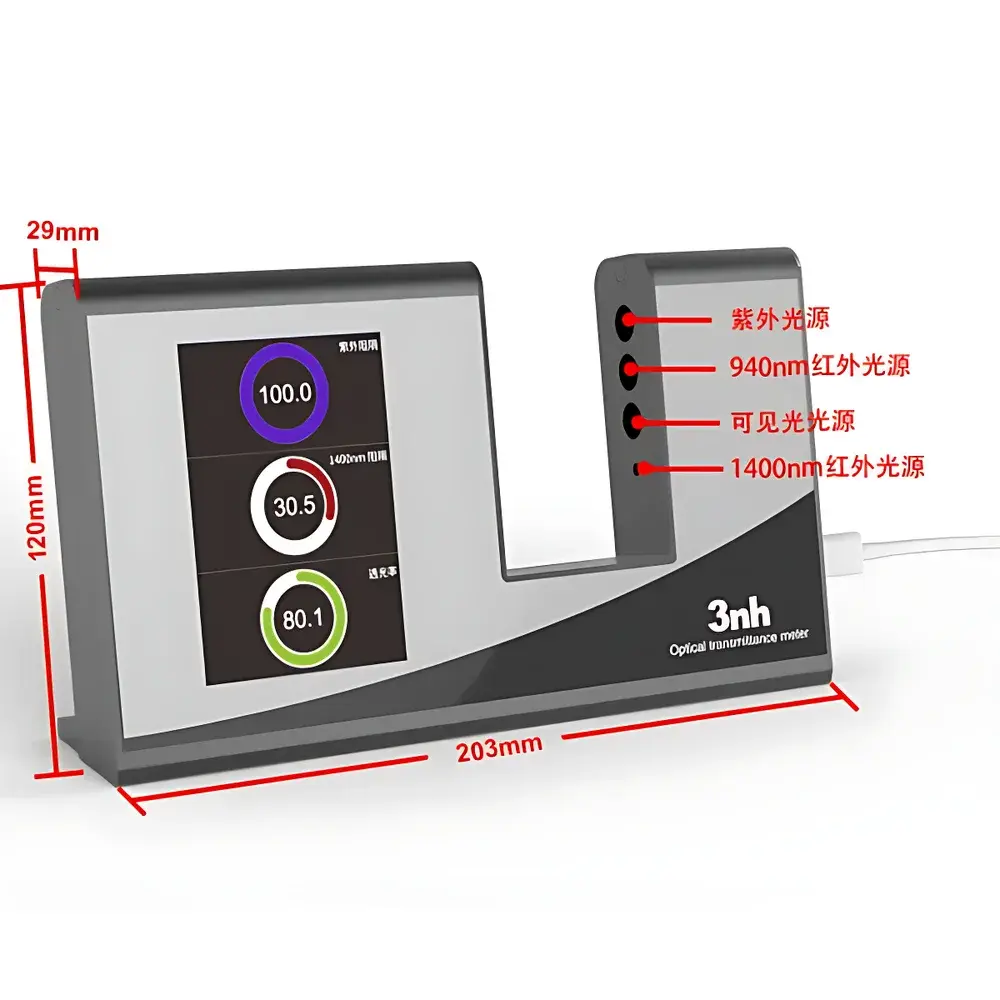
3nh YT1020 Multi-Source Optical Transmittance and Solar Heat Gain Coefficient Analyzer
| Brand | 3nh |
|---|---|
| Model | YT1020 |
| Product Type | Handheld Manual Instrument |
| Transmittance Range | 0–100% |
| Transmittance Repeatability | ±1.0% (certified with NIST-traceable standard reference materials), ±1.5% for colorless homogeneous transparent materials |
| Measurement Time | ~0.5 s |
| Wavelength Coverage | UV–Vis (380–760 nm), IR Peaks (940 nm, 1400 nm), Full IR Band, SHGC & TSER Spectral Modes |
| Resolution | 0.10% |
| Sample Thickness Limit | <47 mm |
| Display | 3.5″ TFT True Color LCD |
| Power | 5 V DC via USB-C |
| Light Source Lifetime | >5 years / >3 million measurements |
| Operating Temp | 0–40 °C, ≤85% RH (non-condensing), <2000 m altitude |
| Storage Temp | −20–50 °C, ≤85% RH (non-condensing) |
| Dimensions | 203 × 120 × 29 mm |
| Weight | 515 g |
Overview
The 3nh YT1020 Multi-Source Optical Transmittance and Solar Heat Gain Coefficient Analyzer is a handheld, microprocessor-controlled spectrophotometric instrument engineered for rapid, high-reproducibility measurement of optical transmittance across multiple spectral bands. Unlike conventional single-band transmittance meters, the YT1020 implements a multi-source illumination architecture—integrating discrete UV, visible (380–760 nm), near-infrared (940 nm and 1400 nm peak wavelengths), full infrared band, Solar Heat Gain Coefficient (SHGC), and Total Solar Energy Rejected (TSER) spectral modes—to enable standardized evaluation of transparent and semi-transparent materials under application-relevant irradiance conditions. Its optical design follows CIE 15:2018 and ISO 9050:2003 principles for luminous and solar transmittance quantification, with photometric response calibrated against NIST-traceable reference standards. The device operates on the principle of collimated beam transmission through planar samples, where incident and transmitted radiant flux are measured by a high-linearity silicon photodiode array coupled with temperature-compensated analog front-end circuitry and real-time digital signal processing.
Key Features
- Multi-spectral illumination system supporting seven distinct operational modes: UV, visible (CIE standard illuminant A/D65), 940 nm IR, 1400 nm IR, full IR band (780–2500 nm), SHGC (per ISO 15099 & EN 410), and TSER—enabling compliance with building envelope energy modeling requirements.
- High-resolution transmittance quantification with 0.10% resolution and certified repeatability of ±1.0% when validated against certified reference materials (CRM), and ±1.5% for homogeneous colorless substrates per ASTM D1003 Annex A2 methodology.
- Sub-second measurement cycle (~0.5 s), initiated automatically upon sample insertion into the precision-machined optical test slot—eliminating manual trigger dependency and minimizing operator-induced variability.
- Integrated auto-calibration routine executed at power-on using internal reference optics; no external calibration tiles required for routine operation.
- Ergonomic handheld form factor (203 × 120 × 29 mm, 515 g) with 3.5″ TFT true-color display enabling intuitive menu navigation, real-time waveform preview, and on-device data review in both English and Simplified Chinese.
- Robust optical path design accommodating samples up to 47 mm thick, with parallel-faced geometry tolerance aligned with ISO 13482:2012 for flat transparent material testing.
- USB-C powered operation (5 V DC) with thermal-stabilized LED sources rated for ≥5 years service life and >3 million measurement cycles—reducing long-term cost of ownership and field maintenance frequency.
Sample Compatibility & Compliance
The YT1020 is validated for use with rigid and flexible planar transparent media including float glass, laminated safety glass, architectural glazing, polymer films (PET, PC, PMMA), coated substrates, and solar control window films. It conforms to measurement geometries specified in ISO 9050:2003 (optical properties of glazing), EN 410:2011 (determination of luminous and solar characteristics), ASTM E424–18 (solar energy transmittance of glazing materials), and ISO 13482:2012 (requirements for optical characterization of transparent plastics). While not a fog/mist/haze analyzer (i.e., it does not compute haze per ASTM D1003 or ISO 14782), its transmittance data serves as a foundational input for SHGC calculation in building energy simulation tools such as EnergyPlus and WINDOW 7. Device firmware supports GLP-compliant audit trails when paired with optional PC software, including timestamped measurement logs, operator ID tagging, and configurable pass/fail thresholds.
Software & Data Management
The YT1020 interfaces via USB-C to Windows-based desktop software (provided free of charge), enabling export of raw transmittance spectra, batch reporting in CSV/PDF formats, statistical process control (SPC) charting, and traceable calibration history management. All stored measurements retain embedded metadata: date/time stamp, spectral mode, ambient temperature/humidity (recorded during measurement), and instrument serial number. Software output complies with FDA 21 CFR Part 11 requirements for electronic records when configured with user authentication and digital signature modules. Firmware updates are delivered via signed binary packages to ensure integrity and prevent unauthorized modification.
Applications
- Architectural glazing qualification: verification of visible light transmittance (VLT), solar transmittance, and SHGC for LEED and BREEAM certification documentation.
- Automotive glazing R&D: comparative analysis of IR-blocking film efficacy across 940 nm and 1400 nm bands relevant to cabin thermal load reduction.
- Packaging film validation: quantification of UV barrier performance and visible clarity for pharmaceutical and food-grade laminates.
- Photovoltaic module testing: pre-lamination transmittance screening of encapsulant films (EVA, POE) and anti-reflective coatings.
- Quality assurance in flat-panel display manufacturing: incoming inspection of cover glass and touch sensor substrates for batch consistency.
- Academic research in optical materials: spectral transmittance profiling of novel transparent conductors, thermochromic layers, and electrochromic devices.
FAQ
Does the YT1020 measure haze or diffused transmittance?
No. The YT1020 is designed exclusively for total (direct + diffuse) transmittance measurement. It does not separate collimated from scattered components and therefore cannot report haze per ASTM D1003 or ISO 14782.
Can the instrument be used for curved or non-planar samples?
No. The optical path assumes parallel-faced, flat geometry. Curved, textured, or patterned surfaces introduce systematic errors due to beam deviation and vignetting.
Is NIST-traceable calibration included with shipment?
Each unit ships with factory calibration verified against NIST-traceable reference standards; full calibration certificates are available upon request at time of order.
What is the recommended recalibration interval?
Annual recalibration is advised under continuous use; however, built-in stability monitoring and auto-zero routines support extended intervals when operated within specified environmental limits.
Does the device meet IP rating or ruggedization standards for industrial environments?
The YT1020 carries no formal IP rating; it is intended for controlled laboratory, QC lab, or clean production floor use—not for outdoor or high-dust/humidity industrial settings without protective enclosures.




