
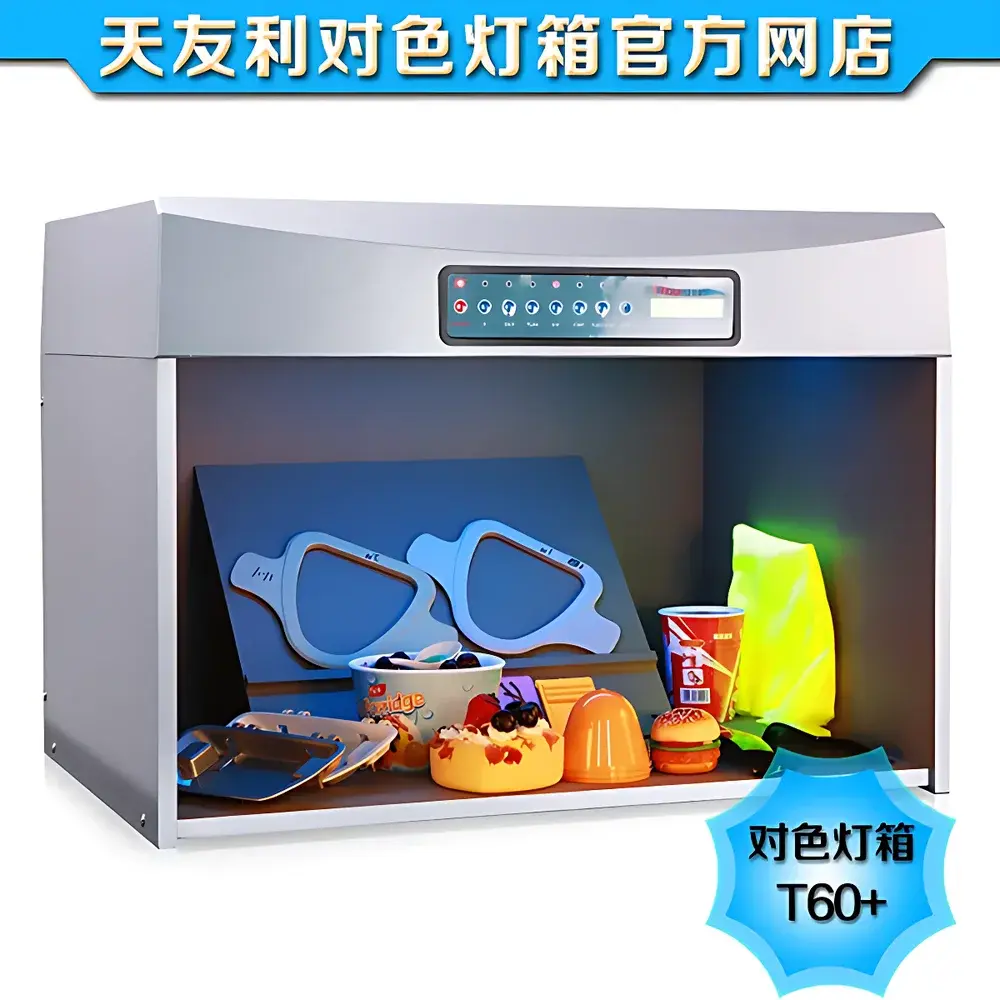
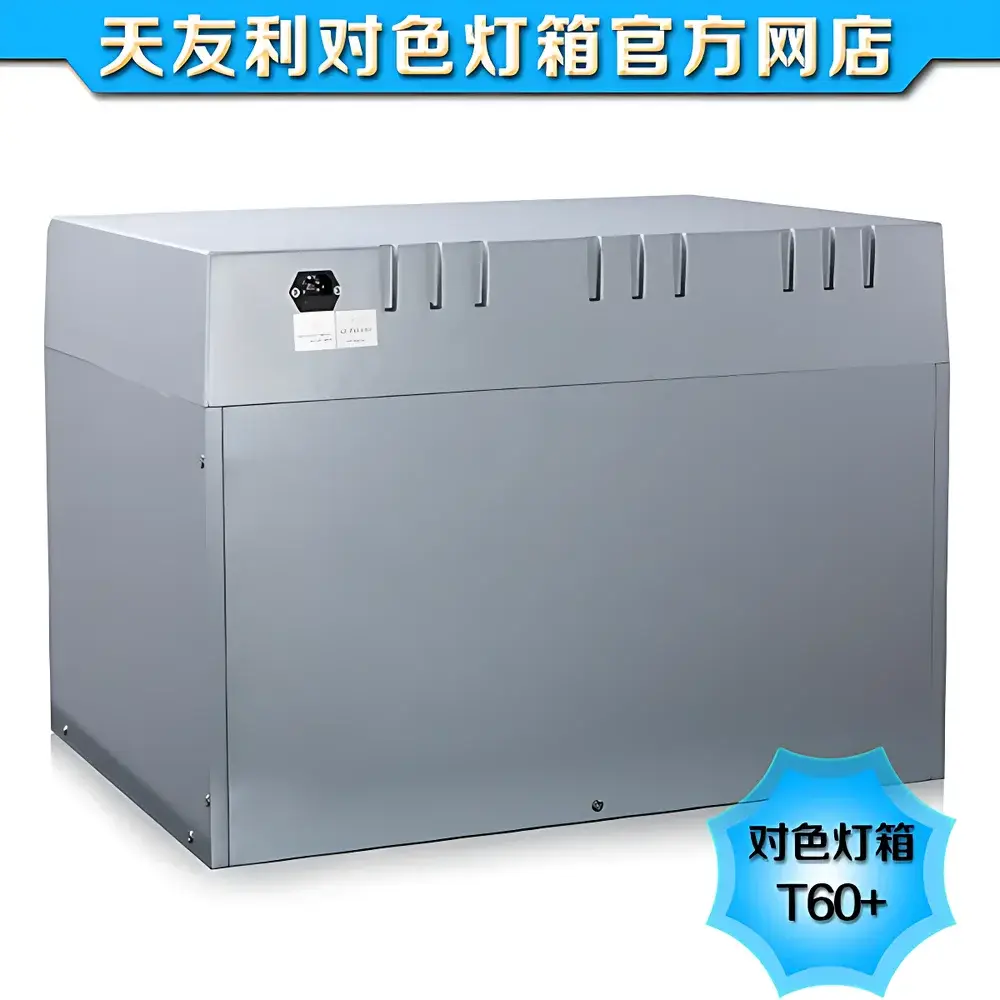
TILO T60+/P60+ Standard Light Source Color Matching Cabinet
| Brand | TILO |
|---|---|
| Origin | Shenzhen, China |
| Model | T60+/P60+ |
| Housing Material | UV-stabilized engineering plastic |
| Light Source Switching | Automatic, with Metamerism Evaluation Capability |
| Warm-up Time | 0 s |
| Power Consumption | Low |
| Operating Temperature | Ambient-stable, non-heat-emitting |
| Standard Illuminants | D65, TL84, CWF, F/A, UV, U30 (configurable naming) |
| Usage Tracking | Real-time lamp hours, switch count, and source identification per channel |
| Footing | Integrated elastomeric leveling feet |
Overview
The TILO T60+/P60+ Standard Light Source Color Matching Cabinet is an engineered optical evaluation system designed for precise, repeatable color assessment under controlled illumination conditions. It operates on the principle of standardized photometric simulation—reproducing defined CIE illuminants (including D65, TL84, CWF, F/A, U30, and UV) to enable objective visual comparison of color appearance across diverse viewing environments. Unlike conventional light booths relying on aging fluorescent tubes or uncalibrated LEDs, the T60+/P60+ integrates thermally stable, spectrally optimized light sources with real-time usage monitoring and zero warm-up latency. Its primary function is to support color-critical workflows in quality control laboratories, R&D departments, and production facilities where metamerism detection, batch-to-batch consistency verification, and compliance with international color standards are mandatory. The cabinet conforms to core requirements of ISO 3664:2009 (Graphic technology — Viewing conditions), ASTM D1729–19 (Standard Practice for Visual Appraisal of Colors), and GB/T 9761–2008 (Chinese national standard for color matching cabinets), ensuring traceability and inter-laboratory comparability.
Key Features
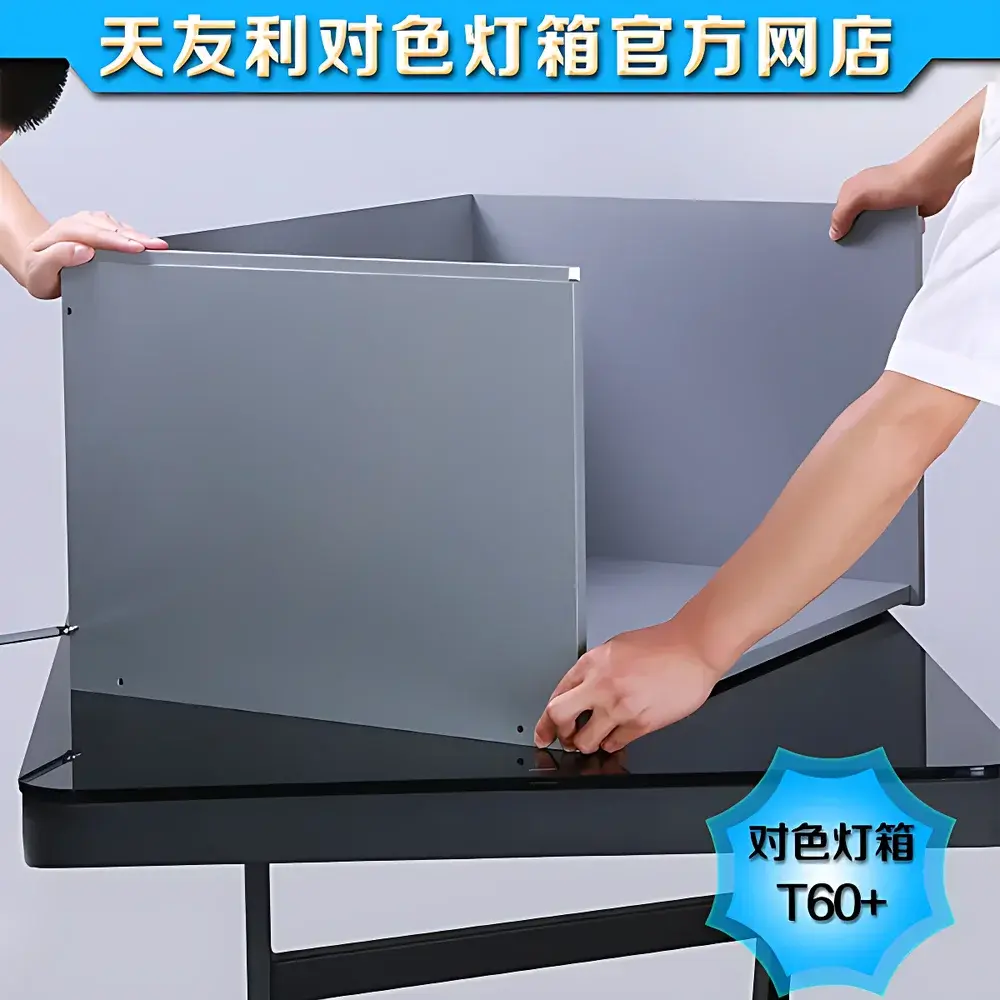
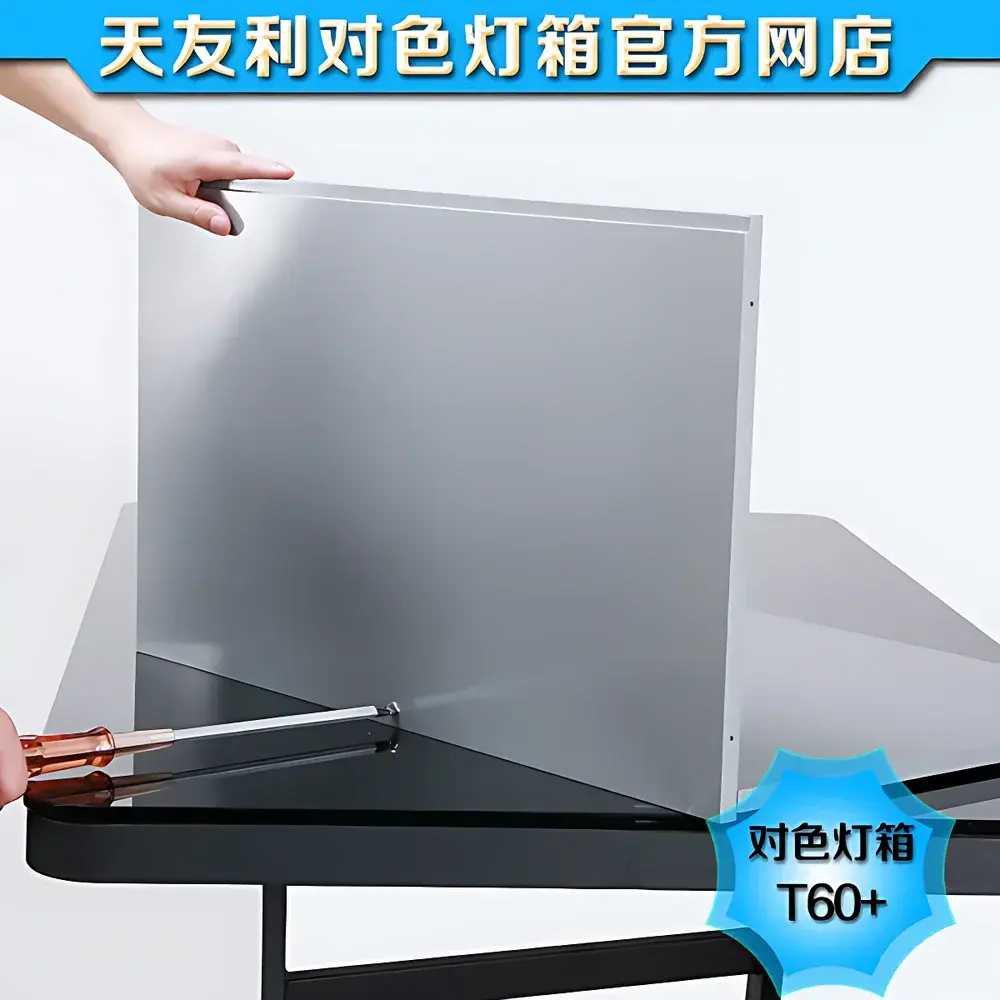
- UV-stabilized engineering plastic housing: Molded in one piece to eliminate seam-related light leakage; engineered for >10-year service life without yellowing, warping, or paint delamination under continuous operational exposure.
- True light-tight architecture: Seamless internal construction achieves 100% optical isolation between illuminant channels—critical for eliminating spectral crosstalk during multi-source evaluation and metamerism analysis.
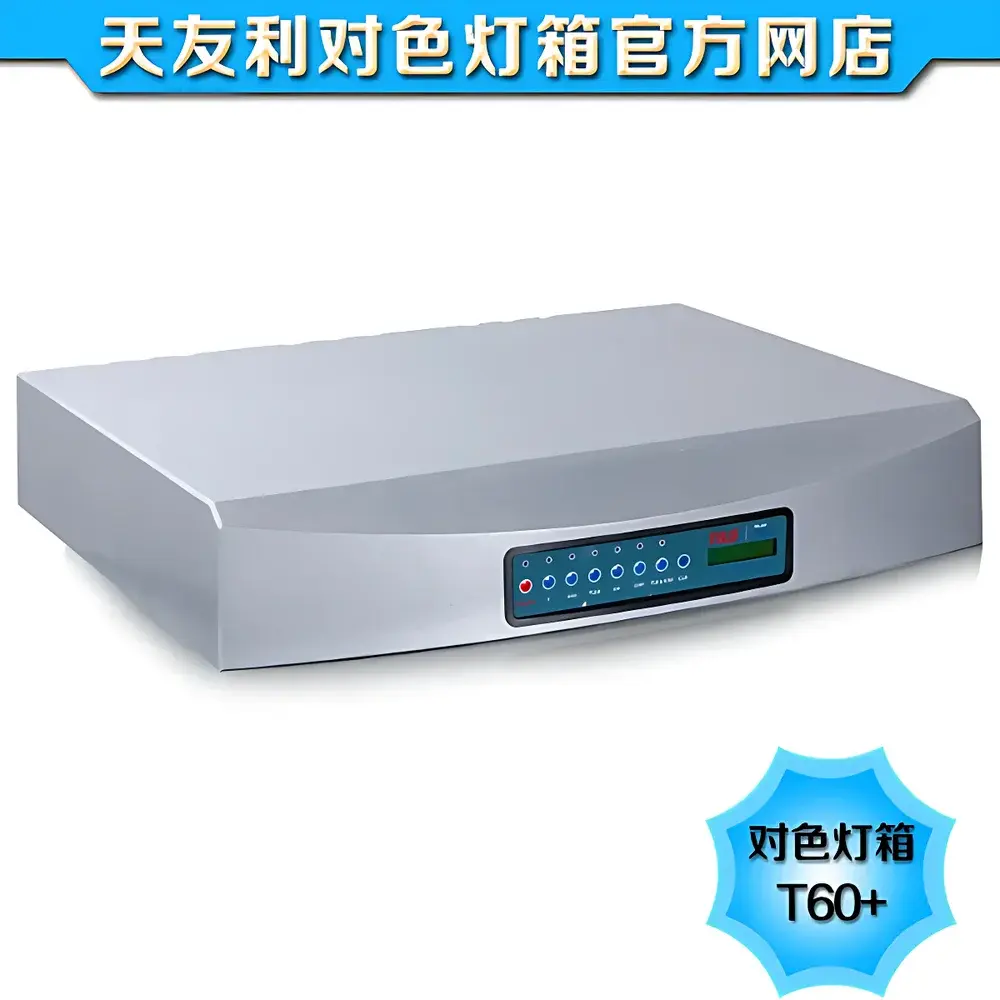
- Intelligent illumination management: Each light source is independently addressable with automatic switching logic; real-time logging of cumulative operating hours, power-on cycles, and active source identity supports preventive maintenance and GLP-compliant recordkeeping.
- No-warm-up operation: Solid-state and optimized fluorescent sources reach full spectral output instantly at activation—eliminating subjective drift during initial observation and enabling high-throughput sample screening.
- Low thermal signature & energy efficiency: Designed for ambient stability; surface temperature rise remains within ±0.5°C during extended use, preventing heat-induced color shift in thermosensitive substrates (e.g., plastics, textiles, coatings).
- Elastomeric leveling feet (standard): Provide vibration damping, surface protection, and positional stability on laboratory benches or QC workstations without requiring permanent mounting.
Sample Compatibility & Compliance
The T60+/P60+ accommodates flat, rigid, and semi-flexible specimens up to 600 mm × 600 mm × 100 mm (W×D×H), including printed media, fabric swatches, painted panels, plastic injection-molded parts, and coated metal substrates. Its uniform 1200 lux ±5% illuminance field (measured at central 300 mm × 300 mm zone) meets minimum brightness thresholds specified in ISO 3664 and ASTM D1729. All installed illuminants are pre-aligned to CIE spectral power distribution targets, with D65 and TL84 channels certified to maintain <5% deviation from reference spectra over 2,000 hours of rated life. The system supports audit-ready documentation: lamp replacement logs, calibration interval records, and illuminant verification reports align with ISO/IEC 17025 and FDA 21 CFR Part 11 data integrity expectations when integrated with validated LIMS platforms.
Software & Data Management
While the T60+/P60+ operates as a standalone hardware platform, its embedded microcontroller enables RS-232 or optional USB-C connectivity for integration into centralized lab informatics systems. Firmware supports export of usage metadata (lamp hours, switch events, timestamped source selection) in CSV format for archival in electronic lab notebooks (ELN) or quality management systems (QMS). Illuminant naming is user-configurable via front-panel interface—allowing alignment with internal nomenclature (e.g., “StoreLight-USA” instead of “CWF”) without altering spectral output. No proprietary software installation is required; all configuration and diagnostics are accessible through intuitive physical controls and LED status indicators.
Applications
- Textile and apparel manufacturing: Shade matching across dye lots under retail lighting (TL84), daylight (D65), and incandescent (F/A) conditions.
- Printing and packaging: Verification of CMYK spot color fidelity on offset, flexo, and digital substrates per ISO 12647-2.
- Automotive OEM supply chain: Paint chip evaluation against body panels under multiple illuminants to detect metamerism prior to assembly.
- Plastics and polymer compounding: Assessment of pigment dispersion uniformity and UV stabilizer efficacy using integrated UV-A (365 nm) channel.
- Regulatory submissions: Generation of illumination-conditioned image sets for FDA 510(k) or CE marking dossiers where color consistency is a performance criterion.
FAQ
Does the T60+/P60+ require annual recalibration?
No—its illuminants are factory-spectral-certified and do not drift within specification over rated lifetime; however, periodic verification using a NIST-traceable spectroradiometer (e.g., every 12 months or after 2,000 lamp hours) is recommended per ISO/IEC 17025 Clause 6.4.3.
Can third-party illuminants be installed?
Only TILO-certified lamp modules are supported; unauthorized replacements void spectral compliance and invalidate conformance to ISO 3664.
Is UV irradiance output adjustable?
The UV channel delivers fixed 365 nm peak output at 1.5 W/m² ±0.2 W/m² (at 300 mm distance); intensity adjustment is not provided to ensure repeatability across user sites.
What is the expected service life of the D65 lamp module?
5,000 hours at nominal voltage; lumen maintenance ≥85% at end-of-life per IEC 62471 photobiological safety classification.
How is metamerism evaluated using this cabinet?
By sequentially illuminating identical samples under two or more spectrally distinct sources (e.g., D65 and TL84) and observing perceptual mismatch—enabled by zero-switching delay and spatially uniform fields that eliminate edge artifacts.





