
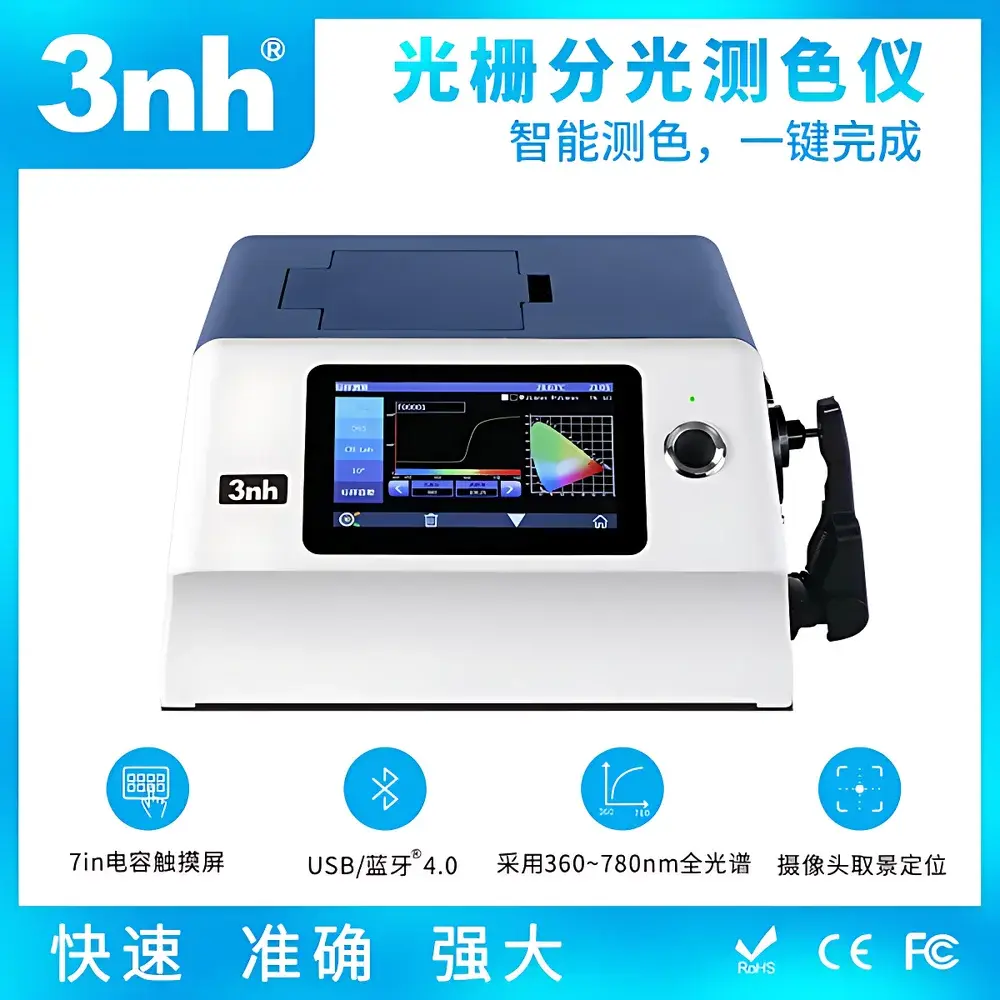
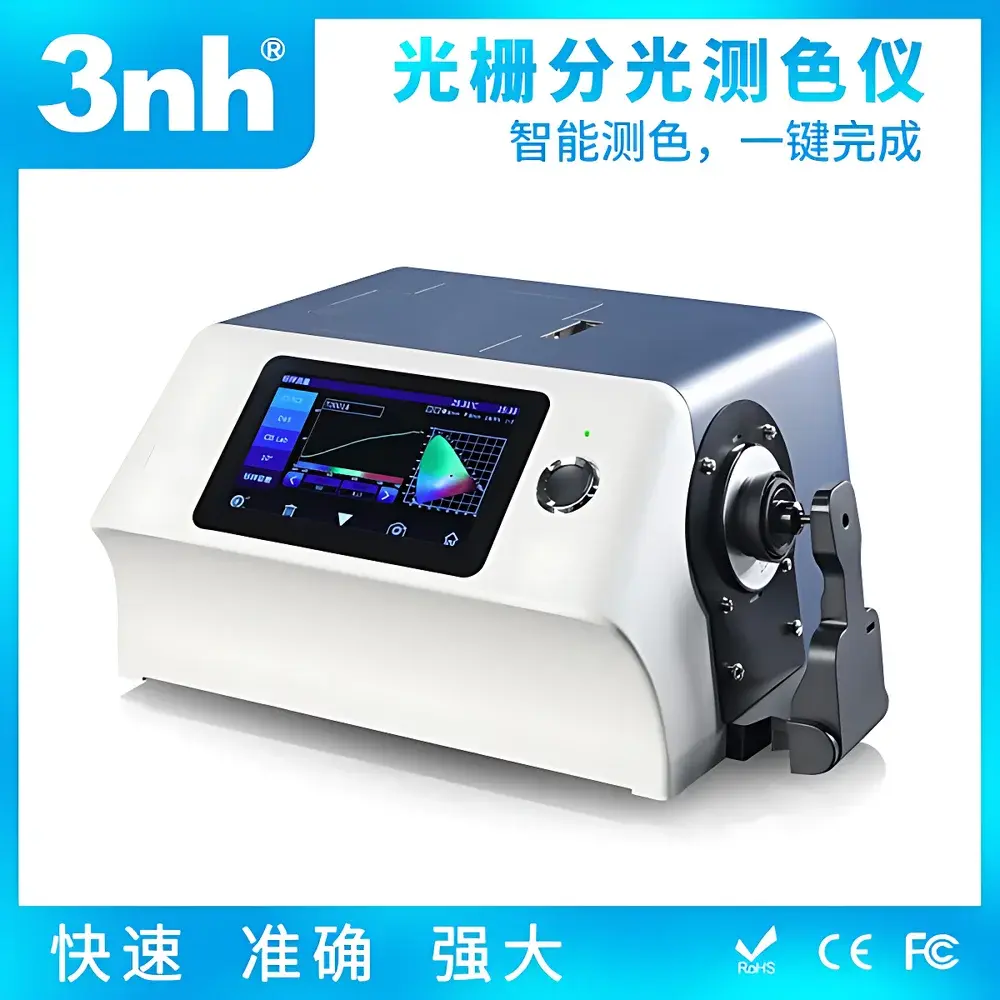
3nh YS6020 Desktop Spectrophotometric Colorimeter with Color Matching & Formulation Capability
| Brand | 3nh |
|---|---|
| Origin | Guangdong, China |
| Manufacturer Type | Direct Manufacturer |
| Product Category | Spectrophotometric Color Measuring Instrument |
| Instrument Type | Benchtop |
| Optical Geometry | d/8° integrating sphere (SCI/SCE) |
| Illuminants | D65, A, C, D50, D55, D75, F1–F12, CWF, DLF, TL83, TL84, TPL5, U30 |
| Spectral Range | 360–780 nm |
| Repeatability | Spectral Reflectance (Φ25.4 mm, SCI): ≤0.07% std dev (≤0.06% at 400–700 nm) |
| Colorimetric Repeatability (Φ25.4 mm, SCI) | ΔE*ab ≤0.015 (after warm-up & calibration, 30 measurements of white tile at 5 s intervals) |
Overview
The 3nh YS6020 is a high-precision benchtop spectrophotometric colorimeter engineered for laboratory-grade color analysis, formulation support, and cross-site color communication in industrial quality control environments. It operates on the principle of grating-based spectral separation coupled with dual-array 256-pixel CMOS detection, enabling full-spectrum acquisition from 360 nm to 780 nm at 10 nm intervals (FWHM ≈ 5 nm). Its d/8° integrating sphere geometry—compliant with ISO 7724-1, CIE No. 15, ASTM E1164, and DIN 5033-7—supports both SCI (specular component included) and SCE (specular component excluded) measurement modes for reflectance, while its D/0° configuration accommodates transmittance analysis per ISO 13655 and ASTM D1003 (haze). The instrument integrates pulsed xenon illumination with real-time source monitoring and thermal compensation, ensuring long-term photometric stability across variable ambient conditions. Designed for traceable color management workflows, it meets foundational requirements for GLP-compliant documentation and supports audit-ready data integrity when used with validated software configurations.
Key Features
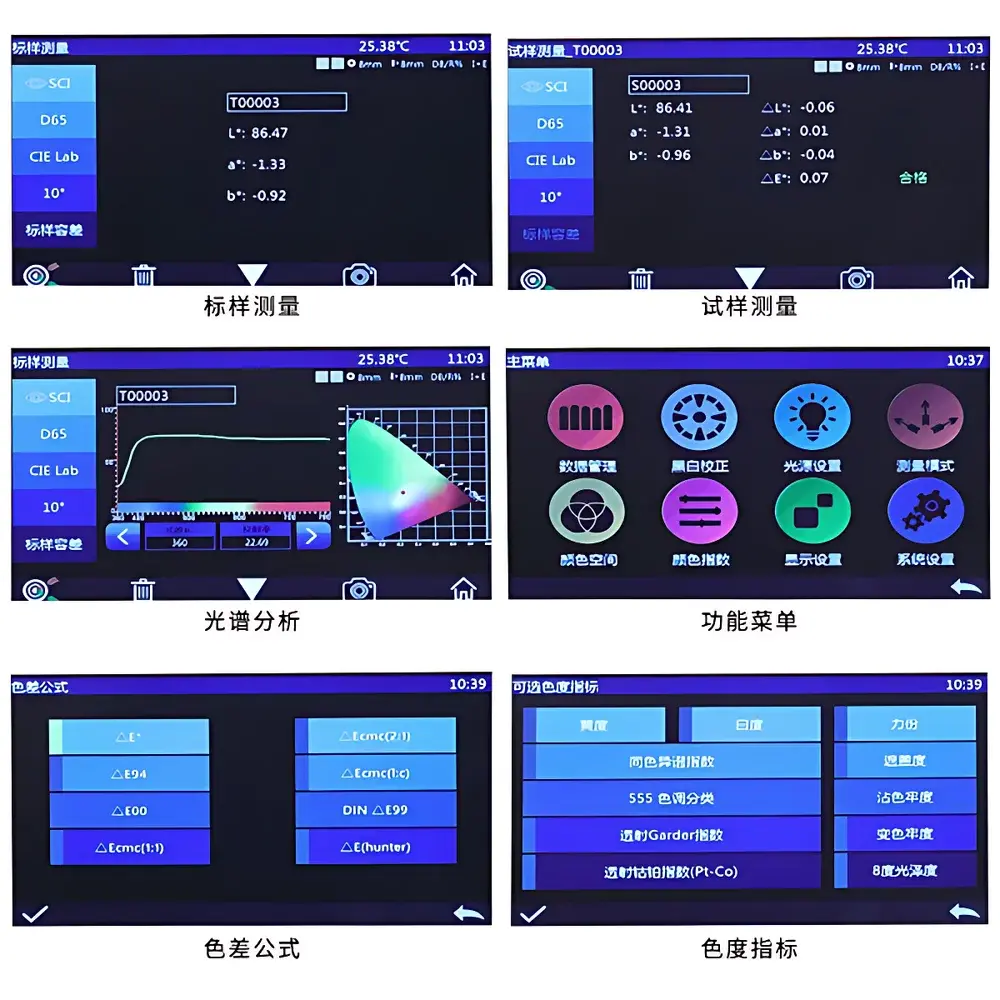
- 7-inch capacitive TFT touchscreen interface with intuitive navigation and real-time spectral visualization
- Dual 256-element CMOS detector array optimized for low-noise spectral signal acquisition
- Pulsed xenon lamp system with independent reference sensor for continuous luminance drift correction
- Automatic aperture recognition for Φ25.4 mm, Φ8 mm, and Φ4 mm measurement ports—switchable without manual recalibration
- Integrated temperature sensor with active compensation algorithm to minimize thermal-induced spectral shift
- UV-inclusive and UV-excluded measurement capability via selectable 400 nm or 420 nm cutoff filters
- Onboard camera-assisted sample positioning for precise targeting of heterogeneous or textured surfaces
- Comprehensive illuminant library covering 22 standard sources including CIE daylight series, fluorescent, and specialty lighting
- Support for both reflection (d/8°) and transmission (d/0°) geometries within a single optical platform
- Large internal memory: 2,000 standard references + 20,000 sample records (each SCI/SCE pair stored as one entry)
Sample Compatibility & Compliance
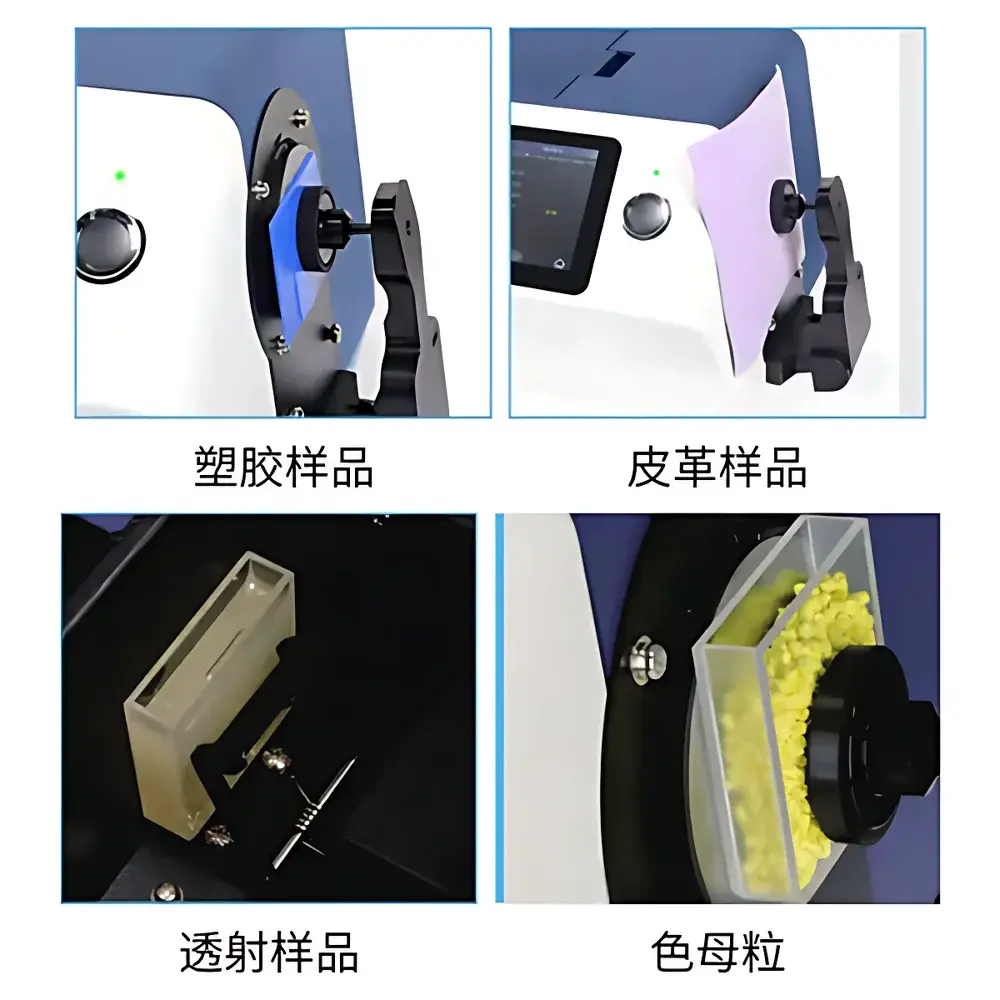
The YS6020 accommodates solid, liquid, powder, and translucent samples—including plastics, coatings, textiles, paper, pharmaceutical tablets, cosmetic emulsions, and food matrices—via configurable fixtures (e.g., transmission holders, micro-aperture clamps, inverted test mounts). Its Φ25.4 mm port is certified for compliance with ISO 7724-1 (diffuse illumination, 8° viewing), while transmittance mode adheres to ISO 13655 (diffuse illumination, 0° viewing) and ASTM D1003 for haze quantification. All color space calculations—including CIE LAB, LCH, XYZ, Yxy, CIE LUV, Hunter Lab, DIN 99, and sRGB—are traceable to NIST-traceable standards. The device satisfies foundational metrological criteria for ISO/IEC 17025-aligned laboratories when operated under documented procedures and routine verification using BCRA Series II tiles (inter-instrument agreement ΔE*ab ≤ 0.15).
Software & Data Management
The YS6020 interfaces with PC-based color management software (freely downloadable from 3nh’s official domain) supporting advanced formulation prediction, batch deviation analysis, tolerance mapping (ellipsoidal or rectangular ΔE limits), and multi-instrument network synchronization. Raw spectral data export is available in CSV and XML formats compatible with third-party statistical process control (SPC) platforms. Software features include full audit trail logging (user actions, calibration events, measurement timestamps), electronic signature support, and optional 21 CFR Part 11 compliance modules for regulated industries. All stored measurements retain full spectral curves, observer angle (2°/10°), illuminant metadata, and geometric mode flags—enabling retrospective re-evaluation without physical resampling.
Applications
This instrument serves as a primary color measurement node in R&D labs and QC departments across sectors requiring rigorous chromatic consistency: polymer compounding and injection molding; automotive OEM paint validation; textile dye lot approval; packaging print certification (ISO 12647-2); pharmaceutical film coating uniformity assessment; cosmetic shade matching; and food product appearance standardization. Its ability to quantify whiteness (ASTM E313), yellowness (ASTM D1925), metamerism index (Mt), colorfastness metrics (AATCC Gray Scales), APHA/Pt-Co, Gardner, and Saybolt indices extends utility beyond basic ΔE reporting into regulatory submission support. In formulation workflows, spectral reflectance/transmittance data feeds directly into commercial color-matching software (e.g., Datacolor MatchText, X-Rite Color iMatch) for pigment optimization.
FAQ
What standards does the YS6020 comply with for reflectance measurement?
It conforms to ISO 7724-1, CIE Publication 15:2018, ASTM E1164, DIN 5033-7, and JIS Z 8722 for d/8° geometry and SCI/SCE modes.
Can the instrument measure transparent or translucent materials?
Yes—using the D/0° transmission mode with optional fixtures, it supports quantitative analysis of liquids, films, and molded plastics per ISO 13655 and ASTM D1003 (haze).
Is UV measurement capability built-in or optional?
UV-inclusive and UV-excluded measurement is fully integrated via motorized filter selection; no external accessories are required.
How is inter-instrument agreement ensured?
Each unit is factory-calibrated against BCRA Series II ceramic tiles; inter-unit ΔE*ab remains ≤0.15 under standardized conditions, supporting multi-site color harmonization.
Does the software support electronic record retention for regulated environments?
The optional software module provides 21 CFR Part 11-compliant audit trails, role-based access control, and electronic signatures—validated for use in GMP/GLP settings.





