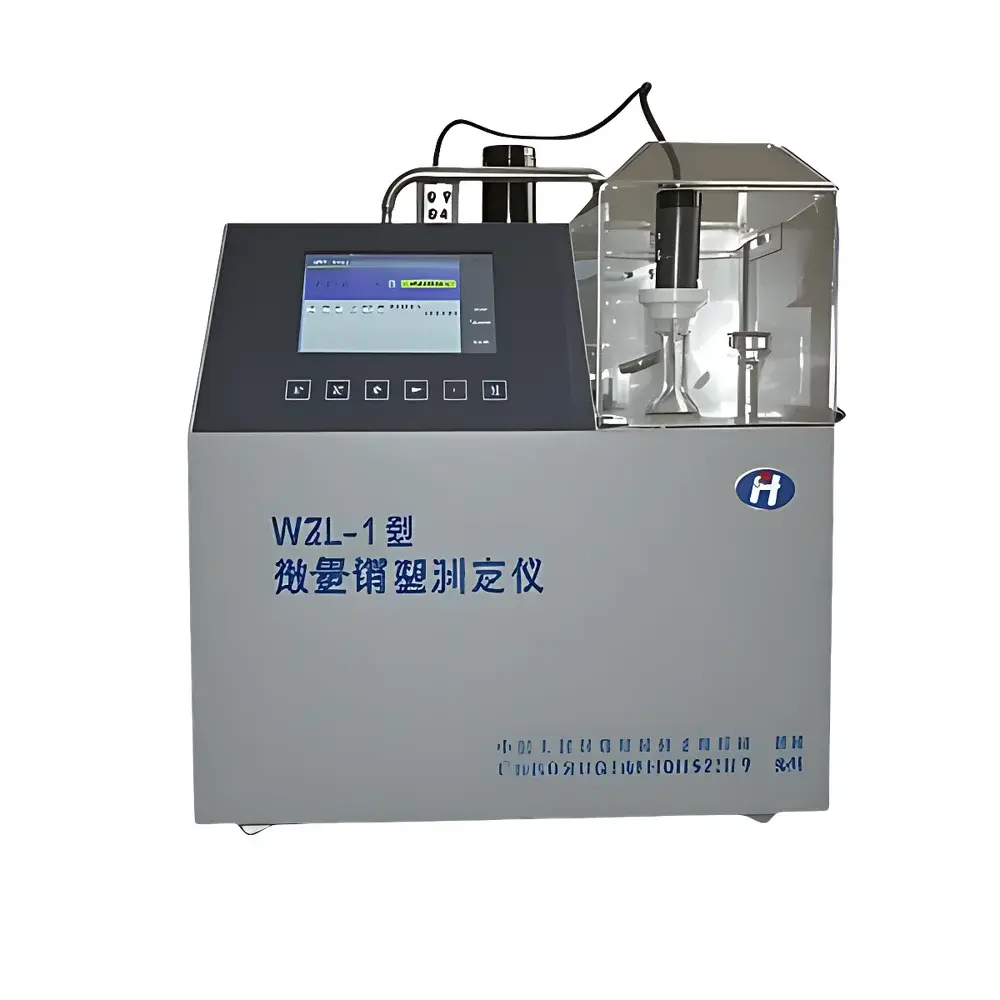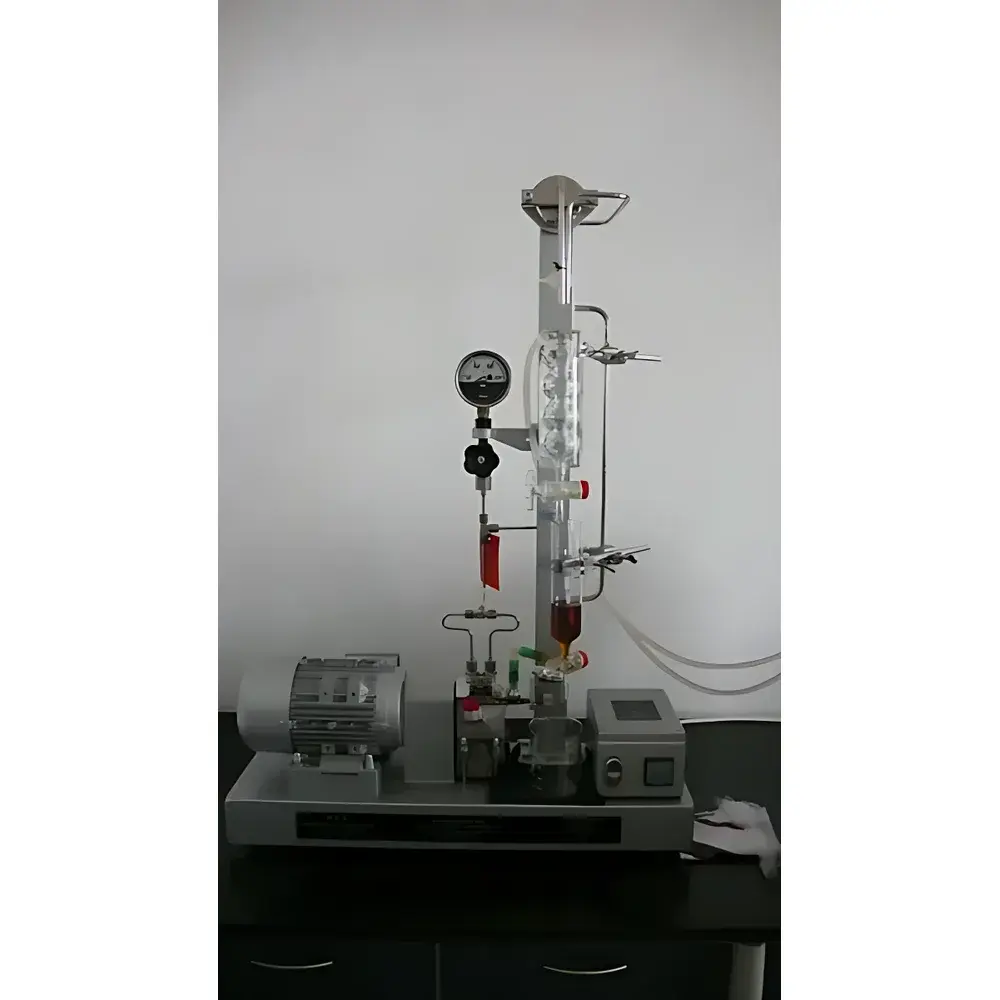
HEA BOSCH Diesel Nozzle Shear Stability Tester
| Brand | HEA |
|---|---|
| Origin | Germany |
| Manufacturer Type | Authorized Distributor |
| Origin Category | Imported |
| Model | HEA |
| Price | Upon Request |
| Standards Compliance | SH/T 0103-2007, CEC L-14-A-78, ASTM D3945-86, ASTM D6278, ASTM D7109, DIN 51382 |
| Operating Temperature Range | 20–25 °C |
| Reservoir Capacity | 250 mL |
| Injection Pump Speed | 925 ± 25 rpm |
| Drive System | Three-phase motor with dual-piston hydraulic pump |
| Nozzle Type | Standardized diesel nozzle per ISO 4113 and ASTM D3945 |
| Power Supply | 380 V AC, 50/60 Hz |
| Rated Power | 5.7 kW |
| Dimensions (W × D × H) | 150 × 120 × 60 cm |
| Weight | 120 kg |
| Cooling System | Integrated thermostatically controlled heat exchanger |
| Filtration | Built-in particulate filter cartridge (ISO 12103-1 A4) |
| Automation Level | Fully automated sequence control with pre-programmed test cycles |
Overview
The HEA BOSCH Diesel Nozzle Shear Stability Tester is an engineered laboratory instrument designed to quantify the shear-induced viscosity loss of polymer-containing lubricating oils—particularly engine oils, gear oils, and hydraulic fluids—using the standardized diesel nozzle method. It operates on the principle of controlled high-shear degradation: a precisely metered oil sample is forced under regulated pressure through a calibrated diesel nozzle at defined rotational speed and temperature, simulating the mechanical stress experienced in fuel injection systems and high-pressure hydraulic circuits. Post-shear kinematic viscosity is measured using a calibrated capillary viscometer (not included), and shear stability is expressed as the percentage viscosity loss relative to the pre-shear value, in strict accordance with SH/T 0103-2007, ASTM D6278, and CEC L-14-A-78 protocols. The system’s core architecture integrates a dual-piston, three-phase motor-driven injection pump, a thermally stabilized reservoir, and a precision-machined Bosch-type diesel nozzle assembly—all housed within a rigid steel frame with acoustic isolation.
Key Features
- Fully automated test execution with programmable cycle timing, pressure ramping, and temperature stabilization—minimizing operator intervention and inter-laboratory variability
- Integrated thermostatic cooling unit maintaining ±0.5 °C stability across the 20–25 °C operating range, critical for reproducible kinematic viscosity comparisons
- Dual-piston hydraulic pump delivering consistent flow rate and pressure profile at 925 ± 25 rpm, compliant with ASTM D3945-86 and DIN 51382 mechanical specifications
- Built-in ISO 12103-1 A4 particulate filter cartridge preventing nozzle clogging and ensuring long-term measurement fidelity
- Modular nozzle mounting assembly accommodating interchangeable nozzles for method cross-validation or extended wear testing
- Robust structural base with vibration-damping mounts and sound-insulated enclosure meeting ISO 16283-1 noise emission requirements for routine QC labs
- Electrical safety certified to IEC 61000-6-2 (immunity) and IEC 61000-6-4 (emission), with CE marking and full EC Declaration of Conformity
Sample Compatibility & Compliance
The tester accepts mineral-, synthetic-, and semi-synthetic-based oils containing viscosity index improvers (VIIs) such as olefin copolymers (OCP), polymethacrylates (PMA), and styrene-butadiene rubbers (SBR). Samples must be free of undissolved contaminants and degassed prior to loading. Each test requires 250 mL of conditioned sample, pre-equilibrated to 25 °C per ASTM D445. The system supports method traceability via documented calibration using reference oils certified to ASTM D2887 and ISO 12185, including both verification oil (e.g., Chevron 10W-40 VI reference) and calibration oil (e.g., NIST SRM 2783). All operational parameters—including pump speed, reservoir temperature, and cycle duration—are logged with time-stamped audit trails, enabling compliance with GLP and internal QA procedures aligned with ISO/IEC 17025:2017 Clause 7.7.
Software & Data Management
Control and data acquisition are managed via embedded industrial PLC with HMI touchscreen interface (optional PC-based software available upon request). The system records real-time pressure, temperature, and pump rotation data at 10 Hz resolution, storing raw values in CSV format with metadata (operator ID, sample ID, date/time, method version). Audit trail functionality meets FDA 21 CFR Part 11 requirements when paired with optional electronic signature module and role-based user access. Exported datasets integrate seamlessly with LIMS platforms via OPC UA or Modbus TCP protocols. Calibration logs, maintenance records, and performance verification reports are retained for ≥10 years per internal quality policy.
Applications
- Quality control of multigrade engine oils during batch release testing
- Formulation development of shear-stable VIIs and additive packages
- Comparative evaluation of nozzle wear impact on shear degradation profiles
- Supporting OEM specification compliance (e.g., ACEA A3/B4, API SP, JASO DL-1)
- Third-party certification testing for lubricant registration with regulatory bodies (e.g., TÜV Rheinland, SGS)
- Research into polymer scission kinetics under transient high-shear conditions
FAQ
What viscosity measurement standard is required for post-shear analysis?
ASTM D445 or ISO 3104 capillary viscometry is mandatory; the tester does not include a viscometer but interfaces directly with certified instruments from Cannon, Ubbelohde, or Schott.
Is the diesel nozzle supplied with traceable calibration documentation?
Yes—each nozzle is individually serialized and supplied with a calibration certificate referencing ISO 4113 and ASTM D3945, including flow rate vs. pressure curves at 25 °C.
Can the system be integrated into a centralized lab network?
Yes—Ethernet connectivity supports remote monitoring, firmware updates, and secure data export via TLS 1.2 encrypted channels.
What maintenance intervals are recommended for the dual-piston pump?
Pump seals and check valves require inspection every 500 test cycles or annually, whichever occurs first; service kits and torque specifications are provided in the technical manual.
Does the instrument support multi-language UI?
Standard interface is English; German, French, and Chinese language packs are available as optional firmware modules.