
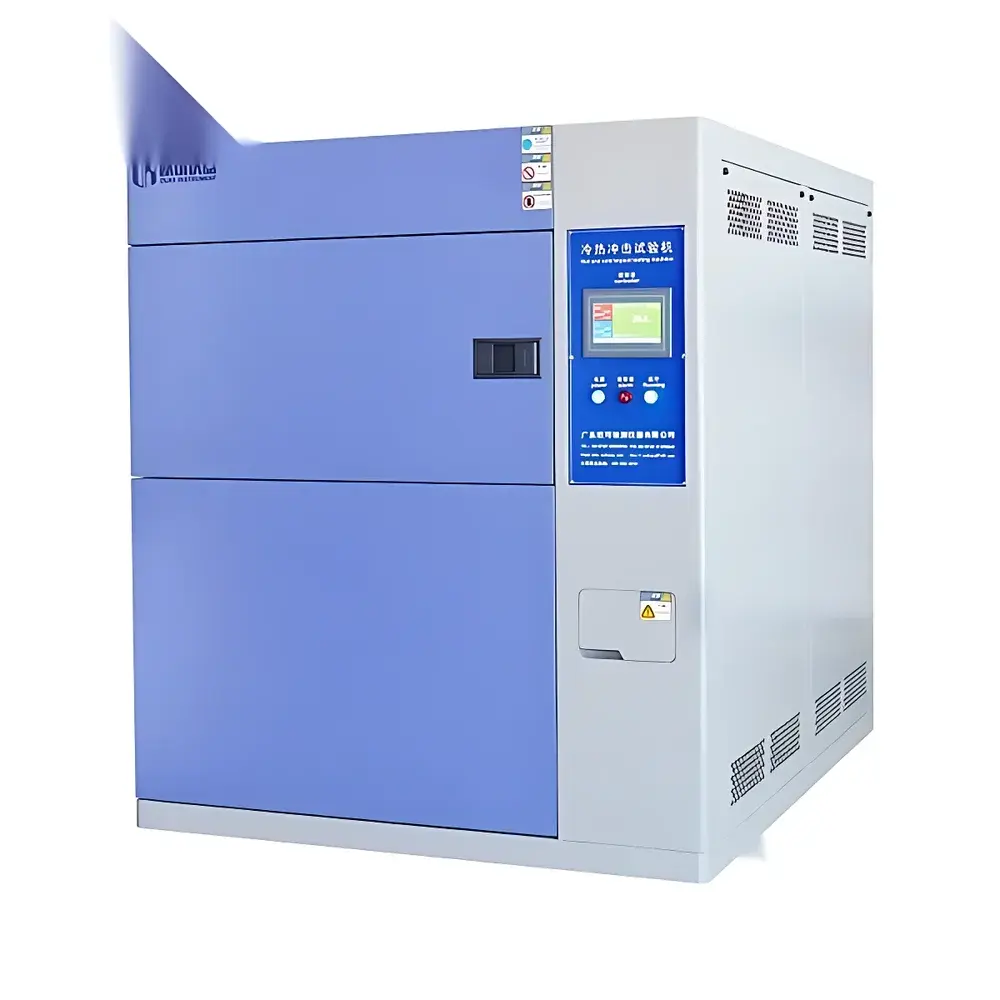
Thermal Shock Test Chamber – Industrial-Grade Two-Zone Rapid Temperature Transition System
| Brand | Other Brands |
|---|---|
| Origin | Imported |
| Manufacturer Type | Authorized Distributor |
| Price | USD 11,200 (FOB) |
| Temperature Range | -65°C to +150°C |
| Transition Time (Typical) | ≤15 s (between chambers) |
| Compliance | ASTM D648, ISO 11359-2, IEC 60068-2-14, MIL-STD-810H Method 503.5, GB/T 2423.22-2022, GJB 150.5A-2009 |
Overview
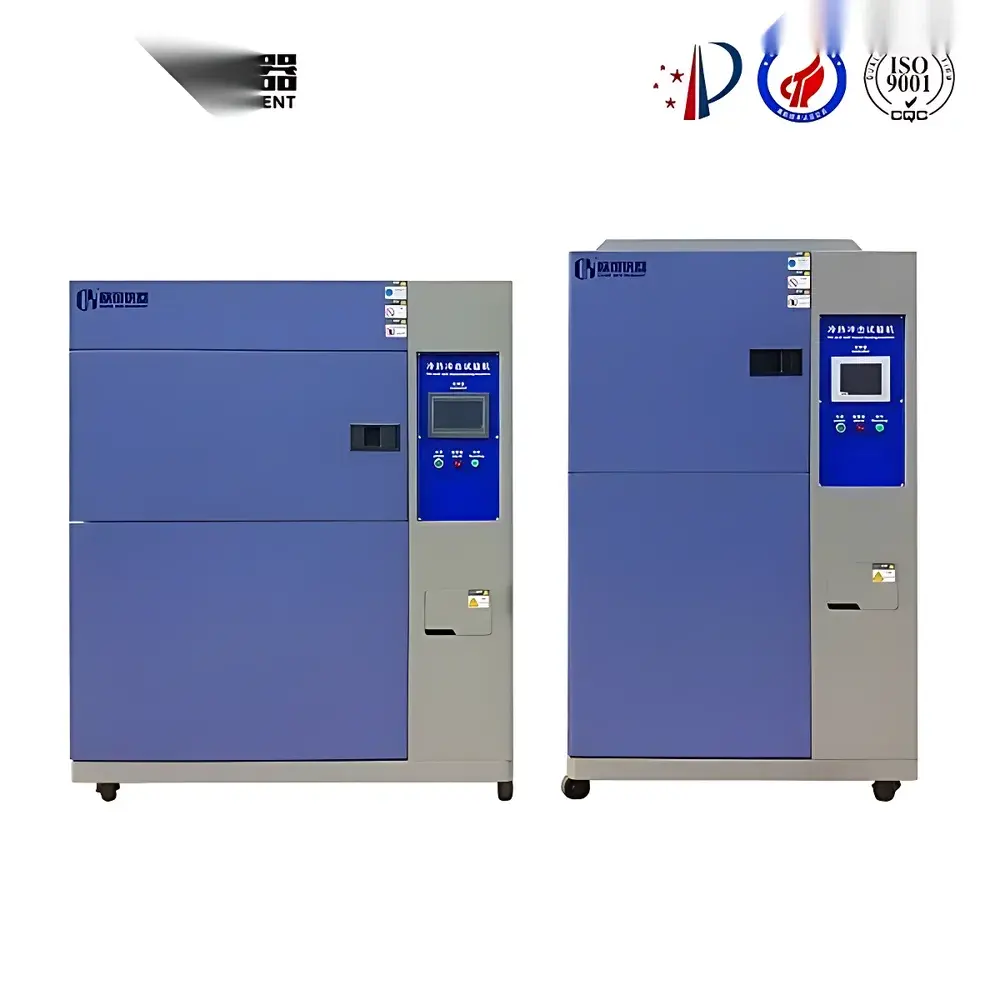
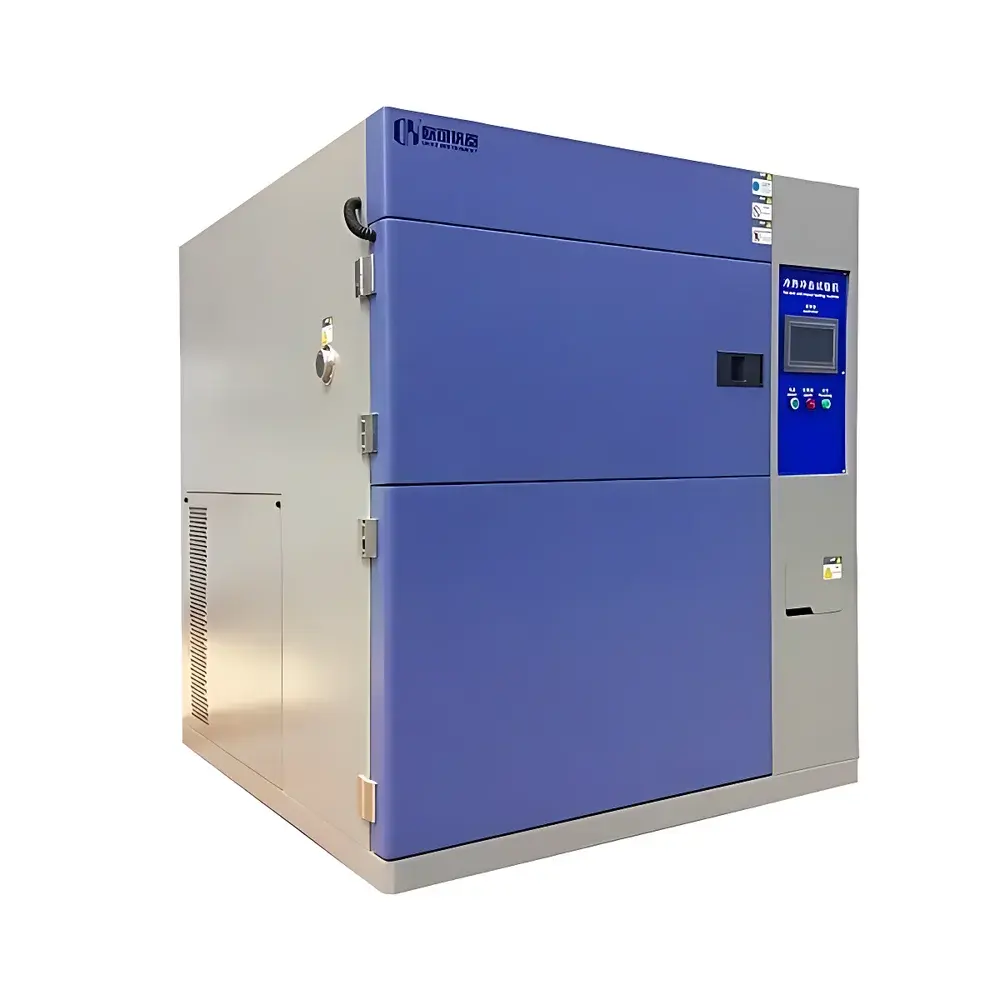
The Thermal Shock Test Chamber is an industrial-grade environmental simulation system engineered for rapid, repeatable thermal cycling between extreme temperature extremes. It operates on a two-zone (hot/cold) mechanical separation principle—distinct from single-chamber ramp-based systems—enabling true instantaneous thermal shock exposure via specimen transfer between independently controlled environments. This architecture ensures precise control over dwell time, transition speed, and thermal gradient magnitude, making it essential for evaluating material integrity, solder joint reliability, coating adhesion, and packaging seal performance under accelerated aging conditions. The chamber meets the physical test requirements of MIL-STD-810H Method 503.5 (Temperature Shock), IEC 60068-2-14 (Test N: Change of Temperature), and ISO 11359-2 (Thermomechanical Analysis), serving as a core qualification tool in aerospace component validation, automotive electronics stress screening, and semiconductor package qualification.
Key Features
- Two independent stainless-steel test zones: high-temperature zone (up to +150°C) and low-temperature zone (down to −65°C), each with dedicated PID-controlled heating/cooling circuits
- Bimetallic basket transfer mechanism with pneumatic actuation, achieving ≤15-second transition time between zones (measured per IEC 60068-2-14 Annex B)
- Dual-stage cascade refrigeration system using imported semi-hermetic compressors (Germany-sourced), with R404A/R23 refrigerant pairing and water-cooled condensation (external cooling tower required: 10 m³/h flow rate)
- Evaporative condenser interstage heat exchanger enabling efficient thermal energy transfer between high- and low-temperature loops
- Energy modulation logic integrated into compressor staging and expansion valve control—reducing power consumption by up to 32% during partial-load operation while maintaining ±0.5°C chamber stability
- 7-inch TFT touch HMI with real-time graphing, programmable multi-step profiles (max. 99 segments), and USB data export capability
Sample Compatibility & Compliance
The chamber accommodates standard test specimens up to 500 mm × 500 mm × 500 mm (W×D×H) with maximum payload of 30 kg. Fixturing options include aluminum sample trays, non-metallic insulated carriers, and custom-machined mounting plates compatible with MIL-STD-202G lead-frame fixtures. All operational parameters—including dwell time, transition velocity, and cycle count—are traceable and auditable to support GLP/GMP-aligned testing protocols. The system conforms to calibration traceability requirements per ISO/IEC 17025:2017 (clause 6.5.2) when used with external NIST-traceable thermocouples (Type T or K, Class 1). Full compliance documentation—including factory acceptance test (FAT) reports, refrigerant charge logs, and pressure vessel certification per PED 2014/68/EU—is supplied with each unit.
Software & Data Management
Embedded firmware supports local profile execution and real-time monitoring without PC dependency. Optional PC-based software (Windows 10/11 compatible) provides extended functionality: automated report generation (PDF/CSV), statistical process control (SPC) charting (X̄-R, Cpk), alarm event logging with timestamped thermal deviation alerts, and 21 CFR Part 11-compliant electronic signature modules for regulated industries. Audit trails record all parameter modifications, user logins, and calibration events with immutable timestamps. Data retention complies with ISO 13485:2016 clause 7.5.10 (Control of Monitoring and Measuring Equipment Records).
Applications
- Qualification testing of PCB assemblies per IPC-J-STD-004B and JEDEC JESD22-A106B
- Automotive ECU validation against QC/T 17-92 and ISO 16750-4 (Environmental Conditions and Testing for Electrical and Electronic Equipment)
- Plastic housing brittleness assessment per ASTM D746 and ISO 179-1 (Charpy Impact)
- Adhesive bond line evaluation under thermal fatigue per ASTM D1002 and ISO 4587
- Hermetic seal integrity verification for medical device enclosures (ISO 11607-1)
- Accelerated life testing of lithium-ion battery modules per UL 1642 and UN 38.3 Section 38.3.4 (Thermal Cycling)
FAQ
What is the minimum dwell time achievable in each temperature zone?
Standard configuration supports dwell times from 10 minutes to 999 hours per zone, adjustable in 1-minute increments. Custom firmware enables 30-second minimum dwell upon request.
Does the system include validation documentation for IQ/OQ/PQ protocols?
Yes—factory-provided IQ/OQ templates compliant with ASTM E2500-13 are included. PQ execution requires site-specific sensor mapping and is typically performed with third-party accredited metrology providers.
Is remote monitoring supported via Ethernet or Modbus?
Standard Ethernet port supports TCP/IP communication for status polling and alarm forwarding. Optional Modbus RTU (RS-485) interface kit available for PLC integration.
What maintenance intervals are recommended for the refrigeration system?
Compressor oil analysis and filter dryer replacement every 2,000 operating hours; full refrigerant circuit leak check and pressure test annually per ASME B31.5 guidelines.



