
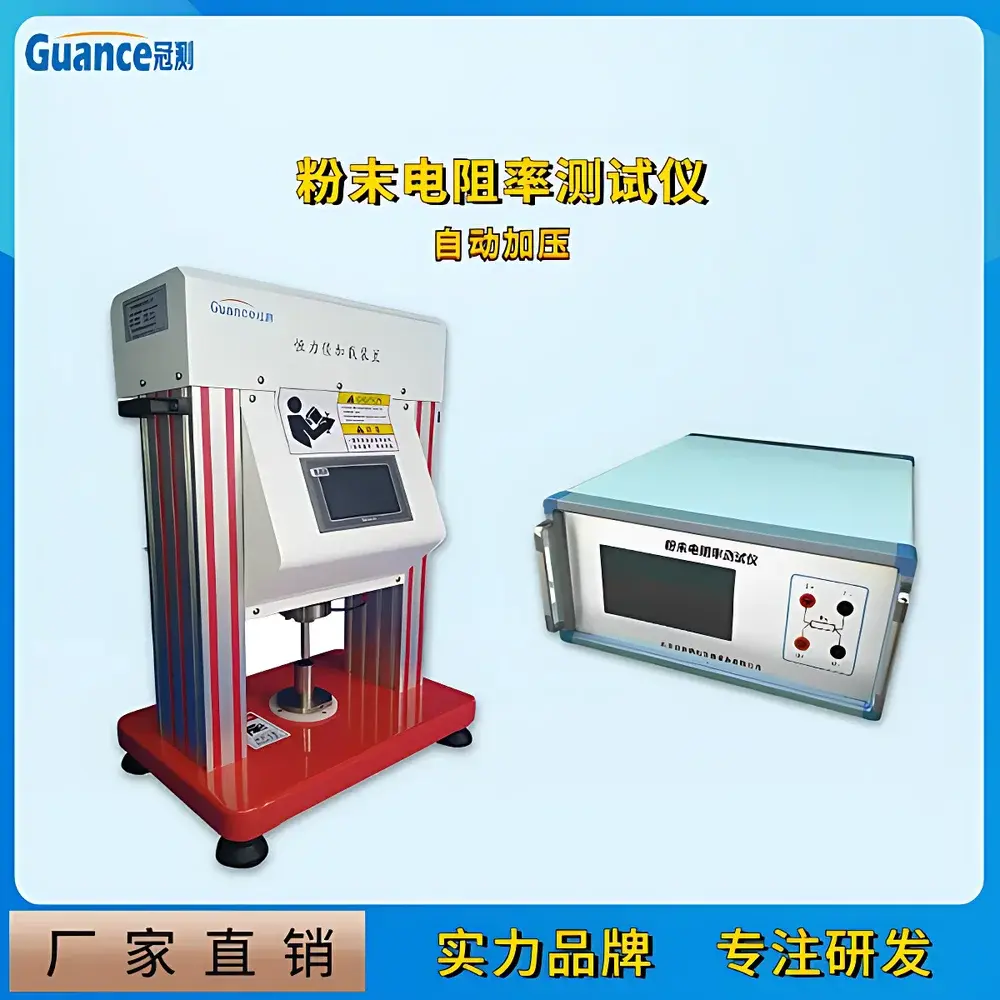
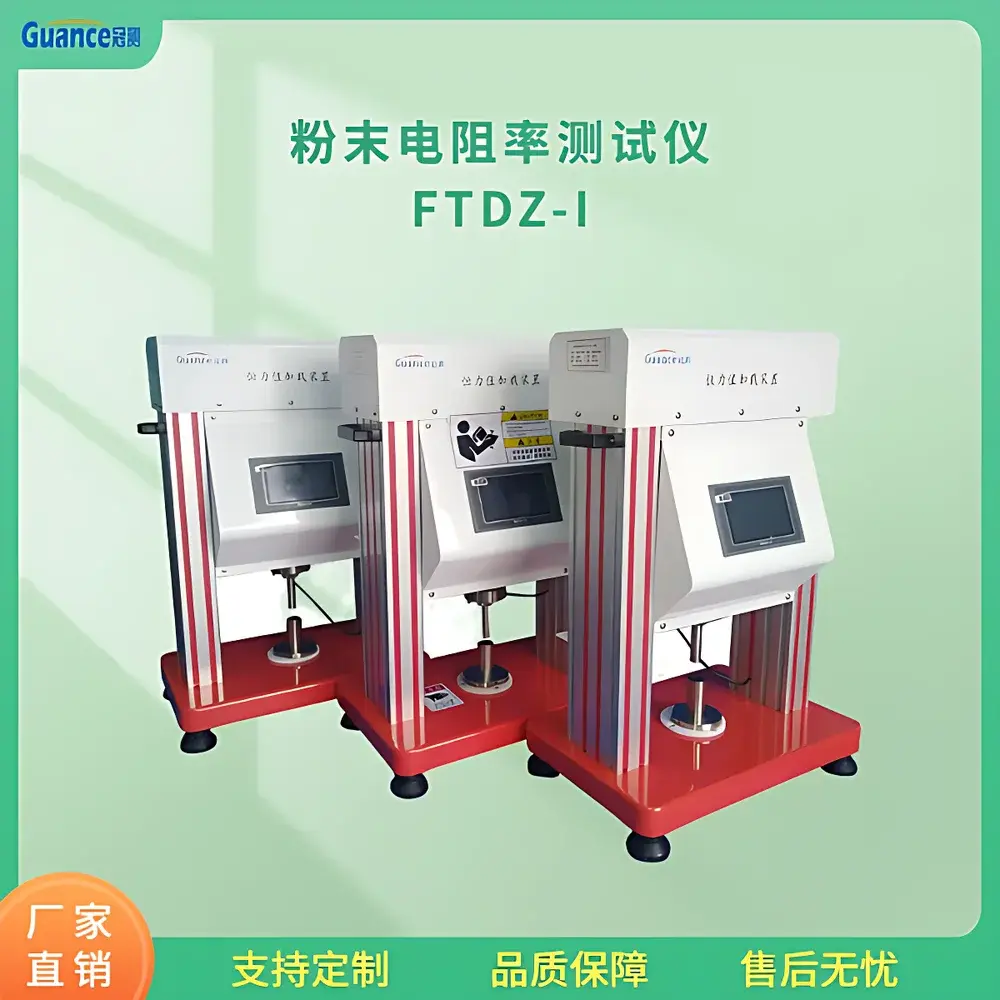
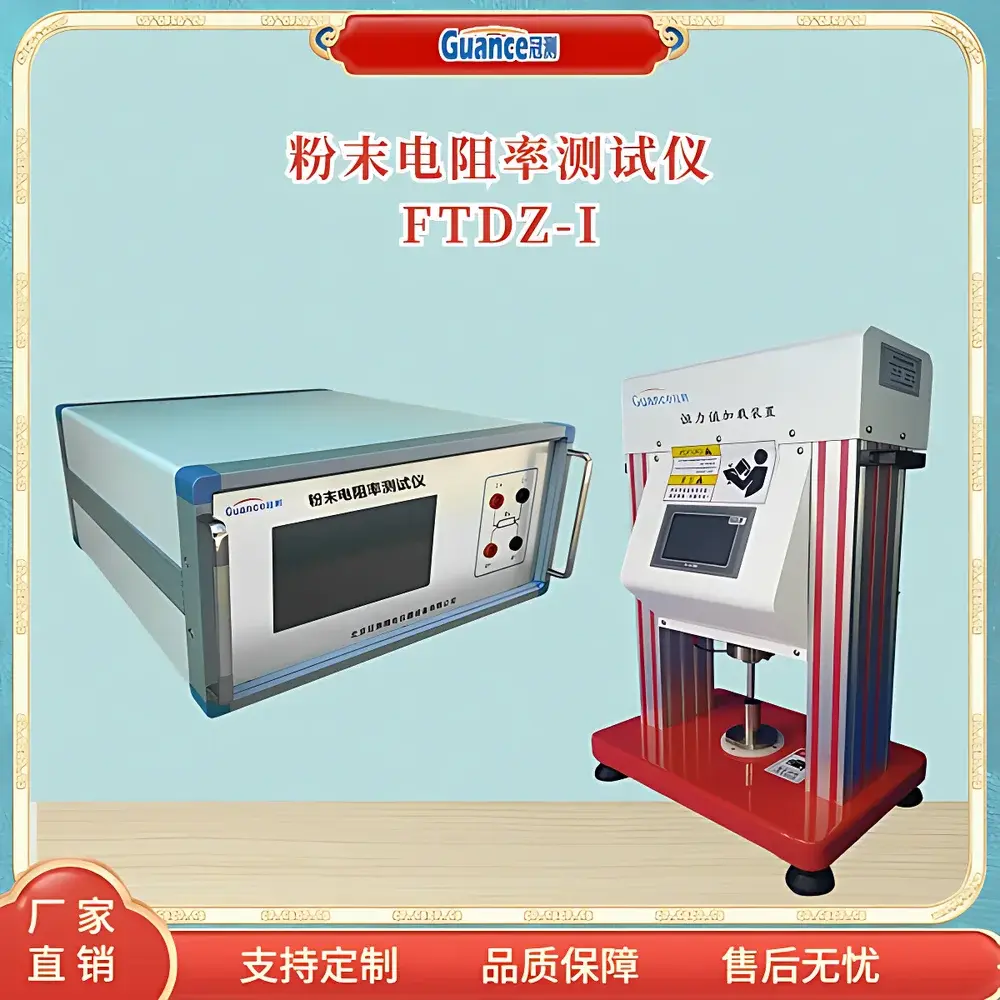
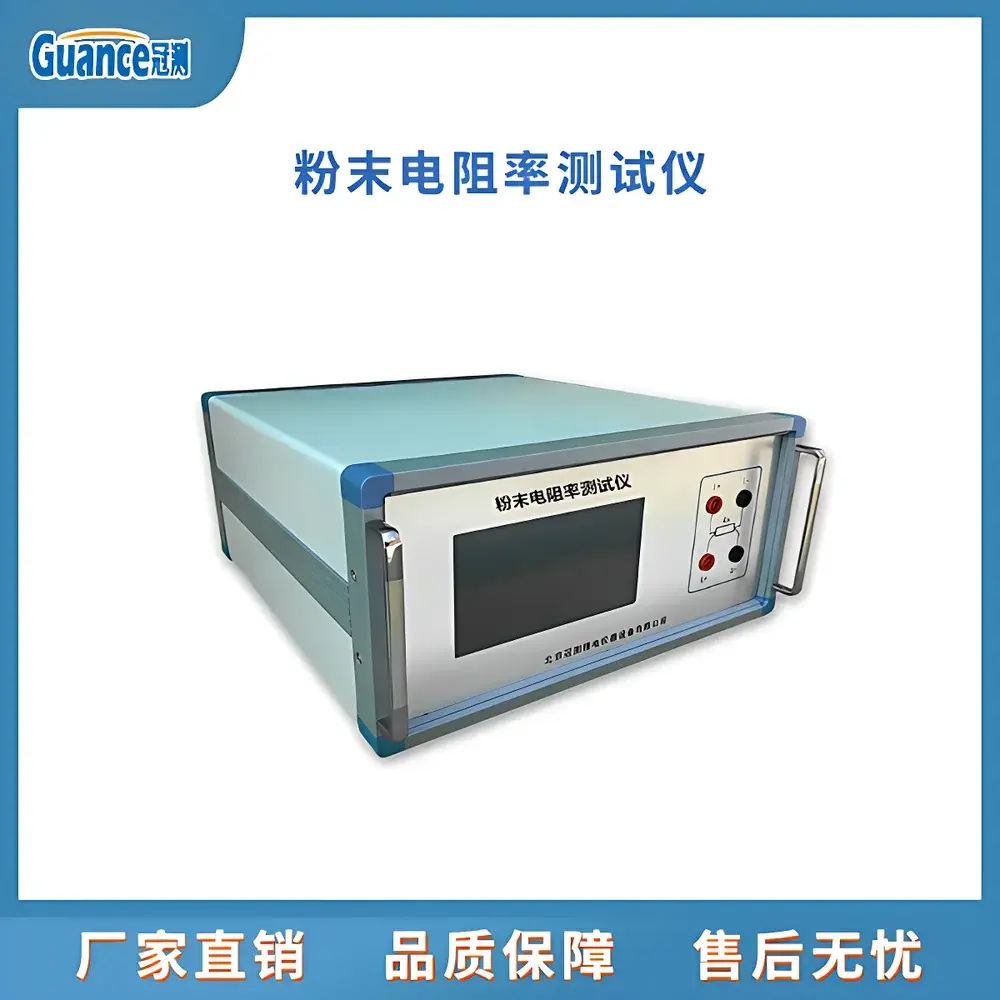
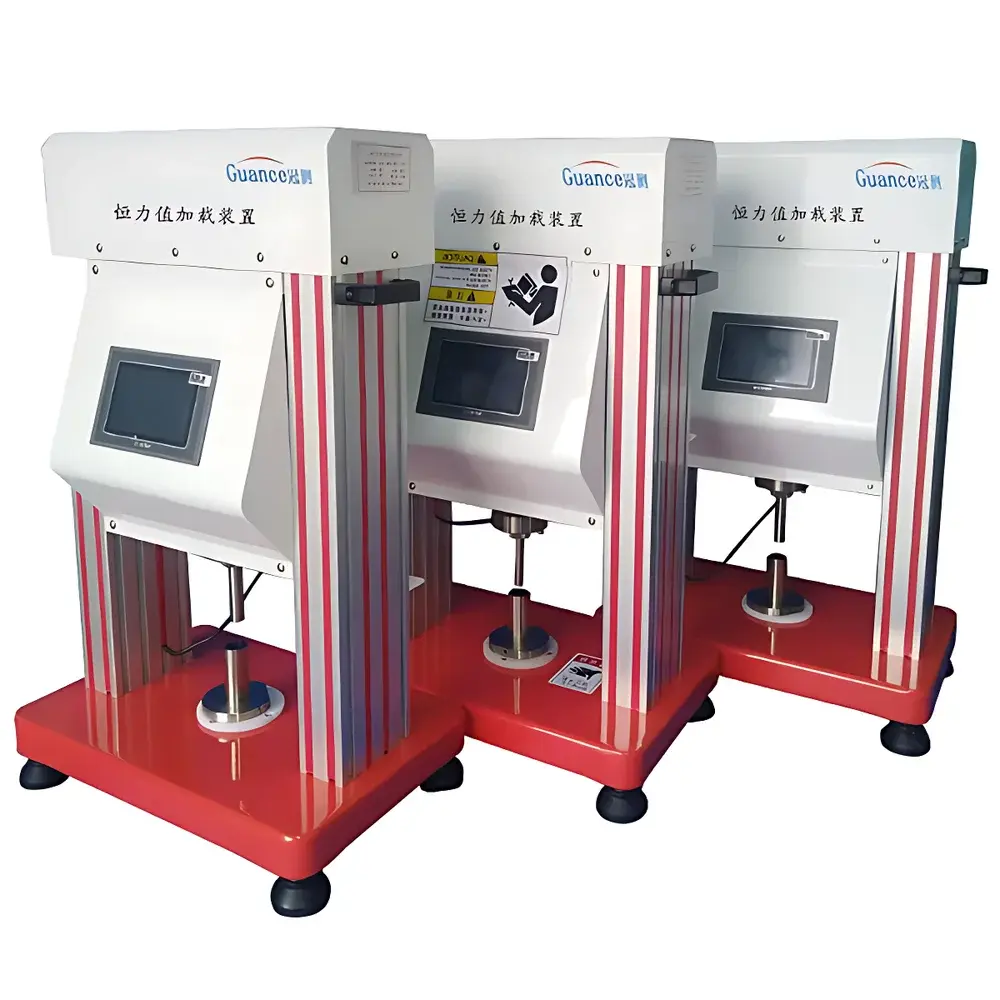
GuanCe Instruments FTDZ-I Powder Resistivity Tester
| Brand | GuanCe Instruments |
|---|---|
| Origin | Beijing, China |
| Manufacturer Type | Authorized Distributor |
| Country of Origin | China |
| Model | FTDZ-I |
| Price | USD 2,150 (excl. tax & shipping) |
Overview
The GuanCe Instruments FTDZ-I Powder Resistivity Tester is a precision DC four-terminal (Kelvin) resistivity measurement system engineered for standardized evaluation of bulk electrical resistivity in granular and powdered materials. It operates on the principle of constant-current DC excitation (typically 1–100 mA range) with simultaneous high-resolution voltage drop measurement across a defined powder column under controlled mechanical compaction. This methodology eliminates contact resistance errors inherent in two-probe configurations and ensures traceable, reproducible results compliant with established metallurgical and carbon materials testing protocols. Designed specifically for quality control laboratories in carbon anode manufacturing, graphite electrode production, battery material R&D, and metallurgical powder processing, the FTDZ-I delivers metrologically sound data under repeatable pressure conditions—critical for correlating microstructural density (e.g., tapped or vibrated bulk density) with electronic transport behavior.
Key Features
- Four-terminal (Kelvin) DC measurement architecture with automatic current reversal to suppress thermoelectric offset errors
- Integrated programmable DC constant-current source (0.1–100 mA, ±0.2% accuracy) and 6½-digit digital nanovoltmeter (0.1 µV resolution)
- Dedicated compaction test fixture with calibrated pneumatic or manual pressure application (0–10 MPa range, ±1% full-scale repeatability)
- 7-inch industrial-grade capacitive touch interface with embedded test sequence logic: pre-compaction baseline, pressure ramping, dwell stabilization, and post-measurement auto-zero
- Onboard data logging (up to 1,000 test records), USB export (CSV), and optional thermal printer support (IEEE 1284 compliant)
- Modular mechanical design: separable main unit and test stand for benchtop integration or cleanroom deployment
- Compliance-ready firmware architecture supporting audit trails, user-level access control (admin/operator modes), and calibration certificate import/export
Sample Compatibility & Compliance
The FTDZ-I accommodates powders within particle size distributions from 1 µm to 2 mm, including calcined petroleum coke, needle coke, synthetic graphite, acetylene black, lithium iron phosphate (LiFePO₄), silicon carbide abrasives, and metal alloy powders (e.g., Ni, Co, Fe). Sample volume is standardized at 5–10 cm³ per test using ISO/IEC 17025-aligned cylindrical die sets (diameter: 25.4 mm ± 0.02 mm; height: variable up to 50 mm). The instrument conforms to ASTM D3764 (Standard Test Method for Bulk Resistivity of Carbon and Graphite Materials), GB/T 24525–2009, GB/T 24521–2009, YS/T 587.6–2006, and ISO 8007-1:2014 (Electrical resistance of metallic powders). Its mechanical and electrical design supports GLP-compliant operation in regulated environments when paired with documented calibration schedules and traceable reference standards.
Software & Data Management
The embedded firmware implements a deterministic real-time operating system (RTOS) with non-volatile memory for secure storage of measurement parameters, operator IDs, timestamped raw data (voltage, current, pressure, temperature), and calculated resistivity (Ω·cm). Data export adheres to ASTM E1382–95 guidelines for analytical instrument output formatting. Optional PC-based GuanCe LabSuite v3.2 software provides advanced statistical process control (SPC) charting, multi-batch trend analysis, uncertainty budgeting per GUM (JCGM 100:2008), and 21 CFR Part 11-compliant electronic signatures when deployed with Windows domain authentication. All calibration events—including current source linearity verification and voltage meter gain calibration—are digitally signed and time-stamped within the device’s audit log.
Applications
- Quality assurance of calcined coke feedstock for aluminum smelting anodes
- Resistivity profiling of graphite powders during milling and classification stages
- R&D screening of conductive additives (e.g., carbon black, graphene nanoplatelets) in composite electrodes
- Process validation of cold isostatic pressing (CIP) parameters in powder metallurgy
- Comparative analysis of oxidation-induced resistivity changes in stored carbon materials
- Teaching laboratories for solid-state physics and materials science curricula (DC transport phenomena, percolation theory)
FAQ
What pressure range is supported for powder compaction?
The standard test fixture supports axial pressures from 0.1 MPa to 10 MPa, adjustable in 0.1 MPa increments via calibrated hydraulic or pneumatic actuation.
Does the system meet FDA 21 CFR Part 11 requirements?
Yes—when used with GuanCe LabSuite v3.2 and configured with domain-based authentication, it provides electronic signature enforcement, audit trail retention (>18 months), and system suitability checks.
Can the FTDZ-I measure anisotropic resistivity?
No—it measures isotropic bulk resistivity under uniaxial compression. For directional conductivity mapping, a custom multi-axis probe array is required (available as OEM option).
Is calibration traceable to NIST or CNAS standards?
All factory calibrations are performed using Fluke 8508A reference standards traceable to NIM (China National Institute of Metrology); CNAS-accredited calibration certificates are available upon request.
What sample preparation steps are mandatory prior to testing?
Powders must be dried to 2 mm, and conditioned at 23±2°C / 50±5% RH for ≥2 h before loading into the die cavity.



