
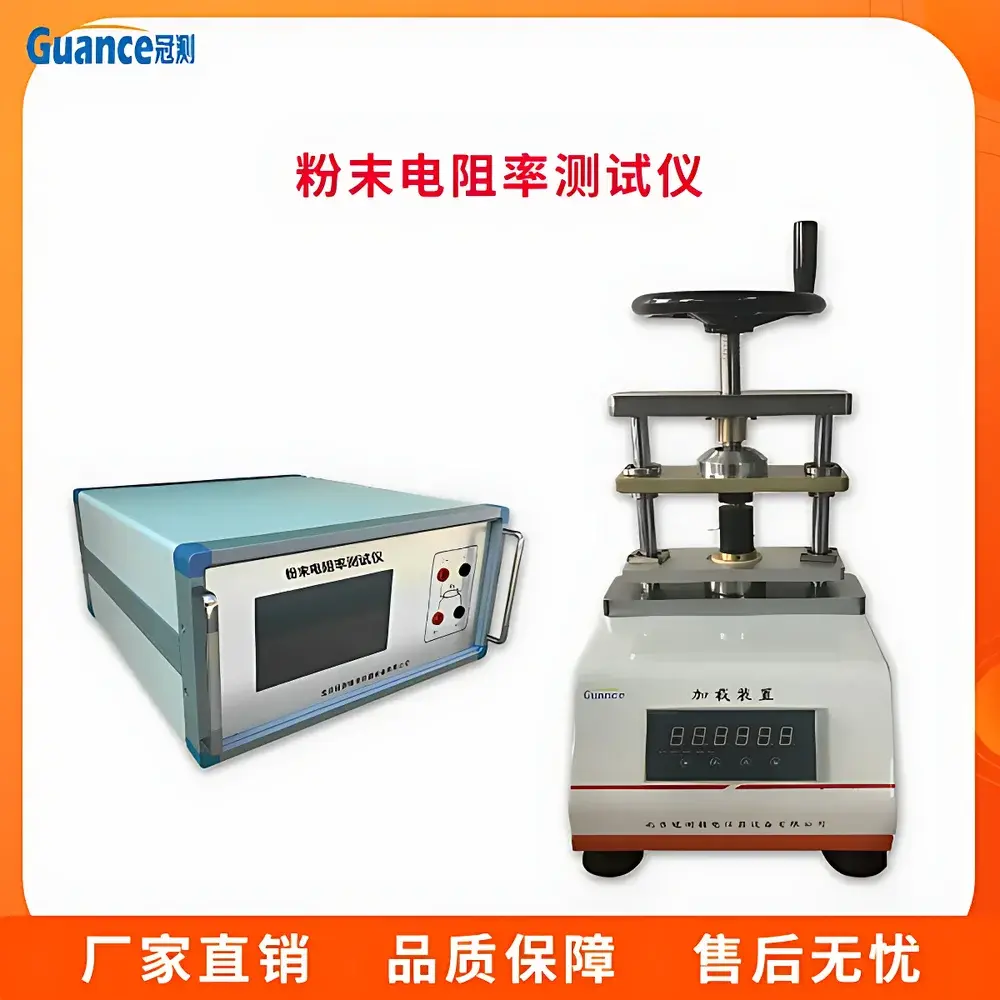
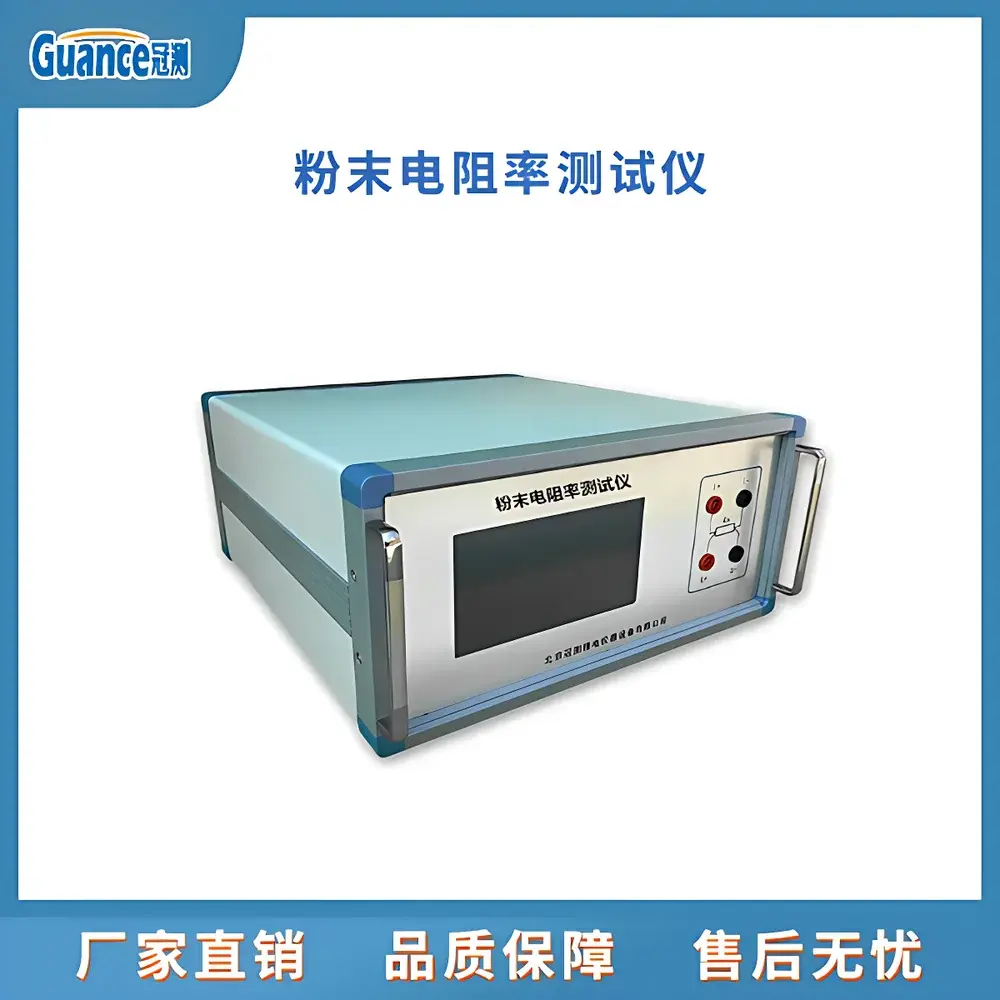
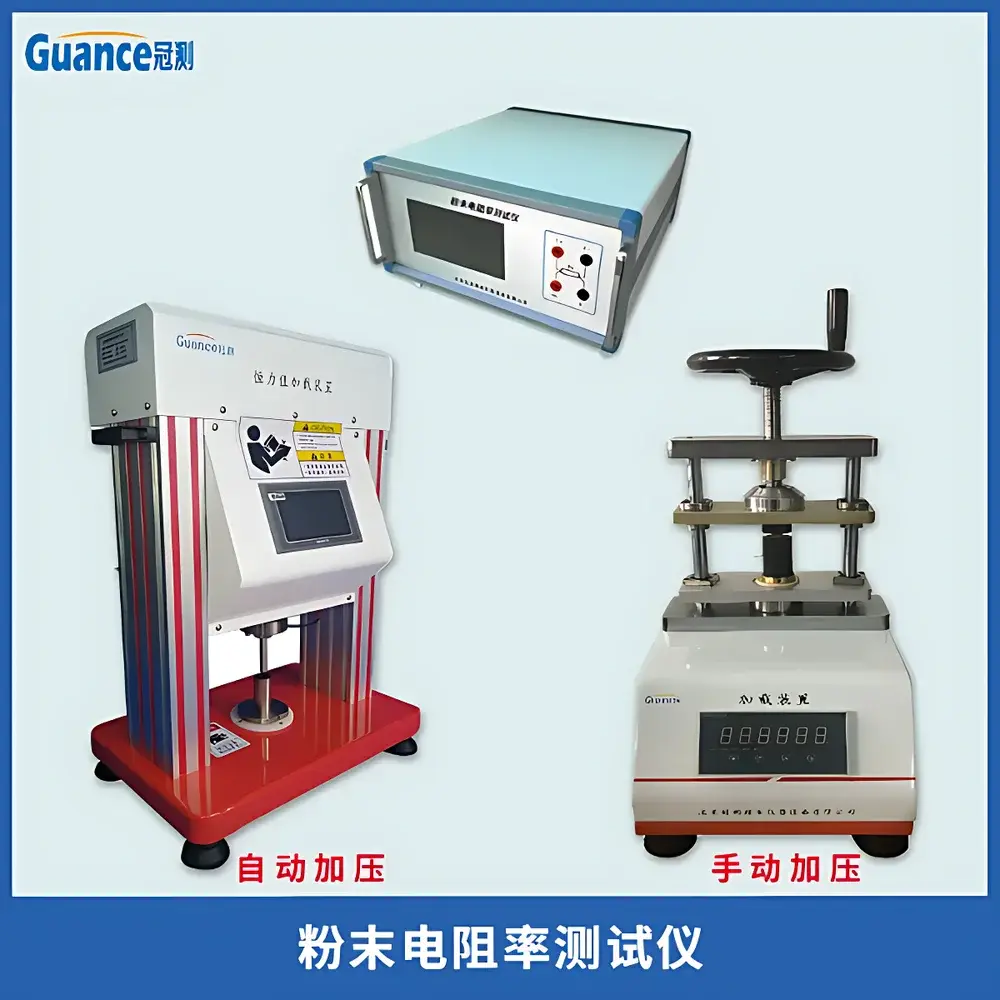
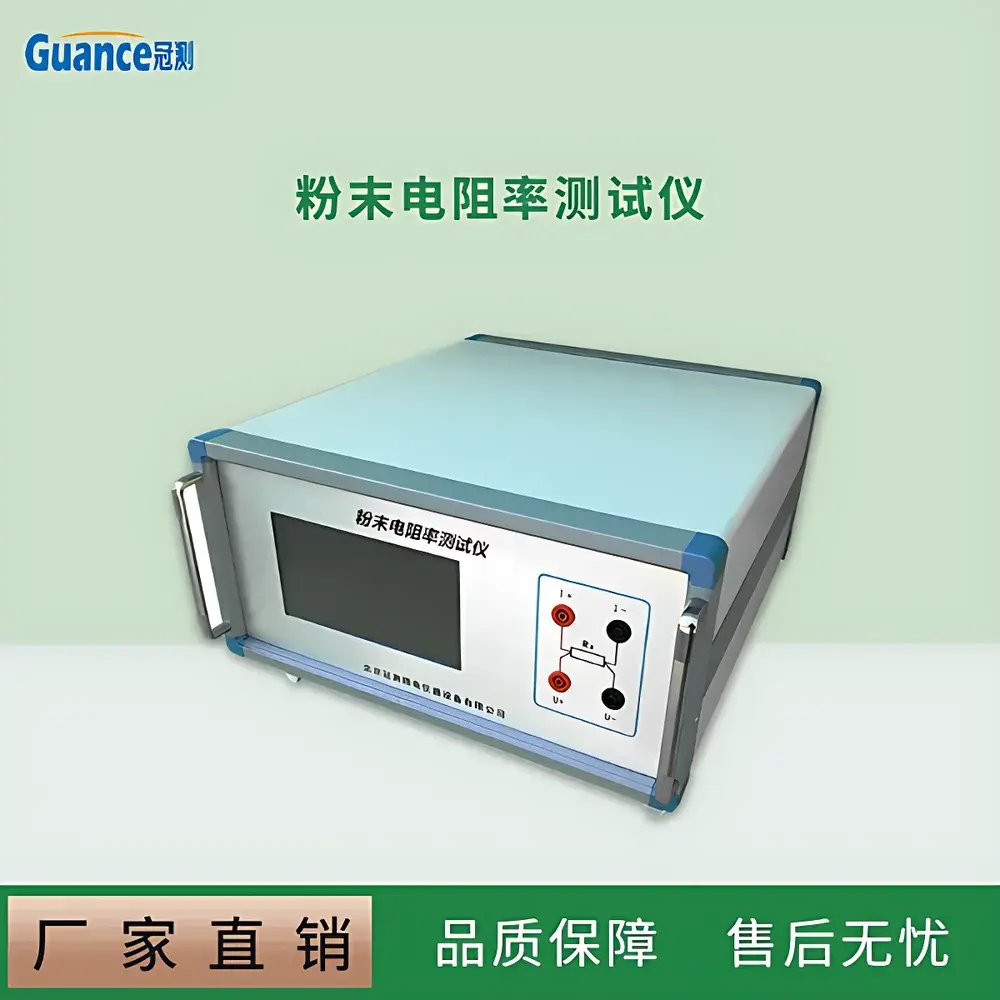
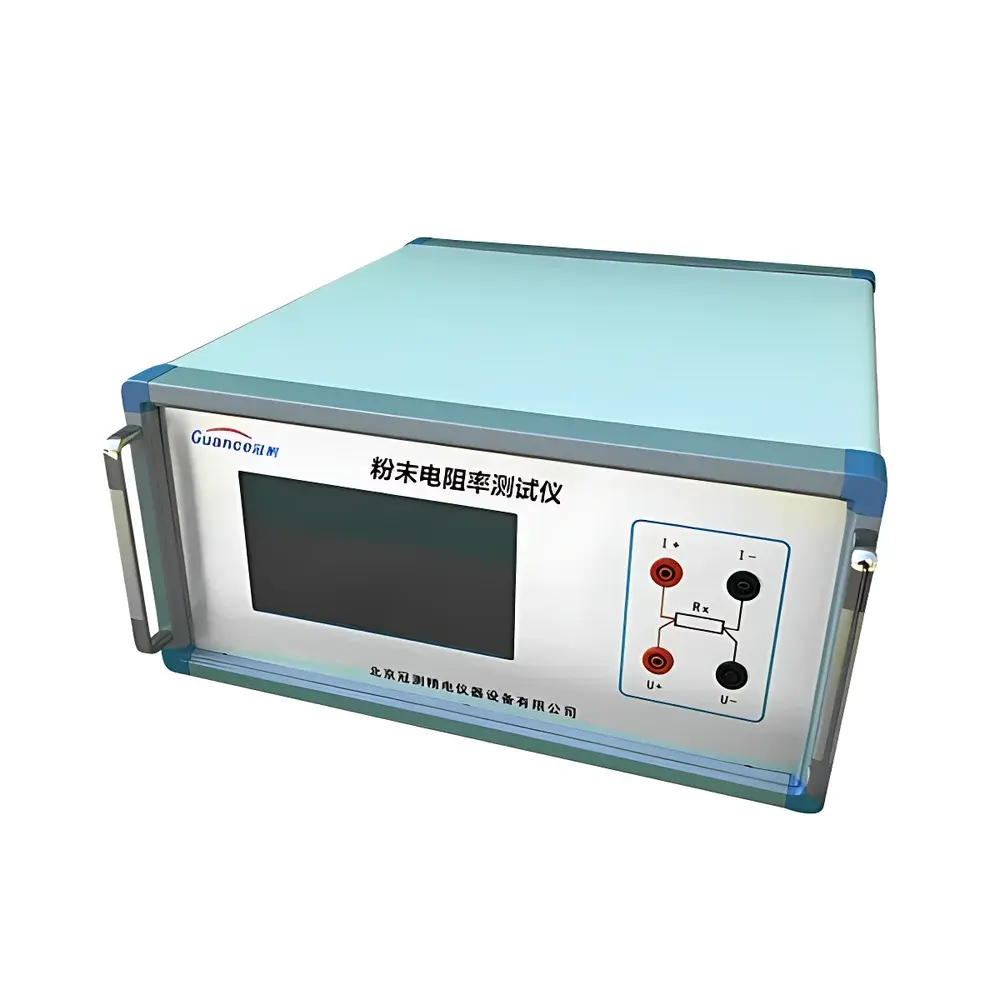
Guance Instruments FTDZ-I Powder Resistivity Tester
| Brand | Guance Instruments |
|---|---|
| Origin | Beijing, China |
| Manufacturer Type | Authorized Distributor |
| Country of Origin | China |
| Model | FTDZ-I |
| Price | USD 2,150 (FOB Beijing) |
Overview
The Guance Instruments FTDZ-I Powder Resistivity Tester is a dedicated benchtop instrument engineered for the precise determination of volume resistivity (ρ) in granular and powdered materials under controlled compaction conditions. It operates on the four-terminal (Kelvin) DC resistance measurement principle, eliminating lead and contact resistance errors to ensure traceable, repeatable results. The system applies a calibrated axial compressive load—via a precision mechanical press assembly integrated into the test fixture—to consolidate powder samples into a defined geometry (cylindrical pellet), enabling calculation of resistivity using the standard formula ρ = R × A / L, where R is measured resistance, A is cross-sectional area, and L is pellet height. Designed specifically for quality control and R&D laboratories in carbonaceous material production, battery electrode development, metallurgical powders, and advanced ceramics, the FTDZ-I complies with internationally recognized test protocols for powder electrical characterization.
Key Features
- Four-wire DC resistance measurement architecture with <1 µΩ resolution and ±0.15% basic accuracy, ensuring metrological integrity per IEC 60584-2 and ASTM D257 guidelines
- Integrated programmable mechanical compression stage delivering repeatable normal forces from 10 N to 500 N (adjustable in 1 N increments), traceable to NIST-certified load cells
- Touchscreen HMI (7-inch capacitive display) with intuitive, menu-driven interface supporting multi-language operation (English, Chinese, Spanish), real-time data visualization, and parameter logging
- Dual-channel high-stability DC constant current source (1 µA–100 mA range, ±0.05% setting accuracy) paired with a 6½-digit digital nanovoltmeter (0.1 µV sensitivity)
- Modular test fixture with interchangeable stainless-steel die sets (standard Ø12.7 mm and Ø25.4 mm) and gold-plated copper electrodes for low-contact-resistance measurement
- Compact footprint (320 × 280 × 360 mm), fanless thermal design, and CE-marked power supply compliant with EN 61010-1 for laboratory safety
Sample Compatibility & Compliance
The FTDZ-I accommodates free-flowing, non-fibrous powders with particle sizes ranging from 1 µm to 500 µm—including calcined petroleum coke, graphite powders, silicon carbide, metal alloys (e.g., Ni, Co, Fe), lithium-ion cathode precursors (LiCoO₂, NMC), and conductive carbon blacks. Sample mass is determined gravimetrically (recommended ±0.1 mg tolerance) prior to loading into the die cavity. Testing follows standardized compaction sequences defined in YS/T 587.6–2006 (anode-grade coke), GB/T 24525–2009 (carbon materials), GB/T 24521–2009 (coke), and GB/T 3782–2016 (acetylene black). All measurement procedures support GLP documentation requirements, with timestamped test records exportable via USB to CSV or PDF formats for audit readiness.
Software & Data Management
The embedded firmware supports full test sequence automation: zero calibration → sample loading → force ramping → dwell stabilization (user-definable 10–300 s) → current application → voltage acquisition → resistivity computation → statistical summary (mean, SD, CV%). Raw and processed data are stored internally (≥10,000 test records) with optional external backup. No proprietary PC software is required; however, an optional Windows-based DataLink Utility (v2.1) enables remote configuration, batch report generation (per ISO/IEC 17025 templates), and integration with LIMS via TCP/IP or RS-232. Audit trails include operator ID, timestamp, environmental temperature/humidity (via optional external sensor input), and calibration history—all compliant with FDA 21 CFR Part 11 electronic record requirements when used with password-protected user roles.
Applications
- Quality assurance of calcined anode coke in aluminum smelting operations
- Resistivity screening of synthetic graphite powders for lithium-ion battery anodes
- Batch-to-batch consistency verification of conductive additives (e.g., carbon black, graphene nanoplatelets) in polymer composites
- R&D evaluation of sintering behavior and interparticle conduction mechanisms in metal injection molding (MIM) feedstocks
- Correlation studies between powder morphology (BET surface area, tap density) and bulk electrical conductivity in ceramic processing
- Validation of surface oxidation effects on titanium and aluminum alloy powders used in additive manufacturing
FAQ
What standards does the FTDZ-I comply with?
It fully implements YS/T 587.6–2006, GB/T 24525–2009, GB/T 24521–2009, and GB/T 3782–2016. Its measurement uncertainty budget is validated against NIST SRM 3132a (graphite resistivity reference material).
Can the instrument measure insulating or highly resistive powders?
Yes—when configured with the optional high-resistance module (up to 1012 Ω), it supports resistivity measurements from 10−5 to 1010 Ω·cm, covering semiconducting to near-insulating regimes.
Is sample preparation automated?
No—manual loading and leveling are required to ensure uniform packing density, consistent with ISO 3252 and ASTM D3417 practices for powder electrical testing.
Does the system support GMP/GLP validation?
Yes—IQ/OQ documentation packages, calibration certificates (traceable to CNAS-accredited labs), and 21 CFR Part 11-compliant data export are available upon request.
What maintenance is required?
Annual verification of compression force accuracy and electrode surface integrity; no consumables beyond standard lab-grade isopropyl alcohol for electrode cleaning.



