
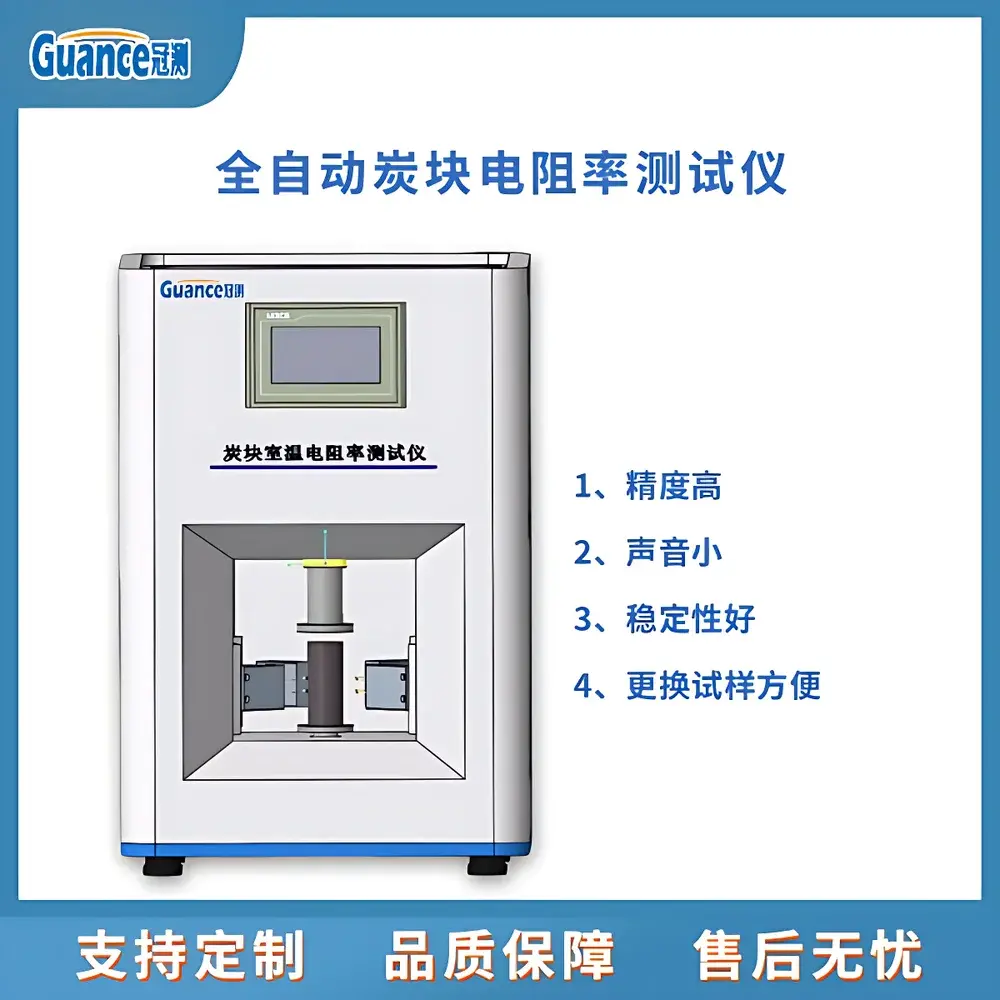
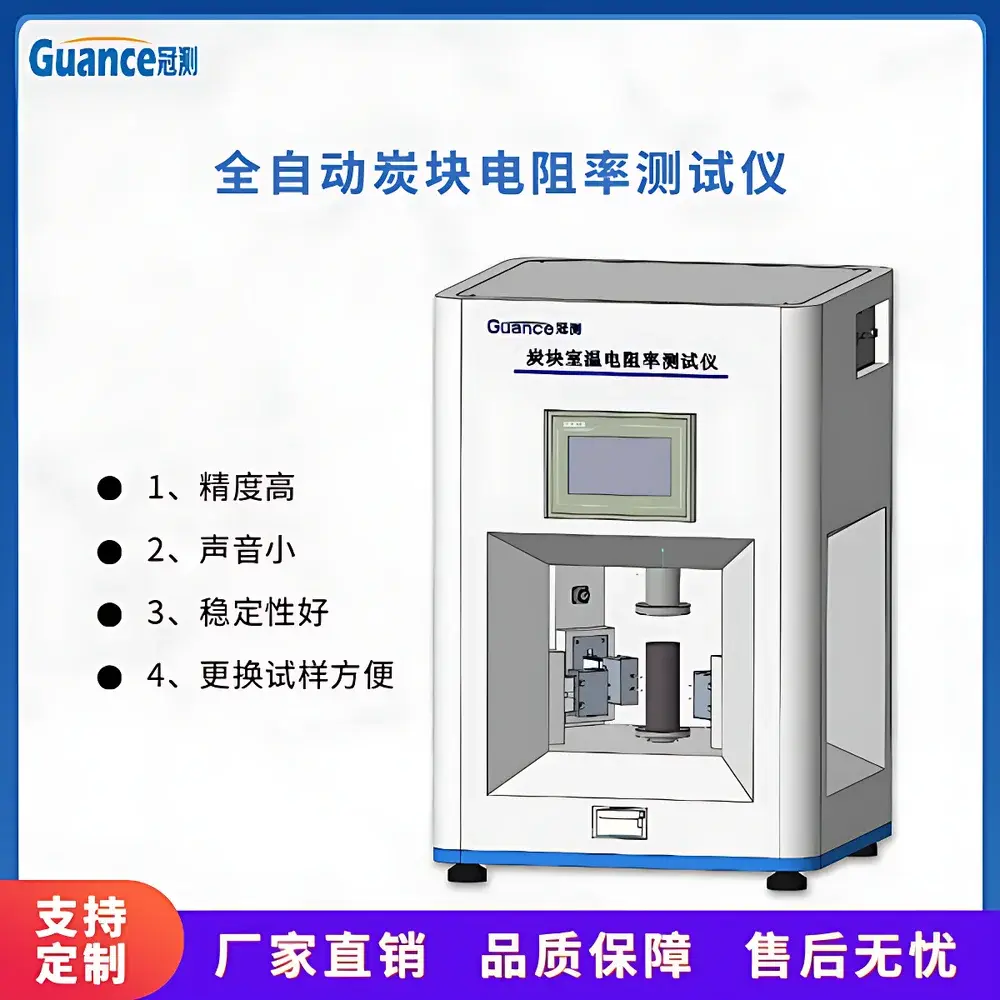
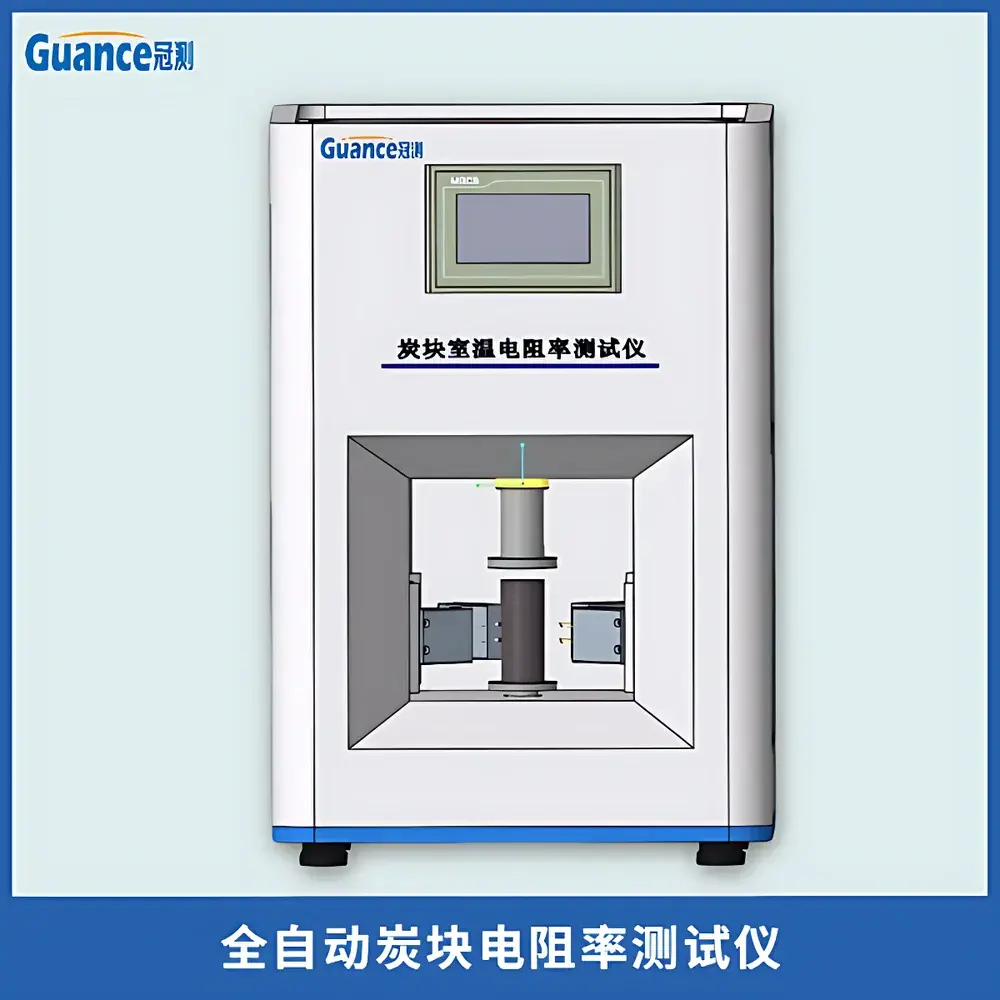
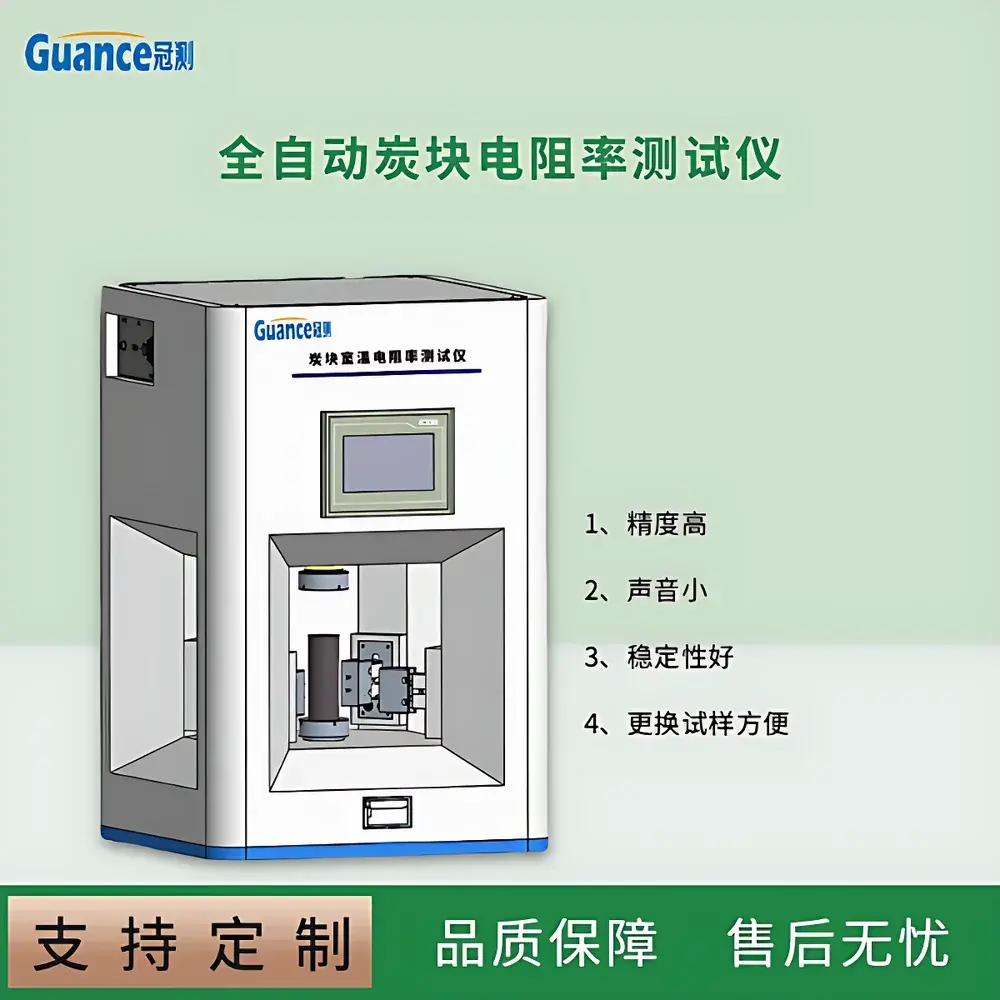
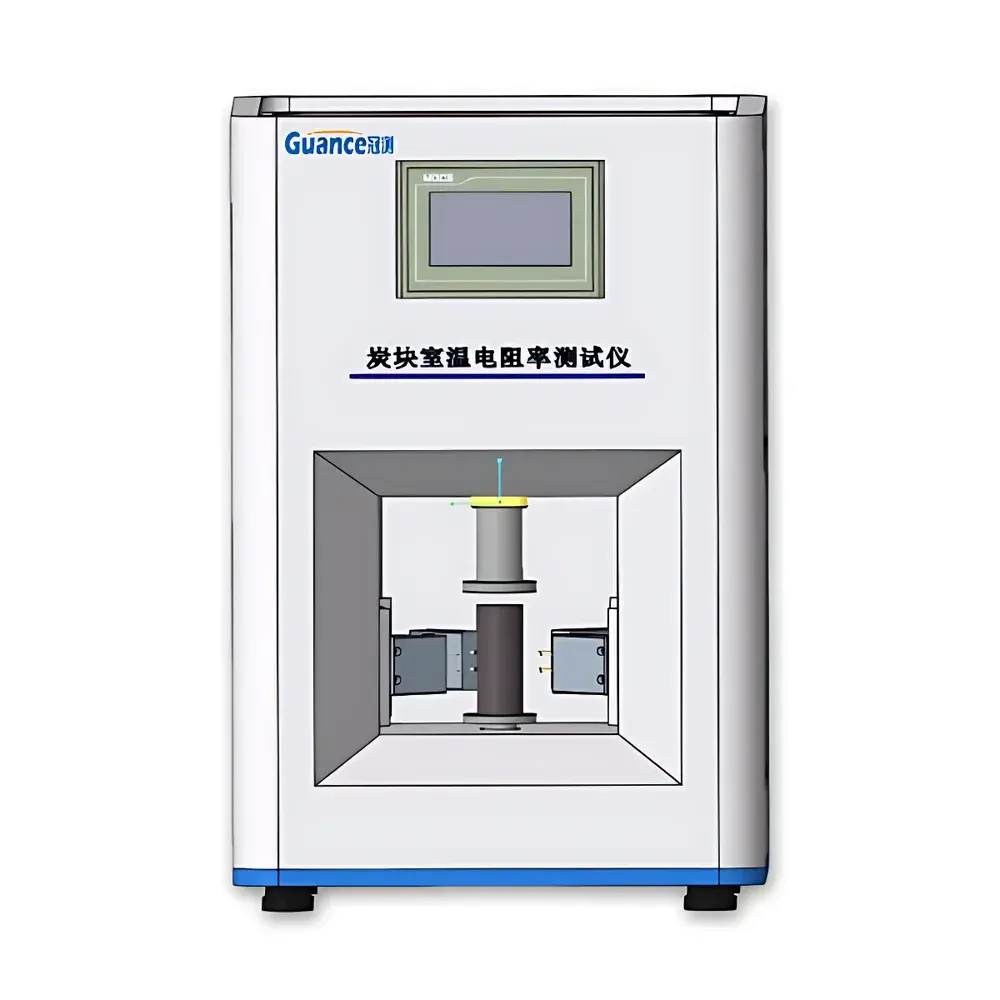
Guance Instrument GEST-210.2 Automatic Resistivity Tester for Carbon Blocks and Graphite Rods
| Brand | Guance Instrument |
|---|---|
| Origin | Beijing, China |
| Manufacturer Type | Authorized Distributor |
| Country of Origin | China |
| Model | GEST-210.2 |
| Price | USD 1,420 (FOB Beijing) |
| Standards Compliance | YS/T 63.2–2006, GB/T 24525–2009, GB/T 24521–2018 |
| Measurement Principle | Four-Point Probe DC Resistivity Method with Current Reversal and Automated Contact Pressure Control |
Overview
The Guance Instrument GEST-210.2 Automatic Resistivity Tester is a precision-engineered system designed specifically for the electrical resistivity characterization of carbonaceous and graphite-based structural materials—including prebaked anodes, cathode blocks, paste-molded carbon rods, and graphite electrodes used in aluminum smelting and high-temperature industrial applications. It implements the four-point probe (Kelvin sensing) DC method in strict accordance with YS/T 63.2–2006, GB/T 24525–2009, and GB/T 24521–2018, ensuring metrological traceability and inter-laboratory comparability. Unlike conventional two-point or manual contact systems, the GEST-210.2 eliminates voltage drop errors at probe–specimen interfaces by separating current injection and voltage sensing paths. Its integrated current reversal function mitigates thermoelectric offset voltages, while programmable pressure control ensures consistent mechanical contact without surface deformation—critical for brittle, low-density carbon materials. The system operates fully autonomously after parameter input, executing standardized test sequences including probe engagement, pressure ramping, bidirectional current application, multi-point voltage acquisition, and statistical averaging—all under closed-loop PLC supervision.
Key Features
- Siemens S7-1200 PLC-based real-time control architecture with deterministic I/O response and fail-safe logic sequencing
- 10-inch industrial-grade capacitive touchscreen HMI with intuitive workflow navigation and multilingual UI support (English, Spanish, Russian)
- Dual-range constant-current source: 5 A / 10 A selectable output with ±0.1% full-scale accuracy and <10 ppm/h long-term stability
- Four independently switchable probe assemblies, each equipped with spring-loaded tungsten-carbide-tipped probes (contact force >0.5 N, repeatable within ±0.03 N)
- Precise probe spacing adjustment from 20 mm to 40 mm in 1 mm increments; calibrated via laser-interferometric verification
- Electromechanical loading system with servo-controlled actuator (0–10 kN adjustable range, resolution 0.1 kN, repeatability ±0.5%)
- Integrated thermal drift compensation algorithm using dual-channel reference thermistors embedded in probe holders
- Onboard micro-printer (thermal, 58 mm width) for immediate hard-copy reporting with timestamp, operator ID, and test parameters
- Internal non-volatile memory (16 GB) storing ≥100,000 test records with searchable metadata (sample ID, date, geometry, pressure, current mode)
- Remote firmware update capability via secure HTTPS-based OTA protocol—no physical access required
Sample Compatibility & Compliance
The GEST-210.2 accommodates cylindrical and rectangular carbon/graphite specimens ranging from 25 mm to 300 mm in length, with cross-sectional diameters or widths from 30 mm to 120 mm. Custom fixture kits support irregular geometries per ASTM D3764–22 Annex A2 provisions. All measurement protocols conform to ISO/IEC 17025:2017 requirements for testing laboratories, including documented uncertainty budgets (k=2) for resistivity results. Data integrity complies with FDA 21 CFR Part 11 principles through electronic signature capture, audit trail logging (user actions, parameter changes, calibration events), and immutable record archiving. The instrument meets CE electromagnetic compatibility (EN 61326-1) and safety (EN 61010-1) directives. Calibration certificates are issued per ISO/IEC 17025-accredited third-party providers upon request.
Software & Data Management
Firmware v3.2 includes embedded data management tools supporting CSV export via USB host port and Ethernet TCP/IP transmission to LIMS or MES platforms. Each test record contains raw voltage readings (forward/reverse), calculated resistivity (μΩ·m), standard deviation across four probe sets, applied pressure (kN or MPa), specimen geometry inputs, and environmental temperature (°C). Optional PC software (Windows/Linux/macOS) enables advanced statistical analysis—trend charting, batch comparison, outlier detection via Grubbs’ test, and report generation compliant with GLP/GMP documentation templates. All stored data is encrypted at rest using AES-256 and protected by role-based access control (administrator, operator, reviewer).
Applications
- Quality control of carbon anodes and cathodes in primary aluminum production facilities
- Incoming inspection of graphite electrode blanks prior to machining and impregnation
- R&D evaluation of binder-coated carbon composites and silicon-carbon anode materials for battery applications
- Process validation of calcination and graphitization heat treatments via resistivity–temperature correlation
- Failure analysis of cracked or delaminated carbon blocks using spatial resistivity mapping (via sequential repositioning)
- Third-party certification testing accredited under CNAS (China National Accreditation Service) and ILAC-MRA frameworks
FAQ
Does the GEST-210.2 meet international standards for resistivity testing?
Yes—it implements the four-point probe method as specified in IEC 60404-16, ASTM D3764–22, and ISO 18513:2020 for carbon and graphite materials.
Can the instrument measure specimens with non-uniform cross-sections?
It supports both diameter-based and user-defined cross-sectional area input; however, uniform geometry is required per standard compliance—non-uniform samples must be sectioned or reported with geometric uncertainty.
Is external compressed air required for probe actuation?
No—the system uses an all-electric servo drive; no pneumatic infrastructure is needed.
How is measurement traceability maintained?
Each unit ships with a factory calibration certificate referencing NIST-traceable shunt resistors and certified dimensional gauges; annual recalibration is recommended per ISO/IEC 17025.
What level of technical support is available outside China?
Guance Instrument partners with regional service centers in Germany, USA, and UAE offering remote diagnostics, spare parts logistics, and on-site technician dispatch under service-level agreements.



