
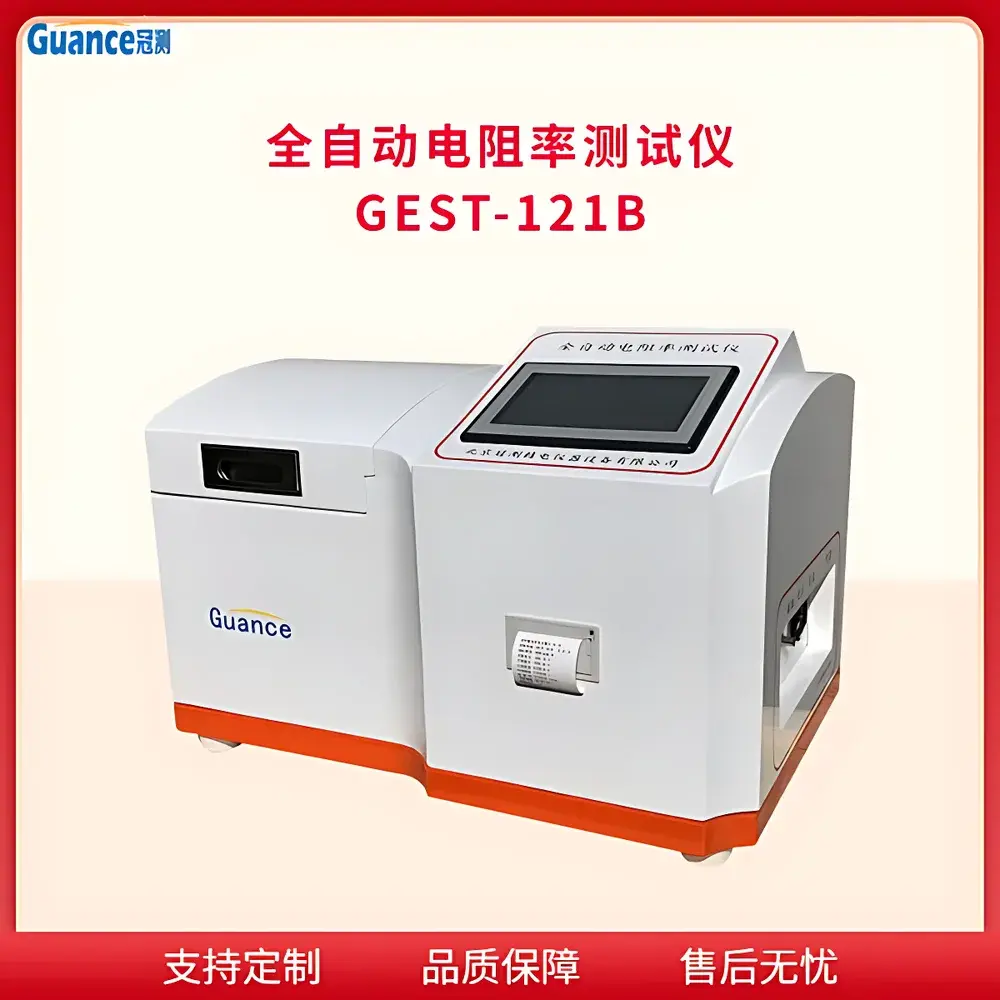
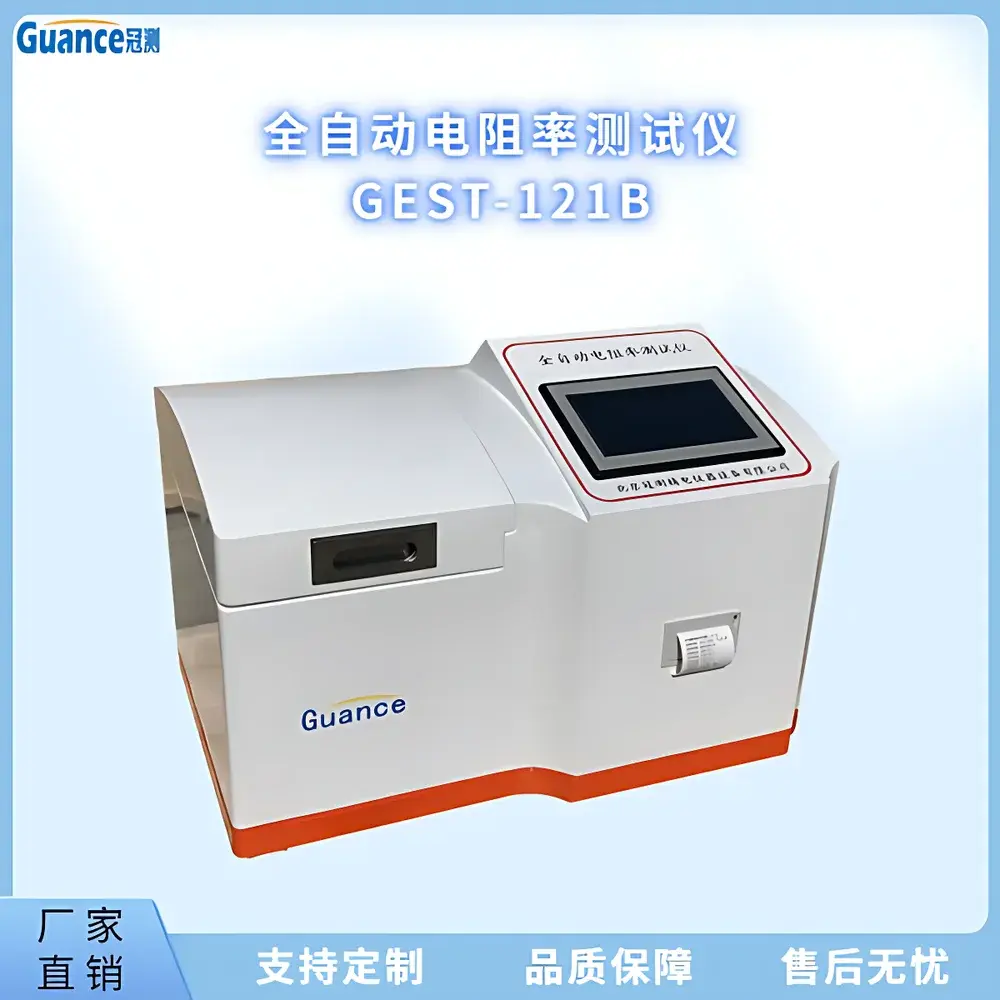
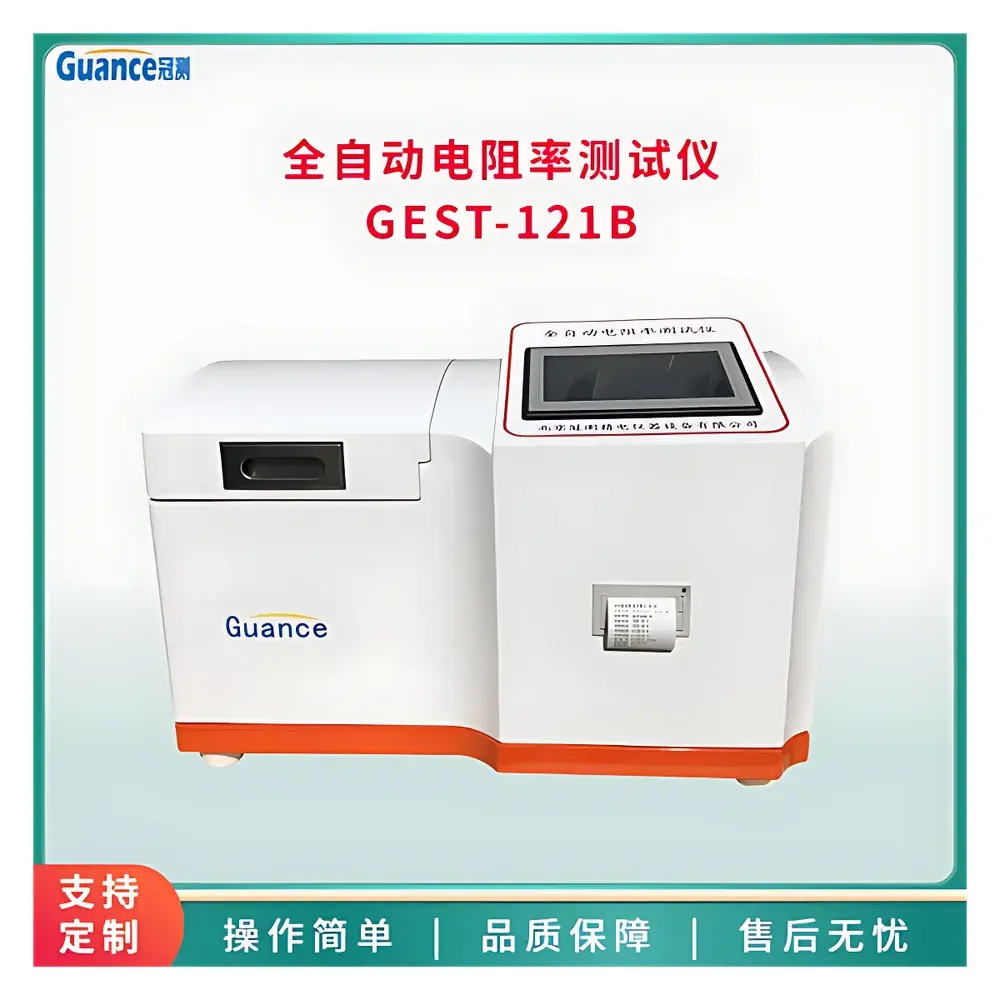
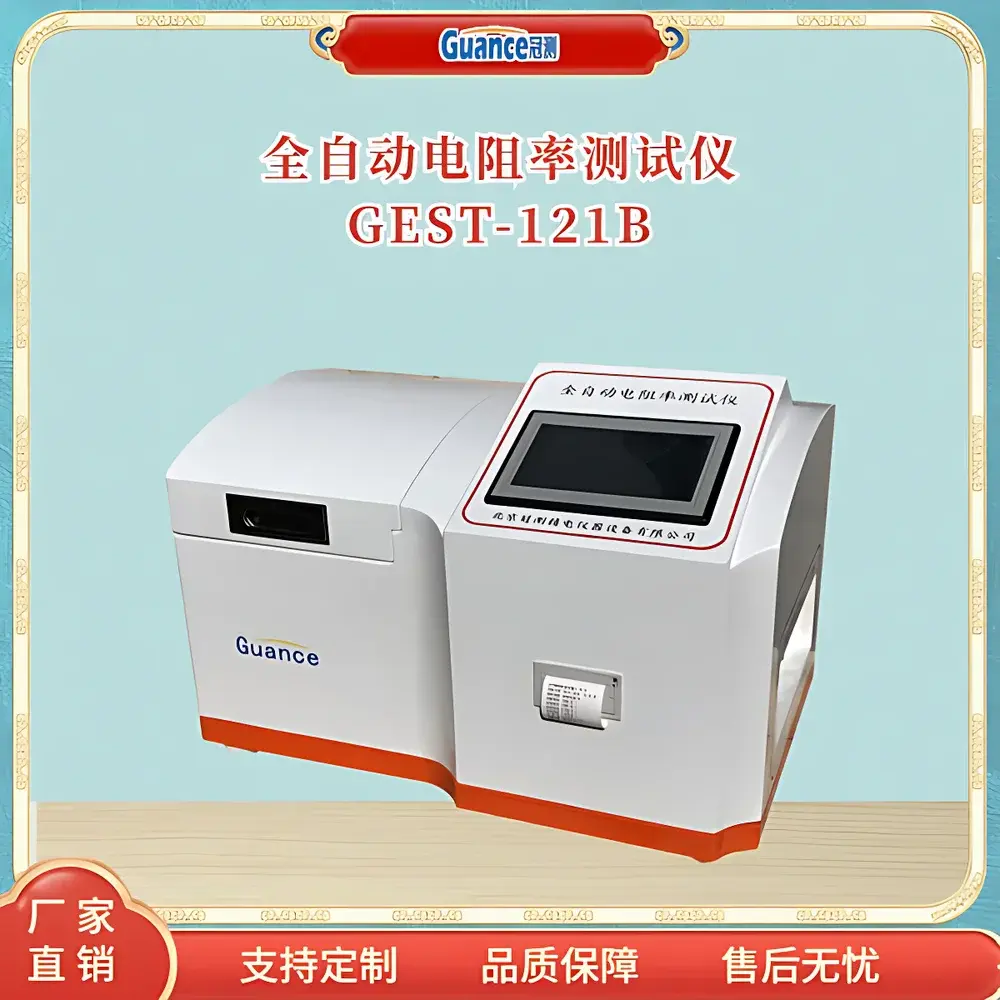
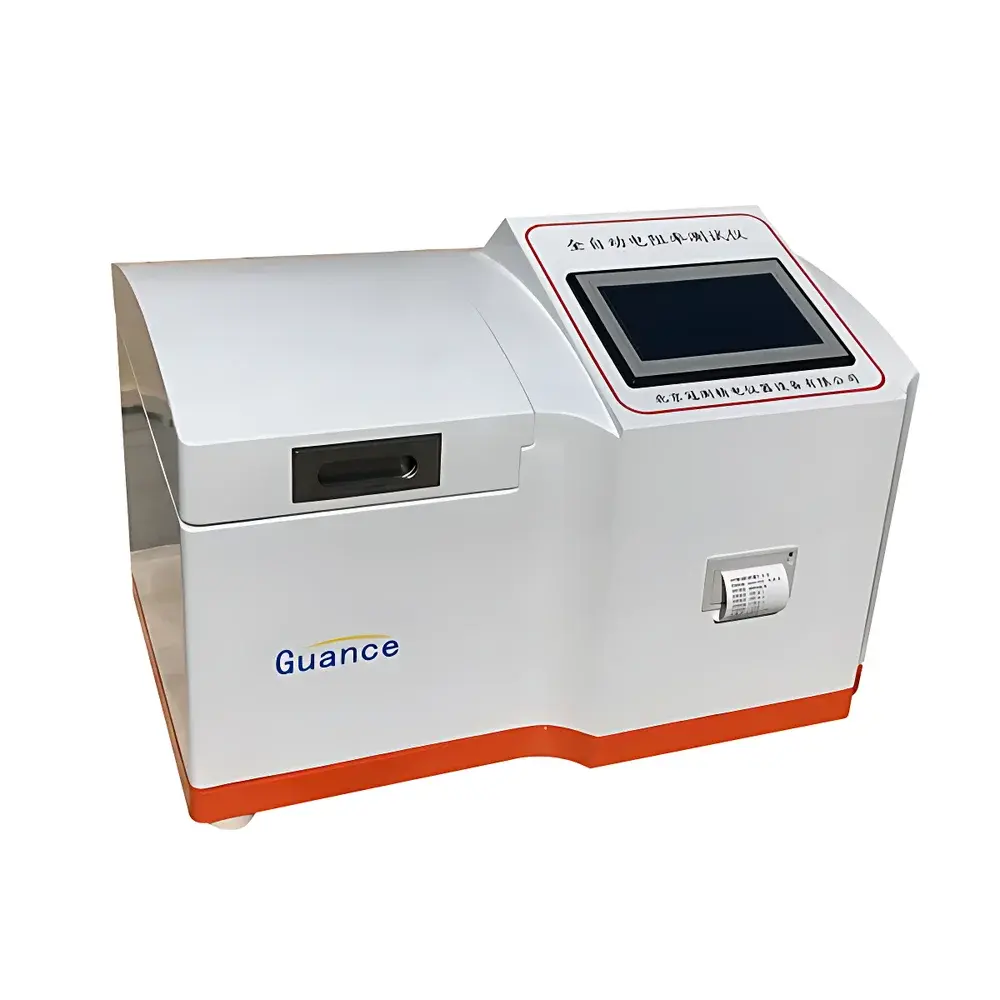
GuanCe GEST-121B Fully Automated Resistivity Tester
| Brand | GuanCe Instruments |
|---|---|
| Origin | Beijing, China |
| Manufacturer Type | Authorized Distributor |
| Product Origin | Domestic (China) |
| Model | GEST-121B |
| Price | USD 1,400 (FOB Beijing) |
Overview
The GuanCe GEST-121B Fully Automated Resistivity Tester is an engineered precision instrument designed for the quantitative determination of volume resistivity, surface resistivity, and insulation resistance of solid, liquid, powder, paste, and thin-film dielectric materials. Based on the constant-voltage direct-current (DC) measurement principle in accordance with Ohm’s Law (R = V/I), the system applies calibrated DC test voltages—ranging from 10 V to 1000 V—and measures resulting currents as low as 1 × 10⁻¹⁶ A to compute resistivity (ρ, in Ω·m) and surface resistivity (σₛ, in Ω/sq). Its architecture integrates high-impedance electrometer-grade circuitry, guarded electrode interface design, and real-time current monitoring to minimize leakage error and ensure traceable, reproducible results across heterogeneous sample geometries. The instrument serves as a core metrology tool in QC laboratories evaluating insulating polymers, antistatic composites, conductive elastomers, electrostatic discharge (ESD)-sensitive flooring systems, and functional coatings where compliance with international electrical safety and material specification standards is mandatory.
Key Features
- Fully automated resistivity calculation: Direct computation of volume resistivity (ρ) and surface resistivity (σₛ) based on user-input sample dimensions and electrode configuration
- Seven selectable DC test voltages: 10 V, 50 V, 100 V, 250 V, 500 V, and 1000 V — programmable per test sequence to match material polarization behavior and standard requirements
- Extended resistance range: 1 × 10⁴ Ω to 1 × 10¹⁸ Ω with ±1% basic accuracy (at 23 °C ±2 °C, RH <80%, after warm-up)
- Ultra-low current measurement capability: Down to 1 × 10⁻¹⁶ A with 2 × 10⁻⁴ A upper limit, enabling characterization of highly insulating ceramics and polymer films
- 7-inch industrial-grade capacitive touchscreen HMI: Intuitive navigation, password-protected operator access control (admin/user tiers), and real-time display of V, I, R, ρ, and σₛ
- Configurable auto-hold timing: In automatic mode, integration time for stable reading acquisition is user-definable (1–60 s), accommodating slow-charging dielectrics
- Self-calibrating voltage and current channels: Internal reference standards enable periodic zero and gain verification without external equipment
- Embedded thermal management: Stable operation within 0–40 °C ambient; power consumption ≤5 W (AC 220 V, 50 Hz)
Sample Compatibility & Compliance
The GEST-121B supports standardized electrode configurations per ASTM D257 and GB/T 1410—including two-terminal coaxial probes for liquids/powders, three-terminal guarded electrodes for volume resistivity, and concentric ring electrodes for surface resistivity. It is validated for use with rubber compounds (GB/T 1692), thermoplastic/elastomeric conductive materials (GB/T 2439), high-temperature insulators (GB/T 10581), textile ESD performance (GB/T 12703.4), and plasticized liquid formulations (GB 1672). All measurement protocols align with ISO/IEC 17025 documentation requirements, and raw data logs include timestamp, operator ID, voltage setting, integration time, and environmental metadata—supporting GLP/GMP audit readiness. While not FDA 21 CFR Part 11–certified out-of-the-box, its data export functionality (CSV/Excel) enables integration into validated LIMS environments.
Software & Data Management
The instrument includes USB-based communication and ships with Windows-compatible PC software for remote control, real-time waveform monitoring, batch test sequencing, and database-driven report generation. Software features include configurable pass/fail limits, statistical analysis (mean, SD, CV%), trend charting over time, and export to CSV, PDF, or XML formats. All measurements are stored locally on-device (internal flash memory) with date/time stamping and operator authentication. Audit trail functionality records parameter changes, calibration events, and test initiation—essential for ISO 9001 internal audits and supplier qualification programs.
Applications
- Volume and surface resistivity evaluation of polymeric insulators (e.g., epoxy encapsulants, silicone gels, PVDF films)
- Quality control of antistatic packaging materials and ESD-safe work surfaces per ANSI/ESD S20.20
- Resistivity mapping of conductive rubber soles, carbon-black-filled TPEs, and graphene-doped composites
- Dark current characterization of photodiodes and optoelectronic sensor substrates
- R&D screening of novel dielectric nanocomposites, ionic liquids, and battery separator membranes
- Compliance testing of cleanroom flooring systems (EN 1081, IEC 61340-4-1) and medical device housings (IEC 60601-1)
FAQ
What standards does the GEST-121B directly support?
It implements test methodologies defined in GB/T 1410-2006, ASTM D257-99, GB/T 10581-2006, GB/T 1692-2008, GB/T 2439-2001, GB/T 12703.4-2010, GB/T 10064-2006, and GB 1672-1988.
Can the instrument measure both volume and surface resistivity on the same sample?
Yes—by switching electrode fixtures and selecting the corresponding test mode in firmware, users can obtain both metrics without recalibration.
Is external calibration required?
Periodic verification using NIST-traceable resistors (e.g., 10⁹ Ω, 10¹² Ω) is recommended annually; the built-in auto-calibration compensates for drift between verifications.
Does the system support statistical process control (SPC)?
The PC software provides Cp/Cpk calculation, X-bar/R charting, and export to Minitab or JMP for enterprise-level SPC deployment.
What is the minimum sample thickness supported for volume resistivity measurement?
With standard guarded electrodes, samples ≥0.5 mm thick are recommended; thinner films require custom electrode spacing and correction per ASTM D257 Annex A4.



