
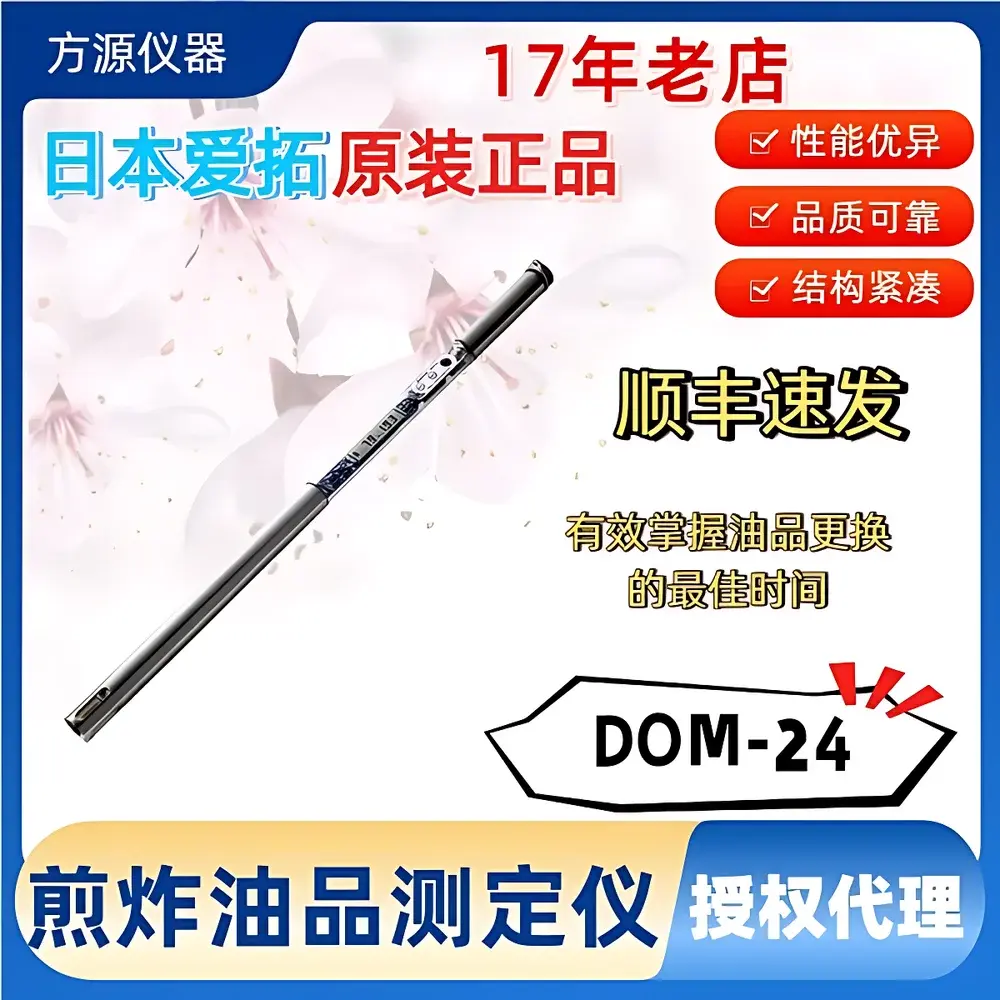
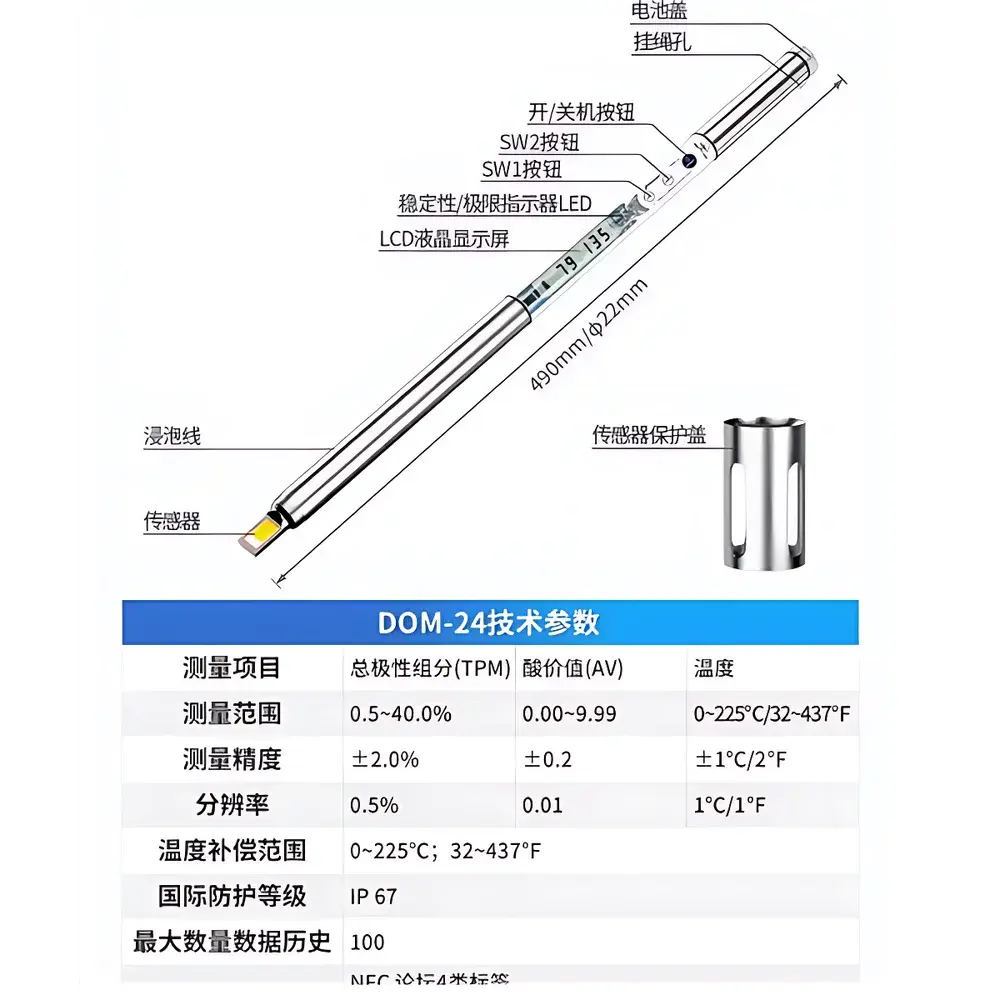
ATAGO DOM-24 Frying Oil Quality Analyzer with AOM-03 Test Strips
| Brand | ATAGO |
|---|---|
| Origin | Japan |
| Model | DOM-24 (9341) + AOM-03 Test Strips (9351) |
| Measurement Range | TPM 0.5–40% |
| Temperature Display Range | 0–225°C (32–437°F) |
| Temperature Accuracy | ±2.0°C (20–190°C), ±3.0°C (full range) |
| TPM Resolution | 0.5% |
| AV Resolution | 0.01 |
| TPM Accuracy | ±2.0% (20–190°C), ±3.0% (full range) |
| Measurement Method | Immersion-based electrochemical/optical strip assay |
| Temperature Compensation | Automatic digital compensation |
| Data Interface | NFC-enabled wireless transfer to iOS/Android devices |
| Compliance | Designed for routine QC in food service, compliant with JIS Z 8401 and ISO 8655-6 principles for volumetric accuracy of test strip readers |
Overview
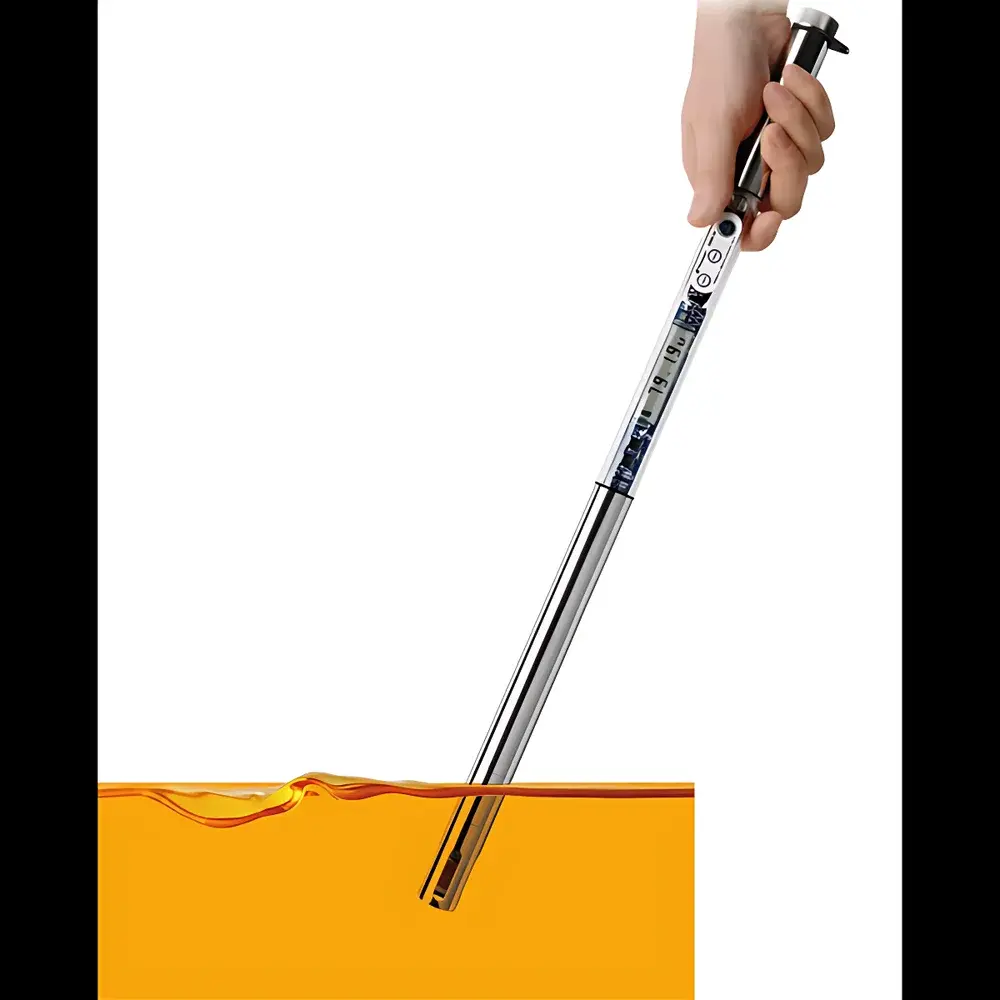
The ATAGO DOM-24 Frying Oil Quality Analyzer is a dedicated handheld instrument engineered for rapid, on-site assessment of thermal degradation in cooking oils used in commercial kitchens, fast-food chains, and institutional food preparation facilities. Unlike general-purpose surface tensiometers or viscosity meters, the DOM-24 employs a validated immersion-based assay method using proprietary AOM-03 disposable test strips (model 9351), which react selectively to polar compounds—primarily total polar materials (TPM) and acid value (AV)—that accumulate during repeated heating cycles. TPM concentration serves as an internationally recognized proxy for oil degradation, with regulatory thresholds commonly set at ≤24–27% TPM for discard decisions (per EU Regulation (EU) No 1169/2011 guidance and Codex Alimentarius standards). The device integrates real-time temperature sensing (0–225°C) with automatic digital temperature compensation, ensuring measurement stability across frying temperature ranges (typically 160–190°C). Its compact, IP65-rated housing supports operation in humid, high-temperature kitchen environments without condensation-related drift.
Key Features
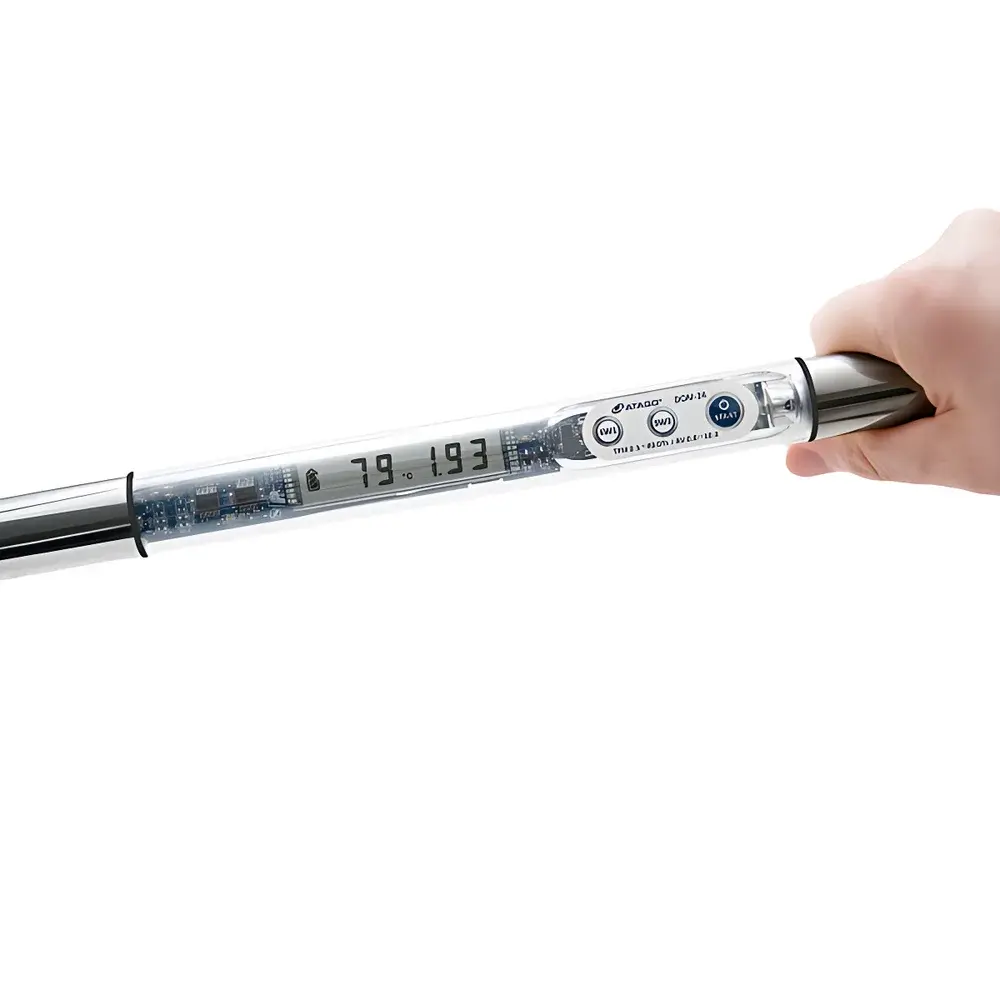
- Simultaneous dual-parameter readout: TPM (%) and AV (unitless scale calibrated to titration equivalence)
- Integrated Pt100-class temperature sensor with ±2.0°C accuracy over operational frying range (20–190°C)
- Automatic temperature compensation algorithm aligned with ASTM D7457-22 Annex A1 for polar compound quantification
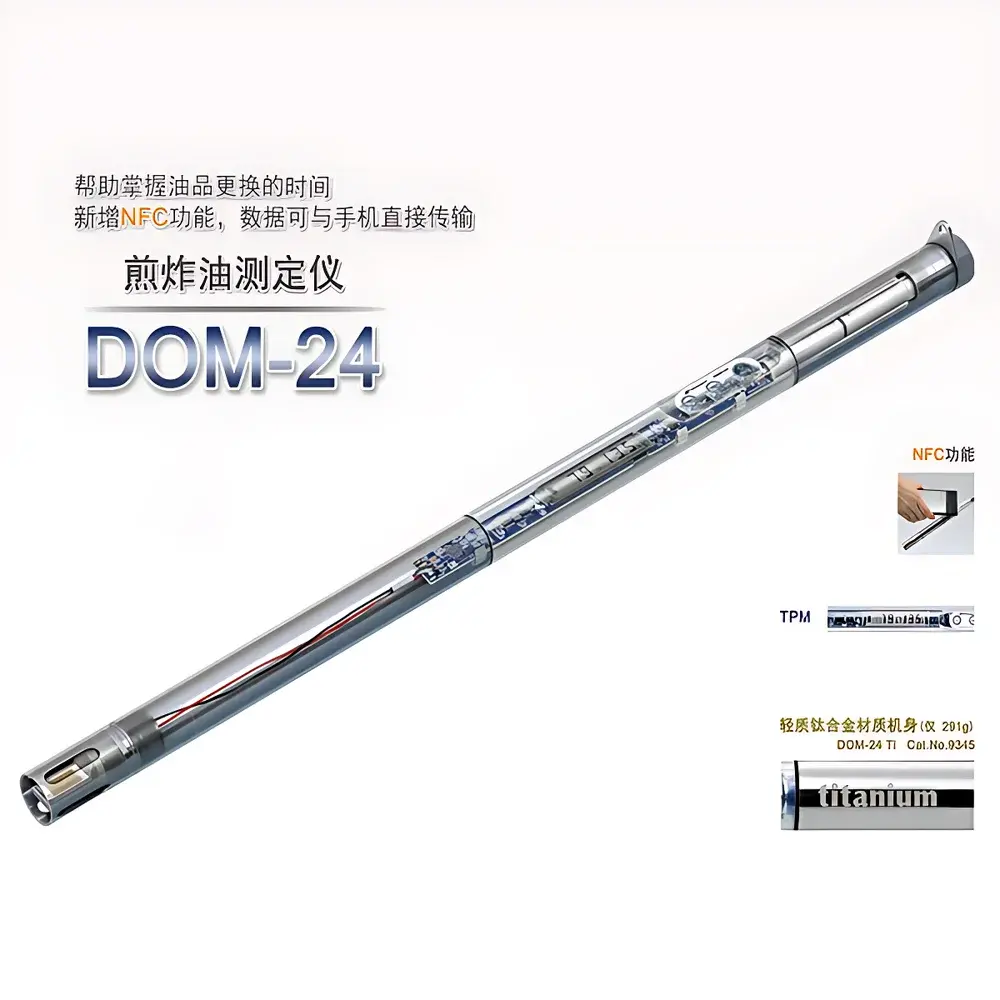
- NFC (Near Field Communication) interface enabling secure, one-touch data export to ATAGO’s proprietary Frying Oil Manager app (iOS/Android)
- Non-rechargeable lithium battery providing ≥5,000 measurements per set (typical usage)
- Calibration traceability via factory-certified reference strips (AOM-03 Lot-specific calibration curves stored in NFC chip)
- Self-diagnostic startup sequence verifying optical path integrity, sensor linearity, and strip recognition firmware
Sample Compatibility & Compliance
The DOM-24 is optimized for use with vegetable-based frying media including soybean, canola, sunflower, palm, and blended oils. It is not intended for non-edible oils (e.g., mineral oil, synthetic lubricants) or highly viscous shortenings. Each AOM-03 test strip is single-use and pre-calibrated to minimize inter-operator variability. The system meets functional requirements for GLP-compliant recordkeeping when paired with the Frying Oil Manager app, which logs timestamp, operator ID, location tag (via GPS), temperature, TPM/AV values, and strip lot number—supporting audit readiness under FDA 21 CFR Part 11 (electronic records/electronic signatures) when configured with user authentication and audit trail enablement. Device design adheres to IEC 61010-1:2010 for electrical safety in laboratory and industrial environments.
Software & Data Management
The companion Frying Oil Manager software provides centralized data aggregation from multiple DOM-24 units across a multi-site foodservice enterprise. Raw readings are encrypted during NFC transmission and stored locally or synchronized to cloud-hosted instances (AWS HIPAA-compliant infrastructure optional). Reporting modules generate daily TPM trend charts, exceedance alerts (configurable threshold: e.g., TPM >25%), and compliance summary reports aligned with HACCP Critical Control Point documentation. All data exports comply with CSV and PDF/A-1a formats for archival integrity. Audit trails capture every modification—including deletion—with immutable timestamps and authenticated user IDs, satisfying internal QA protocols and third-party certification audits (e.g., BRCGS Food Safety Issue 9, SQF Edition 9).
Applications
- Routine monitoring of fryer oil health in restaurants, cafeterias, and catering operations
- Validation of oil rotation schedules against corporate food safety policies
- Root-cause analysis of off-flavor development linked to elevated AV/TPM ratios
- Training tool for kitchen staff on objective oil quality metrics versus subjective sensory evaluation
- Documentation support for insurance claims related to equipment damage caused by degraded oil
- Pre-audit verification prior to BRCGS, ISO 22000, or NSF certification inspections
FAQ
How often should I calibrate the DOM-24?
The DOM-24 requires no field calibration; it relies on factory-traceable AOM-03 strips with embedded NFC calibration data. Users must only verify functionality using the included control strip (model 9351-C) before each shift.
Can I reuse AOM-03 test strips?
No. Each AOM-03 strip is chemically single-use and designed for one immersion event. Reuse compromises analytical specificity and introduces cross-contamination risk.
Does the device measure free fatty acids (FFA) directly?
No. AV output correlates with acid value via standardized titration equivalence but does not replace laboratory-grade FFA quantification by AOCS Cd 3d-63. It serves as a rapid screening indicator.
Is NFC data transfer compatible with enterprise MDM platforms?
Yes. The Frying Oil Manager app supports Mobile Device Management enrollment via Apple Business Manager and Android Enterprise, enabling remote policy enforcement and certificate provisioning.
What is the shelf life of unopened AOM-03 strips?
24 months from manufacture date when stored at 2–30°C in original foil pouch; humidity exposure degrades reagent stability.



