
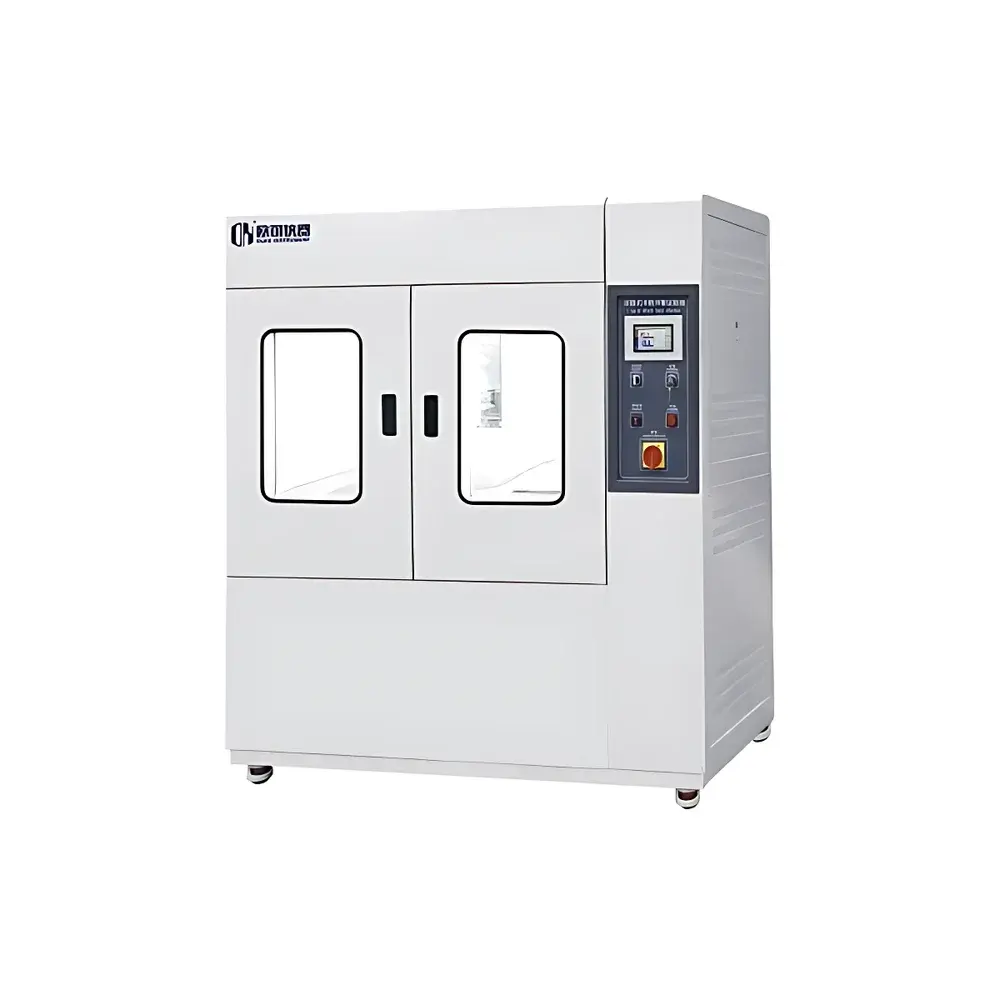
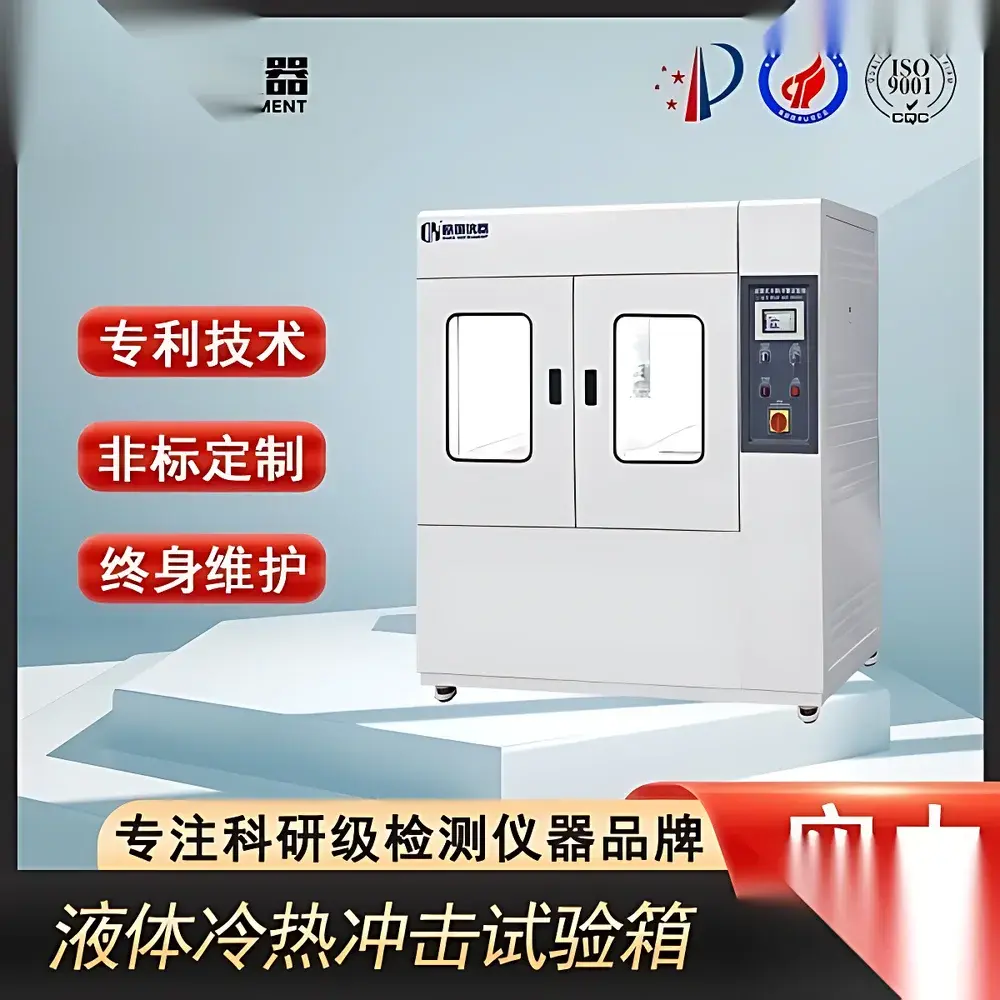
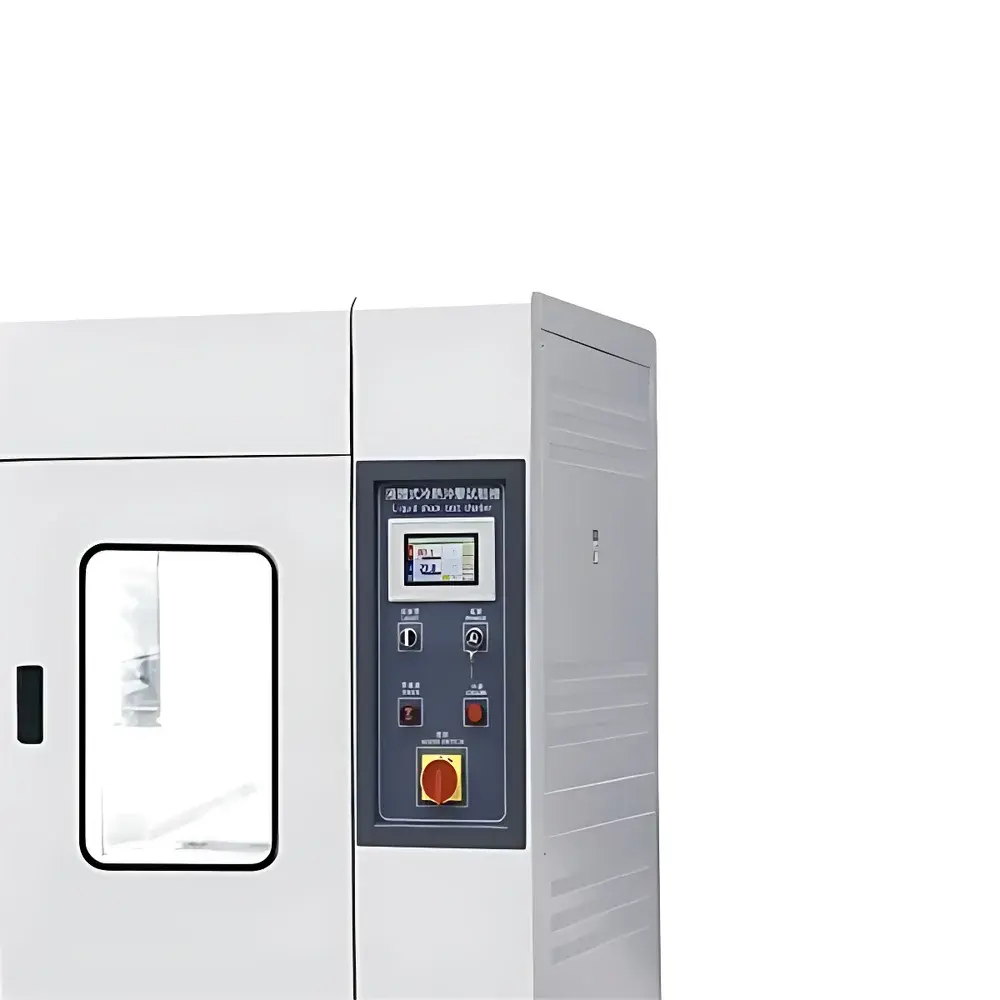
OK-YT Series Liquid-Bath Thermal Shock Test Chamber
| Brand | Other Brands |
|---|---|
| Origin | Imported |
| Manufacturer Type | General Distributor |
| Price | USD 12,500 (FOB) |
| Internal Dimensions (W×H×D) | 40×35×30 cm to 70×60×60 cm |
| External Dimensions (W×H×D) | 145×180×140 cm to 190×170×270 cm |
| Hot Soak Zone Temperature Range | RT to +200 °C |
| Cold Soak Zone Temperature Range | RT to −70 °C |
| Test Zone Temperature Range | +60 °C to +150 °C (hot shock) |
| Temperature Control Accuracy | ±0.5 °C |
| Temperature Uniformity | ±2.0 °C |
| Soak-to-Soak Transition Time | <5 min |
| Hot Zone Preheat Time (RT → 150 °C) | ~30 min |
| Cold Zone Precool Time (RT → −70 °C) | ~85 min |
| Refrigeration System | Hermetic or Semi-Hermetic Compressor with Eco-Friendly Refrigerants (R404A/R23) |
| Inner Chamber Material | SUS#304 Mirror-Finish Stainless Steel |
| Outer Chamber Material | SUS#304 Stainless Steel or Powder-Coated Steel |
| Insulation | High-Density Fire-Retardant PU Foam |
| Power Supply | AC 380 V ±5%, 50 Hz ±0.5 Hz, 3-Phase 5-Wire |
Overview
The OK-YT Series Liquid-Bath Thermal Shock Test Chamber is an engineered environmental test system designed for rapid, high-fidelity thermal cycling of materials and components under controlled, repeatable conditions. Unlike air-based thermal shock chambers, this liquid-bath configuration utilizes segregated hot and cold fluid reservoirs—each thermally stabilized via independent heating and cryogenic refrigeration circuits—to deliver precise, high-rate temperature transitions. The test specimen remains stationary while a pneumatically actuated lift basket transfers it between the two thermal zones, eliminating mechanical vibration and airflow-induced thermal gradients. This architecture enables strict compliance with thermal shock protocols defined in MIL-STD-810, IEC 60068-2-14, and JEDEC JESD22-A104, where dwell time, transfer speed, and temperature stability are critical parameters for evaluating solder joint integrity, polymer embrittlement, coating adhesion, and interfacial delamination in aerospace, defense, medical device, and semiconductor applications.
Key Features
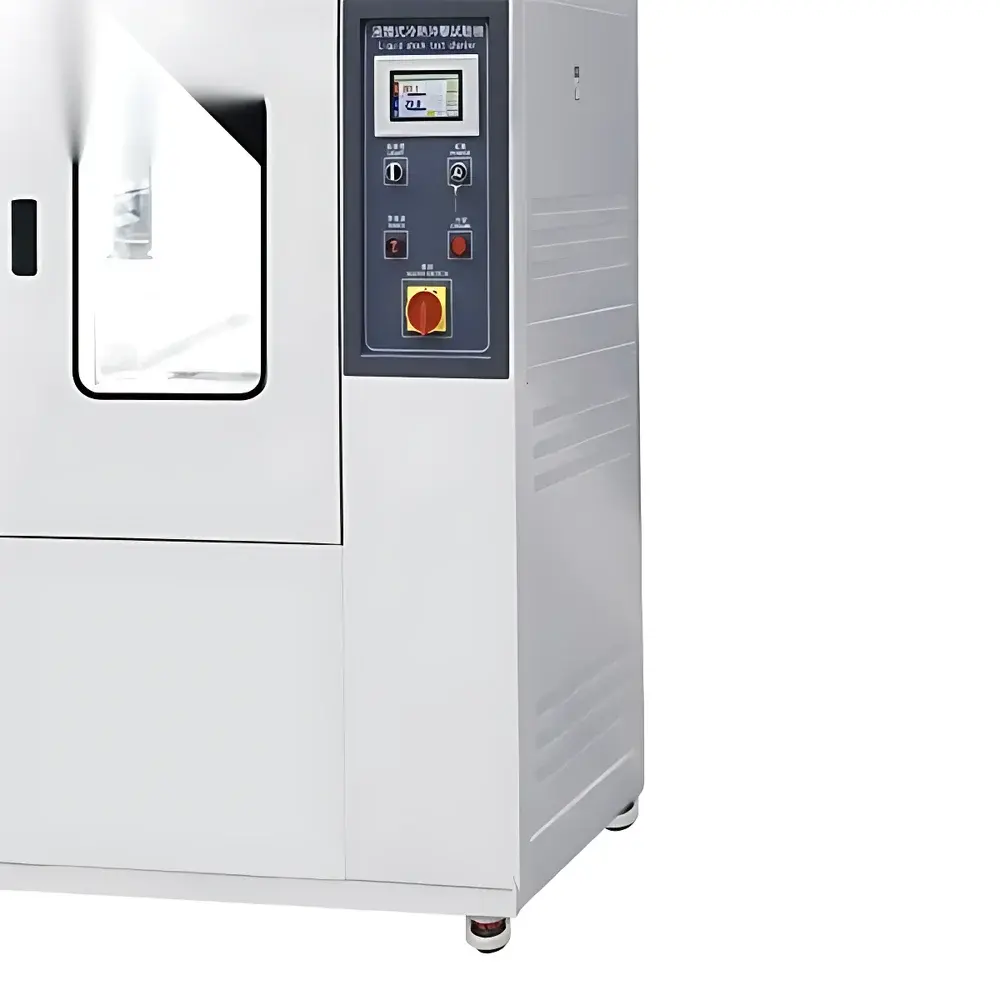
- Large-format color LCD touchscreen controller with intuitive graphical interface, real-time trend display, and multi-language support (English, German, Japanese)
- Dual-circuit refrigeration system featuring hermetic or semi-hermetic compressors, plate-type heat exchangers, and cascaded low-temperature stages using R404A/R23 refrigerant blend for stable operation down to −70 °C
- Liquid-bath thermal mass design ensures exceptional temperature stability (±0.5 °C control accuracy) and uniformity (±2.0 °C across test volume), minimizing overshoot and recovery drift
- LAN-enabled Ethernet interface compliant with Modbus TCP/IP protocol, supporting remote monitoring, script-based test sequencing, and integration into centralized lab management systems
- Configurable operational modes: independent high-temperature soak, low-temperature soak, and programmable thermal shock cycles—including user-defined dwell times, transition counts (up to 999 cycles), and automatic defrost scheduling
- Pre-conditioning functions: automatic pre-cooling/pre-heating during standby, scheduled power-on activation, and energy-efficient idle mode with thermal hold capability
- Comprehensive fault diagnostics with on-screen error codes, event logging, and alarm relay outputs for facility interlock integration
Sample Compatibility & Compliance
The chamber accommodates rigid and semi-rigid samples up to 70 cm × 60 cm × 60 cm (internal volume: 225 L), including printed circuit assemblies (PCBAs), sensor housings, optical modules, battery packs, and polymer-molded enclosures. Its stainless-steel interior (SUS#304 mirror finish) and fire-retardant polyurethane insulation meet UL 61010-1 and IEC 61000-6-3 EMC requirements. The system is validated to satisfy key international standards: GB/T 2423.1 (cold testing), GB/T 2423.2 (dry heat), GB/T 2423.22 (temperature change), GJB 150.5 (military thermal shock), and ISO 16750-4 (road vehicle environmental conditions). Optional calibration certificates traceable to NIST or PTB standards are available upon request for GLP/GMP-regulated laboratories.
Software & Data Management
The embedded controller firmware supports full-cycle data logging at configurable intervals (1–60 sec), storing temperature profiles, setpoint deviations, compressor status, and alarm history internally for ≥30 days. Export is enabled via USB flash drive (CSV format) or Ethernet (FTP/SFTP). Optional PC-based software provides advanced analysis tools—including delta-T vs. time plots, cycle deviation histograms, and statistical process control (SPC) charts—for quality assurance reporting. Audit trail functionality complies with FDA 21 CFR Part 11 requirements when paired with user authentication and electronic signature modules. All test programs are password-protected and version-controlled to ensure method integrity across shifts and operators.
Applications
This chamber serves as a core qualification tool for accelerated reliability assessment across multiple sectors. In electronics manufacturing, it validates component resilience to reflow soldering thermal stress and field-operational thermal cycling. For automotive suppliers, it replicates under-hood thermal transients per ISO 16750-4. Aerospace vendors use it to qualify avionics enclosures against MIL-STD-810H Method 503.4. Medical device firms apply it to verify sterilization-compatible housing integrity and sensor calibration stability. Research institutions employ it in polymer science to quantify glass transition hysteresis, crystallinity shifts, and fatigue crack initiation thresholds under repeated thermal loading.
FAQ
What is the difference between liquid-bath and air-blast thermal shock testing?
Liquid-bath systems provide superior thermal mass stability and faster, more reproducible transitions due to higher heat transfer coefficients of immersion media versus forced convection air. They minimize convective turbulence and are preferred for sensitive assemblies and metrology-grade validation.
Can the chamber operate continuously for extended qualification tests?
Yes—the dual-circuit refrigeration architecture and redundant safety controls (high-pressure cutouts, overtemperature sensors, phase-loss protection) support unattended 72-hour+ test runs with automated defrost and thermal recovery.
Is third-party calibration and IQ/OQ documentation available?
Yes—certified calibration services with NIST-traceable probes and full Installation Qualification (IQ) and Operational Qualification (OQ) packages are offered as optional add-ons for regulated environments.
What maintenance intervals are recommended for long-term reliability?
Compressor oil analysis every 2,000 operating hours; refrigerant leak check annually; condenser coil cleaning quarterly; controller firmware updates per manufacturer release schedule.
Does the system support custom test profiles beyond standard military or industrial specifications?
Yes—the controller accepts user-defined ramp rates, non-linear dwell sequences, and conditional branching logic (e.g., “if T > 145 °C for >30 s, initiate cold transfer”), enabling bespoke reliability modeling.



