
Fangyuan DR81 Separable Light Transmittance Meter for Frosted and Opalescent Materials
| Brand | Fangyuan |
|---|---|
| Origin | Guangdong, China |
| Manufacturer Type | Authorized Distributor |
| Country of Manufacture | China |
| Model | DR81 Separable Light Transmittance Meter (Optimized for Frosted and Opalescent Substrates) |
| Price | USD 240 (FOB Guangdong) |
Overview
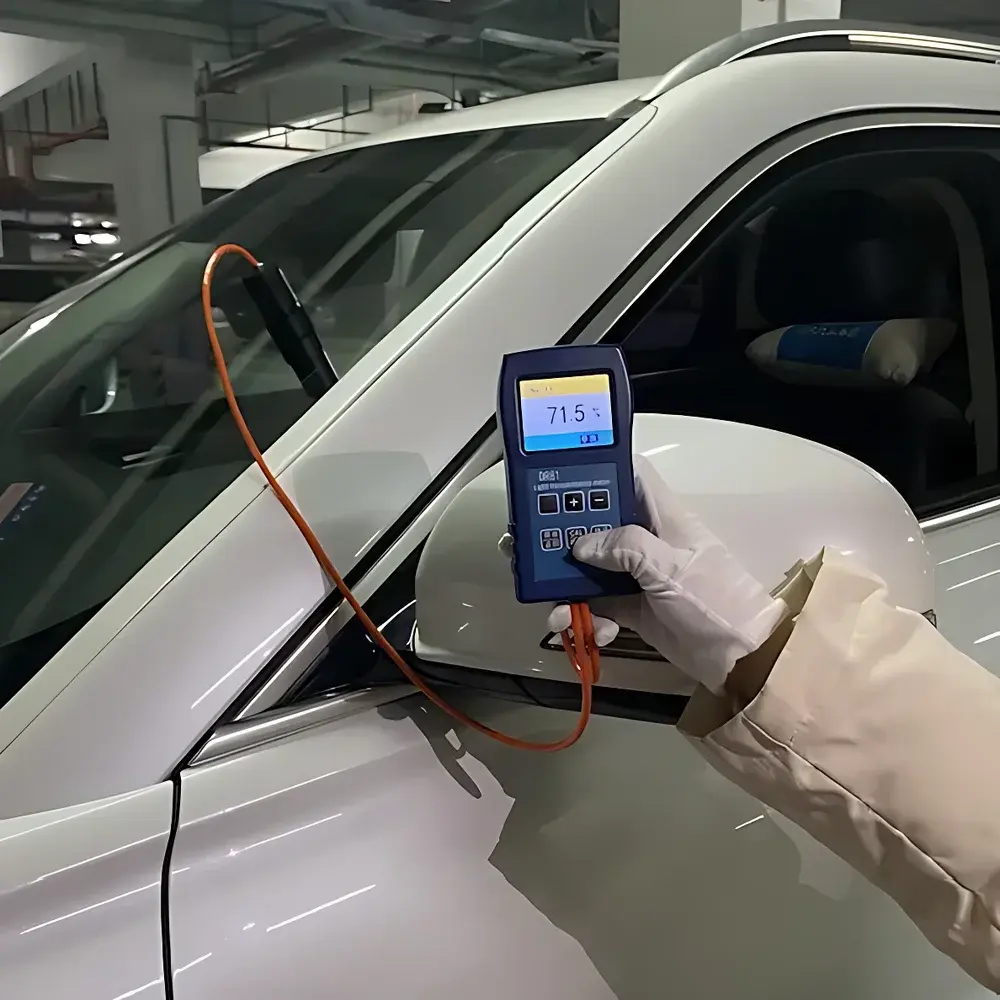
The Fangyuan DR81 Separable Light Transmittance Meter is an optical measurement instrument engineered for reliable quantification of visible light transmission through semi-transparent, diffusing, and highly scattering materials—including frosted glass, ground acrylic, opalescent polymers, matte films, and white diffusion panels. Unlike conventional transmittance meters designed for clear, homogeneous substrates, the DR81 employs a dual-detector geometry with a collimated 540 nm LED source and calibrated photodiode array to minimize angular dependency and mitigate errors caused by forward scattering and surface haze. Its separable design—comprising a handheld probe unit and a dedicated base station with integrated calibration reference—enables flexible deployment in production lines, QC labs, and R&D environments where spatial constraints or sample geometry preclude use of fixed benchtop systems. The device operates in accordance with ISO 13468-2 (Plastics — Determination of light transmittance), ASTM D1003 (Standard Test Method for Haze and Luminous Transmittance of Transparent Plastics), and aligns with the photometric principles defined in CIE Publication No. 15:2018.
Key Features
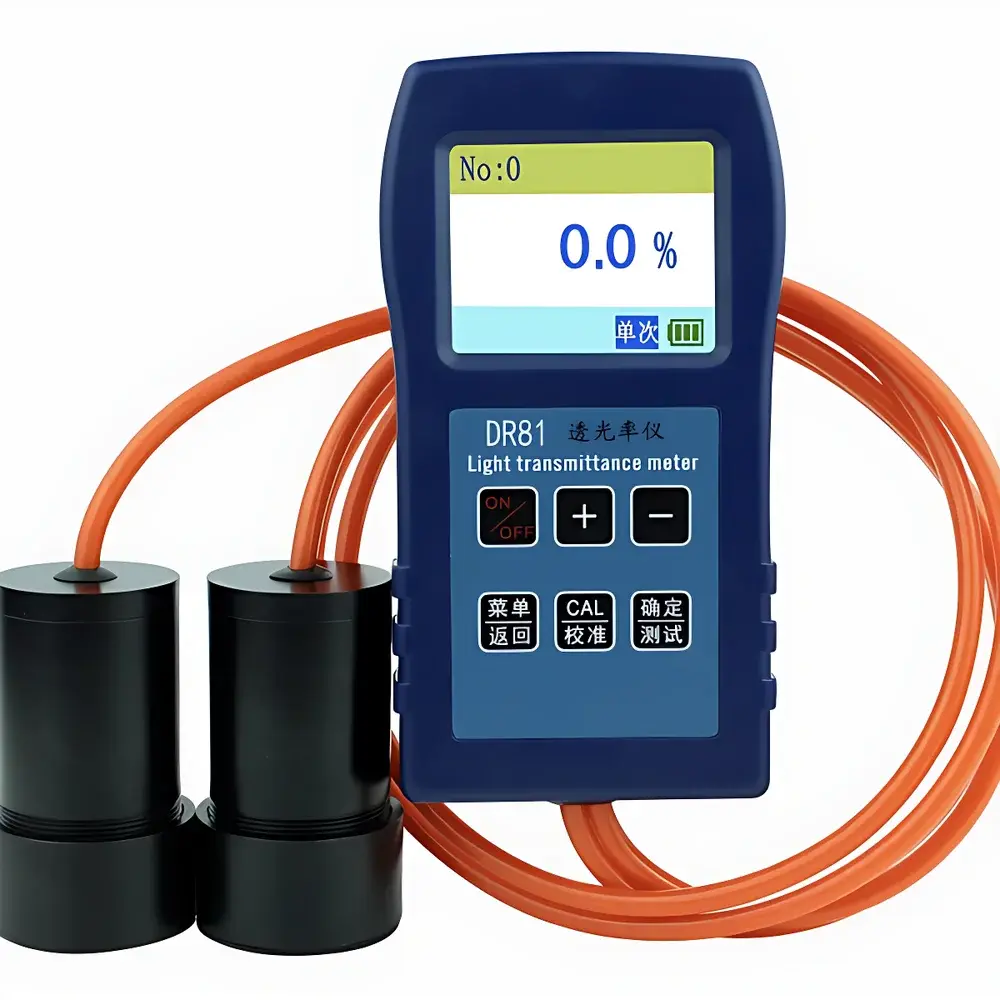
- Separable architecture: Detachable probe (light source + detector) and base unit (power management, display, memory) allow operation on curved, oversized, or mounted samples without repositioning.
- Optimized optical path: 540 nm narrow-band LED source matches peak photopic sensitivity (CIE V(λ) function), ensuring high correlation with human visual perception of translucency.
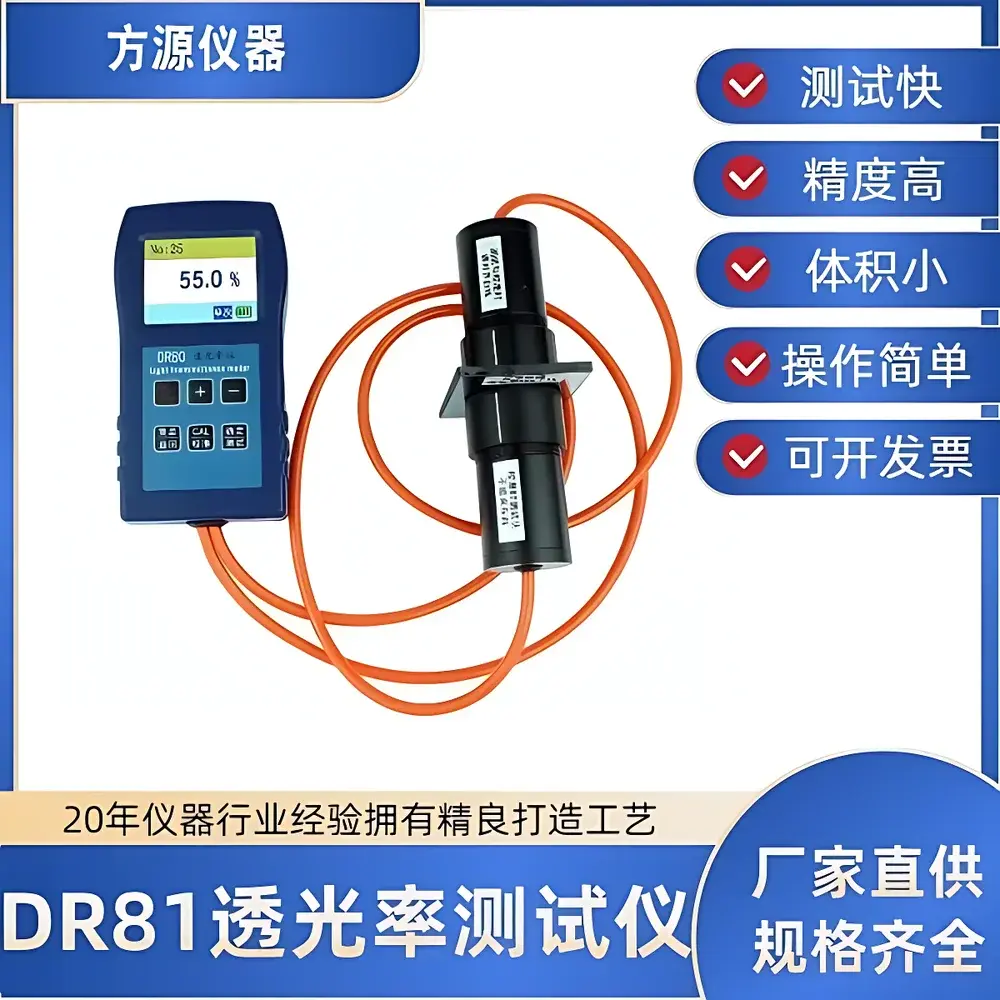
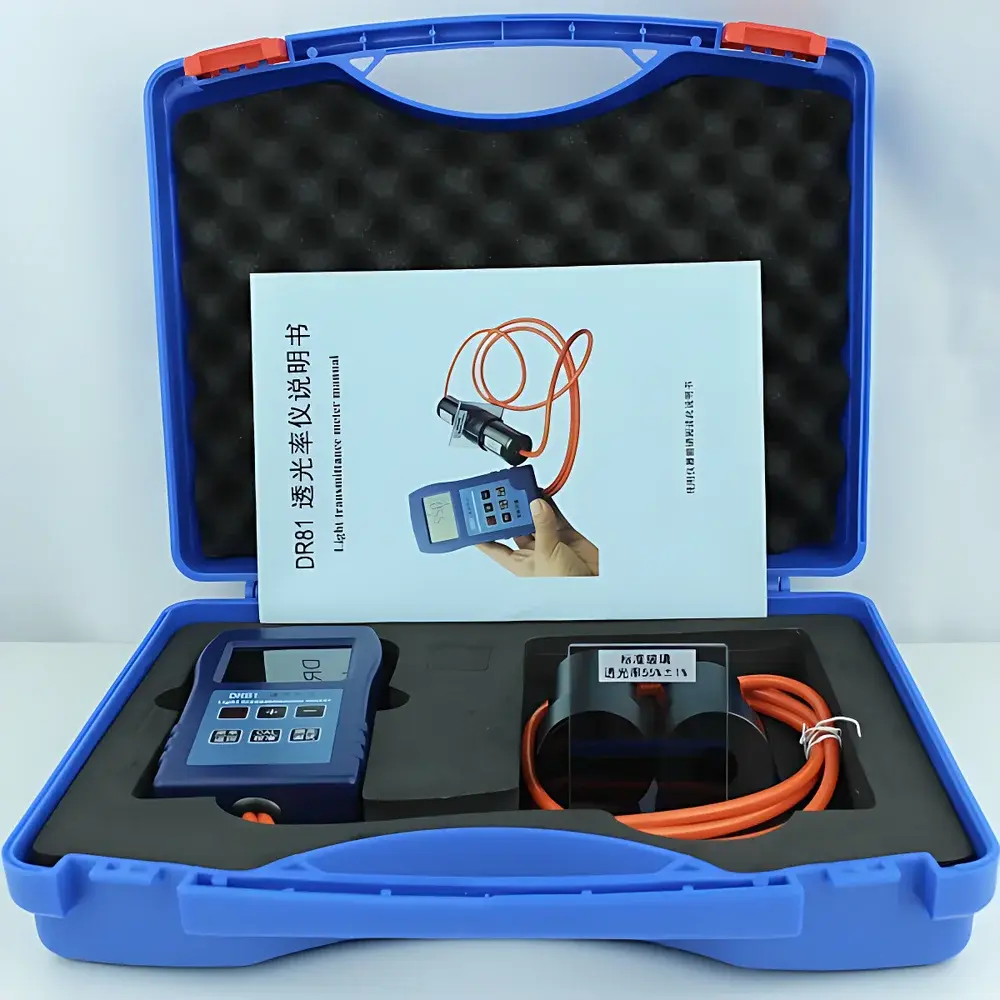
- Dual-reference calibration system: Includes factory-traceable 55% ±1% certified standard glass reference (ISO 13468-1 compliant) and user-accessible zero-calibration port for dark-current compensation.
- Real-time stability monitoring: Built-in thermal drift compensation algorithm adjusts gain dynamically during extended measurements, maintaining repeatability within ±0.3% over 8-hour continuous operation.
- GLP-compliant data handling: Timestamped results stored internally (up to 500 records); export via USB-C to CSV for audit trail generation and integration into LIMS environments.
Sample Compatibility & Compliance
The DR81 is validated for use with non-uniform, high-haze materials exhibiting total transmittance values between 5% and 95%, including but not limited to: sandblasted tempered glass, silicone-diffused LED lenses, PMMA light-diffusing sheets, titanium-doped polycarbonate, and medical-grade opaque PET film. It complies with ISO/IEC 17025 requirements for measurement uncertainty estimation (k=2) and supports traceability to NIM (National Institute of Metrology, China) standards. While not FDA 21 CFR Part 11–certified out-of-the-box, its audit-log functionality and password-protected calibration mode enable configuration for GMP-aligned workflows under internal SOPs.
Software & Data Management
The DR81 operates independently without PC software; however, its embedded firmware supports firmware updates and parameter configuration via Fangyuan’s proprietary DR-Link Utility (Windows/macOS). Raw transmittance data exports include sample ID, test date/time, operator code (user-defined), ambient temperature, and instrument serial number—facilitating full traceability per ISO 9001:2015 Clause 8.5.2. Batch reporting templates conform to ASTM E2915 guidelines for statistical evaluation of measurement reproducibility across multiple operators and shifts.
Applications
- Quality control of architectural glazing components subjected to acid-etching or mechanical abrasion processes.
- In-process verification of light-diffusing additives in injection-molded optical housings.
- Material qualification for backlight units in automotive instrument clusters and medical display enclosures.
- Research into polymer morphology–translucency relationships using controlled annealing or UV exposure protocols.
- Validation of cleaning efficacy on frosted laboratory glassware where residue alters scattering behavior.
FAQ
What is the measurement principle used by the DR81?
It applies direct photometric transmittance measurement using a fixed-wavelength (540 nm) collimated beam and dual photodiode detection, optimized for integrating scattered light from turbid media.
Can the DR81 measure materials thicker than 25 mm?
Yes—its separable probe allows positioning on both sides of thick panels or laminated assemblies; maximum measurable thickness is limited only by probe standoff distance (standard 30 mm, extendable with optional spacer kit).
Is calibration traceable to international standards?
Each unit ships with a NIM-traceable 55% ±1% reference standard; calibration certificates include uncertainty budgets per ISO/IEC 17025 Annex A.
Does the DR81 support automatic pass/fail judgment against user-defined limits?
Yes—threshold-based go/no-go mode can be configured per sample group; audible and visual alerts trigger upon deviation from preset transmittance windows.
How frequently should recalibration be performed?
Recommended every 90 days under normal lab conditions; more frequent calibration is advised after mechanical shock, temperature cycling beyond 15–35°C, or when operating outside humidity range 30–70% RH (non-condensing).



