
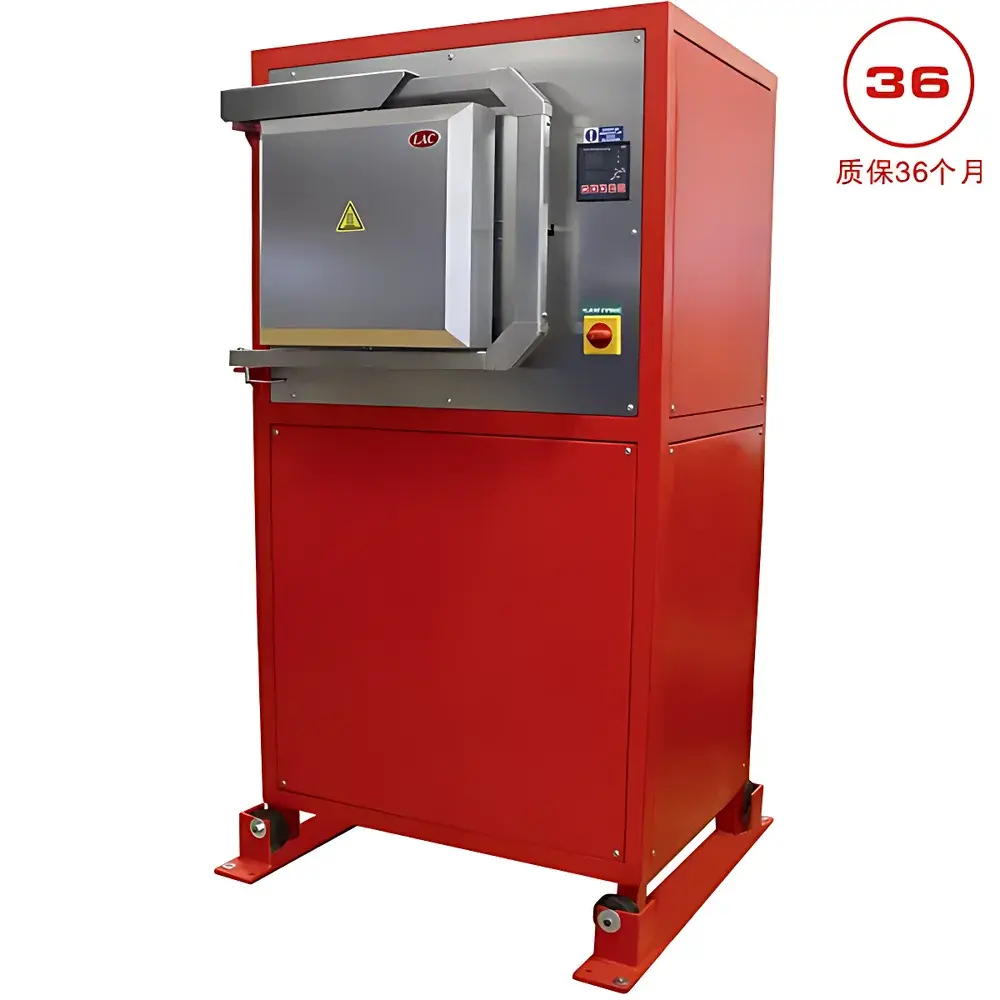
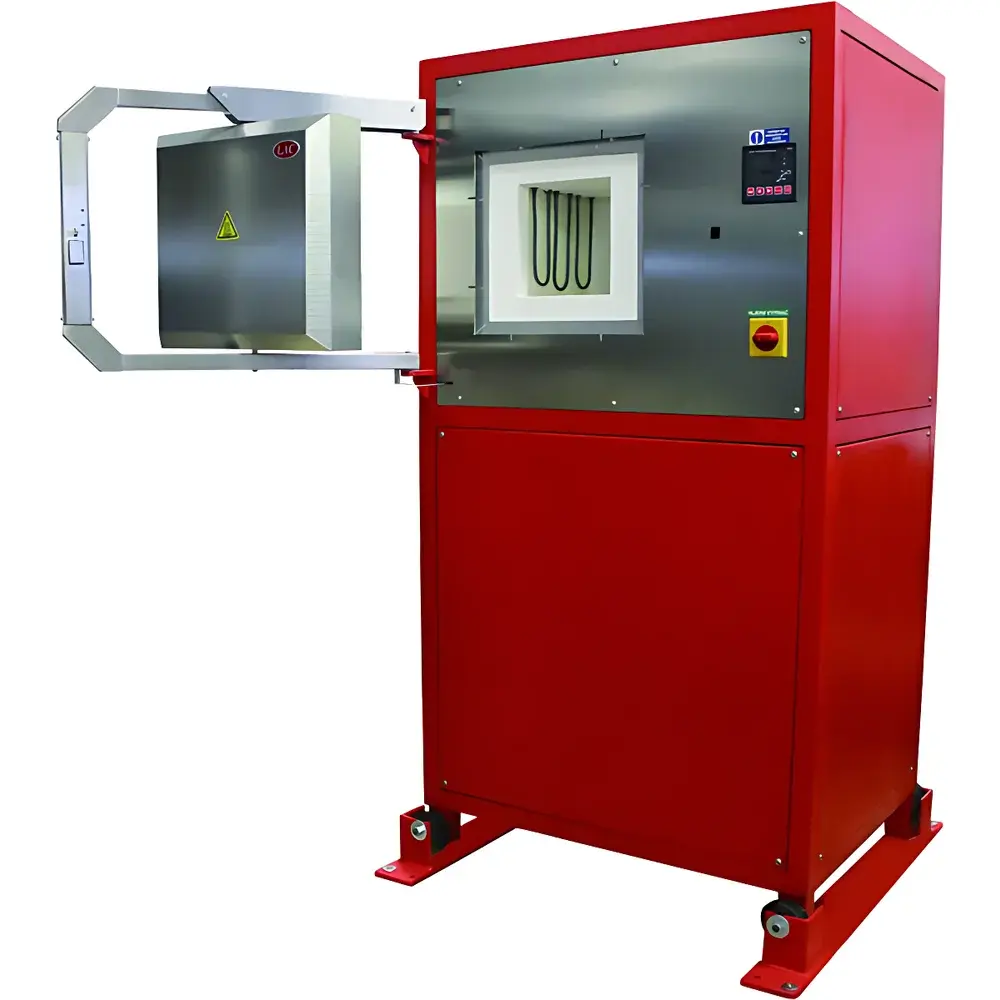
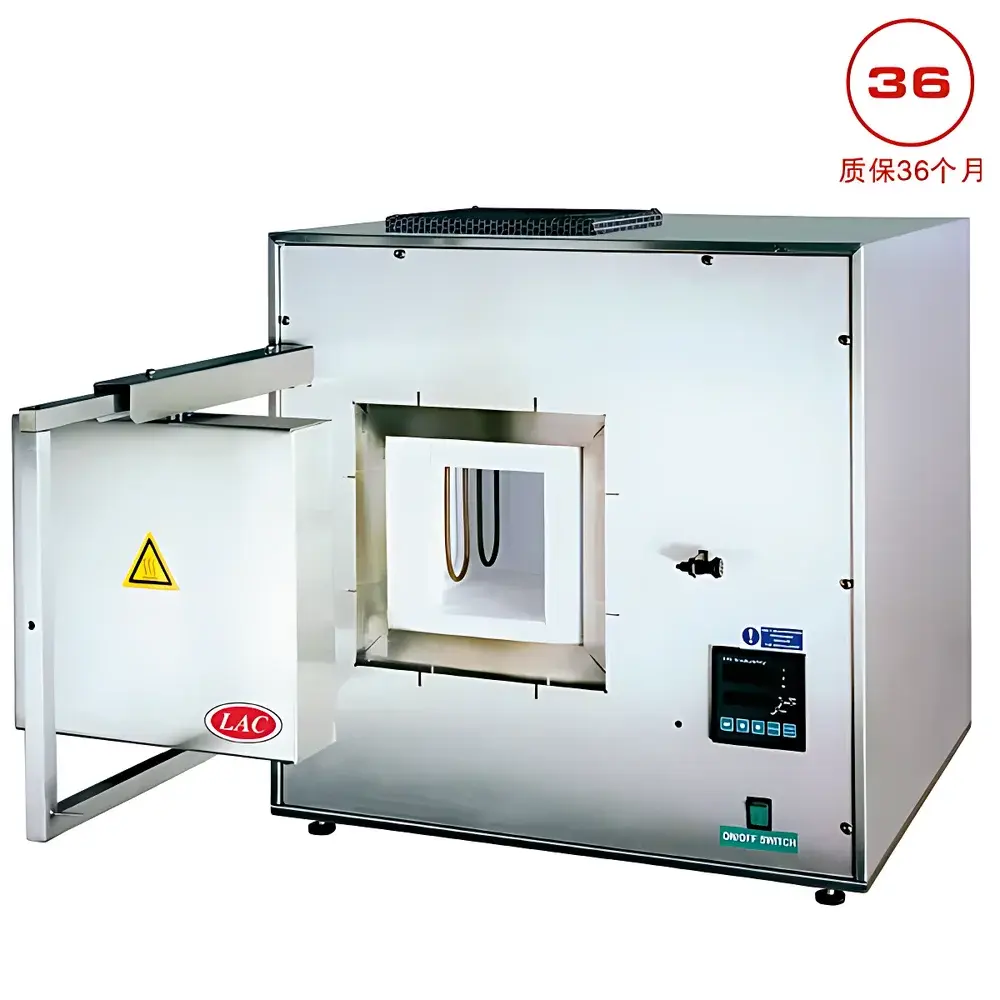
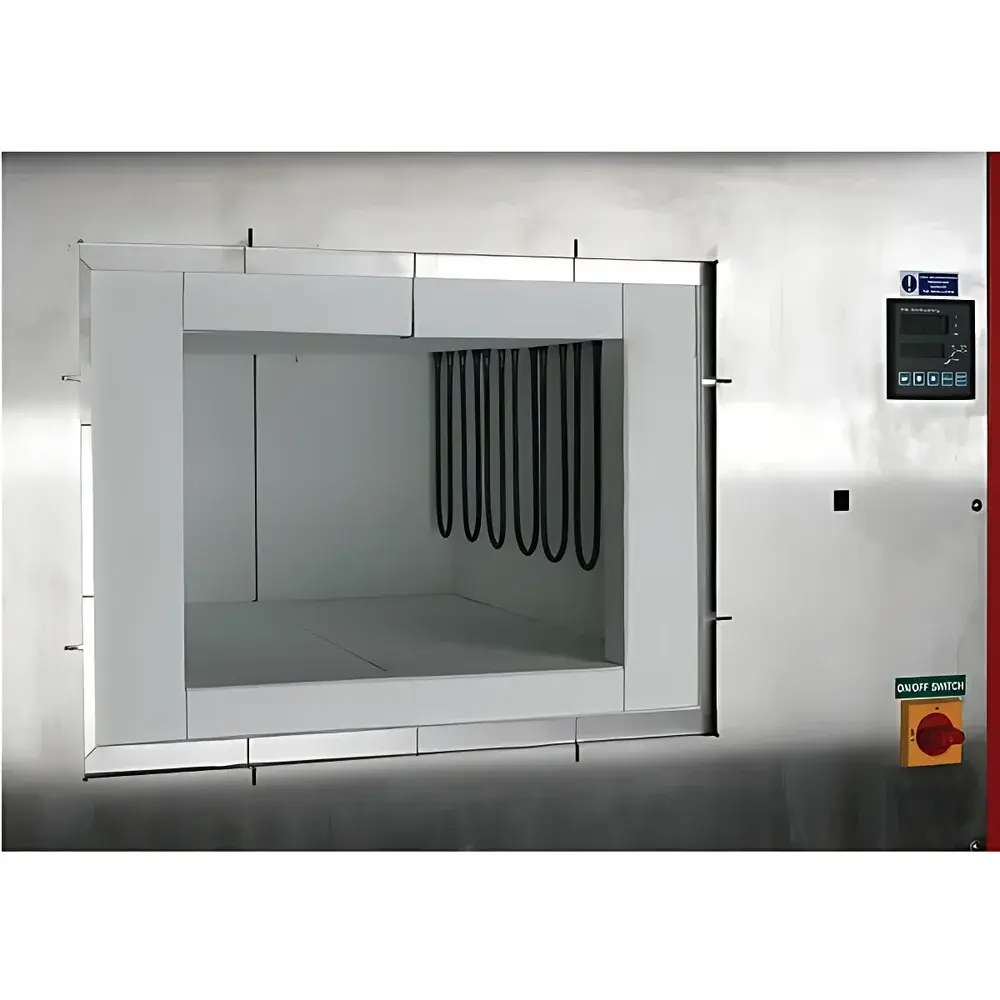
LAC VP02/16 High-Temperature Box Furnace (1600 °C)
| Brand | LAC |
|---|---|
| Origin | Czech Republic |
| Model | VP02/16 |
| Max Temperature | 1600 °C |
| Temperature Uniformity | ±1 °C |
| Max Power | 3 kW |
| Ramp Time to 1600 °C | 135 min |
| Heating Element | Silicon Molybdenum (MoSi₂) Rods |
| Internal Chamber Dimensions | 130 × 150 × 135 mm (W × H × D) |
| Controller | HT205 (30 programs, 15 segments each, LAN interface) |
| Thermocouple Type | Type B |
| Door Operation | Manual side-opening with safety limit switch |
| Cooling | Integrated fan for electronics |
| Exhaust Port | Standard |
| Design | Benchtop |
Overview
The LAC VP02/16 is a precision-engineered high-temperature box furnace designed for sustained operation at up to 1600 °C in inert, oxidizing, or vacuum-compatible environments. Built upon LAC’s decades of expertise in refractory thermal systems, this furnace employs silicon molybdenum (MoSi₂) heating elements — selected for their exceptional stability, oxidation resistance, and long-term repeatability above 1200 °C. Unlike conventional resistance-heated furnaces using Kanthal or FeCrAl alloys, the VP02/16 is explicitly optimized for high-temperature applications only; operation below 1200 °C is not recommended due to thermomechanical stress accumulation in MoSi₂ elements and potential degradation of temperature uniformity across the chamber. Its robust ceramic fiber insulation and double-walled stainless steel housing ensure low external surface temperatures and high thermal efficiency, supporting stable soak conditions required for sintering, ashing, heat treatment, and materials synthesis under controlled atmospheres.
Key Features
- High-stability MoSi₂ heating elements rated for continuous operation at 1600 °C, with proven longevity under cyclic thermal loads
- Precision temperature control via HT205 programmable controller: ±1 °C accuracy over full range, 30 user-defined programs with 15 ramp/soak segments each
- Benchtop configuration (VP02 series) with compact internal volume (130 × 150 × 135 mm), enabling rapid thermal response and minimal energy consumption
- Integrated forced-air cooling system for power electronics and solid-state relays, ensuring reliability during extended high-temperature runs
- Manual side-hinged door with mechanical limit switch — automatically de-energizes heating circuit upon opening for operator safety and element protection
- Standard exhaust port and optional atmosphere management interfaces (N₂, Ar, forming gas) with integrated flowmeter and pressure gauge
- Type B thermocouple (Pt/Rh-Pt) calibrated to ITS-90, suitable for accurate measurement from 600 °C to 1700 °C
Sample Compatibility & Compliance
The VP02/16 accommodates crucibles and sample holders made from alumina, zirconia, silicon carbide, or graphite — all compatible with oxidizing or inert atmospheres at 1600 °C. It is not suitable for reducing or carburizing atmospheres without additional protective liners. The furnace meets CE marking requirements per Directive 2014/35/EU (Low Voltage) and 2014/30/EU (EMC). Its controller architecture supports audit-ready data logging when paired with HTMonit software, facilitating compliance with GLP and ISO/IEC 17025 documentation standards. Optional RS232/EIA-485 and LAN interfaces enable integration into centralized lab monitoring systems compliant with FDA 21 CFR Part 11 for electronic records and signatures.
Software & Data Management
The standard HT205 controller provides local program execution and real-time setpoint/actual temperature display. For advanced data handling, the optional HTMonit software suite enables remote monitoring, automated data export (CSV/Excel), alarm logging, and calibration traceability. When used with the HT200 controller upgrade (30 programs × 25 segments, USB + LAN), users gain enhanced sequence flexibility and firmware-upgradable functionality. All controllers support input calibration routines traceable to NIST-certified references, and logged temperature profiles include timestamps, segment IDs, and deviation alerts — essential for quality assurance protocols in R&D and production validation labs.
Applications
- Sintering of advanced ceramics (e.g., Al₂O₃, ZrO₂, Si₃N₄) and refractory metal powders
- Thermal gravimetric analysis (TGA) pre-treatment and residue quantification at elevated temperatures
- Heat treatment of high-performance alloys and superconducting precursors
- Ash content determination in ASTM D3174 and ISO 1171-compliant protocols
- Crystal growth annealing and phase transformation studies requiring precise thermal profiles
- Calibration of high-temperature reference materials and secondary thermocouples
FAQ
Why is operation below 1200 °C discouraged?
MoSi₂ elements undergo microstructural changes during prolonged exposure to intermediate temperatures (800–1100 °C), leading to accelerated aging, increased resistivity drift, and compromised temperature uniformity. This behavior is documented in ASTM C1161 and IEC 60584-2 standards for high-temperature heating elements.
Can the furnace be used under vacuum?
Yes — with optional vacuum flange and sealing modifications. However, MoSi₂ elements require at least 1% oxygen partial pressure to maintain passivation; fully evacuated operation requires supplemental O₂ dosing or alternative heating configurations.
Is the HT205 controller compliant with laboratory data integrity requirements?
The HT205 supports time-stamped event logging and password-protected parameter editing. Full 21 CFR Part 11 compliance requires HTMonit software with electronic signature modules and audit trail activation.
What maintenance intervals are recommended for MoSi₂ elements?
Under nominal 1600 °C cycling (≤5 cycles/week), MoSi₂ rods typically exceed 2000 hours of service life. Visual inspection every 500 hours is advised; replacement is indicated by visible cracking, localized hot spots, or >10% resistance increase measured at room temperature.
Does the furnace include overtemperature protection?
Yes — independent overtemperature cutoff (OTC) circuitry activates at 1650 °C, disconnecting power and triggering audible/visual alarms. This dual-redundant safety layer complies with EN 60519-2 for industrial electroheating equipment.



