
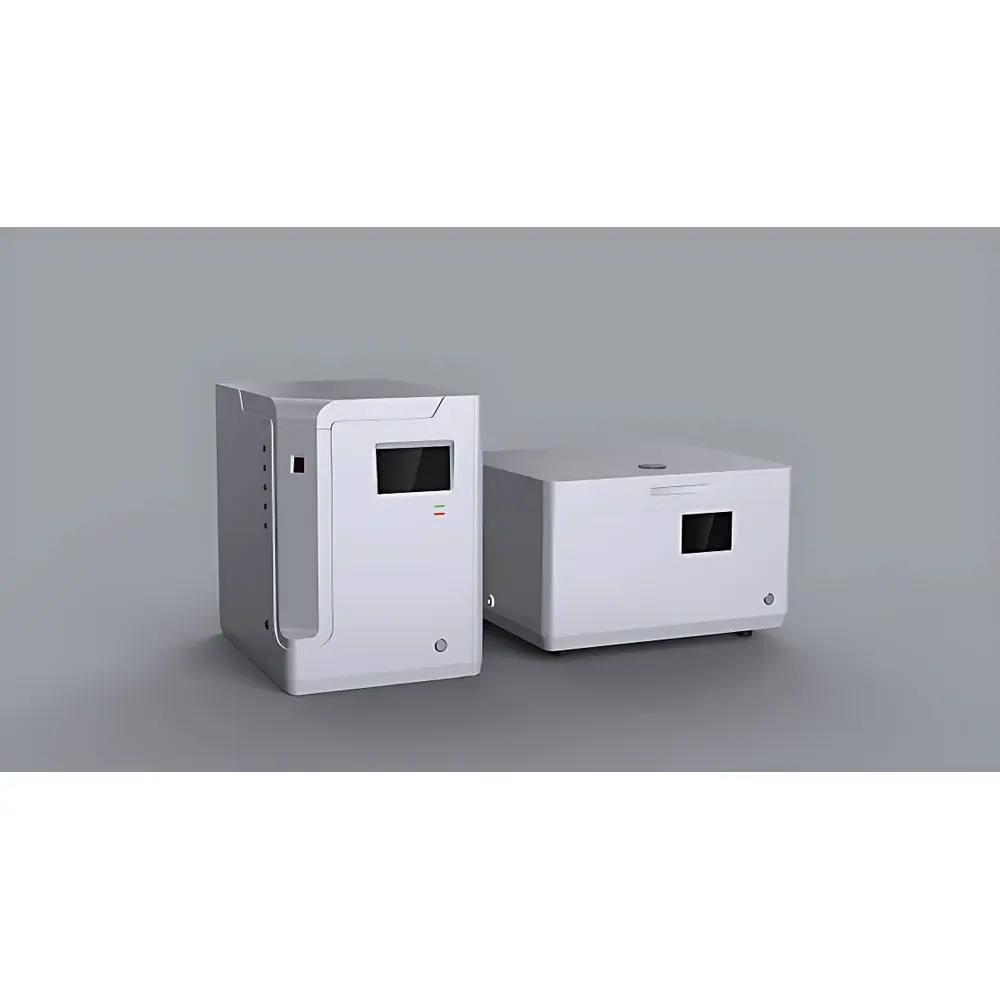
Tongxintianbo SJ-12A Automatic Acid Value Analyzer for Food and Edible Oils
| Brand | Tongxintianbo |
|---|---|
| Origin | Beijing, China |
| Manufacturer Type | Authorized Distributor |
| Country of Manufacture | China |
| Model | SJ-12A |
| Power Supply | 220 V AC / 50 Hz |
| Price Range | USD 16,500 – 27,500 (FOB China) |
Overview
The Tongxintianbo SJ-12A Automatic Acid Value Analyzer is a dedicated benchtop titration system engineered for precise, high-throughput determination of acid value (AV) in edible oils, fats, and lipid-containing food matrices. It operates on the principle of potentiometric endpoint detection during standardized neutralization titration with alcoholic potassium hydroxide (KOH), fully compliant with internationally recognized methods including ISO 660:2020, AOAC Official Method 940.28, and GB 5009.229–2016. Designed specifically for routine quality control in food manufacturing and regulatory testing environments, the SJ-12A eliminates manual titration variability by automating sample dispensing, reagent addition, stirring, pH monitoring, and endpoint calculation—delivering reproducible results with ≤±0.02 mg KOH/g repeatability under controlled laboratory conditions.
Key Features
- Automated potentiometric titration with dual-electrode pH sensing (glass reference + antimony or Ag/AgCl indicator electrode) for robust endpoint detection across diverse oil matrices
- Integrated solvent handling system supporting ethanol–diethyl ether (1:1 v/v) or isopropanol–toluene mixtures per method requirements
- Programmable method library with pre-configured protocols for common samples: refined soybean oil, peanut oil, sunflower oil, rice bran oil, lard, rendered poultry fat, and processed meat products
- Self-calibrating burette with glass piston and PTFE seal, delivering volumetric accuracy of ±0.02 mL over 20 mL range
- Sample carousel accommodating up to 12 vials (10–25 mL capacity), enabling unattended batch analysis with barcode or manual ID entry
- Real-time titration curve visualization and automatic slope-based endpoint recognition with configurable sensitivity thresholds
- Compliance-ready audit trail: timestamped operator log, method version, raw titration data, and final AV report stored locally with optional network backup
Sample Compatibility & Compliance
The SJ-12A supports direct analysis of clarified liquid oils (e.g., frying oils, virgin olive oil, corn oil), semi-solid fats (e.g., lard, tallow, palm stearin), and homogenized food extracts—including minced meat, fried noodle samples, butter, margarine, and cream-based products—following appropriate solvent extraction and filtration per ISO 660 Annex B. All hardware and firmware conform to IEC 61010-1:2010 safety standards for electrical equipment in laboratory use. Data integrity features—including electronic signatures, user role-based access control (admin/operator/auditor), and immutable result archiving—align with GLP and GMP documentation expectations. While not certified to FDA 21 CFR Part 11 out-of-the-box, the system supports validation documentation packages for regulated laboratories upon request.
Software & Data Management
The embedded Windows-based control software (v3.2+) provides intuitive workflow navigation, method editor with parameter locking (e.g., titrant concentration, sample mass, solvent volume), and customizable reporting templates exportable as PDF, CSV, or XML. Raw titration data—including mV vs. volume curves, first-derivative plots, and equivalence point interpolation—are retained with full metadata. Network connectivity enables centralized data aggregation via secure FTP or SMB share; optional LIMS integration is supported through ASTM E1384-compliant HL7 or CSV-based interfaces. All software updates are digitally signed and validated prior to installation to ensure traceability and cybersecurity compliance.
Applications
- Quality assurance in edible oil refineries: monitoring AV trends during deodorization and storage stability assessment
- Routine testing in national grain and oil inspection centers for regulatory compliance with national limits (e.g., ≤3.0 mg KOH/g for Grade 1 rapeseed oil)
- Shelf-life studies in snack food manufacturers evaluating oxidative rancidity in fried noodles and potato chips
- Raw material screening at meat processing facilities to detect spoilage in rendered animal fats and emulsified sausages
- Third-party certification labs performing accredited testing per CNAS-CL01:2018 (equivalent to ISO/IEC 17025:2017)
- Research applications in food science departments studying antioxidant efficacy and accelerated oxidation models
FAQ
What standard methods does the SJ-12A support?
ISO 660:2020, AOAC 940.28, GB 5009.229–2016, and IDF Standard 153:2009 — with method parameters fully configurable.
Can the instrument analyze solid or viscous samples without preprocessing?
No. Samples must be dissolved in specified solvent mixtures and filtered (≤0.45 µm) prior to analysis; built-in heating or ultrasonic dissolution is not provided.
Is remote operation or cloud data synchronization available?
Local network access is supported; cloud sync requires on-premise server deployment or validated third-party middleware — no direct SaaS integration is offered.
What maintenance is required for long-term reliability?
Monthly electrode calibration and cleaning, quarterly burette seal inspection, and annual verification using certified AV reference standards (e.g., NIST SRM 2377).
Does the system meet requirements for ISO/IEC 17025 accreditation?
Yes — when operated within documented SOPs, with calibrated electrodes, traceable standards, and maintained audit logs, it fulfills technical competence criteria for acid value testing.





