
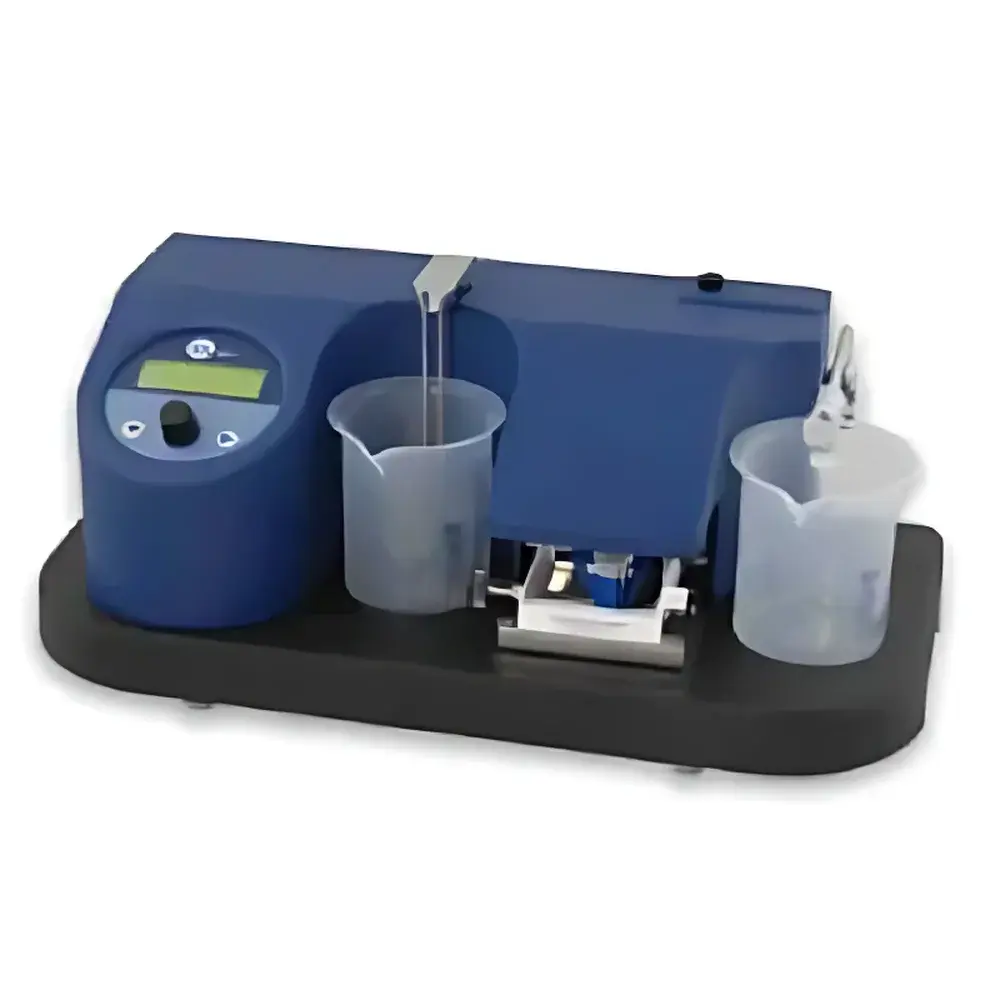
SETA MFT 91600-3 Multifunctional Fuel Filtration Tester
| Brand | SETA |
|---|---|
| Origin | United Kingdom |
| Model | 91600-3 |
| Compliance | ASTM D2068, IP 387 (Procedures A, B & C), ASTM D6426 (Cold Soak), IP PM EA/08 |
| Filtration Plug Trend Range | 1.0–30 |
| Filterability Quality Factor Range | 100–1 |
| Maximum Test Pressure | 200 kPa |
| Power Consumption | 500 W |
| Dimensions | 27 × 43 × 26 cm |
| Weight | 10 kg |
Overview
The SETA MFT 91600-3 Multifunctional Fuel Filtration Tester is an engineered solution for quantitative assessment of filterability and cold-weather operability of middle-distillate fuels—including diesel, kerosene, gas oil, turbine fuels, and biodiesel blends. It operates on the principle of controlled-pressure, constant-flow filtration through standardized membrane filters under defined thermal conditions, directly implementing the physical mechanisms described in ASTM D2068, IP 387 (Procedures A, B, and C), and ASTM D6426 (Cold Soak Filtration Test). The instrument measures the progressive increase in differential pressure across a specified filter medium as fuel passes at a fixed volumetric rate (20 mL/min), enabling calculation of two primary performance indices: the Filtration Plug Trend (FPT), quantifying the rate of pressure rise, and the Filterability Quality Factor (FQF), derived from the inverse relationship between pressure development and filtered volume. These metrics provide objective, reproducible indicators of fuel cleanliness, wax crystallization behavior, and particulate loading potential—critical parameters for engine fuel system reliability, especially in low-temperature environments.
Key Features
- Microprocessor-controlled SMART (SETA Multifunctional Advanced Rotational Tester) interface with backlit alphanumeric LCD display (4-line), intuitive two-button navigation, and real-time parameter feedback
- Integrated precision peristaltic pump with pulse-dampening system ensuring stable, laminar flow delivery (20 mL/min nominal) from integrated reservoir
- Simultaneous high-resolution monitoring of upstream/downstream pressure (0–200 kPa range) and sample temperature (±0.5 °C accuracy) during test execution
- Modular hardware architecture supporting method-specific accessories: cold-soak chambers, heated filter holders, alternative filter media kits (e.g., 0.8 µm, 1.2 µm cellulose acetate), and high-capacity filtration fixtures (up to 1 L)
- Comprehensive calibration support for pressure transducers and PT100 temperature sensors via on-board diagnostics and traceable reference inputs
- Optional SETALERT remote control module enabling fully functional operation up to 300 meters from the instrument via shielded RS-485 link
Sample Compatibility & Compliance
The MFT 91600-3 is validated for use with hydrocarbon-based distillate fuels meeting ISO 8217, ASTM D975, ASTM D1655, and EN 590 specifications. It accommodates fuels containing up to 20% v/v FAME (biodiesel) per EN 14214 without modification. All test protocols align with regulatory and industry-standard methodologies requiring GLP-compliant documentation: ASTM D2068 defines the standard filtration test for diesel; IP 387 specifies three procedural variants (A: ambient, B: chilled, C: cold-soak pre-conditioning); ASTM D6426 introduces extended cold-soak exposure prior to filtration to simulate winter storage conditions. Instrument firmware and data logs are structured to support audit readiness for ISO/IEC 17025-accredited laboratories and comply with data integrity requirements outlined in FDA 21 CFR Part 11 when paired with validated software configurations.
Software & Data Management
Data output is accessible via RS-232 serial interface or USB-to-serial adapter for direct connection to Windows-based host systems. The included SETA DataLink software enables real-time graphing of pressure vs. volume curves, automated FPT/FQF calculation, and export of ASCII or CSV files compatible with LIMS integration. All test records include timestamp, operator ID, method identifier, environmental conditions (ambient temperature/humidity), sensor calibration status, and raw sensor traces. Audit trails capture every parameter change, test initiation, and result finalization event. Optional encrypted database mode supports electronic signature workflows and version-controlled report templates aligned with internal QA procedures.
Applications
- Routine quality control of refinery-produced diesel and jet fuel batches prior to shipment
- Evaluation of additive package efficacy (e.g., cold flow improvers, dispersants) in stabilizing wax morphology and reducing filter plugging tendency
- Investigation of fuel degradation pathways during long-term storage or repeated thermal cycling
- Support for OEM fuel specification development and validation against Tier 3/IV emission compliance requirements
- Research into biofuel blend compatibility, particularly assessing phase separation and precipitate formation in low-temperature scenarios
- Field-deployable verification of fuel handling integrity at distribution terminals and military forward operating bases
FAQ
What filtration standards does the MFT 91600-3 directly support?
It implements ASTM D2068, IP 387 (all three procedures), and correlates with ASTM D6426 for cold-soak filtration testing.
Can the instrument perform tests beyond 300 mL?
Yes—using optional high-capacity fixtures and software configuration, maximum test volume extends to 1 L for specialized stability assessments.
Is temperature control integrated into the base unit?
The standard configuration monitors temperature but does not actively control it; chilled and cold-soak testing require external thermal conditioning units or optional SETA cold-soak modules.
How is traceability maintained for calibration records?
Each sensor calibration event is logged with date, technician ID, reference standard ID, deviation values, and pass/fail status—exportable as PDF or XML for archival.
Does the system meet cybersecurity requirements for network-connected labs?
The instrument itself operates as a standalone embedded device; network connectivity is limited to optional serial/USB host interfaces with no onboard IP stack or wireless capability, minimizing attack surface per IEC 62443-3-3 guidance.





