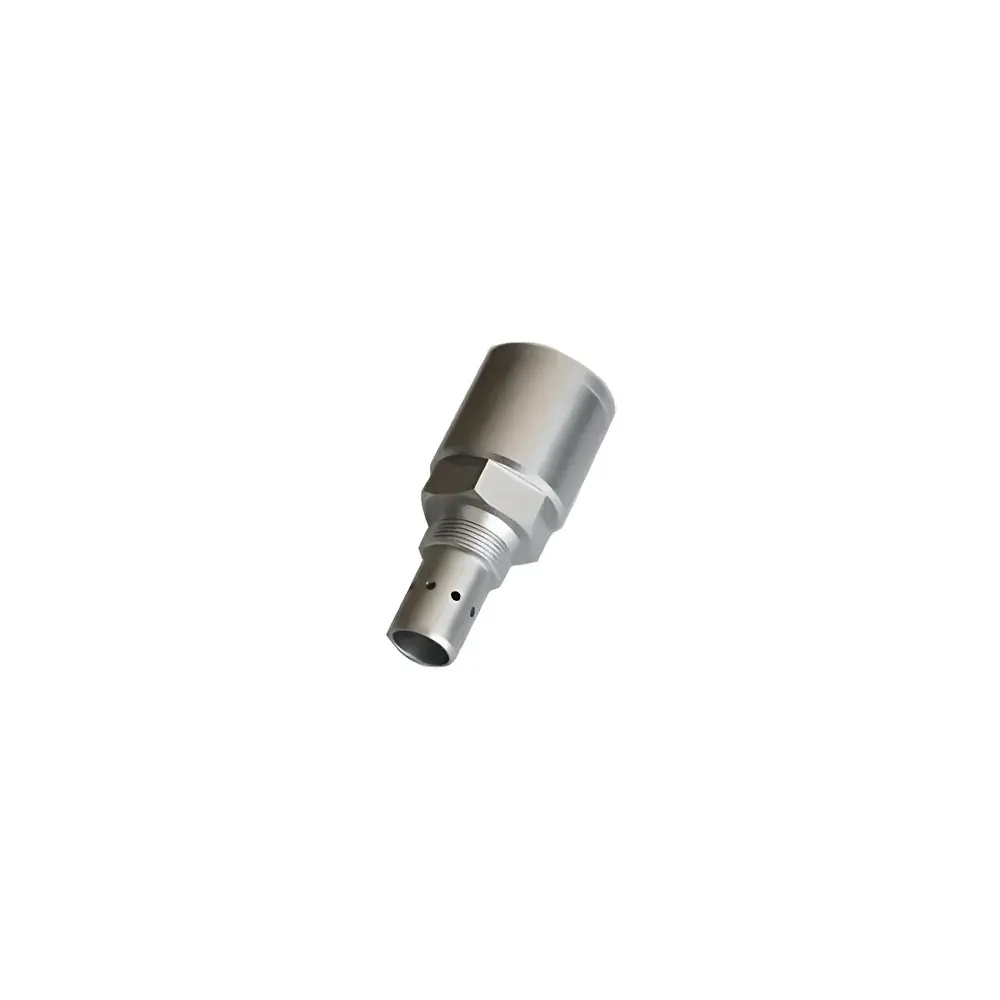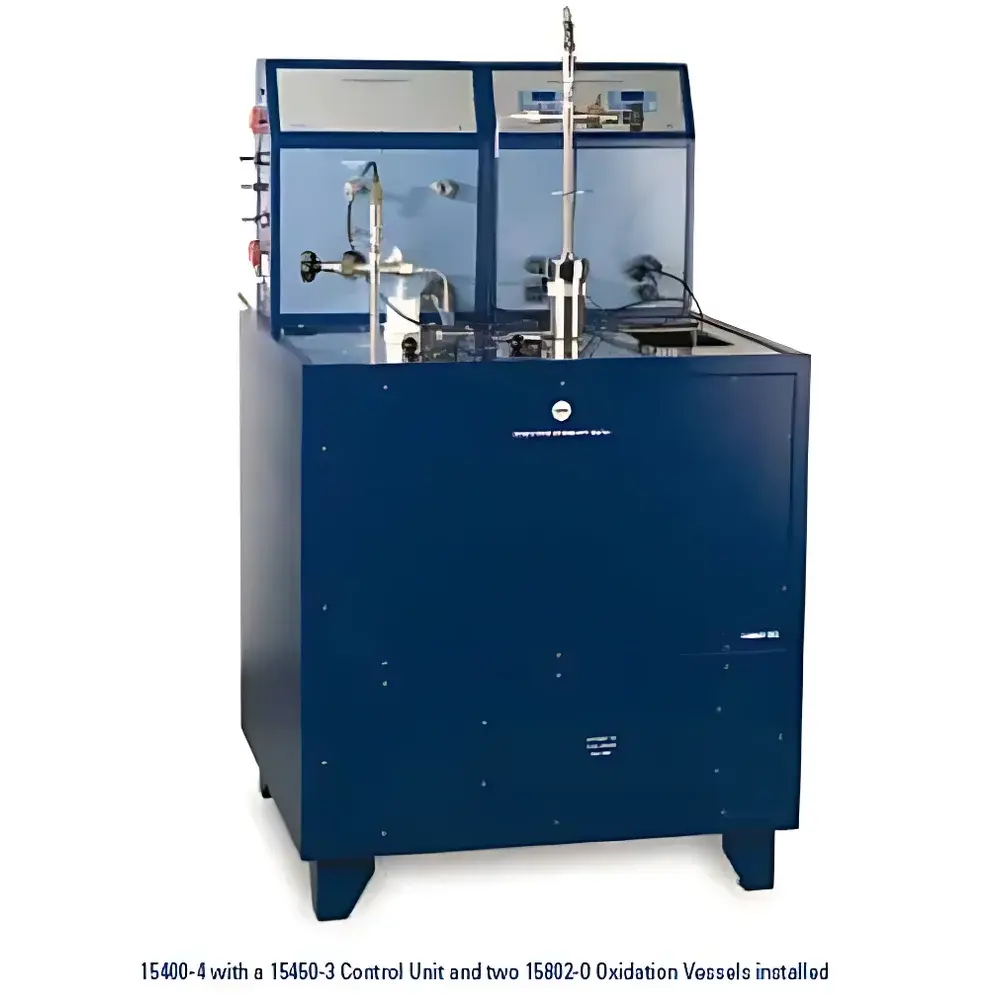
SETA Model 15400-4 Automated Gasoline Induction Period Tester
| Brand | SETA |
|---|---|
| Origin | United Kingdom |
| Model | 15400-4 |
| Bath Volume | 60 L |
| Test Temperature | 100 °C |
| Number of Bomb Positions | 4 |
| Maximum Bomb Charging Pressure | 1380 kPa |
| Cooling Method | Water-cooled bath |
| Voltage | 110/120 V or 220/240 V, 50/60 Hz |
| Power Consumption | 3 kW |
| Dimensions (W×D×H) | 135 × 83 × 77 cm |
| Weight | 87 kg |
Overview
The SETA Model 15400-4 Automated Gasoline Induction Period Tester is a precision-engineered instrument designed for the quantitative determination of oxidation stability in gasoline and aviation turbine fuels via the oxygen bomb method. It operates on the principle of accelerated oxidative aging under controlled high-pressure oxygen atmosphere at a precisely maintained temperature of 100 °C. The induction period—the time elapsed until a measurable pressure drop occurs due to rapid hydrocarbon oxidation—is recorded as the primary stability metric. This test directly correlates with fuel storage life, deposit formation potential, and engine performance degradation risk. The system complies with internationally recognized standard methods including ASTM D525 (gasoline), ASTM D873 (aviation fuels), ISO 7536, EN 7536, IP 40 and IP 138, GB/T 8018, JIS K2287, and multiple defense specifications (e.g., FTM 791-3352, FTM 791-3354). Its robust architecture supports both routine QC laboratories and R&D facilities requiring GLP-compliant, repeatable, and auditable oxidation stability data.
Key Features
- Four-position oxygen bomb configuration enabling parallel testing of up to four samples per run—significantly improving throughput without compromising measurement integrity.
- Integrated 60 L thermostatically controlled water bath with dual-level safety: a constant-level float regulator maintains consistent immersion depth, while a low-water-level sensor automatically deactivates heating elements to prevent dry-run damage.
- Automated oxygen charging station delivering precise, repeatable pressurization up to 1380 kPa—eliminating operator variability and ensuring method compliance across all bomb positions.
- Dedicated post-test cooling bath for rapid, uniform thermal quenching of oxygen bombs—minimizing residual reaction kinetics and enhancing result reproducibility.
- Modular monitoring architecture supporting three operational modes: fully automated (via SETA OXS software + 15450-3 control unit), semi-automated (with Oxford portable pressure recorder 15611-2), and manual (using analog pressure gauge 15600-0).
- Optional solid heating bath variant available for applications requiring non-aqueous thermal environments—extending method flexibility for specialized fuel formulations or additive screening studies.
Sample Compatibility & Compliance
The instrument is validated for use with unleaded gasoline, leaded gasoline (where permitted), aviation turbine fuels (Jet A, Jet A-1, JP-5, JP-8), and related hydrocarbon blends. Sample volume requirements align with ASTM D525 (50 mL) and ASTM D873 (100 mL). All wetted components—including bomb bodies, valves, and pressure transducers—are constructed from corrosion-resistant stainless steel (AISI 316) to withstand prolonged exposure to oxidized hydrocarbons and acidic byproducts. The system meets mechanical and electrical safety standards per IEC 61010-1 and carries CE marking. Full traceability is ensured through integrated audit trails when operated in automated mode, supporting regulatory compliance with FDA 21 CFR Part 11 (when deployed with validated software configurations) and ISO/IEC 17025-accredited laboratory practices.
Software & Data Management
The SETA OXS software (v3.2+) provides full instrument control, real-time pressure–time curve visualization, automatic endpoint detection using first-derivative threshold algorithms, and digital archiving of raw and processed datasets. Each test record includes operator ID, sample ID, batch number, ambient conditions, calibration status, and timestamped pressure readings at ≤1-second intervals. Export formats include CSV, PDF reports (with embedded charts), and XML for LIMS integration. Audit logs capture all user actions—including parameter modifications, calibration events, and report generation—with immutable timestamps and user authentication. Software validation documentation (IQ/OQ/PQ protocols) is available upon request for GxP-regulated environments.
Applications
- Quality control of finished gasoline batches prior to distribution—ensuring compliance with refinery specifications and national fuel standards.
- Evaluation of antioxidant efficacy during fuel formulation development and additive package optimization.
- Stability assessment of bio-blended fuels (e.g., ethanol-gasoline, fatty acid methyl ester blends) under accelerated oxidative stress.
- Investigation of storage-induced degradation mechanisms in military and aviation logistics chains.
- Supporting ASTM D3241 (Jet Fuel Thermal Oxidation Test) preparatory analysis and correlation studies.
- Quantitative gravimetric analysis of gum and sediment formation in jet fuels—when used in conjunction with standardized evaporation and weighing procedures per ASTM D381.
FAQ
What standards does the SETA 15400-4 fully support?
ASTM D525, ASTM D873, ISO 7536, EN 7536, IP 40, IP 138, BS 2000-40/138, GB/T 8018, JIS K2287, NF M07-012/013, and FTM 791-3352/3354.
Can the system operate without computer connectivity?
Yes—manual and semi-automated modes are fully functional without PC connection; however, automated data acquisition, reporting, and audit trail generation require the OXS software suite.
Is calibration verification supported within the software?
Yes—OXS includes built-in calibration check routines for pressure transducers and temperature sensors, with configurable alert thresholds and electronic certificate logging.
What maintenance intervals are recommended for long-term reliability?
Daily visual inspection of bath level and bomb seals; quarterly verification of pressure transducer linearity and temperature uniformity across all bomb positions; annual full preventive maintenance by authorized SETA service engineers.
Does the instrument support remote monitoring or networked operation?
When configured with optional Ethernet interface and validated OXS server deployment, multi-user access, centralized data repository management, and remote diagnostic capability are enabled per IT infrastructure policies.