
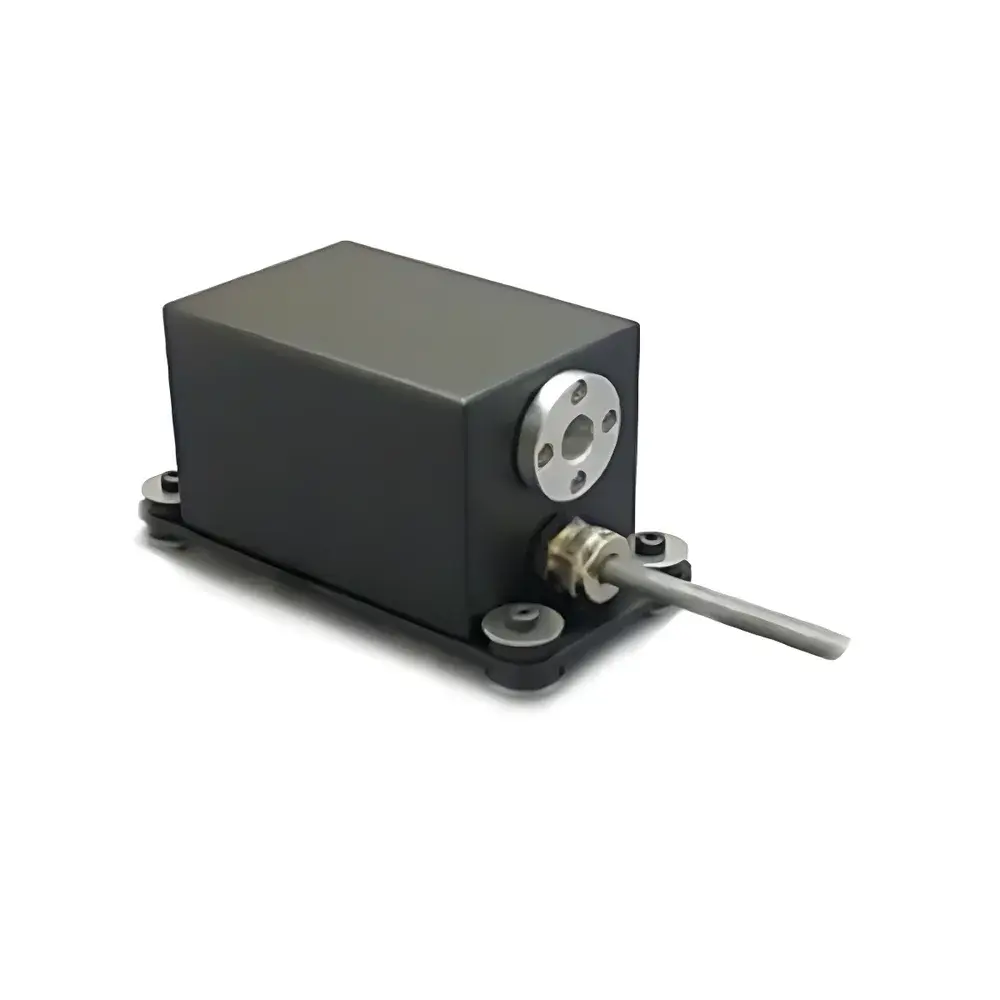
WDS Ferrous Wear Particle Sensor by Kittiwake
| Brand | Kittiwake |
|---|---|
| Origin | United Kingdom |
| Manufacturer Type | Authorized Distributor |
| Origin Category | Imported Instrument |
| Model | WDS Series (Custom Configuration Available) |
| Price | Contact for Quotation |
Overview
The WDS Ferrous Wear Particle Sensor, engineered by Kittiwake—a UK-based leader in condition monitoring instrumentation—is a purpose-built inline or dip-probe sensor designed for continuous, real-time quantification of ferromagnetic wear debris in lubricating oils and hydraulic fluids. Operating on the principle of high-sensitivity magnetic induction coupled with differential flux detection, the WDS sensor measures the volumetric concentration of ferrous particles—primarily iron, steel, and nickel alloys—suspended in the fluid matrix. Unlike optical or electrostatic particle counters, the WDS is specifically optimized for ferrous species, delivering ppm-level mass concentration data (mg Fe per kg oil) with high reproducibility across varying fluid viscosities (ISO VG 32–680) and temperatures (−20 °C to +120 °C). Its integrated magnetic shielding eliminates interference from external electromagnetic fields—including variable-frequency drives, solenoids, and adjacent rotating machinery—ensuring measurement integrity in electrically noisy industrial environments such as power generation plants, marine propulsion systems, and wind turbine gearboxes.
Key Features
- Active magnetic shielding architecture minimizes susceptibility to ambient EMI/RFI, validated per IEC 61000-4-3 (radiated immunity) and IEC 61000-4-4 (electrical fast transient) standards
- Real-time output of ferrous particle concentration in ppm (mass basis), traceable to NIST-traceable calibration oils containing certified iron oxide dispersions
- Configurable alarm thresholds with dual-stage warning (pre-alarm and critical alert) via dry-contact relay and 4–20 mA analog output
- Robust 316 stainless steel housing rated IP67; compatible with pressurized oil circuits up to 10 bar (145 psi)
- Multiple mounting options: inline flange (DIN 259/2563), threaded probe (G1/2″, NPT 1/2″), or submersible dip-tube configuration
- No consumables or moving parts; maintenance-free operation with >10-year operational lifetime under continuous duty
Sample Compatibility & Compliance
The WDS sensor is validated for use with mineral-based, synthetic, and bio-based lubricants—including turbine oils (ISO-L-TGA), gear oils (ISO-L-CKD), hydraulic fluids (ISO-L-HM), and engine oils (API CK-4, FA-4). It maintains accuracy across fluid conductivity ranges of 10–2500 pS/m and water content ≤0.1% v/v. The device complies with ISO 4406:2017 (fluid cleanliness coding), ISO 16232-C (particle counting methodology), and supports integration into asset integrity management frameworks aligned with ISO 55001. For regulated industries, its analog and digital outputs are compatible with SCADA, DCS, and CMMS platforms supporting audit-ready data logging per FDA 21 CFR Part 11 (when paired with compliant software infrastructure) and GLP/GMP documentation workflows.
Software & Data Management
While the WDS operates autonomously as a standalone sensor, it is fully interoperable with Kittiwake’s K-Suite™ Condition Monitoring Platform (v5.2+), which provides time-series trending, statistical process control (SPC) charts, and automated wear rate calculations (µg/hr). Data export formats include CSV, OPC UA, and Modbus TCP. All measurement events—including alarm triggers, calibration timestamps, and sensor health diagnostics—are timestamped with UTC synchronization and support configurable retention policies (≥12 months). Firmware updates are delivered via secure HTTPS and validated using SHA-256 signatures to ensure system integrity.
Applications
- Early detection of abnormal wear in journal bearings, planetary gear sets, and hydraulic pump components
- Trending ferrous debris accumulation in gas turbine lube systems to inform oil drain intervals and overhaul scheduling
- Verification of filtration efficiency in offline kidney-loop systems
- Integration into predictive maintenance programs for Class I offshore vessels (IMO MSC.1/Circ.1476 compliant)
- Supporting ISO 28191-1 (condition-based maintenance for wind turbines) through continuous wear severity indexing
FAQ
Does the WDS sensor require periodic recalibration?
No—factory calibration is stable for the service life of the sensor. Optional annual verification using Kittiwake-certified reference oils is recommended for ISO 17025-accredited labs.
Can the WDS distinguish between cutting wear and fatigue wear particles?
No—the WDS reports total ferrous mass concentration only. Morphological analysis requires complementary ferrography (e.g., analytical ferrography per ASTM D7690) or SEM-EDS.
Is the sensor suitable for use with fire-resistant hydraulic fluids (HFD-U, HFD-R)?
Yes—validated for use with phosphate ester (HFD-R) and polyol ester (HFD-U) fluids at operating temperatures up to 80 °C.
What is the minimum detectable ferrous concentration?
Detection limit is 1 ppm (mass) in clean base oil; effective lower limit in field applications is typically 3–5 ppm due to background noise and fluid conditioning effects.
Does the WDS support HART or Foundation Fieldbus communication?
Not natively—but 4–20 mA output can be interfaced with HART-enabled I/O modules; digital protocols require third-party gateways compliant with IEC 61158.





