
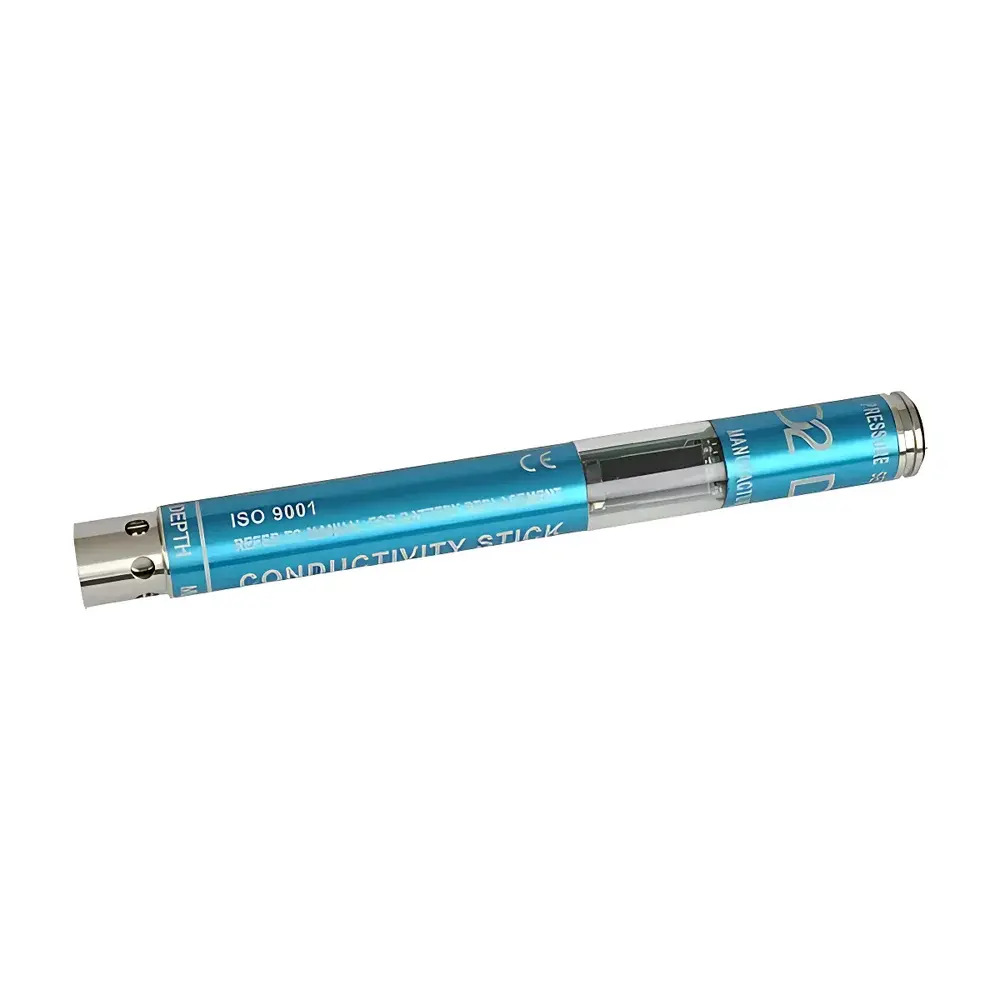
SETA 99580-0 Handheld Conductivity Tester
| Brand | SETA |
|---|---|
| Origin | United Kingdom |
| Model | 99580-0 |
| Conductivity Range | 0–2000 pS/m |
| Resolution | 0.1 pS/m and 0.1 °C |
| Temperature Accuracy | ±0.5 °C |
| Operating Temperature | −30 °C to +50 °C |
| Power Source | Replaceable AAA batteries |
| Compliance | ASTM D2624, IP 274, GB/T 6539 |
| Measurement Principle | AC Conductance (2-electrode, frequency-compensated) |
Overview
The SETA 99580-0 Handheld Conductivity Tester is an intrinsically robust, field-deployable instrument engineered for precise measurement of electrical conductivity in low-conductivity hydrocarbon liquids—particularly aviation turbine fuels (Jet A-1, JP-5, JP-8), diesel, kerosene, and other non-aqueous petroleum distillates. Unlike conventional DC-based meters susceptible to electrode polarization and electrolyte depletion, the 99580-0 employs a calibrated AC conductance technique at a fixed frequency optimized to eliminate capacitive reactance and minimize drift. This enables stable, repeatable readings without requiring sample transfer or fuel release—a critical safety and procedural advantage during aircraft refueling operations or tank farm inspections. Its design adheres strictly to the electrochemical measurement protocols defined in ASTM D2624 (Standard Test Method for Electrical Conductivity of Aviation Fuels), IP 274 (Institute of Petroleum Method), and GB/T 6539 (Chinese national standard for fuel conductivity), ensuring regulatory alignment across global aviation and defense supply chains.
Key Features
- True handheld form factor with ergonomic, impact-resistant housing rated for IP65 environmental ingress protection
- Single-button operation with auto-ranging conductivity measurement (0–2000 pS/m) and simultaneous temperature readout (−30 °C to +50 °C)
- High-stability dual-electrode sensor with platinum-black plating and integrated PTC thermistor for real-time temperature compensation
- AC excitation circuitry operating at 1 kHz to suppress electrochemical noise and eliminate zero drift associated with static charge buildup
- Field-replaceable AAA alkaline battery pack supporting >10,000 measurements per set; no proprietary charger required
- Built-in IRD (Instrument Response Data) logging capability for traceable calibration verification and audit-ready documentation
- USB-enabled 5-point validation and calibration simulator for on-site metrological verification against NIST-traceable reference standards
Sample Compatibility & Compliance
The 99580-0 is validated exclusively for non-aqueous, low-polarity fluids with conductivity below 5 nS/m (5000 pS/m), including aviation fuels, military-spec hydrocarbons, and refined distillates. It is not intended for aqueous solutions, acids, bases, or high-ionic-strength media. Its measurement protocol satisfies the stringent repeatability requirements of ASTM D2624 (repeatability ≤ ±0.1 pS/m or 5% of reading, whichever is greater) and supports GLP-compliant data integrity when used with IRD-verified calibration records. The device conforms to EN 61326-1:2013 for electromagnetic compatibility in industrial environments and carries CE marking under the EU Electromagnetic Compatibility Directive.
Software & Data Management
While the 99580-0 operates as a standalone instrument, its IRD interface enables secure, time-stamped export of measurement metadata—including date/time stamp, ambient temperature, conductivity value, sensor ID, and operator code—to external PCs via USB. The included calibration simulator software allows laboratories to generate electronic calibration certificates compliant with ISO/IEC 17025 requirements. All stored IRD logs retain cryptographic checksums to prevent post-acquisition tampering—supporting FDA 21 CFR Part 11 readiness when deployed within regulated fuel quality assurance programs.
Applications
- Aircraft refueling quality control at ramp-side locations and fuel hydrant systems
- Monitoring static charge dissipation capability in jet fuel prior to loading into aircraft tanks
- In-field verification of fuel additive effectiveness (e.g., Stadis 450, Lubrizol 564) in accordance with DEF STAN 91-91
- Periodic inspection of storage tanks, transport trailers, and blending facilities for conductivity degradation
- Supporting root-cause analysis during electrostatic discharge (ESD) incident investigations per IATA Ground Handling Manual Chapter 7
- Integration into laboratory QC workflows where portability and rapid turnaround supersede benchtop precision
FAQ
Does the 99580-0 require electrode cleaning between measurements?
No—its AC measurement principle and inert platinum-black electrodes eliminate fouling-related drift; routine wipe-down with lint-free cloth and isopropyl alcohol is sufficient.
Can it measure conductivity in water or ethanol blends?
No—this instrument is specifically designed and calibrated for hydrocarbon matrices only; aqueous or oxygenated fuels will yield non-linear, non-compliant results.
Is temperature compensation automatic and traceable?
Yes—integrated PTC thermistor provides continuous, NIST-traceable temperature correction per ASTM D2624 Annex A2 algorithms.
What constitutes a valid calibration event under ASTM D2624?
A full 5-point verification using the USB simulator against certified reference standards, documented with IRD log files and signed by authorized personnel.
How is measurement uncertainty quantified for audit purposes?
Total expanded uncertainty (k=2) is ±0.15 pS/m at 50 pS/m, derived from Type A (repeatability) and Type B (calibration, temp comp, resolution) components per GUM guidelines.





