
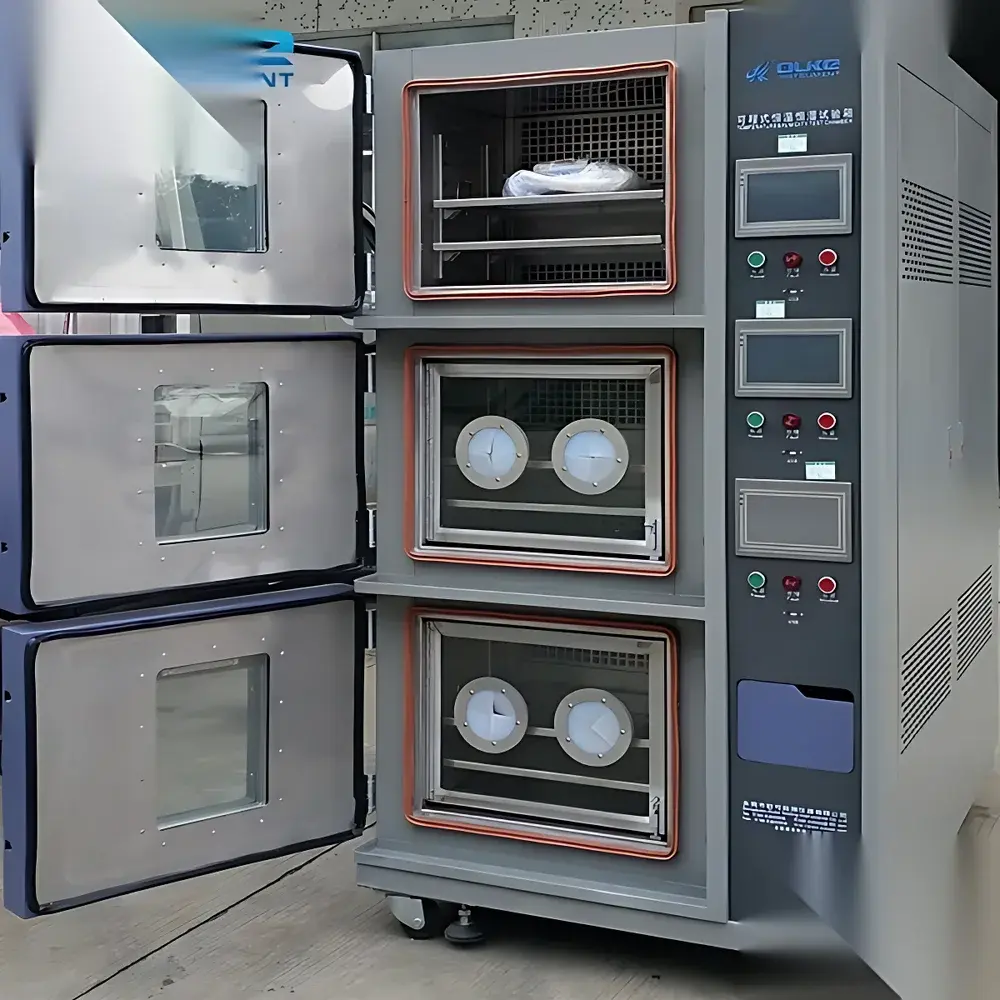
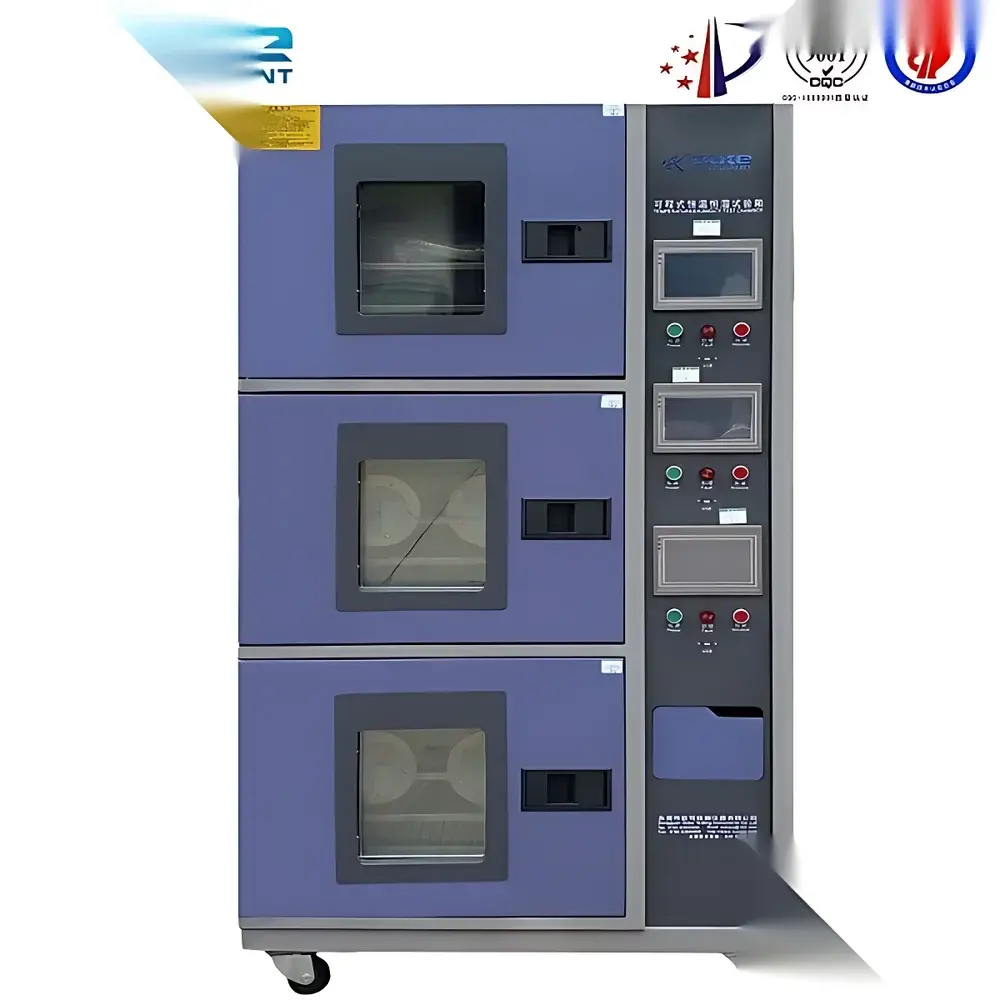
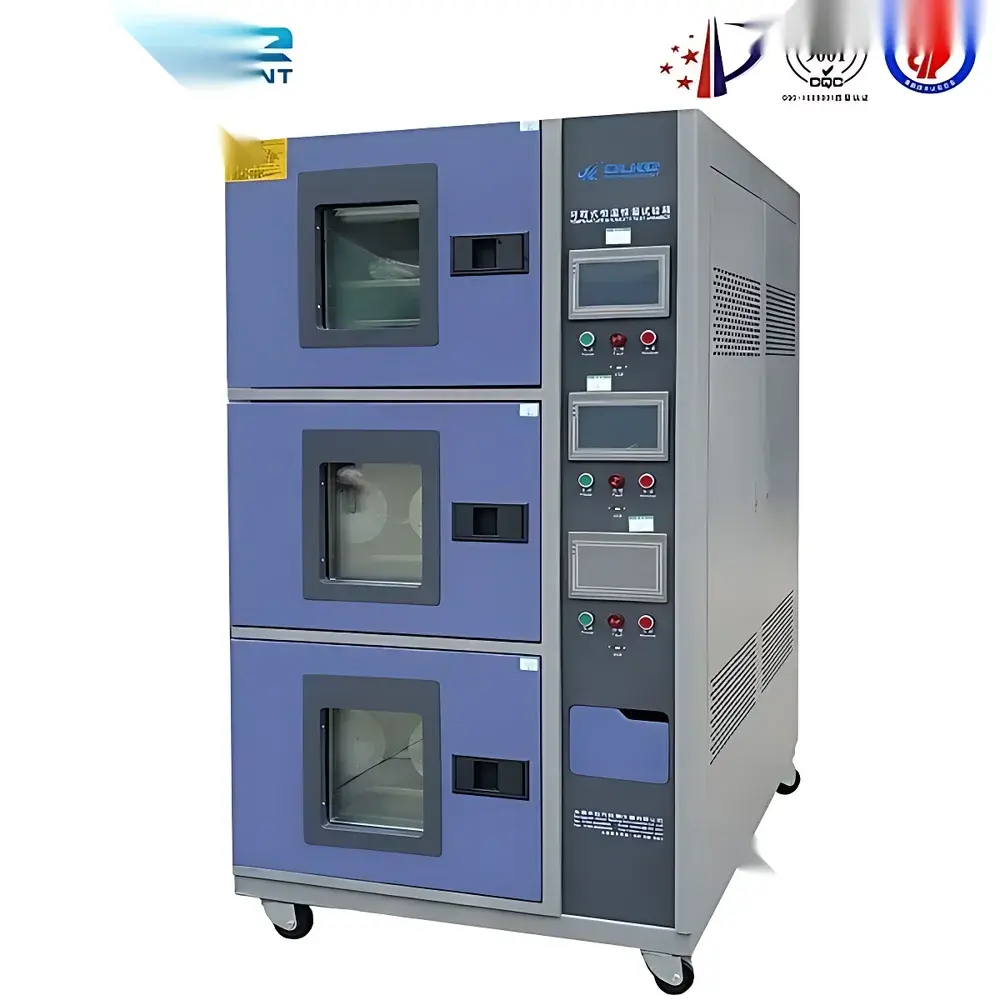
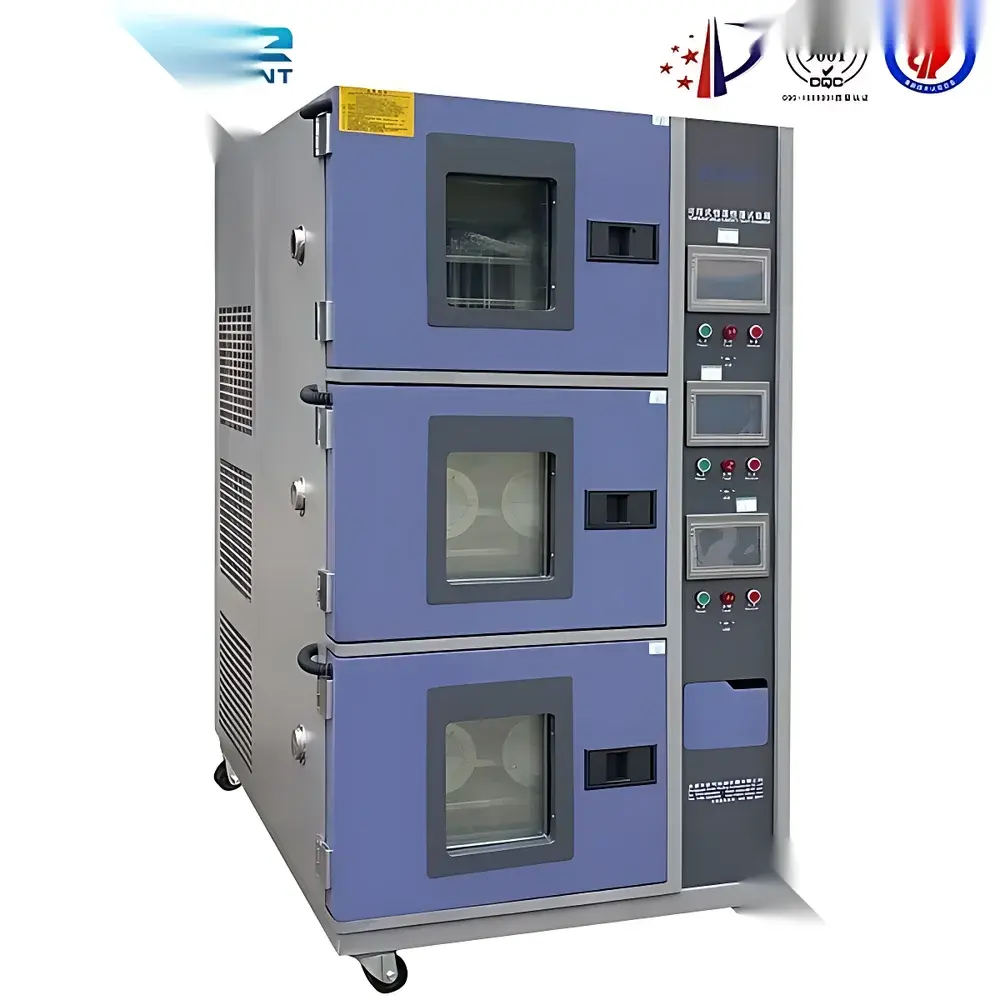
Environmental Test Chamber – Temperature and Humidity Controlled Chamber (Generic OEM Model)
| Key | Brand: OEM |
|---|---|
| Origin | Imported |
| Manufacturer Type | Authorized Distributor |
| Price | USD 7,200 (Reference FOB) |
| Temperature Range | −70°C to +180°C (typical) |
| Humidity Range | 20–98% RH |
| Control Stability | ±0.5°C / ±2.0% RH |
| Cooling Water Requirement | 10–28°C, 0.1–0.3 MPa |
| Compliance | GB/T 2423.1–2023, GB/T 2423.2–2023, IEC 60068-2-1, IEC 60068-2-2, GJB 1032A–2021, MIL-STD-2164A |
Overview
The Environmental Test Chamber – Temperature and Humidity Controlled Chamber is a precision-engineered climatic simulation system designed for accelerated environmental stress testing of electronic components, automotive parts, aerospace materials, pharmaceutical packaging, and industrial polymers. It operates on the principle of balanced temperature and humidity control (BTHC), integrating refrigeration, electric heating, steam-based humidification, and forced-air circulation to maintain highly reproducible thermal-hygrometric conditions across defined test profiles. Unlike single-stress chambers, this dual-parameter system enables concurrent application of temperature gradients and controlled relative humidity—critical for evaluating moisture absorption, condensation resistance, dimensional stability, and long-term material degradation under real-world operational or storage environments.
Key Features
- Robust dual-loop PID-controlled BTHC system with SSR-driven output modulation, ensuring dynamic equilibrium between heat/humidity input and chamber thermal/hygrometric losses.
- Full-capillary refrigeration circuit with automatic capacity regulation—eliminating mechanical expansion valve hysteresis and delivering faster, smoother temperature ramping (e.g., 3–5°C/min typical cooling rate from 25°C to −40°C under no-load conditions).
- Integrated multi-layer safety architecture: dry-heater overtemperature cutoff, independent high-limit thermostat, low-water-level sensor for steam generator, compressor overload/overheat/overcurrent protection, high-pressure refrigerant switch, molded-case circuit breaker, and residual-current device (RCD) compliant with IEC 61000-4-5.
- Ergonomic curved enclosure with seamless stainless-steel interior, flat non-reactive door handle, and double-glazed observation window with anti-fog coating.
- Touchscreen controller supporting programmable multi-step profiles, real-time trend logging, USB data export, and optional Ethernet/RS485 interface for SCADA integration.
Sample Compatibility & Compliance
This chamber accommodates standard test specimens up to 500 mm × 500 mm × 500 mm (W×D×H); custom internal dimensions are available upon engineering review. The unit meets structural and performance requirements for qualification testing per GB/T 2423.1–2023 (cold), GB/T 2423.2–2023 (dry heat), IEC 60068-2-1 (cold), IEC 60068-2-2 (dry heat), GJB 1032A–2021 (environmental stress screening), and MIL-STD-2164A (electronic equipment ESS). All stated temperature uniformity (±1.5°C) and humidity uniformity (±3% RH) specifications are validated per ISO 16750-4 Annex A and verified using NIST-traceable calibrated sensors during factory acceptance testing (FAT). Operational validation requires ambient conditions of 25°C ± 6°C and no internal load; performance degrades predictably with thermal mass, surface emissivity, and airflow obstruction—users must perform load-specific profile calibration prior to qualification runs.
Software & Data Management
The embedded controller firmware supports audit-trail-enabled operation in accordance with FDA 21 CFR Part 11 (when configured with user authentication, electronic signatures, and immutable event logging). Data files (CSV/TXT) include timestamped chamber setpoints, actual readings, alarm status, and system fault codes. Optional PC software provides statistical process control (SPC) charting, deviation reporting, and automated report generation aligned with ISO/IEC 17025 documentation requirements. All firmware updates are digitally signed and deployed via secure HTTPS channel; configuration backups support GLP/GMP traceability and revalidation after maintenance.
Applications
- Temperature-humidity cycling for solder joint fatigue analysis in PCB assemblies.
- Moisture barrier integrity testing of blister packs and cold-chain medical device packaging.
- Thermal shock preconditioning prior to HALT/HASS protocols.
- Long-term aging studies of elastomers, adhesives, and composite laminates per ASTM D570 and ISO 62.
- Environmental screening of avionics enclosures under DO-160 Section 4 (temperature) and Section 7 (humidity) conditions.
- Validation of HVAC component performance under extreme wet-bulb conditions.
FAQ
What is the difference between “air temperature change rate” and “product temperature change rate”?
Air temperature change rate refers to the average rate at which chamber air reaches target setpoints—not the rate at which a loaded test specimen equilibrates. Product response depends on mass, specific heat, thermal conductivity, and mounting configuration.
Why is cooling water temperature specified between 10–28°C?
Condenser efficiency declines sharply outside this range; temperatures >28°C reduce refrigerant subcooling and compromise low-temperature capability, while <10°C may cause condensate freezing in the chiller loop.
Can this chamber operate continuously at 85°C and 85% RH?
Yes—continuous operation at 85°C/85% RH is supported, provided the chamber is equipped with corrosion-resistant stainless-steel humidifier tank and high-temp insulation; extended runtime requires periodic descaling and verification of dew-point sensor drift.
Is third-party calibration certification included?
Factory calibration with NIST-traceable certificates is standard; ISO/IEC 17025-accredited field calibration is available as an add-on service.
How is system reliability ensured during unattended weekend testing?
The chamber includes redundant safety interlocks, email/SMS alarm notification (via optional IoT gateway), and automatic safe shutdown upon critical fault detection—fully documented in the Risk Assessment Report (RAR) supplied with each unit.



