
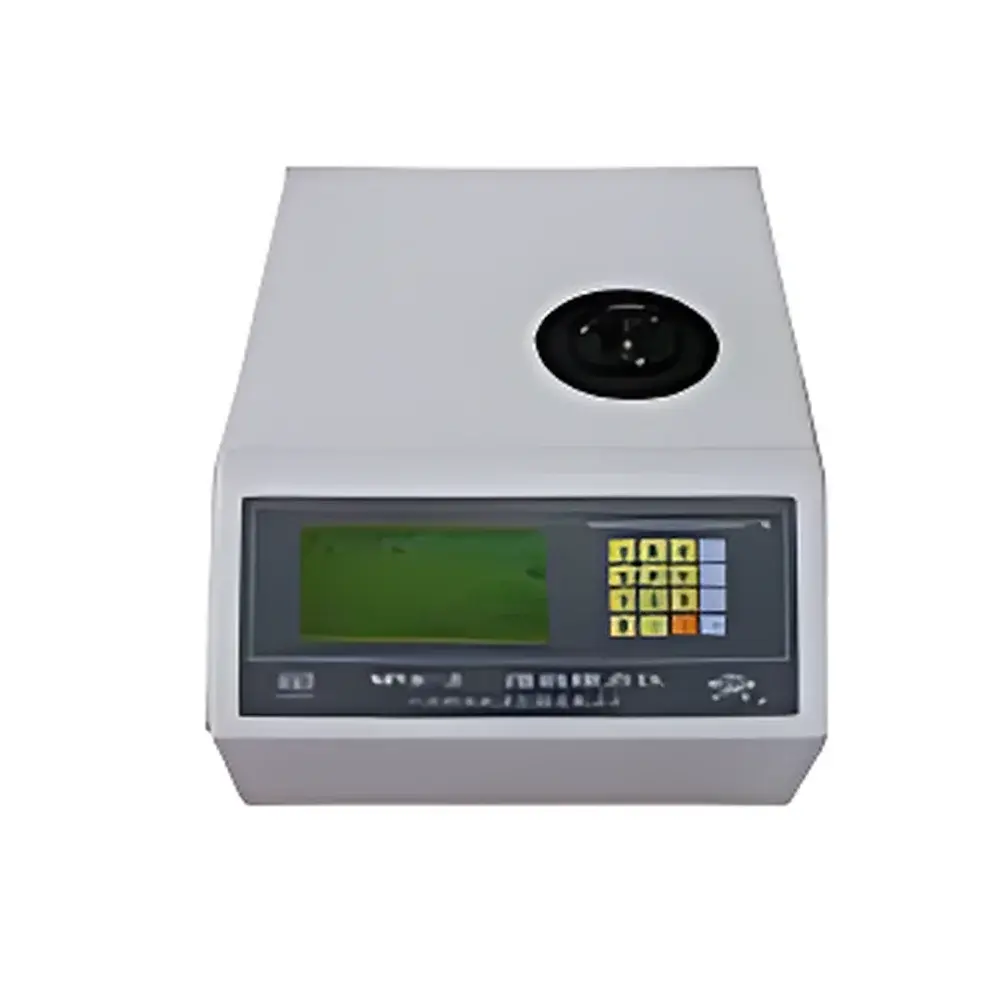
YDWO WRS-2A Microscopic Melting Point Apparatus
| Brand | YDWO |
|---|---|
| Origin | Shanghai, China |
| Model | WRS-2A |
| Temperature Range | Ambient to 300 °C |
| Temperature Resolution | 0.1 °C |
| Heating Rate | 0.2–5.0 °C/min |
| Accuracy | ±0.5 °C below 200 °C |
| Sample Capacity | 3 positions (simultaneous measurement) |
| Display | LCD with real-time melting curve visualization |
| Input | Digital keypad |
| Detection Method | Photoelectric detection |
Overview
The YDWO WRS-2A Microscopic Melting Point Apparatus is a precision thermal analysis instrument engineered for accurate, repeatable determination of the melting behavior of crystalline organic compounds. It integrates optical microscopy with controlled linear heating and photoelectric endpoint detection to capture both visual and thermometric transitions during solid-to-liquid phase change. Designed in accordance with fundamental principles of thermal analysis—specifically, the correlation between melting point depression and sample purity—the WRS-2A serves as a critical tool in quality control laboratories where identification, batch release, and specification verification of pharmaceutical intermediates, fine chemicals, dyes, and fragrance compounds are routine requirements. Its operational range (ambient to 300 °C), fine temperature resolution (0.1 °C), and programmable heating rates (0.2–5.0 °C/min) enable method flexibility aligned with pharmacopoeial guidelines including USP , EP 2.2.17, and ChP IV.
Key Features
- Triple-sample chamber design enabling concurrent analysis of three independent specimens—reducing inter-run variability and increasing throughput in high-volume QC environments.
- Integrated digital microscope optics with adjustable magnification and coaxial illumination, facilitating real-time observation of crystal lattice disruption, sintering, decomposition, or polymorphic transitions.
- Photoelectric detection system that automatically identifies onset (initial collapse) and completion (full liquefaction) points based on transmitted light intensity changes—eliminating subjective visual interpretation.
- LCD interface with graphical real-time curve display: shows temperature vs. time profile with dynamic annotation of initial melt (onset), clear melt (endpoint), and calculated mean values.
- Digital keypad input for precise parameter entry—including target temperature, ramp rate, and hold duration—ensuring method reproducibility across operators and shifts.
- Robust aluminum alloy heating block with PID-controlled thermal regulation, delivering stable temperature gradients and minimizing overshoot during ramp transitions.
Sample Compatibility & Compliance
The WRS-2A accommodates standard 1-mm capillary tubes (borosilicate glass, sealed at one end), compatible with samples ranging from highly volatile low-melting organics (<50 °C) to refractory aromatic systems (up to 300 °C). It supports routine compliance with ISO 11357-3 (Plastics — Differential Scanning Calorimetry — Part 3: Determination of melting temperature and enthalpy of fusion), ASTM D1565 (Standard Test Method for Melting Point of Organic Coating Materials), and pharmacopeial monographs requiring visual or optically assisted melting point verification. While not a regulated GMP instrument per se, its digital data logging capability, operator-accessible calibration records, and deterministic endpoint logic support audit readiness under GLP and FDA 21 CFR Part 11–aligned documentation practices when integrated into validated laboratory workflows.
Software & Data Management
The WRS-2A operates as a standalone unit with embedded firmware; no external PC connection is required for basic operation. All measurement parameters and results—including individual onset/endpoint temperatures, mean values, heating rate, and timestamped curves—are stored internally and displayed directly on the LCD. For traceability, users may manually record results into LIMS or ELN systems. Optional RS-232 serial output (available via accessory interface module) enables ASCII-formatted data export for integration with third-party laboratory informatics platforms. Calibration verification is performed using certified NIST-traceable reference standards (e.g., indium, tin, lead), with calibration logs retained per user-defined schedule to satisfy internal QA protocols.
Applications
- Pharmaceutical QC: Verification of identity and purity of active pharmaceutical ingredients (APIs) and excipients per ICH Q5 and Q6A guidelines.
- Chemical manufacturing: Batch-to-batch consistency assessment of dyes, pigments, agrochemical intermediates, and specialty polymers.
- Academic research: Polymorph screening, eutectic mixture characterization, and thermal stability profiling of novel organic frameworks.
- Regulatory submission support: Generation of raw melting data compliant with dossier requirements for FDA ANDA, EMA MRP, or PMDA filings.
- Forensic and customs labs: Rapid differentiation of structurally similar compounds where melting behavior provides discriminant evidence.
FAQ
What capillary tube specifications are recommended for use with the WRS-2A?
Standard 1.0 mm outer diameter × 0.1 mm wall thickness borosilicate glass capillaries, 100 mm length, sealed at one end. Fill height should be 3–5 mm for optimal optical path and thermal response.
Does the instrument support automatic calibration or require manual adjustment?
Calibration is manual and traceable: users perform two-point verification (e.g., water ice point and pure indium) using the digital keypad interface; offset corrections are entered directly into the system firmware.
Can the WRS-2A detect decomposition events occurring near or above the melting point?
Yes—simultaneous visual observation via the integrated microscope allows detection of discoloration, bubbling, charring, or sublimation prior to or concurrent with melting, supporting comprehensive thermal event documentation.
Is the melting curve data exportable in CSV or PDF format?
Raw temperature/time data is exportable as ASCII text via RS-232; post-processing into CSV or PDF requires external software. The instrument itself displays but does not generate file-based reports.
How often should the heating block be cleaned or serviced?
No routine servicing is required. Capillary residue should be removed after each run using lint-free swabs and ethanol; annual inspection of heater contacts and optical path cleanliness is recommended for sustained accuracy.



