
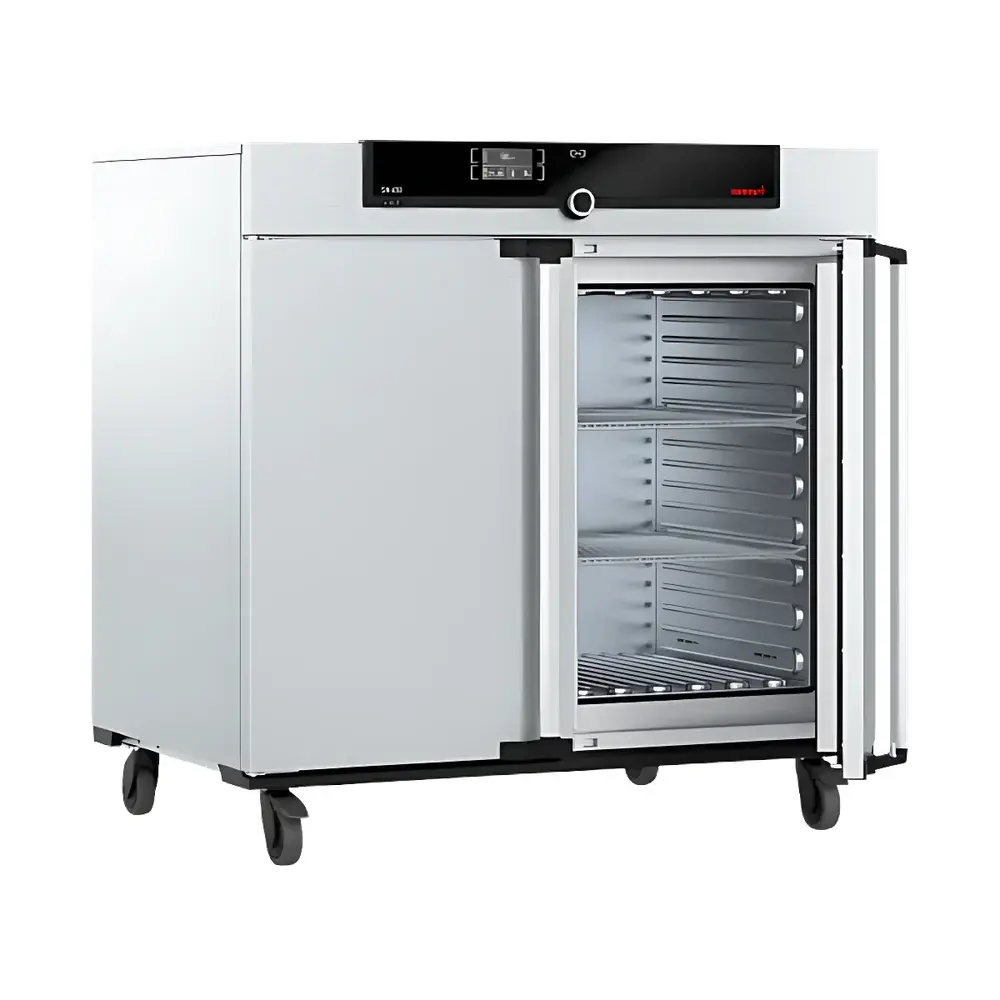
Memmert SN Series Sterilization Oven with Single-Display ControlCOCKPIT
| Brand | Memmert |
|---|---|
| Origin | Germany |
| Manufacturer | Memmert GmbH + Co. KG |
| Type | Benchtop / Floor-Standing Sterilization Oven |
| Models | SN30, SN55, SN75, SN110, SN160, SN260, SN450, SN750 |
| Temperature Range | 20–250 °C |
| Compliance | ISO 13485, EN 554, DIN 58946-2, FDA 21 CFR Part 11 (with optional audit trail & user management), GLP/GMP-ready |
| Control System | Single-display ControlCOCKPIT with SetpointWAIT function |
| Optional Accessories | Pt100 reference probe (freely positionable), electromagnetic door lock, ID card access control, 4–20 mA analog output, data logging via USB or Ethernet |
Overview
The Memmert SN Series Sterilization Ovens are precision-engineered thermal sterilization systems designed for laboratories, hospitals, and medical device manufacturers requiring validated, repeatable dry-heat sterilization processes. Unlike conventional drying ovens, the SN series operates on a validated thermal inactivation principle—leveraging sustained exposure to elevated temperatures (20–250 °C) to achieve microbial lethality through protein denaturation and enzymatic inactivation. Dry-heat sterilization is particularly critical for heat-stable, non-porous items such as glassware, metal instruments, powders, and silicone components where steam penetration is impractical or undesirable. The core innovation—SetpointWAIT—is not a timer delay but a thermally gated process initiation logic: sterilization timing begins only after *all* configured temperature sensors confirm stable attainment of the setpoint across the chamber volume. This eliminates time-in-temperature uncertainty caused by thermal lag or spatial gradients, directly supporting compliance with ISO 13485 quality management systems and EN 554 validation requirements for sterilization equipment.
Key Features
- SetpointWAIT function ensures process timing initiates exclusively upon verified thermal equilibrium at the defined setpoint—eliminating premature start errors and enabling precise dwell-time execution.
- Single-display ControlCOCKPIT interface provides intuitive navigation, real-time display of up to three independent temperature channels (e.g., chamber air, load surface, reference probe), and full parameter logging.
- Robust stainless-steel chamber construction with double-walled insulation minimizes thermal loss and ensures uniform temperature distribution (±0.5 K at 180 °C per DIN 12880).
- Optional freely positionable Pt100 Class A sensor enables direct load temperature monitoring—critical for establishing correlation between air temperature and actual item surface temperature during qualification.
- Electromagnetic door lock (optional) prevents inadvertent or unauthorized opening during active sterilization cycles, integrated with ID card-based user authentication for traceable operator access.
- Built-in 4–20 mA analog output and USB/Ethernet connectivity support integration into centralized laboratory information management systems (LIMS) and enable automated data export compliant with 21 CFR Part 11 when paired with validated software.
Sample Compatibility & Compliance
The SN series accommodates a wide range of sterilizable materials—including borosilicate glass vials, stainless-steel surgical tools, ceramic substrates, anhydrous pharmaceutical excipients, and polymer-coated devices—provided they exhibit thermal stability within the 20–250 °C operating envelope. Chamber volumes range from 30 L (SN30) to 750 L (SN750), allowing scalability from R&D benchtop validation to production-line batch processing. All models are manufactured under ISO 13485-certified quality management systems and conform to EN 554 (sterilization by dry heat), DIN 58946-2 (performance requirements), and IEC 61010-1 (safety of laboratory equipment). When equipped with optional data logging, electronic signatures, and audit trail functionality, the system supports GLP and GMP environments, including FDA inspections requiring documented evidence of process consistency and personnel accountability.
Software & Data Management
The ControlCOCKPIT firmware includes embedded cycle programming, event logging (start/stop, door status, temperature deviations, alarm triggers), and timestamped storage of all measured values. Data export is supported via USB mass storage mode (CSV format) or Ethernet-based protocols (Modbus TCP, HTTP API). For regulated environments, optional Memmert Validation Software (V-SW) provides IQ/OQ documentation templates, calibration certificate management, and 21 CFR Part 11-compliant features—including role-based user accounts, electronic signatures, and immutable audit trails with operator attribution and timestamping. All recorded data retain metrological traceability to national standards via factory calibration certificates included with each Pt100 probe.
Applications
- Terminal sterilization of reusable surgical instruments and diagnostic tooling in hospital central sterile supply departments (CSSD).
- Depyrogenation of glass containers and stoppers in pharmaceutical manufacturing (e.g., parenteral drug packaging lines).
- Microbial reduction validation studies for cleanroom garments, filters, and environmental monitoring media.
- Thermal stability testing of excipients, APIs, and medical-grade polymers under accelerated aging protocols.
- Pre-sterilization conditioning of analytical sample vials and chromatography columns prior to high-sensitivity assays.
- ISO 11138-4-compliant biological indicator challenge testing using Geobacillus stearothermophilus spores.
FAQ
What is the purpose of the SetpointWAIT function?
SetpointWAIT delays the start of the sterilization dwell time until the chamber—and optionally, the load—has reached and stabilized at the programmed temperature, ensuring accurate thermal exposure duration.
Can the SN oven be used for depyrogenation?
Yes—when operated at ≥250 °C for ≥30 minutes (per USP & EP guidelines), the SN series meets depyrogenation requirements for glassware and stainless-steel components.
Is validation support available for IQ/OQ/PQ protocols?
Memmert provides standardized qualification documents, test templates, and on-site support services for installation, operational, and performance qualification.
How is temperature uniformity verified across the chamber?
Uniformity is assessed per DIN 12880 using nine calibrated Pt100 probes; typical results show ≤±0.5 K deviation at 180 °C in standard configurations.
Does the oven support remote monitoring and alarm notification?
Via optional Ethernet interface and Memmert’s web-based monitoring platform, users can receive email/SNMP alerts for critical events (e.g., temperature deviation >±2 K, door open during cycle).



