
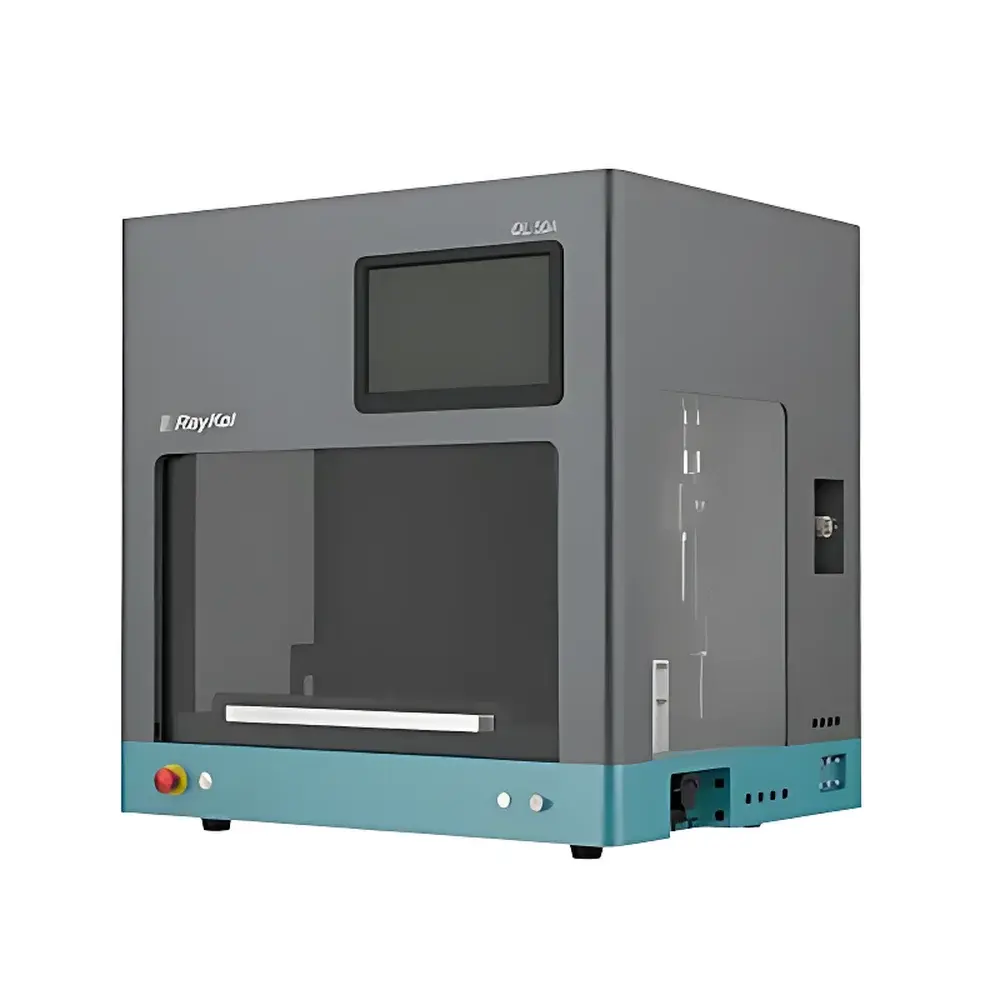
Raykol IDL 50A Intelligent Liquid Dispenser
| Brand | Raykol |
|---|---|
| Origin | Fujian, China |
| Manufacturer Type | Original Equipment Manufacturer (OEM) |
| Country of Origin | China |
| Model | IDL 50A |
| Plate Capacity | 36 positions |
| Dispensing Speed | 20 sec/sample |
| Precision | <1% (0–25 mL), ≤±2% (10–100 µL) |
| Volume Range | 0–100 mL (dual-pump architecture) |
| Dimensions (W×D×H) | 750 × 600 × 750 mm |
| Compliance | ASTM D7843, ISO/IEC 17025-aligned operation, supports GLP/GMP audit trails via software logging |
Overview
The Raykol IDL 50A Intelligent Liquid Dispenser is an automated, dual-syringe-pump-based liquid handling workstation engineered for high-throughput, trace-accurate solvent and standard solution dispensing in regulated analytical laboratories. It operates on a precision volumetric displacement principle—leveraging independently controlled large-volume (0–25 mL) and micro-volume (10–100 µL) syringe pumps—to deliver reproducible liquid transfers without gravitational dependency or air-gap interference. Designed specifically to replace manual pipetting in sample preparation workflows for chromatographic residue analysis, the IDL 50A minimizes human intervention while maintaining metrological integrity across multi-solvent protocols. Its closed-loop architecture—including integrated fume extraction, real-time reagent level monitoring, and programmable needle wash cycles—ensures operator safety during prolonged exposure to volatile organic compounds (VOCs), aligning with OSHA 29 CFR 1910.1200 and EU Directive 2004/37/EC (CARC) requirements.
Key Features
- Dual independent syringe pump system: Large-bore pump (0–25 mL, ≤±1% CV) for bulk solvent delivery; micro-bore pump (10–100 µL, ≤±2% CV) for internal standard spiking.
- 4-channel solvent selection valve enabling sequential or parallel dispensing from up to four distinct reagents without manual tubing swaps.
- Automated needle washing station with programmable solvent selection (e.g., methanol, acetonitrile, water) and dwell time control to eliminate carryover between samples.
- Integrated fume extraction hood with adjustable airflow (≥150 m³/h) and activated carbon filtration, certified to meet EN 14175-3 laboratory fume cupboard performance standards.
- Touch-enabled tablet interface running Raykol DispenseOS v3.2—graphical workflow builder with drag-and-drop step sequencing, parameter validation, and electronic signature support per FDA 21 CFR Part 11.
- Real-time consumables monitoring: Reagent bottle level sensors trigger automatic pause + GUI alert; waste container fill-level detection prevents overflow and ensures compliance with local hazardous waste handling protocols.
Sample Compatibility & Compliance
The IDL 50A accommodates standard 15 mL and 50 mL conical centrifuge tubes mounted on proprietary 36-position racks. Tube geometry recognition is achieved via optical height sensing, ensuring consistent tip immersion depth and minimizing evaporation-induced error. All fluidic pathways are constructed from chemically inert PTFE and PEEK materials, validated for compatibility with acetonitrile, methanol, ethyl acetate, hexane, and 0.1% formic acid solutions. The system conforms to method validation requirements outlined in USP , ICH Q2(R2), and ISO/IEC 17025:2017 for precision, accuracy, and intermediate precision assessment. Instrument logs—including timestamped dispense events, pump calibration records, and user activity—are stored with immutable digital signatures and support full audit trail export for regulatory submissions.
Software & Data Management
Raykol DispenseOS provides a secure, role-based access environment supporting three user tiers (Operator, Supervisor, Administrator) with configurable permissions. Method files (.rmdf) encapsulate all dispensing parameters, including volume gradients, dwell times, mixing steps, and wash sequences—and are version-controlled with SHA-256 checksum verification. Raw instrument data (CSV/Excel) and metadata (JSON-LD) are automatically archived to network-attached storage (NAS) or LIMS-integrated endpoints via HL7 v2.5 or RESTful API. Built-in QC reporting tools generate daily precision summaries (mean, SD, %RSD), outlier detection alerts (Grubbs’ test), and trend charts aligned with ISO 80000-1 unit formatting conventions.
Applications
The IDL 50A is deployed primarily in food safety, herbal medicine quality control, and environmental residue testing laboratories performing multi-analyte quantitation by GC-MS/MS and LC-MS/MS. It supports standardized workflows referenced in Chinese Pharmacopoeia 2020 Edition, General Chapter 2341 (Pesticide Residue Determination); GB 23200.113–2018 (208 pesticide residues in plant-derived foods); GB 23200.121–2021 (331 analytes by LC-MS/MS); and GB 31660.1–2019 / GB 31660.7–2019 (veterinary drug residues in aquatic and porcine tissues). Its ability to execute gradient dilution series, matrix-matched spiking, and internal standard addition under unattended operation makes it suitable for ISO/IEC 17025-accredited testing facilities requiring documented traceability and minimal analyst involvement.
FAQ
What is the minimum and maximum dispensing volume supported by the IDL 50A?
The large-volume pump handles 0–25 mL with ≤±1% accuracy; the micro-pump delivers 10–100 µL with ≤±2% accuracy. Combined, the system covers 0–100 mL per sample via sequential or split dispensing.
Does the system support integration with third-party LIMS or ELN platforms?
Yes—via configurable REST API endpoints and HL7 v2.5 message templates. Pre-built connectors are available for Thermo Fisher SampleManager, LabWare LIMS, and Benchling ELN.
How is cross-contamination prevented during high-throughput runs?
Each dispense cycle includes a mandatory post-transfer needle wash using user-defined solvents and dwell times, followed by air-dry aspiration. Wash efficiency is verified quarterly using caffeine/methanol carryover tests per ASTM D7843 Annex A2.
Is the instrument compliant with FDA 21 CFR Part 11 requirements?
Yes—DispenseOS implements electronic signatures, audit trails with tamper-evident hashing, and role-based access controls validated per IQ/OQ/PQ protocols supplied with the system.
What maintenance is required for long-term operational reliability?
Syringe pump calibration is recommended every 6 months or after 10,000 cycles; PTFE seals should be replaced annually. Preventive maintenance logs are auto-generated and exportable as PDF reports for QA review.



