
Tongzhou Weipu K-Series Integrated Air-Cooled Circulating Chiller for Environmental Test Chambers
| Brand | Tongzhou Weipu |
|---|---|
| Origin | Hebei, China |
| Manufacturer Type | Direct Manufacturer |
| Instrument Type | Integrated Circulating Chiller |
| Cooling Method | Air-Cooled |
| Temperature Control Range | −40 °C to +35 °C |
| Refrigeration Capacity | 500 W to 15 kW |
| Temperature Stability | ±0.2 °C to ±1.5 °C |
| Circulating Pump Pressure | 1.3 bar to 4.5 bar |
| Circulating Pump Flow Rate | 18 L/min to 110 L/min |
| Reservoir Volume | 12 L to 120 L |
Overview
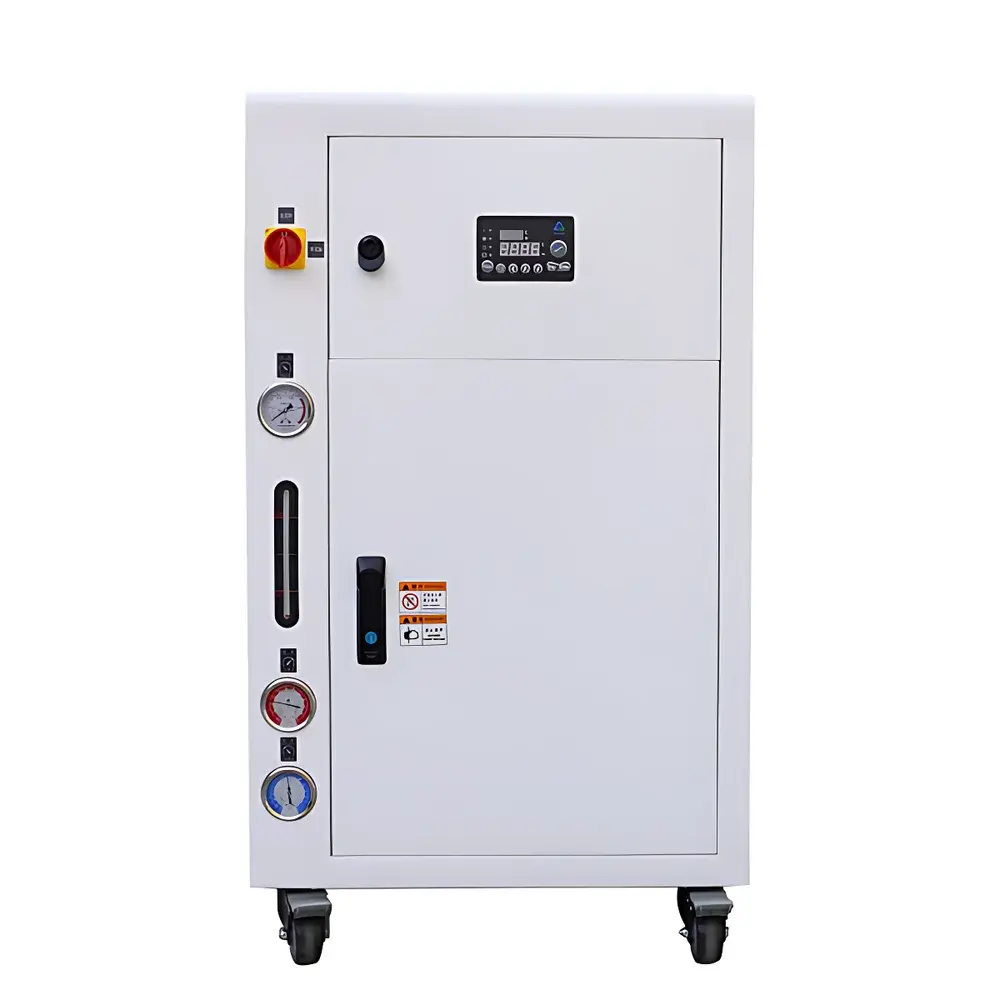
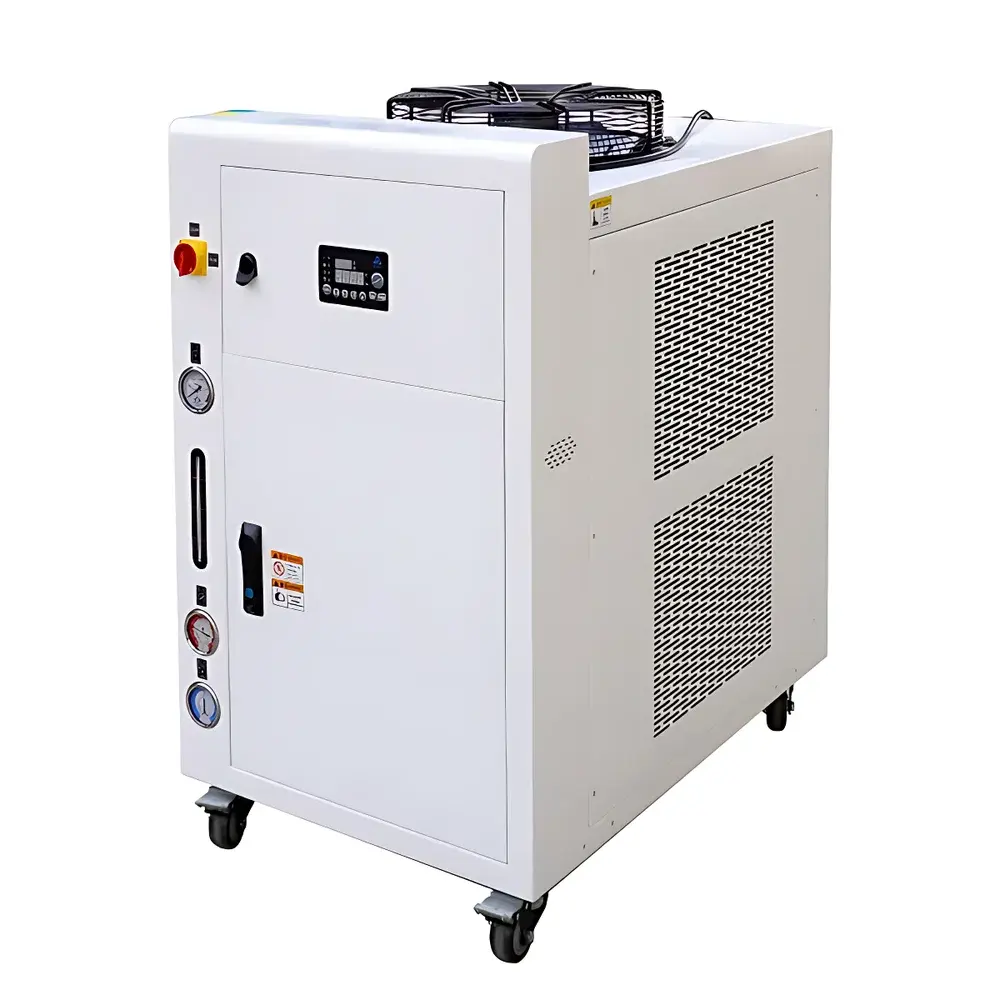
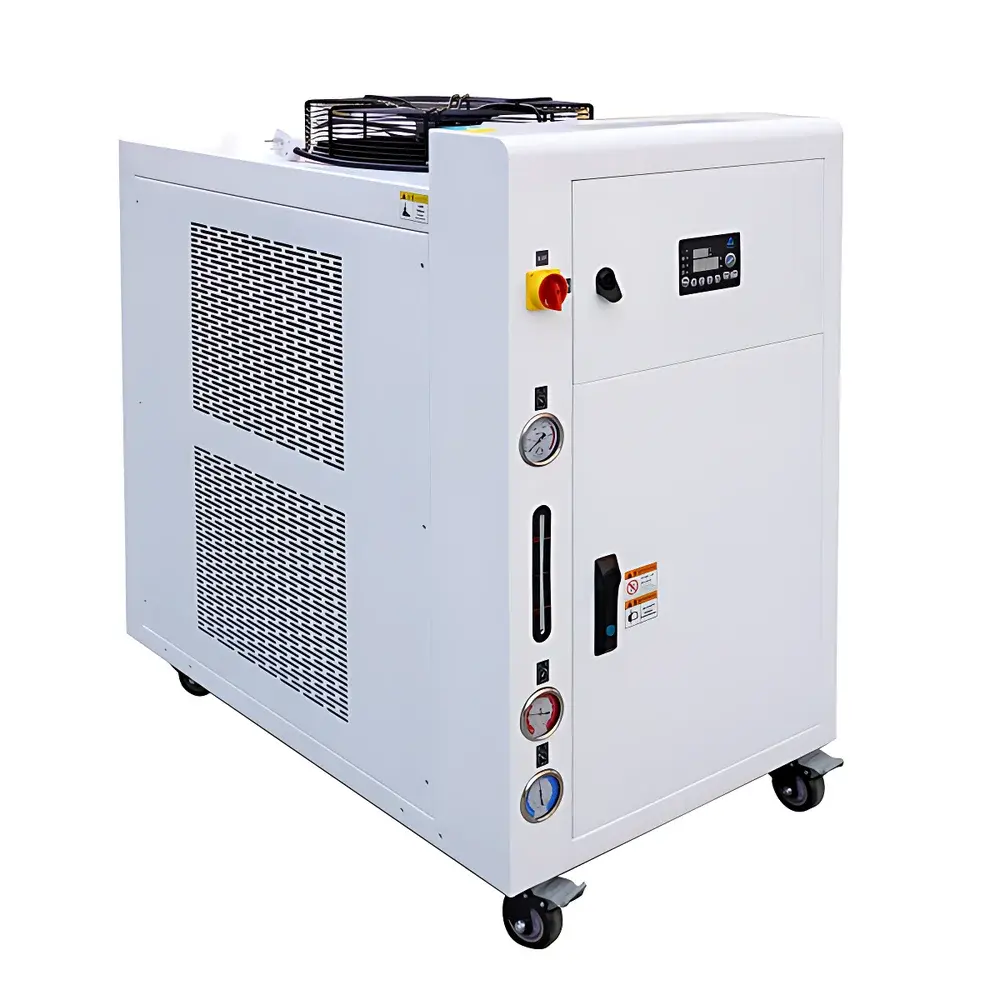
The Tongzhou Weipu K-Series Integrated Air-Cooled Circulating Chiller is an engineered thermal management solution designed specifically to maintain precise, stable coolant temperatures for environmental test chambers and other heat-sensitive laboratory and industrial equipment. Operating on vapor-compression refrigeration with optimized air-cooled condensation, the K-Series delivers consistent cooling performance across a wide operational envelope—from cryogenic setpoints (−40 °C) to ambient-adjacent conditions (+35 °C). Its integrated architecture eliminates external piping complexity and minimizes footprint, making it ideal for benchtop, floor-standing, or rack-integrated deployment within controlled laboratory environments. The chiller’s thermodynamic design emphasizes thermal inertia reduction, rapid response to load transients, and long-term stability—critical parameters when supporting temperature-critical applications such as thermal cycling validation, material aging studies, or vacuum chamber thermal conditioning.
Key Features
- Vertical modular construction with electrostatic color powder coating—enhances corrosion resistance, structural rigidity, and aesthetic integration into modern lab spaces;
- Front-accessible removable panel for routine condenser maintenance without tools or system shutdown;
- High-efficiency stainless-steel centrifugal pump offering low-noise operation, extended service life (>20,000 hr MTBF), and stable flow delivery across variable backpressure conditions;
- Integrated reservoir with dual-level monitoring: transparent level gauge for visual verification and electronic float switch for automated low-level alarm and compressor interlock;
- Optional water purification modules—including polypropylene sediment filter (5–10 µm) and mixed-bed ion-exchange resin cartridge—to meet ASTM D1193 Type II/III water quality requirements for sensitive instrumentation;
- Standardized quick-connect hydraulic interface with multiple NPT and BSP thread options (¼″ to 1″) to ensure seamless integration with OEM equipment manifolds;
- Comprehensive safety architecture: compressor soft-start delay (≥3 min), overcurrent protection, flow loss detection (via turbine sensor), high/low temperature cutout, and real-time fault logging;
- Configurable remote control interfaces including 0–10 V analog input/output, RS485 Modbus RTU, and optional Ethernet/IP support for centralized HVAC or MES integration.
Sample Compatibility & Compliance
The K-Series chiller is compatible with a broad range of thermal loads requiring active liquid cooling, including but not limited to environmental test chambers (IEC 60068-2-1, -2-2, -2-14 compliant), laser systems (Class IV), vacuum furnaces (ISO 20437), rheometers, spectrometers, and materials testing frames. All units comply with CE marking requirements (2014/30/EU EMC Directive and 2014/35/EU LVD Directive), RoHS 2011/65/EU, and EN 60335-1 safety standards. Optional documentation packages include Factory Acceptance Test (FAT) reports, calibration certificates traceable to NIST or CNAS-accredited labs, and IQ/OQ protocols aligned with ISO/IEC 17025 and FDA 21 CFR Part 11 data integrity guidelines.
Software & Data Management
The onboard controller features a 4.3″ TFT LCD touchscreen with intuitive menu navigation and multilingual UI (English, German, French, Japanese). Real-time data—including setpoint, actual bath temperature, flow rate, pump status, and compressor run hours—is logged at user-defined intervals (1 s to 60 min) and exportable via USB mass storage in CSV format. Optional cloud-enabled firmware supports secure MQTT-based telemetry to SCADA or LabVantage platforms, enabling predictive maintenance alerts and audit-ready historical trending. All configuration changes are timestamped and attributed, satisfying GLP/GMP requirements for electronic record retention and change control.
Applications
- Thermal stabilization of environmental test chambers during climatic stress screening (e.g., MIL-STD-810H, JEDEC JESD22-A104);
- Cooling of high-power CO₂ and fiber lasers in optical metrology and micromachining setups;
- Temperature regulation of vacuum deposition systems (sputtering, evaporation) to prevent thermal drift in film thickness uniformity;
- Heat extraction from exothermic bioreactor jackets and fermentation vessels operating under cGMP conditions;
- Supporting thermal cycling tests on polymer composites, battery cells, and semiconductor packaging substrates;
- Secondary cooling loop for recirculating chillers used in tandem with primary glycol systems in large-scale pilot facilities.
FAQ
What is the minimum ambient temperature required for reliable operation?
The unit is rated for continuous operation in ambient environments between +5 °C and +40 °C, with derated capacity above 35 °C per ISO 5149 Annex B.
Can the chiller be operated with ethylene glycol/water mixtures?
Yes—up to 35% v/v glycol concentration is supported; viscosity and specific heat corrections must be applied to flow and capacity calculations.
Is remote monitoring via Ethernet available as standard?
Ethernet connectivity is optional; standard communication includes RS485 Modbus RTU and analog I/O.
How often should the condenser coil be cleaned?
Under typical lab conditions (ISO Class 8 cleanroom or better), quarterly inspection and cleaning are recommended; frequency increases in dusty or high-humidity environments.
Does the chiller support programmable ramp-soak profiles?
No—ramp-soak functionality is not embedded; however, external PLC or chamber controller can orchestrate multi-step thermal sequences using analog setpoint modulation.



