
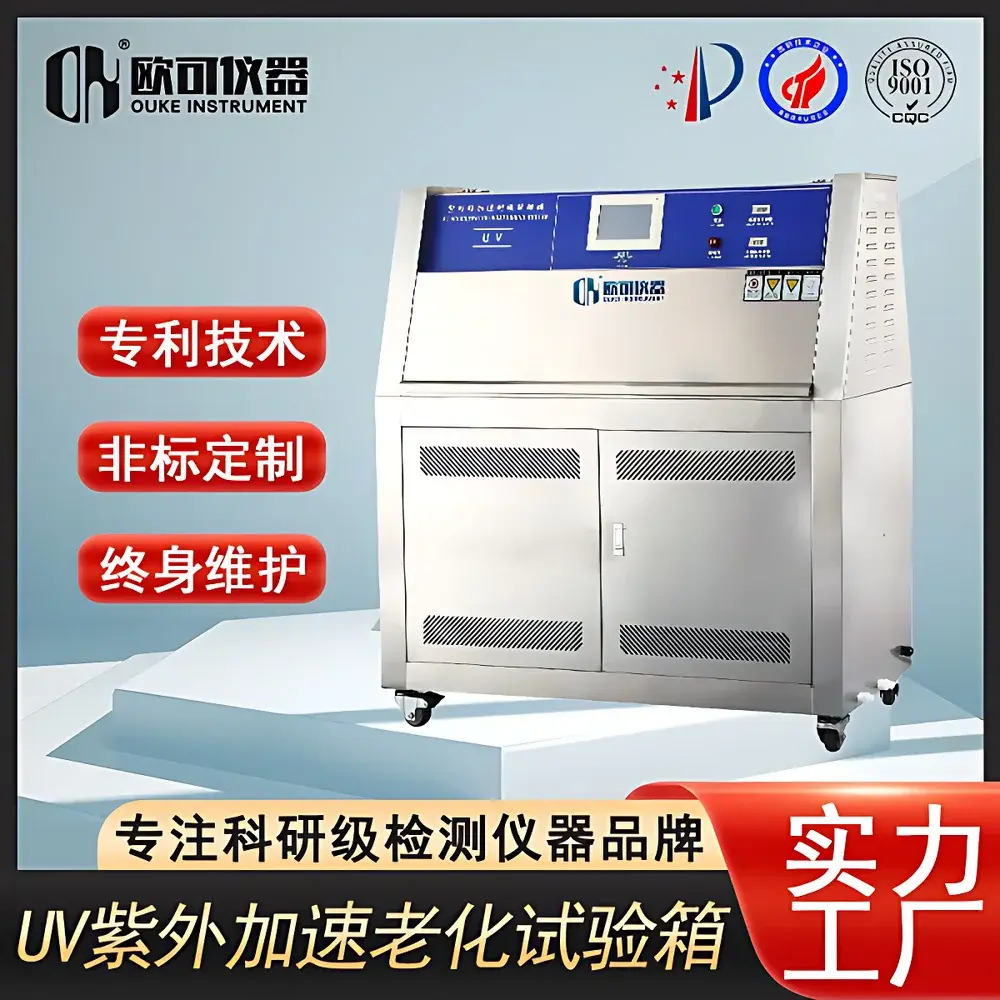
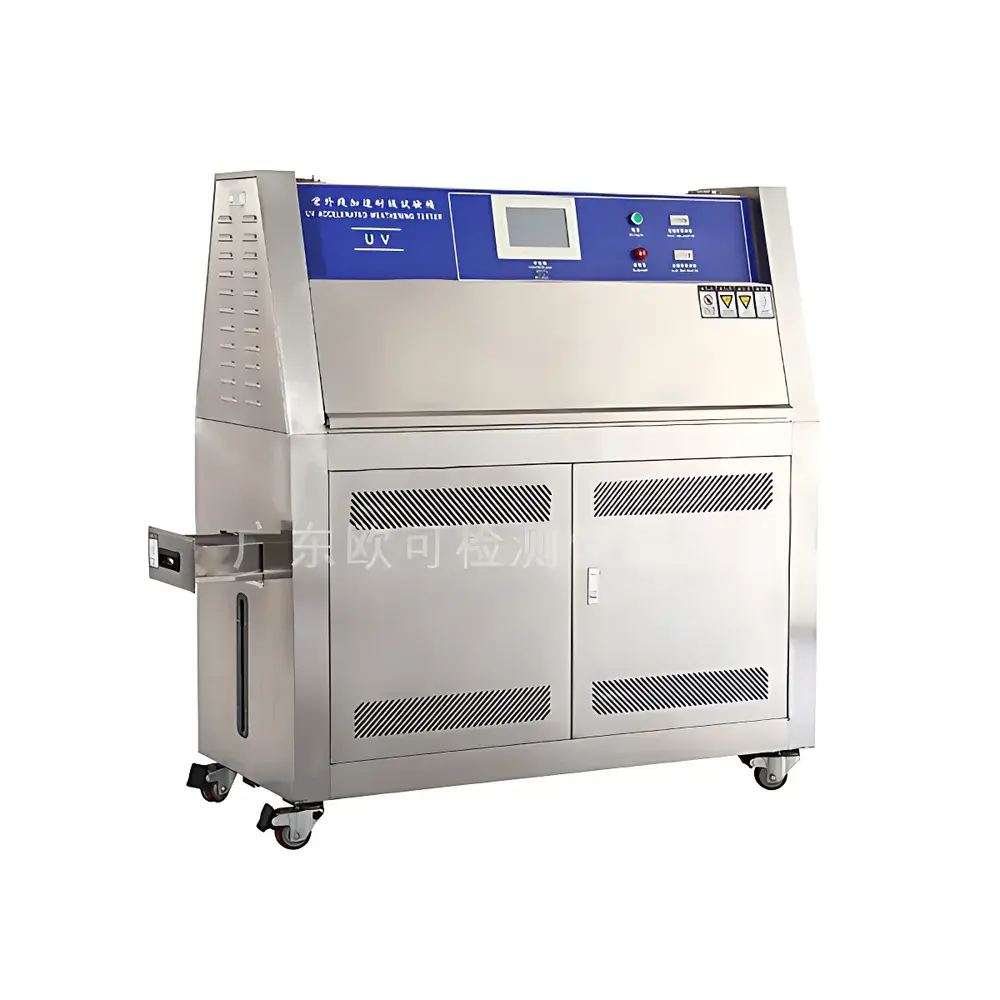
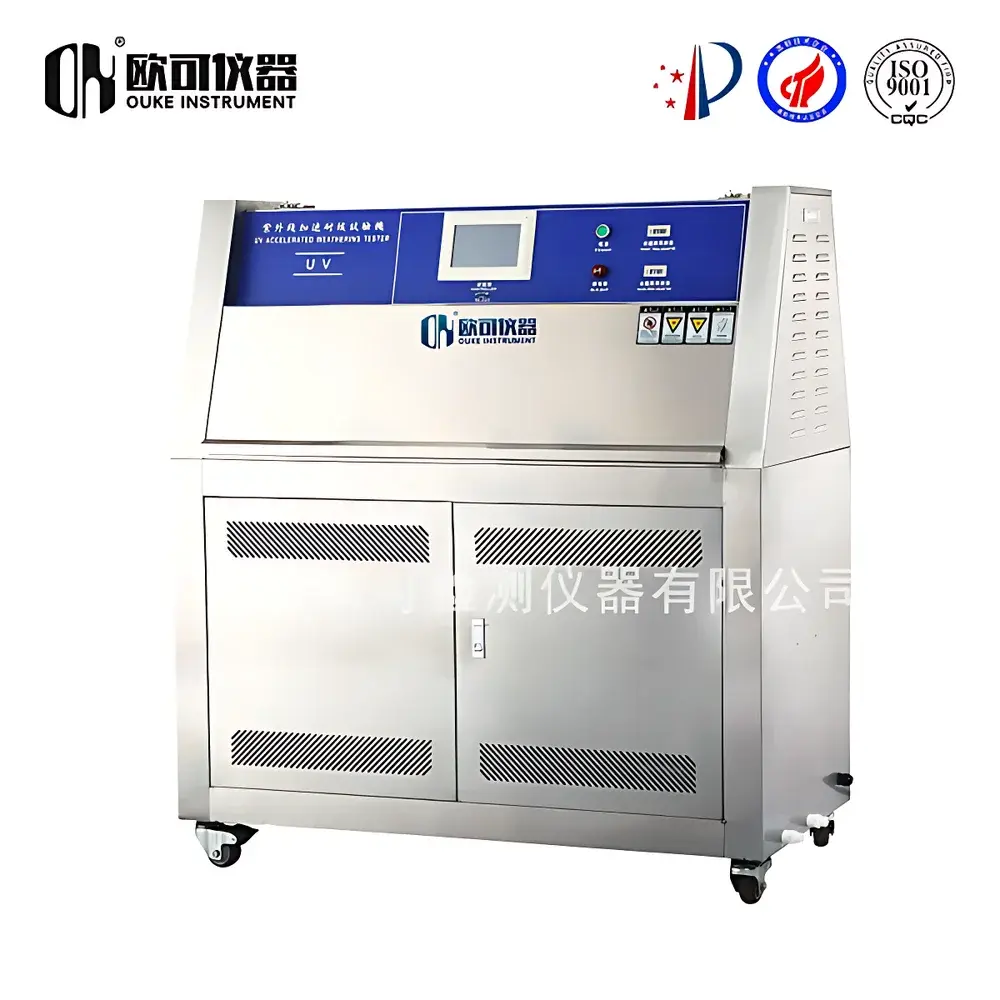
OK UV-290.000 Advanced Fluorescent UV Accelerated Weathering Test Chamber
| Brand | OK Instruments |
|---|---|
| Origin | Guangdong, China |
| Manufacturer Type | Direct Manufacturer |
| Model | OK-UV-290.000 |
| Humidity Range | ≥95% RH (chamber internal humidity) |
| Lamp Power | 40 W per tube |
| Irradiance Range | 0.72 W/m² @ 340 nm |
| Exposure Time Setting | 1–9999 h (adjustable) |
| Illumination Temperature Range | RT to 70 °C |
| UV Wavelength Range | 280–400 nm |
| Chamber Dimensions (L×W×H) | 1170 × 400 × 400 mm |
Overview
The OK UV-290.000 Advanced Fluorescent UV Accelerated Weathering Test Chamber is an engineered environmental simulation system designed to replicate the photochemical degradation mechanisms induced by solar ultraviolet (UV) radiation in outdoor service conditions. It operates on the principle of controlled fluorescent UV irradiation—specifically targeting the 280–400 nm spectral band, where photodegradation of organic polymers, pigments, and coatings is most pronounced. Unlike full-spectrum xenon arc testers, this chamber isolates the UV component responsible for bond scission, chromophore destruction, and surface embrittlement, enabling accelerated yet mechanistically relevant aging assessment. The system executes programmable cycles comprising three distinct phases: UV irradiation (with precise black-panel temperature control), condensation (simulating nocturnal dew formation via saturated vapor contact), and optional water spray (mimicking rain-induced mechanical and hydrolytic stress). This tri-phase exposure protocol aligns with ISO 4892-3, ASTM G154, and GB/T 16422.3, ensuring regulatory traceability for materials qualification in R&D, QC, and certification workflows.
Key Features
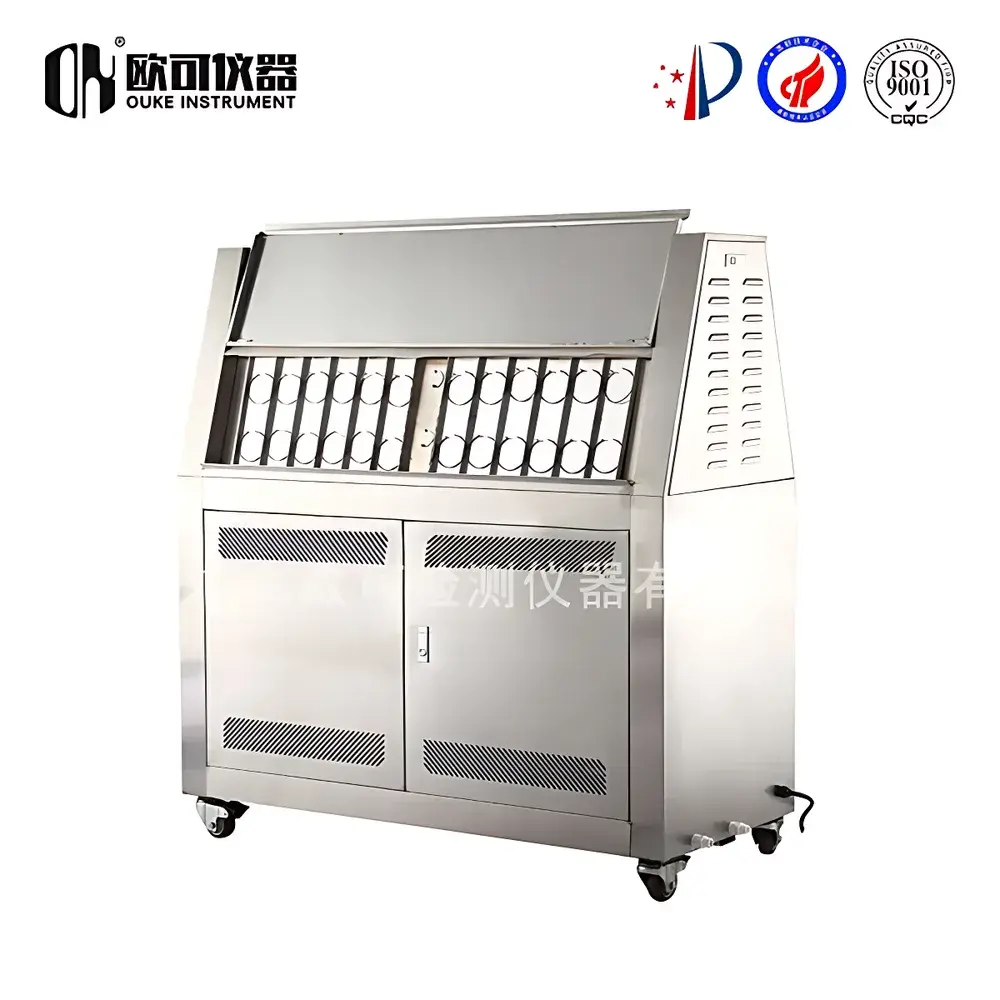
- Fluorescent UV lamp array with standardized UVA-340 or UVB-313 spectral output (280–400 nm), compliant with international lamp classification requirements
- Black-panel temperature control during irradiation phase (RT to 70 °C), monitored via calibrated thermocouple directly mounted on specimen-facing surface
- Condensation system utilizing heated deionized water reservoir to generate uniform moisture film on test specimens at 40–50 °C chamber ambient
- Optional high-fidelity water spray module with adjustable pressure (0.05–0.2 MPa), supporting intermittent or continuous operation per IEC 61215 Annex A
- Programmable logic controller (PLC) with 7-inch industrial touchscreen interface; supports up to 100-segment multi-cycle profiles (irradiation/condensation/spray timing independently configurable)
- Stainless-steel interior chamber (1170 × 400 × 400 mm) with corrosion-resistant construction and removable sample racks (standard 75 × 150 mm specimen capacity, tilt-angle adjustable 0°–45°)
- Integrated safety architecture including UV lamp fault detection, overtemperature cutoff, ground-fault circuit interruption, and real-time irradiance drift alert
Sample Compatibility & Compliance
The OK UV-290.000 accommodates flat-sheet specimens of plastics, elastomers, paints, textiles, adhesives, and photovoltaic encapsulants—typically cut to ISO-standard dimensions (e.g., 75 × 150 mm) and mounted on non-reflective, thermally stable carriers. Its operational envelope satisfies core compliance requirements for material durability validation across multiple sectors: ISO 11507 (coatings), ASTM D4329 (plastics), SAE J2020 (automotive exterior components), IEC 61215-2 (photovoltaic module backsheet qualification), and GB/T 1865 (Chinese national standard for paint weathering). All thermal and irradiance parameters are referenced to internationally accepted measurement protocols—including black-panel thermometer calibration per ASTM E1980 and irradiance monitoring at 340 nm using NIST-traceable broadband radiometers. The chamber’s design supports GLP-compliant audit trails when paired with optional data logging modules meeting FDA 21 CFR Part 11 electronic record integrity criteria.
Software & Data Management
Embedded firmware enables real-time display of irradiance (W/m² @ 340 nm), black-panel temperature (°C), chamber humidity (% RH), and elapsed exposure time (h). Historical cycle logs—including start/stop timestamps, parameter deviations, and alarm events—are stored internally for ≥12 months and exportable via USB interface in CSV format. Optional PC-based software provides extended functionality: remote monitoring via Ethernet, automated report generation (PDF/Excel), irradiance trend analysis with statistical process control (SPC) charts, and deviation alerts triggered by ±5% irradiance drift or ±1.5 °C black-panel temperature excursion. All software modules adhere to ISO/IEC 17025 documentation standards for test method validation and support integration into enterprise LIMS environments through OPC UA protocol compatibility.
Applications
- Coatings & Paints: Evaluation of chalking, gloss loss, color shift (ΔE), and adhesion failure in automotive OEM finishes, architectural façade systems, and marine-grade anticorrosive primers
- Polymers & Elastomers: Quantification of tensile strength retention, elongation-at-break decay, and yellowing index (YI) in PVC window profiles, EPDM roofing membranes, and TPE automotive seals
- Textiles & Nonwovens: Assessment of colorfastness (ISO 105-B02), seam strength degradation, and UV-induced fiber embrittlement in awning fabrics and geotextiles
- Photovoltaics: Qualification of ethylene-vinyl acetate (EVA) encapsulant discoloration, polyamide backsheet delamination, and fluoropolymer frontsheet haze development under IEC 61215 UV preconditioning sequences
- Building Materials: Durability screening of silicone sealants, acrylic stucco renders, and polyurethane waterproofing membranes per EN 1187-2 fire-rated assembly weathering prerequisites
FAQ
What UV lamp types are supported, and how do they differ in application?
UVA-340 lamps (315–400 nm) replicate terrestrial sunlight UV spectrum and are recommended for final product qualification per ISO 4892-3. UVB-313 lamps (280–315 nm) deliver higher photon energy and accelerate degradation for comparative formulation screening—but are not suitable for certification testing due to non-representative photochemistry.
Is black-panel temperature monitoring mandatory?
Yes. Air temperature alone is insufficient; black-panel sensors directly measure radiant heating at the specimen surface—a critical variable governing reaction kinetics. Per ASTM G154 Section 7.3.2, all compliant UV chambers must report black-panel temperature, not chamber air temperature.
Can this chamber replace a xenon arc weatherometer?
No. Xenon arc systems simulate full solar spectrum (290–800 nm) including visible and IR effects, making them appropriate for heat-sensitive or visibly fading materials. The OK UV-290.000 isolates UV-driven mechanisms only and is not interchangeable for standards requiring broad-spectrum exposure.
How often must UV lamps be replaced?
Lamp output declines measurably after ~1000 hours of operation. For metrological continuity, replacement is required prior to 1500 h, followed by irradiance recalibration using a NIST-traceable reference sensor.
Does the system meet FDA 21 CFR Part 11 requirements for electronic records?
When equipped with the optional audit-trail-enabled data logger and validated user access controls, the system supports ALCOA+ principles (Attributable, Legible, Contemporaneous, Original, Accurate) and satisfies electronic signature and record retention clauses under Part 11 Subpart B.



