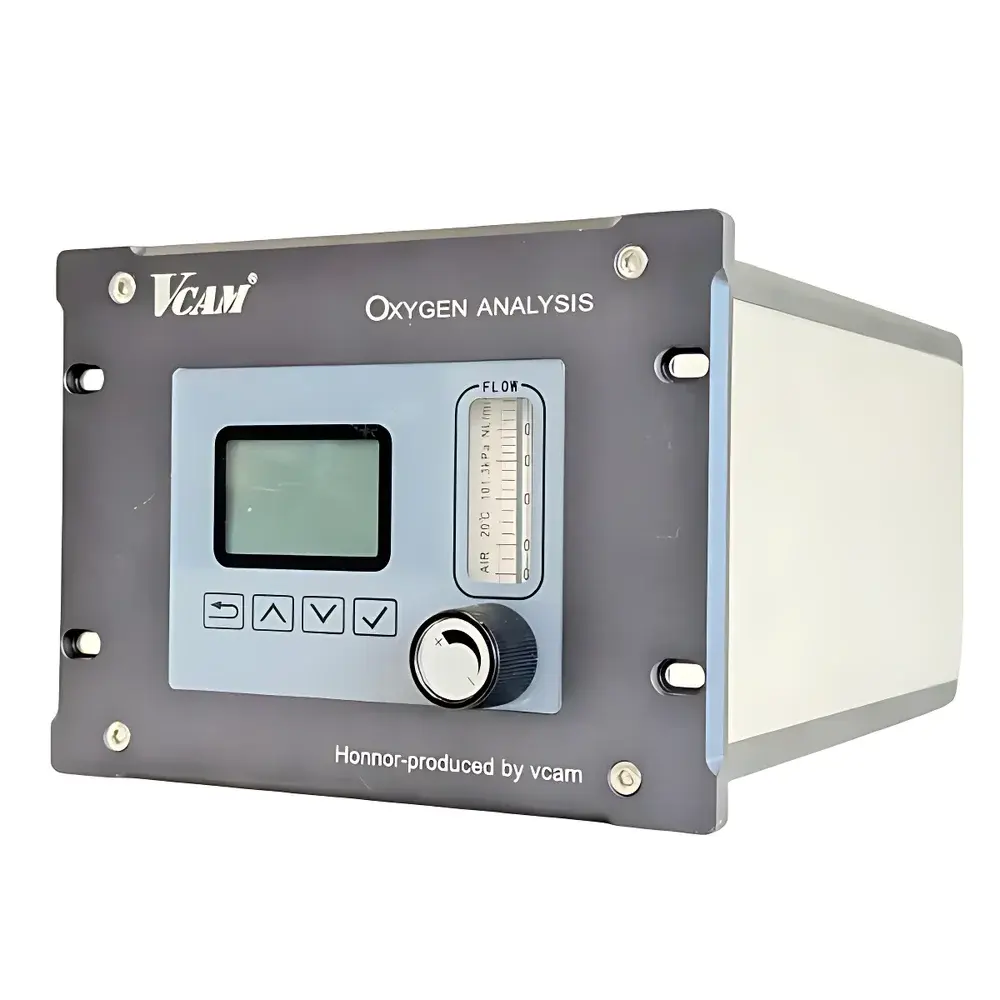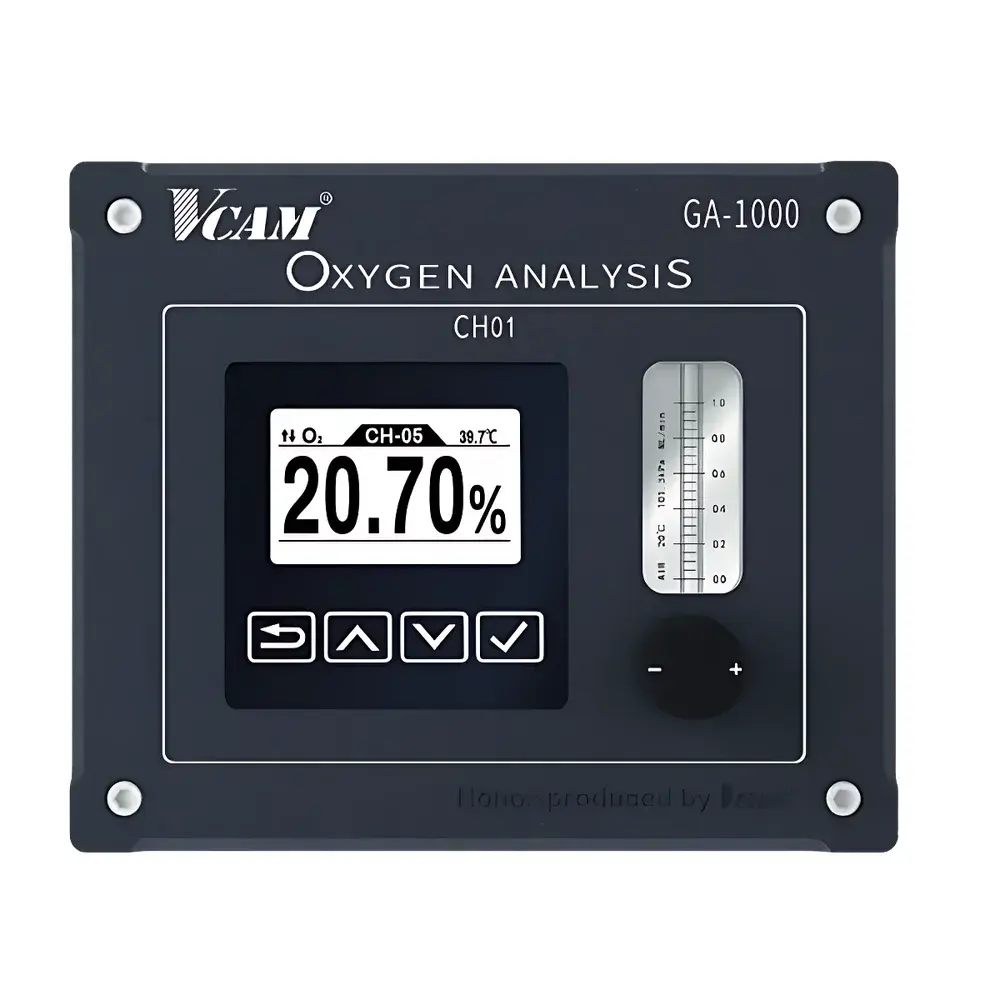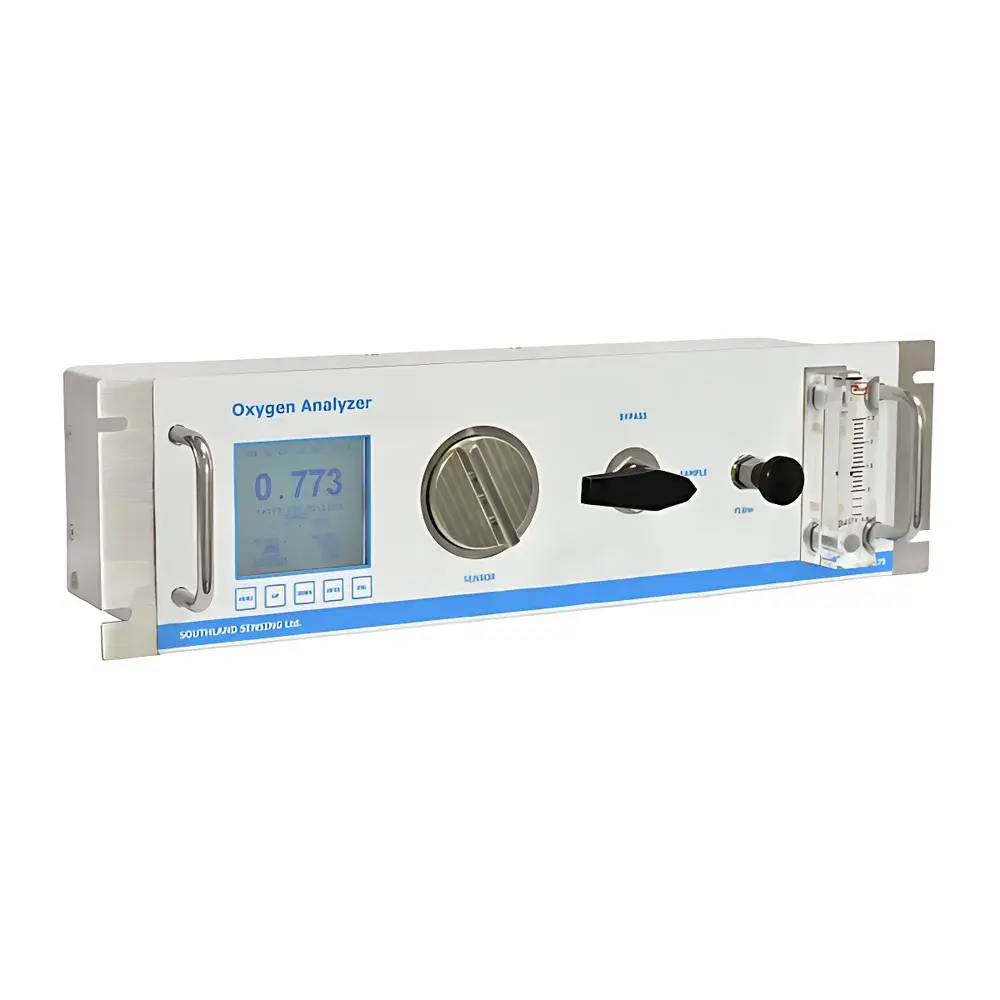
Southland Sensing OMD-675-10 Trace Oxygen Analyzer
| Origin | USA |
|---|---|
| Manufacturer Type | Authorized Distributor |
| Origin Category | Imported |
| Model | OMD-675-10 |
| Measurement Ranges | 0–10 ppm, 0–100 ppm, 0–1,000 ppm, 0–1% O₂, 0–25% O₂ |
| Sensor Type | Micro-fuel-cell electrochemical sensor |
| Accuracy | <1% FS |
| Certifications | CE, Class I, Div 2, Groups B, C, D |
| Operating Temperature | –10 to 50 °C |
| Dimensions | 241 × 165 × 96 mm |
| Power Supply | 12–24 VDC, 25 mA |
| Output Signals | 4–20 mA, 0–10 VDC, MODBUS RS485 (ASCII, bi-directional) |
| Sample Flow Rate | 230–2500 mL/min |
| Temperature Compensation | Integrated |
| Warranty | 12 months |
| Compatible Gases | N₂, Ar, He, H₂, hydrocarbons, CO₂ (with acid-resistant sensor option), H₂S/SO₂/CO₂ (with optional corrosion-resistant sensor) |
Overview
The Southland Sensing OMD-675-10 Trace Oxygen Analyzer is a precision-engineered electrochemical analyzer designed for continuous, real-time measurement of oxygen concentrations across an exceptionally wide dynamic range—from ultra-trace levels at 0.01 ppm up to 25% volume in industrial process streams. At its core lies a proprietary micro-fuel-cell oxygen sensor, which operates on the principle of galvanic electrochemical reduction of molecular oxygen at a catalytic cathode, generating a current linearly proportional to partial pressure of O₂. This sensor architecture delivers inherent stability, long-term baseline reproducibility, and immunity to background gas interference—critical attributes for applications where zero drift or cross-sensitivity compromises process integrity. The analyzer’s intelligent microcontroller continuously monitors sensor health, performs automatic zero stabilization, and enables seamless auto-ranging between discrete measurement spans (e.g., 0–10 ppm → 0–1,000 ppm → 0–25%) without manual intervention. Its compact, explosion-rated enclosure complies with Class I, Division 2, Groups B, C, D hazardous area requirements—making it suitable for deployment directly in natural gas transmission pipelines, syngas processing headers, and semiconductor fab utility corridors.
Key Features
- Micro-fuel-cell electrochemical sensor with <1% full-scale accuracy and no requirement for external calibration gases under stable operating conditions
- Five programmable measurement ranges: 0–10 ppm, 0–100 ppm, 0–1,000 ppm, 0–1% O₂, and 0–25% O₂—automatically selected based on process demand
- Integrated temperature compensation circuitry ensuring consistent performance across –10 to 50 °C ambient environments
- Dual SPDT alarm relays configurable for high/low O₂ thresholds with latching or non-latching logic
- Backlit LCD display with intuitive menu navigation and real-time status indicators (sensor life, signal strength, fault codes)
- Robust mechanical design: IP65-rated enclosure; dimensions 241 × 165 × 96 mm; suitable for panel mounting or direct pipe-tap installation
- Multi-protocol output interface: isolated 4–20 mA analog output, 0–10 VDC, and MODBUS RTU over RS485 (ASCII mode, bi-directional communication)
Sample Compatibility & Compliance
The OMD-675-10 is validated for use with inert carrier gases (N₂, Ar, He), reducing atmospheres (H₂), hydrocarbon-rich streams (natural gas, refinery off-gas), and mixed CO₂/H₂S-containing feeds common in amine-treated sour gas systems. For aggressive acidic service, an optional acid-resistant sensor variant is available—featuring chemically stabilized electrodes and corrosion-inhibiting electrolyte formulation to withstand prolonged exposure to SO₂, H₂S, and CO₂ at concentrations up to 5,000 ppm. All units are CE-marked and certified to UL 1203 for Class I, Division 2 hazardous locations. While not intrinsically safe (IS), its low-power architecture (25 mA @ 24 VDC) and thermal management ensure compliance with NEC Article 500 and IEC 60079-0/14. The analyzer supports GLP/GMP-aligned data integrity through timestamped event logging and relay state history—facilitating audit readiness for regulated industries including pharmaceutical manufacturing and semiconductor fabrication.
Software & Data Management
The OMD-675-10 communicates via standard MODBUS RTU protocol over RS485, enabling seamless integration into DCS, SCADA, and PLC-based control architectures (e.g., Siemens SIMATIC, Rockwell Allen-Bradley, Honeywell Experion). ASCII command sets allow remote configuration of range selection, alarm setpoints, damping time constants, and sensor diagnostics. No proprietary software is required—configuration can be performed using any MODBUS master tool or terminal emulator. Analog outputs provide hardwired redundancy for critical safety loops. All operational parameters—including sensor voltage, temperature-corrected O₂ reading, relay activation status, and power supply voltage—are accessible via register mapping. Firmware updates are field-upgradable via serial interface, supporting long-term obsolescence mitigation and future protocol enhancements.
Applications
- Natural gas pipeline monitoring: verification of inerting efficacy during pigging, dehydration, and commissioning phases
- Metallurgical annealing furnaces: maintaining sub-10 ppm O₂ in hydrogen/nitrogen atmospheres to prevent oxide formation on stainless steel and titanium coils
- Semiconductor diffusion and epitaxy tools: continuous monitoring of purge gas purity in load-lock chambers and CVD reactors
- Carbon capture and storage (CCS) systems: detecting trace O₂ ingress in CO₂ compression trains to prevent corrosion and amine degradation
- Aerospace propulsion testing: verifying oxygen-free purge conditions in liquid hydrogen fuel lines and cryogenic test stands
- Pharmaceutical lyophilization: validating nitrogen blanket integrity in freeze-dryer chambers per USP and ISO 11140-1
FAQ
What is the expected sensor lifetime under typical operating conditions?
With continuous operation in clean, dry N₂ or Ar, the micro-fuel-cell sensor typically achieves 24–36 months of functional service life. Exposure to condensable vapors, particulates, or unmitigated acid gases reduces longevity—hence the recommendation for coalescing filters and optional acid-resistant sensor variants in sour service.
Can the OMD-675-10 measure oxygen in hydrogen-rich streams without cross-interference?
Yes. The fuel-cell sensor exhibits negligible sensitivity to H₂ due to its selective cathodic reaction mechanism and patented electrode catalyst formulation—validated per ASTM D8295 for reducing gas matrices.
Is the device compliant with FDA 21 CFR Part 11 for electronic records and signatures?
While the analyzer itself does not implement electronic signature functionality, its MODBUS register structure supports full audit trail capture (via external historian), and all relay events and analog outputs are timestamped—enabling Part 11-compliant system-level validation when integrated with qualified data acquisition platforms.
Does the unit require periodic zero/span calibration?
Zero calibration is automatically maintained via internal reference compensation. Span verification using certified zero air (or N₂) and span gas (e.g., 100 ppm O₂ in N₂) is recommended every 6 months for critical applications, per ISO 17025 metrological traceability guidelines.