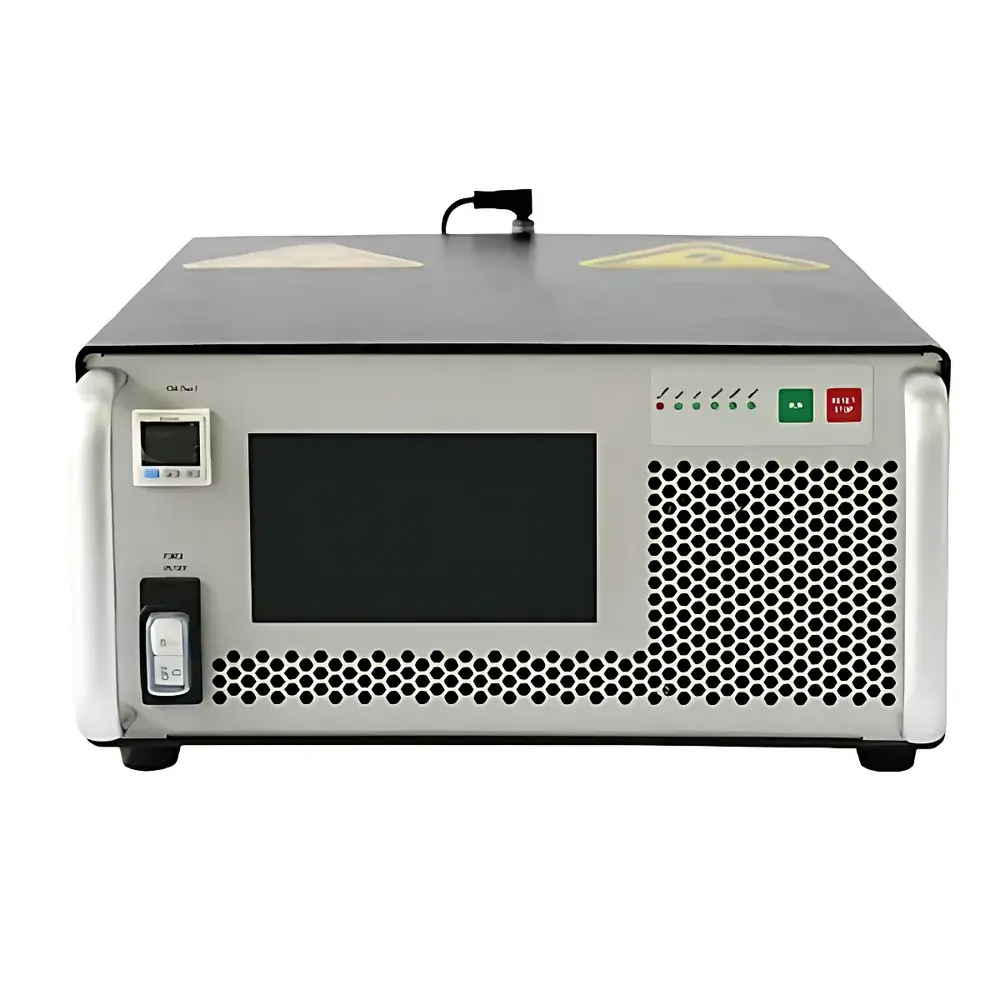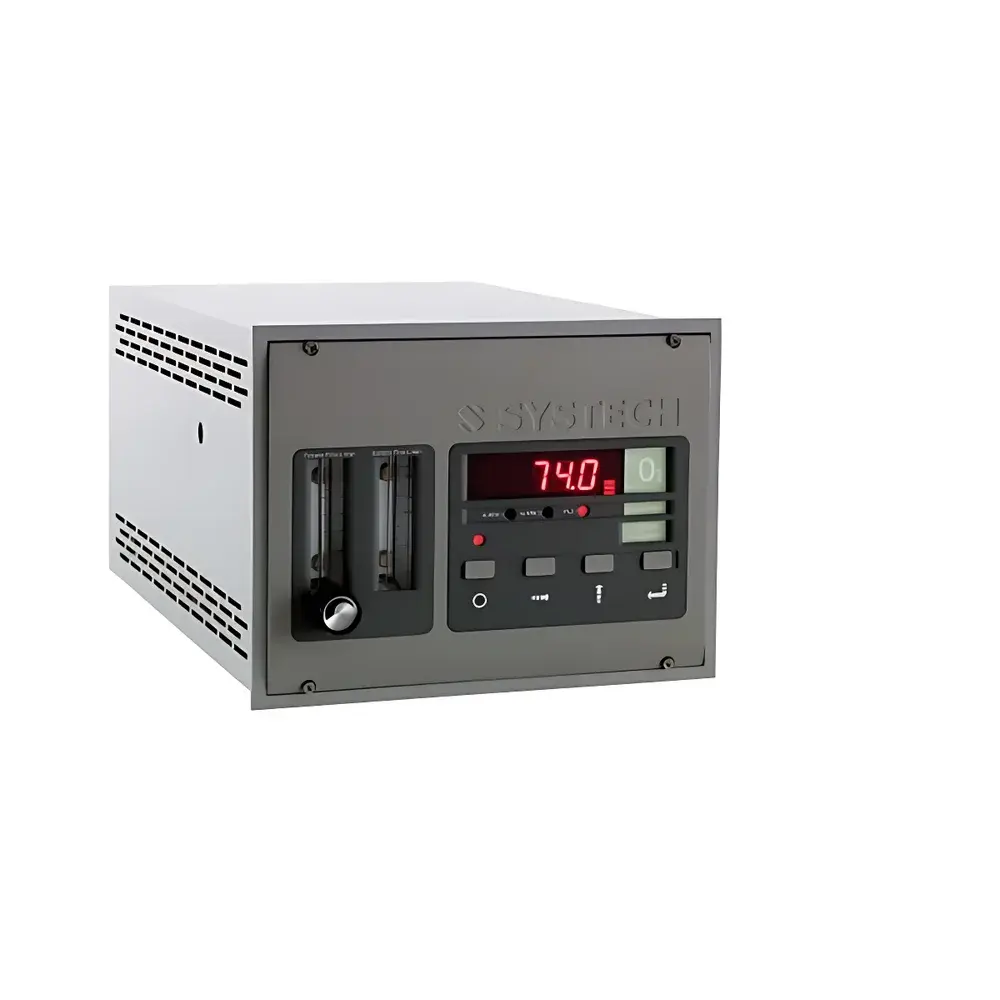
Systech PM710 Paramagnetic Oxygen Analyzer
| Brand | Systech |
|---|---|
| Origin | United Kingdom |
| Model | PM710 |
| Measurement Principle | Paramagnetic Detection |
| Range | 0.01–99.99% O₂ (auto-ranging) |
| Accuracy | < ±0.05% O₂ |
| Linearity | < ±0.05% FS |
| Repeatability | < ±0.05% FS |
| Response Time (T90) | 4–7 s |
| Zero Drift | < 0.05% FS/week |
| Span Drift | < 0.05% FS/week |
| Operating Temperature | −10°C to +50°C |
| Enclosure Rating | IP65 |
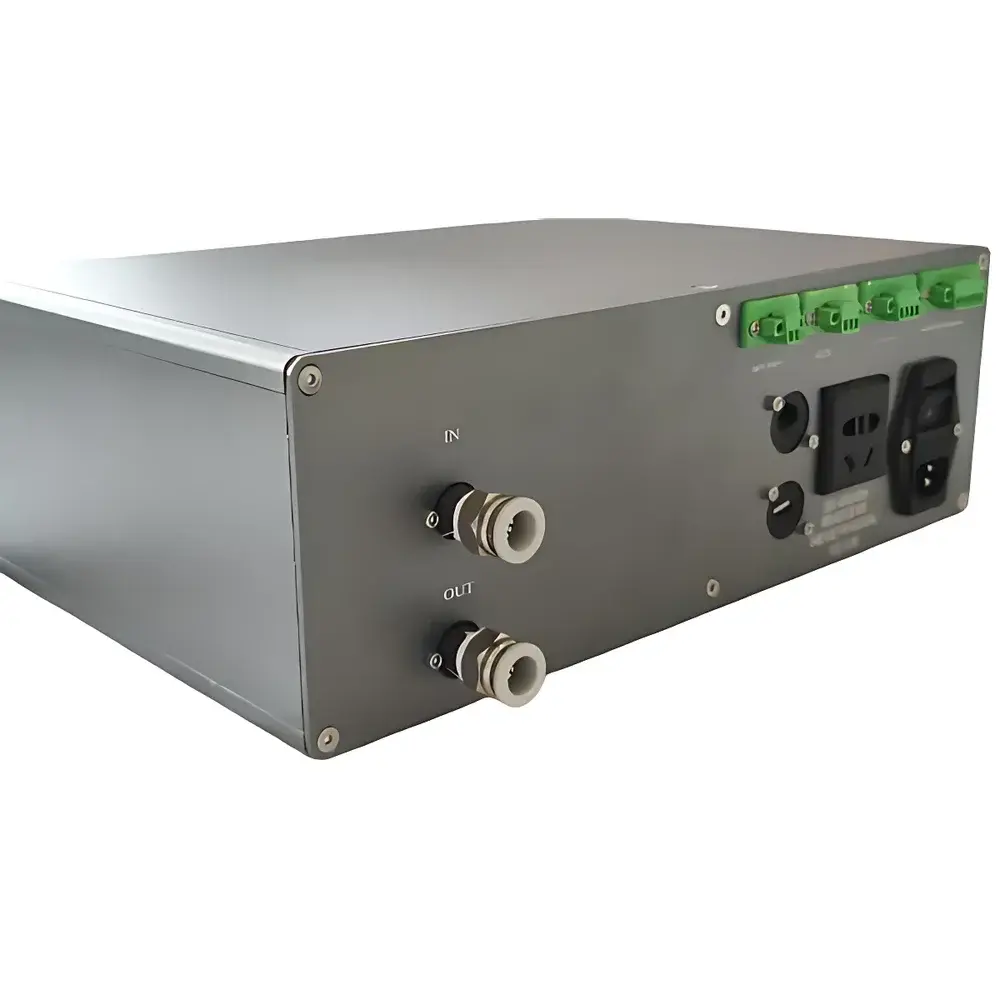
| Power Supply | 100–240 VAC ±10%, 50–60 Hz, max. 50 VA |
| Output Signals | Isolated 4–20 mA (default), 0–20 mA, 0–1 V / 0.5–1 V / 1–5 V (selectable) |
| load | ≤400 Ω (current), ≥250 Ω (voltage) |
| Communication | RS232 standard |
| Calibration | Manual or automatic zero/span calibration |
Overview
The Systech PM710 Paramagnetic Oxygen Analyzer is a high-precision, continuous online gas analyzer engineered for reliable measurement of oxygen concentration in industrial process streams and laboratory environments. It leverages the fundamental physical property of molecular oxygen—its strong paramagnetism—to deliver highly selective and stable O₂ quantification. Unlike electrochemical or zirconia-based sensors, which suffer from cross-sensitivity, aging, or temperature-dependent drift, the PM710 employs a true physical detection principle: oxygen molecules are drawn into a magnetic field gradient due to their unpaired electrons, generating a measurable force proportional to partial pressure. This differential magnetic susceptibility method ensures immunity to background gas composition changes (e.g., CO₂, N₂, Ar, H₂O vapor, hydrocarbons), making the PM710 especially suitable for applications where gas matrix variability is inherent—such as flue gas, synthesis gas, inerting atmospheres, and medical air systems.
Key Features
- True paramagnetic sensing core with dual-chamber null-balance design for high long-term stability and minimal zero/span drift
- Auto-ranging measurement capability across 0.01–99.99% O₂, eliminating manual range switching and reducing operator error
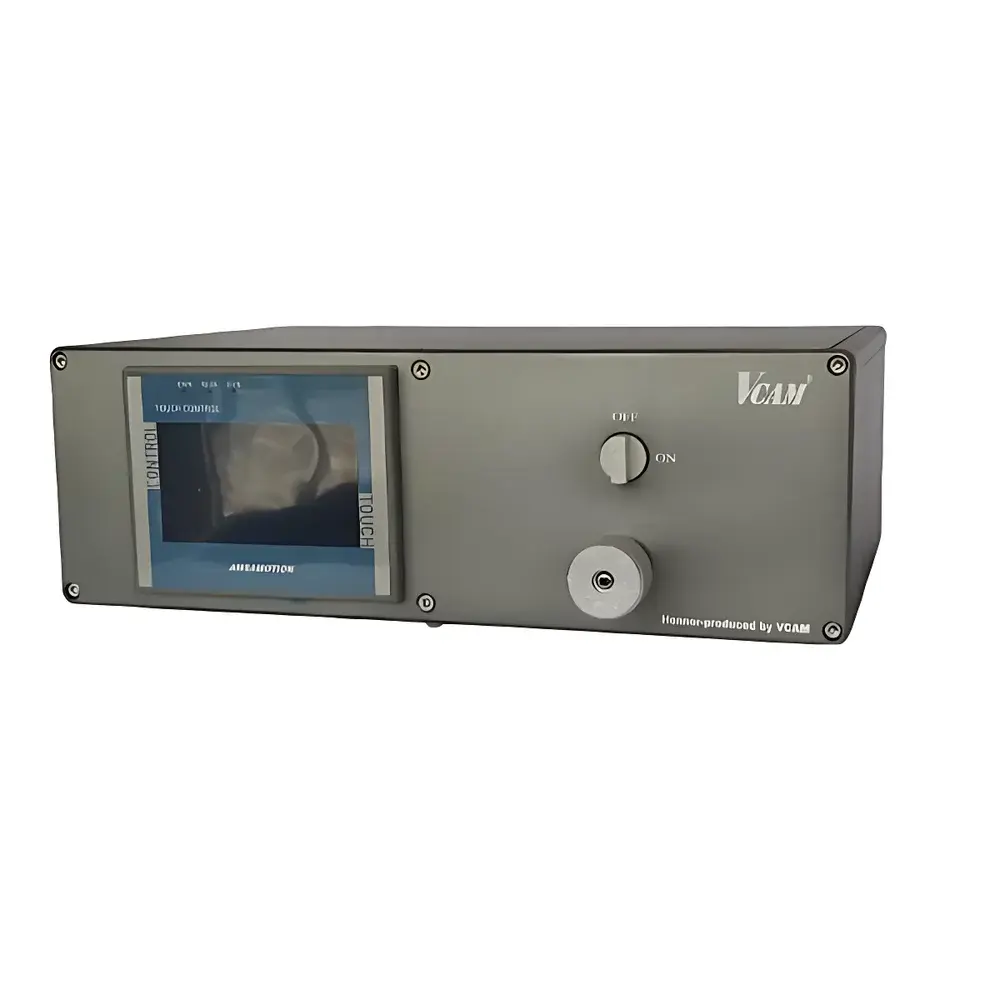
- Large backlit LCD display with intuitive English-language menu navigation and on-screen operational prompts
- Full digital signal processing architecture—enhancing noise rejection, temperature compensation accuracy, and data integrity
- Isolated analog outputs (4–20 mA and 1–5 V default) compliant with IEC 61000-6-2/4 for industrial EMC environments
- RS232 serial interface supporting Modbus RTU protocol for integration with PLCs, DCS, SCADA, and LIMS platforms
- Dedicated status outputs for calibration mode, fault alarm, and range change—enabling seamless interlocking with safety shutdown systems
- IP65-rated aluminum enclosure suitable for harsh plant-floor deployment without additional weatherproof housing
Sample Compatibility & Compliance
The PM710 is designed for direct installation in low-pressure, non-corrosive, particle-free gas streams. Sample conditioning (e.g., particulate filtration, moisture removal via Nafion® or chilled mirror dryers) is recommended when analyzing wet or dirty process gases. The analyzer complies with key international standards including IEC 61010-1 (safety), IEC 61326-1 (EMC), and EN 60079-0 (general requirements for explosive atmospheres—though not ATEX-certified, it may be deployed in Zone 2 when installed per local electrical codes). Its metrological performance aligns with ISO 8573-1 (compressed air purity) and ASTM D6245 (oxygen in breathing air), and supports GLP/GMP documentation workflows through traceable calibration logs and audit-ready output signals.
Software & Data Management
While the PM710 operates autonomously via front-panel controls, its RS232 interface enables bidirectional communication with host systems for remote configuration, real-time data logging, and diagnostic monitoring. Optional PC software (supplied separately) allows users to archive calibration history, generate trend plots, export CSV-formatted datasets, and configure alarm thresholds—including programmable high/low O₂ limits with relay-triggered notifications. All analog outputs include built-in galvanic isolation (1500 VAC) and meet NAMUR NE43 fault signaling conventions, ensuring compatibility with distributed control systems requiring fail-safe diagnostics per IEC 61511.
Applications
- Combustion optimization in thermal power plants, cement kilns, and metallurgical furnaces—enabling precise air/fuel ratio control to maximize thermal efficiency and minimize NOₓ emissions
- Quality assurance in nitrogen blanketing, argon shielding, and hydrogen production units—verifying O₂ impurity levels below 10 ppm in ultra-high-purity streams
- Pharmaceutical manufacturing—monitoring headspace O₂ in lyophilization chambers and packaging lines per USP and ISO 11607
- Biological research—quantifying respiratory quotient (RQ) in controlled-environment chambers and animal metabolism studies
- Medical gas verification—continuous monitoring of O₂ concentration in hospital central supply pipelines and hyperbaric oxygen therapy chambers per ISO 8573-7 and NFPA 99
- Lab-scale combustion analysis—real-time O₂ profiling during calorimetry, catalytic testing, and flame propagation experiments
FAQ
Does the PM710 require periodic sensor replacement like electrochemical cells?
No. The paramagnetic detection system contains no consumable elements, electrolytes, or membranes. With proper sample conditioning and routine zero/span verification, the core sensor exhibits operational lifetimes exceeding 10 years.
Can the PM710 measure oxygen in high-CO₂ environments such as biogas or flue gas?
Yes. Its paramagnetic principle is inherently immune to CO₂ interference, unlike zirconia or tunable diode laser analyzers that require complex compensation algorithms. However, particulate and condensable hydrocarbons must be removed upstream to prevent optical path fouling.
Is the PM710 suitable for use in hazardous areas?
The standard PM710 is not certified for Zone 0/1; however, it may be installed in Zone 2 or safe-area enclosures using intrinsically safe barriers. Custom ATEX/IECEx variants are available upon request.
How often should calibration be performed?
For critical process control applications, daily zero check with certified N₂ and weekly span verification with traceable O₂ standard gas (e.g., 20.9% in N₂) are recommended. Drift specifications (<0.05% FS/week) support extended calibration intervals under stable operating conditions.
What sample flow rate and pressure are required?
Optimal operation requires 0.5–2.0 L/min at ambient pressure (±10 kPa). Positive pressure sampling is supported; vacuum draw configurations require optional flow regulators to maintain laminar flow through the measurement cell.