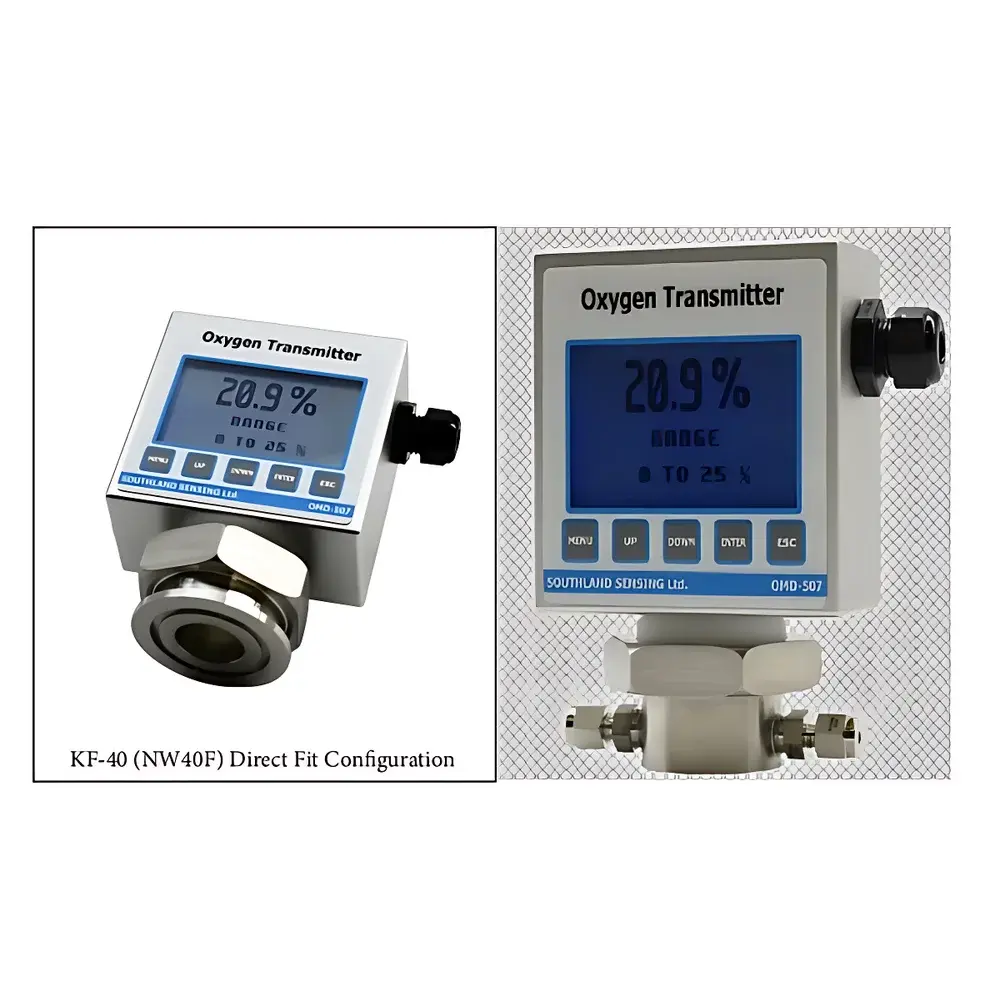
Southland Sensing OMD-507 Fuel-Cell-Based Oxygen Analyzer for 3D Printing Enclosures
| Origin | USA |
|---|---|
| Manufacturer Type | Authorized Distributor |
| Origin Category | Imported |
| Model | OMD-507 |
| Price Range | USD $1,400 – $4,200 (FOB) |
| Sensor Technology | Micro-Fuel-Cell |
| Measurement Ranges | 0–10 ppm / 0–100 ppm / 0–1,000 ppm / 0–1 % / 0–25 % / 0–100 % O₂ |
| Accuracy | < ±1 % FS |
| Output Signals | 4–20 mA & 0–10 VDC |
| Sample Flow Rate | 230–2500 mL/min |
| Operating Temperature | −10 to +50 °C |
| Dimensions | 241 × 165 × 96 mm |
| Power Supply | 12–24 VDC |
| Current Draw | 25 mA |
| Temperature Compensation | Built-in |
| Certifications | CE |
| Warranty | 12 months |
| Compatible Gases | N₂, Ar, He, H₂, hydrocarbon streams |
| Sensor Lifetime | >2 years (typical in inert/reducing atmospheres) |
Overview
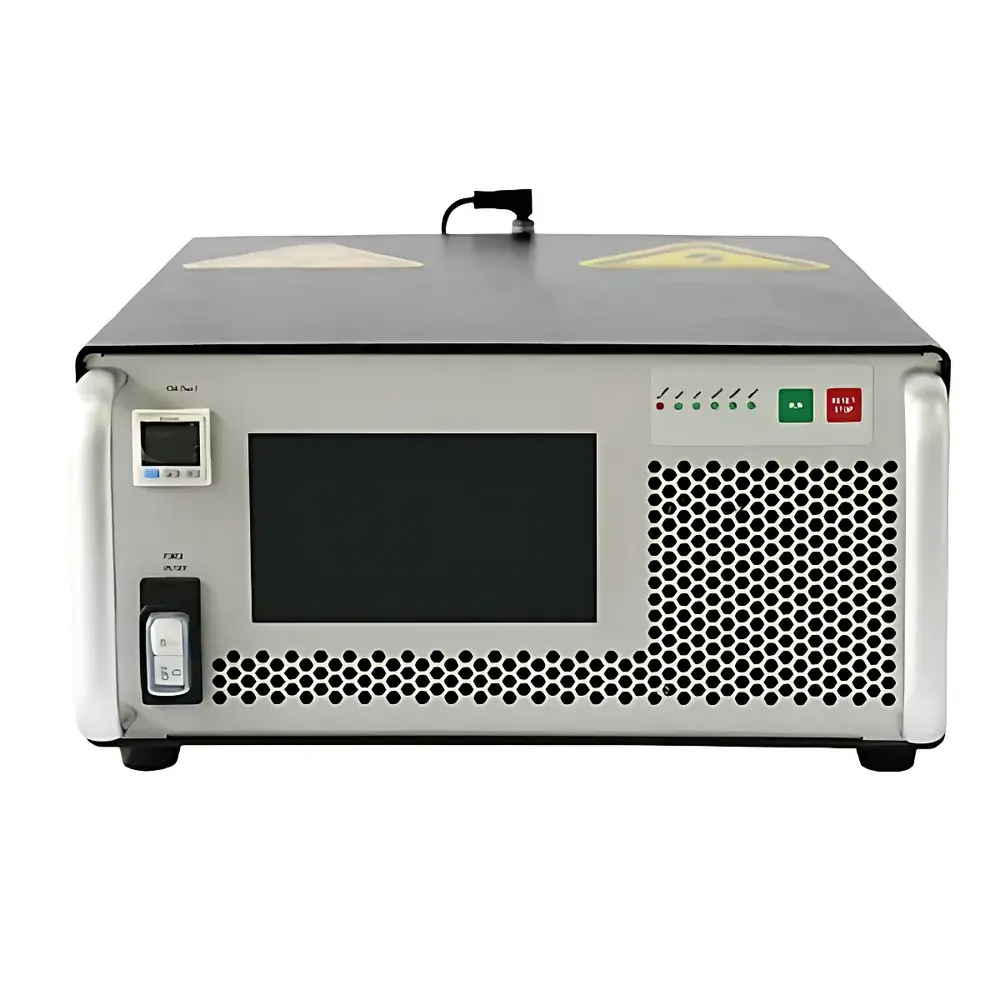
The Southland Sensing OMD-507 is a high-stability, micro-fuel-cell-based oxygen analyzer engineered specifically for inert atmosphere monitoring in additive manufacturing enclosures—including gloveboxes, build chambers, and purge tunnels used in metal and polymer 3D printing. Unlike paramagnetic or zirconia-based analyzers, the OMD-507 employs an electrochemical fuel cell that generates a current proportional to molecular oxygen concentration via catalytic reduction at the cathode. This principle ensures exceptional selectivity for O₂ in complex gas matrices, minimal cross-sensitivity to CO₂, H₂, or hydrocarbons, and intrinsic immunity to pressure fluctuations within typical enclosure operating ranges (±10 % of ambient). Its design targets applications where trace-level oxygen control (<10 ppm) is critical to prevent oxidation of reactive powders (e.g., Ti-6Al-4V, AlSi10Mg), inhibit nozzle clogging in high-temperature extrusion, and maintain consistent layer adhesion in laser sintering processes. The instrument complies with fundamental requirements of ISO 14001 environmental monitoring frameworks and supports GLP-aligned documentation when integrated into validated process control systems.
Key Features
- Fuel-cell sensor architecture delivering stable, drift-free output over extended deployment cycles—typical baseline drift <0.5 % FS/month under continuous operation in nitrogen-purged environments
- Multi-range configuration capability: field-selectable full-scale spans including 0–10 ppm, 0–100 ppm, 0–1,000 ppm, 0–1 %, 0–25 %, and 0–100 % O₂—enabling single-instrument flexibility across pre-purge verification, chamber qualification, and real-time process surveillance
- Integrated temperature compensation circuitry ensuring measurement integrity across −10 to +50 °C ambient conditions—critical for integration near heated build platforms or in non-climate-controlled production floors
- Low-power consumption (25 mA @ 24 VDC) and compact footprint (241 × 165 × 96 mm) facilitating DIN-rail mounting or direct panel integration without thermal loading concerns
- Standard dual analog outputs (4–20 mA and 0–10 VDC) compatible with PLCs, DCS systems, and SCADA architectures—supporting both local alarm triggering and centralized data acquisition
- Optional acid-resistant sensor variant available for installations where sample streams contain CO₂, H₂S, or SO₂—extending operational life in mixed-gas purge systems common in hybrid sintering or binder-jetting workflows
Sample Compatibility & Compliance
The OMD-507 is validated for continuous analysis of oxygen in inert carrier gases (N₂, Ar, He), reducing atmospheres (H₂-doped N₂), and saturated hydrocarbon streams. It is not intended for use in oxidizing or corrosive gas mixtures exceeding 10 % O₂ without external dilution. For applications involving acidic contaminants, the optional acid-resistant sensor must be specified at time of order. The analyzer meets CE marking requirements per Directive 2014/30/EU (EMC) and 2014/35/EU (LVD). While not intrinsically safe, it may be deployed in Zone 2 classified areas when installed per IEC 60079-14 guidelines and paired with appropriate barrier systems. Calibration traceability follows NIST-traceable standards; routine verification intervals are defined per ISO/IEC 17025-compliant QA procedures.
Software & Data Management
The OMD-507 operates as a stand-alone analog transmitter and does not include embedded firmware-based configuration software. All range selection, zero/span calibration, and output scaling are performed via front-panel push-button interface or external 4–20 mA loop calibrator. For integration into digital process networks, third-party gateways (e.g., Modbus RTU/ASCII converters) can translate its analog outputs into industrial protocols. When deployed in regulated environments (e.g., medical device AM facilities), users implement external audit-trail-capable data loggers compliant with FDA 21 CFR Part 11 requirements to record O₂ trends, calibration events, and alarm statuses. Southland Sensing provides calibration certificates and sensor replacement logs supporting IQ/OQ documentation packages.
Applications
- Real-time oxygen monitoring inside argon-purged metal powder handling gloveboxes (ASTM F2885-22 compliance support)
- In-line verification of nitrogen purge efficacy prior to laser powder bed fusion (LPBF) builds
- Continuous surveillance of oxygen ingress in sealed polymer sintering chambers using CO₂-laser systems
- Quality assurance testing of inert gas supply lines feeding binder jetting systems
- Environmental validation of glovebox integrity during titanium alloy post-processing annealing
- Process qualification for aerospace-grade AM parts per AMS7000 and ASTM F3302-21
FAQ
What is the expected service life of the fuel-cell sensor under typical 3D printing enclosure conditions?
With continuous operation in N₂ or Ar atmospheres containing 5 % or repeated cycling through >1 % O₂ accelerates degradation; acid-resistant variants extend longevity in CO₂-rich purge streams.
Can the OMD-507 be calibrated in-situ without removing it from the enclosure?
Yes—zero calibration is performed using certified nitrogen (99.999 % purity); span calibration requires certified O₂-in-N₂ standard gas at the selected full-scale value. Both procedures are executed via front-panel controls and require no disassembly.
Is the analyzer suitable for installation inside a Class 100 cleanroom environment?
The OMD-507’s sealed aluminum housing (IP54 rating) and absence of outgassing components meet ISO 14644-1 Class 5 particulate requirements; however, user-installed conduit entries must comply with cleanroom sealing specifications.
Does Southland Sensing provide application-specific validation support for AM process qualification?
Yes—application engineers supply protocol templates aligned with ASTM F2792 and ISO/ASTM 52900 terminology, including uncertainty budgeting, repeatability assessment, and installation qualification checklists for OEM integration.