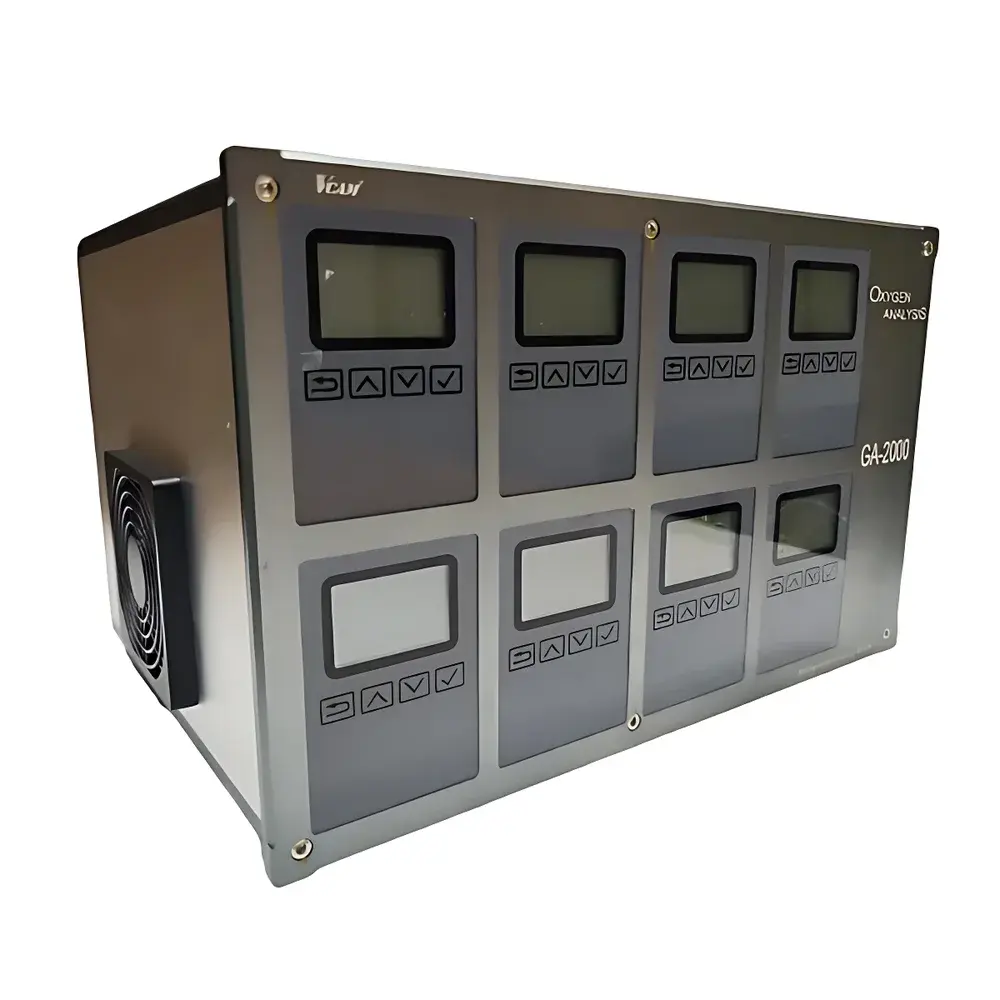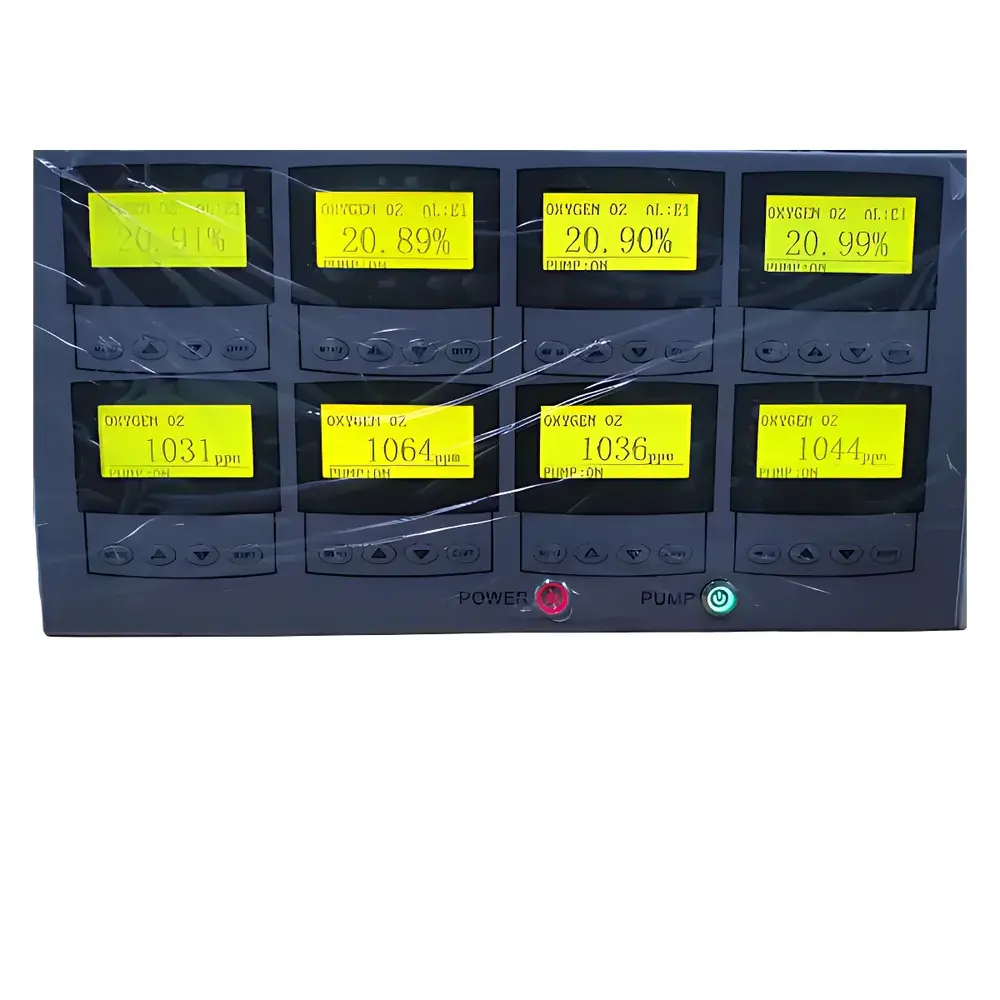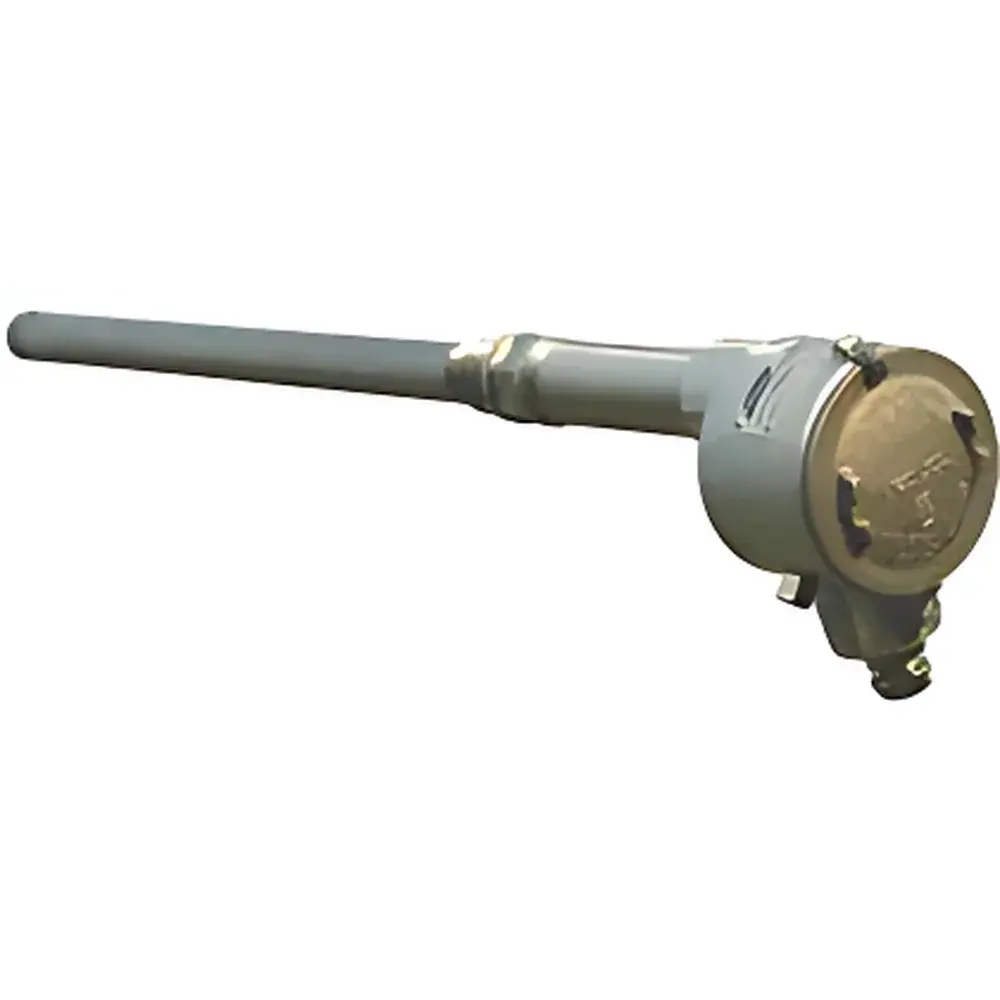
DH-6000-FLD Zirconia Oxygen Analyzer
| Origin | Imported |
|---|---|
| Manufacturer Type | Authorized Distributor |
| Model | DH-6000-FLD, Probe Length: 800 mm |
| Measurement Range | 0–25% O₂ (3-digit display) |
| Accuracy | ±2% of reading |
| Linearity | ±1% FS (analog output) |
| Repeatability | ±0.5% FS (analog output) |
| Stability | ±2% FS/24 h (zero & span) |
| Analog Outputs | 0–5%, 0–10%, or 0–25% O₂ range selectable |
| Warm-up Time | 25 min |
| Power Consumption | <80 W |
| Supply | 220 V ±10% AC, 50 Hz ±10% |
| Operating Temp. | Converter: –5 to +50 °C |
| Detector | –10 to +80 °C |
| Sample Gas Temp. | Low-temp version: 0–600 °C (models 112 & 112F) |
| High-temp version | 0–1400 °C (model 112G) |
| Sample Pressure Range | –500 to +500 mm H₂O |
| Response Time (t₉₀) | ≤5 s |
| Probe Length Options | 0.2, 0.4, 0.8, 1.0, or 12 m (custom lengths available) |
| Converter Dimensions | 212 × 274 × 120 mm (tolerance ±1 mm) |
Overview
The DH-6000-FLD Zirconia Oxygen Analyzer is a high-reliability, in-situ oxygen monitoring system engineered for continuous, real-time measurement of oxygen concentration in industrial combustion and process gas streams. It employs the principle of solid electrolyte potentiometry using a stabilized zirconium dioxide (ZrO₂) sensing element operating at elevated temperatures (typically >650 °C), where oxygen ions become mobile across the ceramic lattice. The resulting electromotive force (EMF) between the reference air and sample gas compartments is directly related to the partial pressure ratio of oxygen, enabling precise calculation of O₂ volume percent via the Nernst equation. Designed for integration into boiler control loops, furnace atmosphere management, incinerator optimization, and inerting systems, the DH-6000-FLD delivers robust performance under demanding thermal and chemical conditions typical of cement kilns, glass melting tanks, metal heat treatment furnaces, and waste-to-energy plants.
Key Features
- High-temperature zirconia sensor with dual-stage heating architecture ensures stable operation up to 1400 °C (with 112G probe option), eliminating need for external gas conditioning in many hot-wet applications.
- Three configurable analog output ranges (0–5%, 0–10%, 0–25% O₂) support seamless integration with DCS, PLC, and SCADA systems without external signal scaling.
- Fast dynamic response (t₉₀ ≤5 s) enables closed-loop combustion control with improved fuel efficiency and reduced NOₓ emissions.
- Modular converter design with IP65-rated enclosure facilitates wall- or panel-mount installation; compact dimensions (212 × 274 × 120 mm) minimize footprint in space-constrained control rooms.
- Low power consumption (<80 W) and wide input voltage tolerance (220 V ±10%, 50 Hz ±10%) ensure operational resilience in fluctuating plant power environments.
- Probe length flexibility (0.2–12 m standard; custom lengths supported) allows optimal insertion depth for representative sampling across ducts, stacks, and refractory-lined vessels.
Sample Compatibility & Compliance
The DH-6000-FLD is compatible with dry and moderately wet flue gases containing CO, CO₂, SO₂, NOₓ, and hydrocarbons — provided condensable vapors are minimized upstream. For high-dust applications, optional ceramic filter sleeves and purge air interfaces (N₂ or instrument air) are recommended. The analyzer meets CE marking requirements for electromagnetic compatibility (EN 61326-1) and low-voltage directive (2014/35/EU). While not certified to SIL standards out-of-the-box, its architecture supports integration into Safety Instrumented Systems (SIS) when deployed with redundant transmitters and appropriate logic solvers per IEC 61511. Traceability of calibration is maintained through documented zero/span verification procedures aligned with ISO 14644-1 cleanroom practices and ASTM D6216 for combustion gas analysis.
Software & Data Management
The DH-6000-FLD operates as a standalone field device with local LED display and push-button interface for basic configuration (range selection, output mode, damping factor). No embedded firmware-based data logging is included; however, all analog outputs are inherently compatible with third-party historian systems (e.g., OSIsoft PI, Emerson DeltaV Datalogger) supporting long-term trend analysis, alarm archiving, and regulatory reporting. Optional RS-485 Modbus RTU communication module (sold separately) enables remote parameter readout and diagnostic status polling. All calibration events and configuration changes are recorded manually in site-specific maintenance logs to satisfy GLP/GMP documentation expectations for critical process measurements.
Applications
- Combustion optimization in coal-, oil-, and gas-fired boilers to maintain excess air at target stoichiometric ratios (typically 1.5–3% O₂).
- Atmosphere control in continuous annealing lines and galvanizing furnaces for steel strip processing.
- Emission monitoring compliance for EPA Method 3A and EN 14792 flue gas O₂ reporting requirements.
- Inert gas blanketing verification in pharmaceutical drying ovens and solvent recovery units.
- Process safety interlocks in hydrogen-rich atmospheres where O₂ ingress must remain below 1% v/v.
FAQ
What is the minimum detectable oxygen concentration?
The lower limit of detection is 0.1% O₂, though full accuracy specifications apply only within the calibrated 0–25% range.
Can the DH-6000-FLD be used in corrosive gas streams containing HCl or HF?
Direct exposure to halogen acids is not recommended; use of a heated sampling line with alkali scrubber or quartz-lined probe is required for such applications.
Is periodic calibration required, and what gas standards are needed?
Zero calibration with certified nitrogen (99.999% purity) and span calibration with certified synthetic air (20.9% O₂ in N₂) are recommended every 3–6 months, depending on operating severity and regulatory requirements.
Does the analyzer support automatic temperature compensation for ambient fluctuations?
Yes — internal thermistors continuously monitor converter and detector housing temperatures, applying real-time correction to the Nernst potential calculation.
What is the expected service life of the zirconia sensor under continuous operation at 900 °C?
Typical sensor lifetime exceeds 24 months in clean, non-sulfiding environments; replacement intervals should be determined by routine span drift assessment per site QA protocols.