RELION MICRODRILL SYSTEM for Microsampling of Carbonates, Quartz, and Zircon
| Brand | RELION |
|---|---|
| Origin | USA |
| Manufacturer Type | Authorized Distributor |
| Import Status | Imported |
| Model | MICRODRILL SYSTEM |
| Pricing | Available Upon Request |
Overview
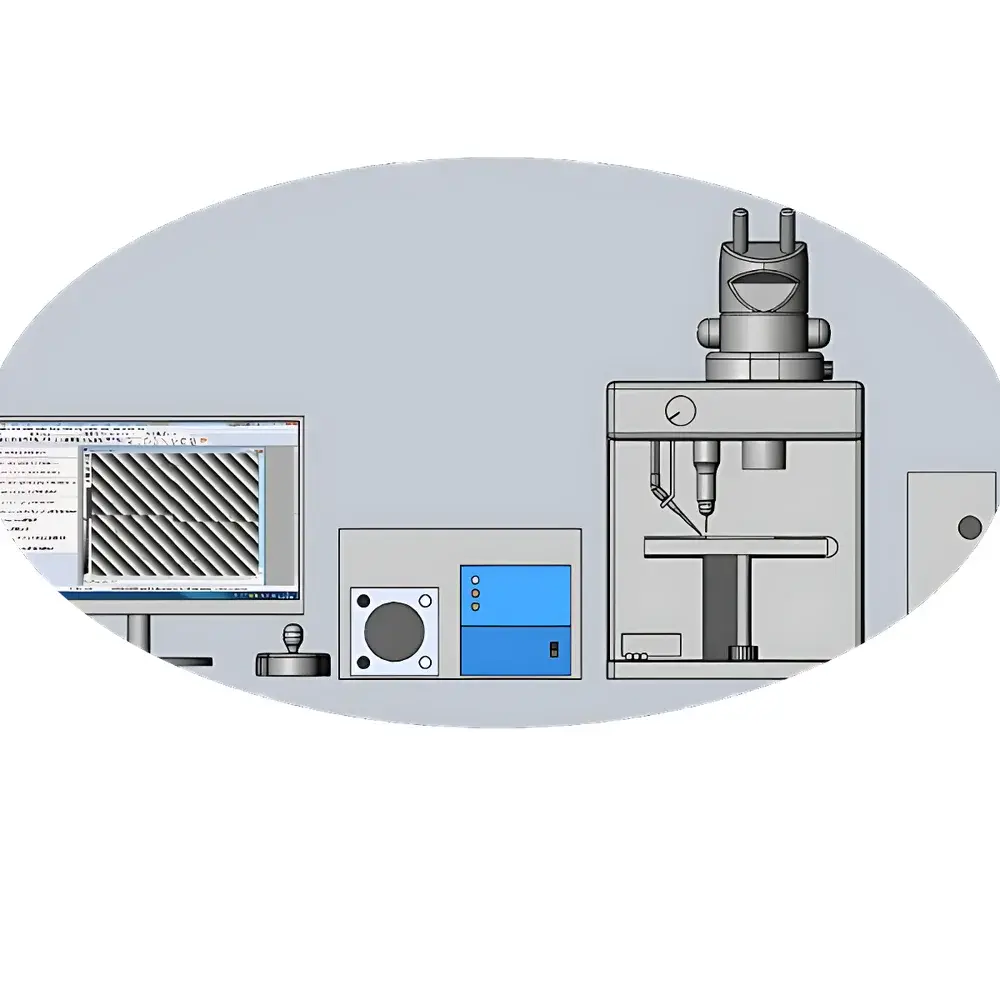
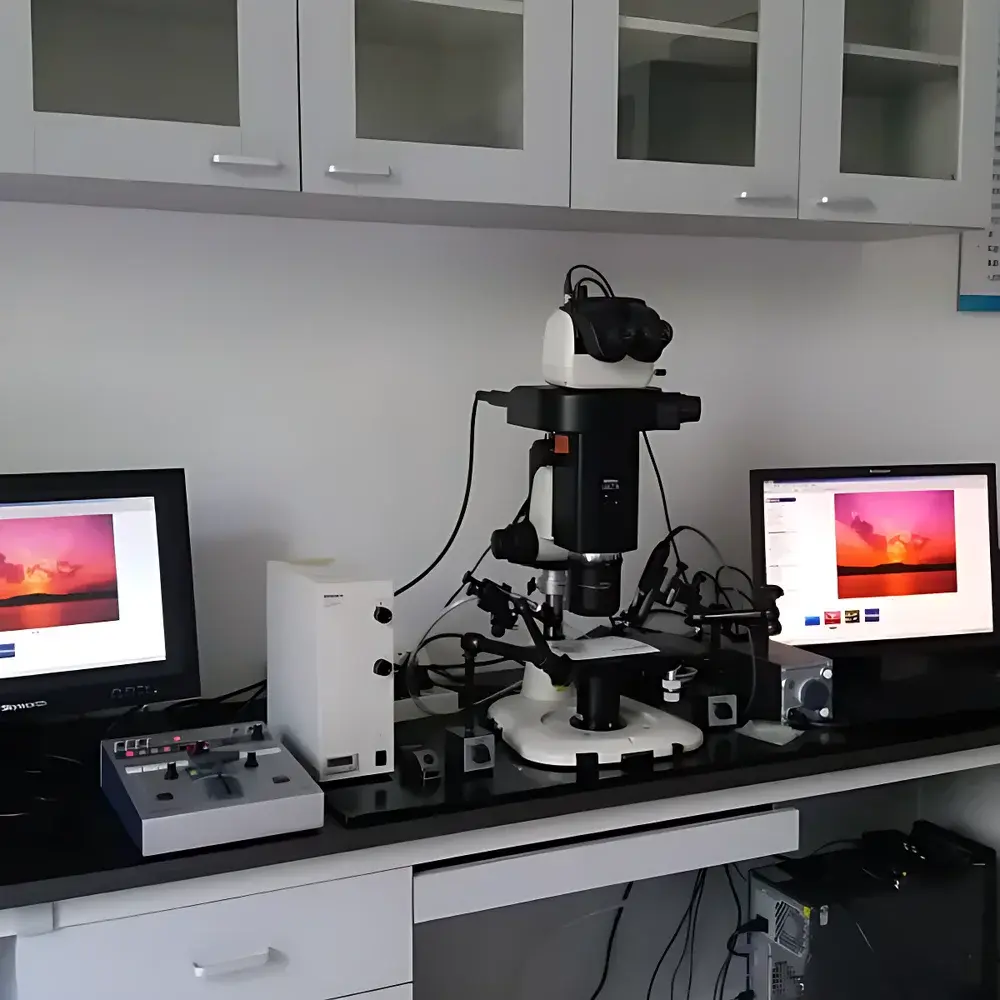
The RELION MICRODRILL SYSTEM is a precision microsampling instrument engineered for high-resolution, spatially controlled material extraction from geologically heterogeneous solid samples—including carbonate rocks, quartz, zircon, speleothems (e.g., stalagmites), mollusk shells, and biogenic carbonates. It operates on the principle of mechanically assisted micro-drilling under optical guidance, integrating stereomicroscopy, motorized XYZ translation stages, programmable motion control, and vacuum-assisted particulate capture. Unlike bulk dissolution or laser ablation techniques, this system enables physical removal of discrete sub-millimeter volumes with minimal thermal or chemical perturbation—preserving isotopic integrity and structural context critical for downstream stable isotope ratio mass spectrometry (IRMS), multi-collector ICP-MS (MC-ICP-MS), and clumped isotope analysis. The system is designed to support micrometer-scale targeting within petrographic textures, growth bands, fluid inclusions, and diagenetic features—making it essential for paleoclimate reconstruction, provenance studies, and diagenetic history modeling.
Key Features
- Three-axis motorized micromanipulator (X/Y/Z) with sub-micron repeatability, enabling precise positioning of both microdrill bit and vacuum capillary relative to sample surface
- Integrated stereomicroscope with coaxial illumination and real-time CCD imaging via digital image combiner—supporting simultaneous visual monitoring and coordinate-based sampling navigation
- Electrically driven sample stage with programmable linear translation, synchronized with drill actuation for automated raster or point-sampling routines
- Vacuum collection subsystem featuring stainless-steel pipette holder, disposable polypropylene capillaries, and inline cellulose filter membrane (pore size ≤0.45 µm) to prevent particulate ingress into vacuum pump
- Software-controlled operation mode (via proprietary Windows-based interface) supporting script-driven drilling sequences, depth profiling, and coordinate logging; manual override available via ergonomic jog controller
- Drill bit compatibility with standard 0.1–0.3 mm shank diameters; minimum achievable bore diameter: 12 µm (verified under optimal sample hardness and bit geometry conditions)
Sample Compatibility & Compliance
The MICRODRILL SYSTEM accommodates flat-mounted or epoxy-embedded rock/mineral thin sections (up to 200 mm × 200 mm), polished slabs, and irregular biogenic substrates (e.g., shell cross-sections, stalagmite laminae). It supports sampling of brittle to moderately hard silicates (quartz, feldspar), carbonates (calcite, aragonite), and refractory oxides (zircon), provided mechanical stability is maintained during drilling. All hardware components comply with CE electromagnetic compatibility (EMC) Directive 2014/30/EU and RoHS 2011/65/EU. Data acquisition and instrument control software are structured to meet GLP-compliant audit trail requirements, including user authentication, timestamped event logging, and exportable metadata (coordinates, depth, duration, bit ID)—facilitating traceability per ISO/IEC 17025:2017 and ASTM D7577-22 (Standard Practice for Microsampling of Solid Materials for Isotopic Analysis).
Software & Data Management
The RELION Control Suite provides intuitive graphical workflow configuration: users define sampling grids, circular targets, or freehand paths directly over live microscope images. Each drill event is tagged with absolute stage coordinates (µm resolution), spindle speed (RPM), dwell time, and vacuum activation status. Raw coordinate logs and image snapshots are saved in vendor-neutral formats (.csv, .tiff) for integration with third-party data reduction pipelines (e.g., IsoplotR, EARTHTIME). Audit logs record operator ID, session start/end times, parameter changes, and error flags—fully compatible with FDA 21 CFR Part 11-compliant electronic signature modules when deployed in regulated QA/QC environments.
Applications
- High-resolution δ18O and δ13C profiling across annual growth bands in corals, foraminifera, and speleothems
- Targeted extraction of individual fluid inclusions or mineral domains from metamorphic zircons for U-Pb and O-isotope decoupling
- Stratigraphic sampling of carbonate platform sediments to reconstruct diagenetic fluid flow pathways
- Micromilling of biomineralized tissues (e.g., otoliths, teeth enamel) for clumped isotope thermometry (Δ47)
- Preparation of matrix-matched reference materials via homogenized micro-drilled powders
FAQ
What is the smallest practical drill hole diameter achievable with this system?
The system achieves consistent 12 µm bore diameters on homogeneous calcite under optimized parameters (low RPM, low feed rate, diamond-coated bit); theoretical limit is ~8 µm but requires exceptional sample homogeneity and bit condition.
Can the system be integrated with an IRMS or MC-ICP-MS lab workflow?
Yes—collected powders are transferred directly into standard dual-inlet or continuous-flow cups; vacuum capillary tips are compatible with common autosampler trays (e.g., Thermo Fisher Delta V, Nu Instruments Panorama).
Is remote operation supported?
Local network access allows secure remote desktop control; however, real-time visual feedback requires local monitor connection due to latency constraints in high-resolution stereomicroscope video streaming.
What maintenance is required for long-term operational stability?
Biannual calibration of XYZ stage encoders and vacuum flow sensors is recommended; capillary filters must be replaced after every 50 drilling cycles or visible clogging.
Does the system support depth-resolved sampling (e.g., vertical profiles)?
Yes—Z-axis motorization enables controlled plunge drilling with programmable step increments (minimum 0.5 µm), allowing sequential layer-by-layer ablation in laminated carbonates or shells.