
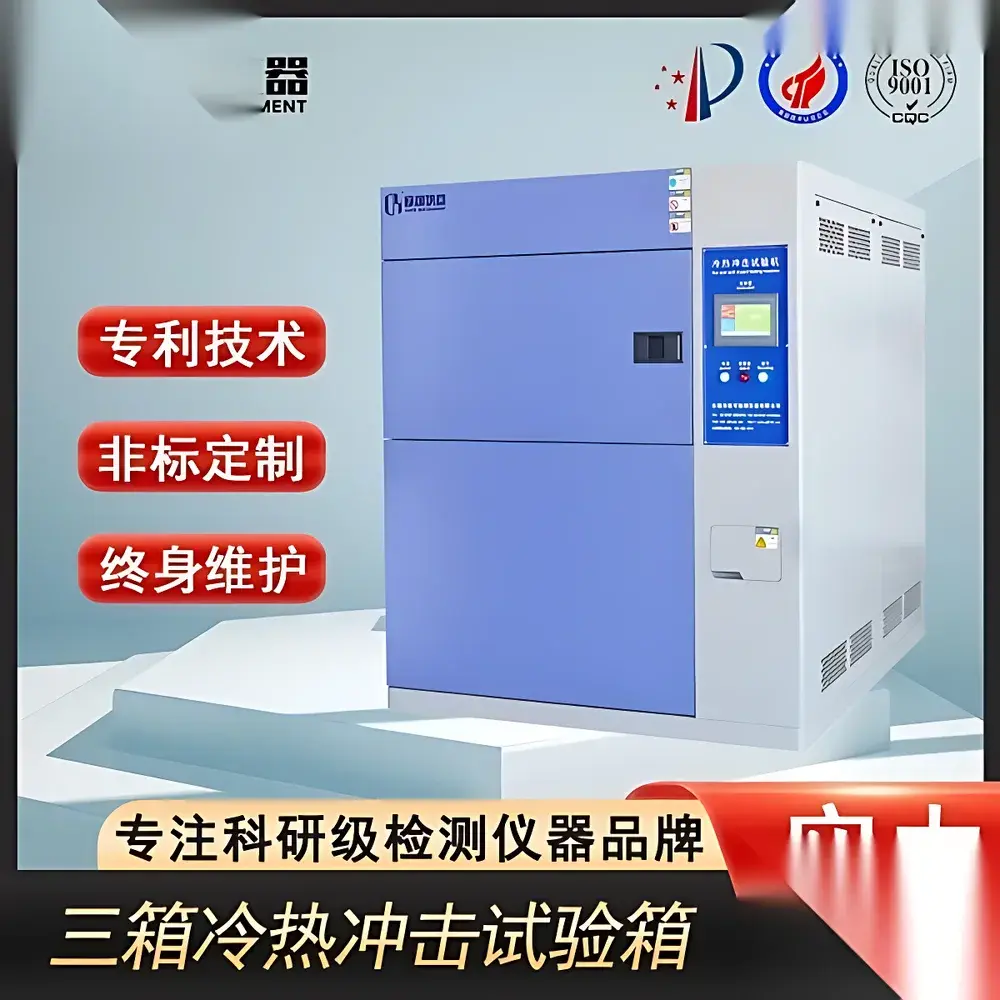
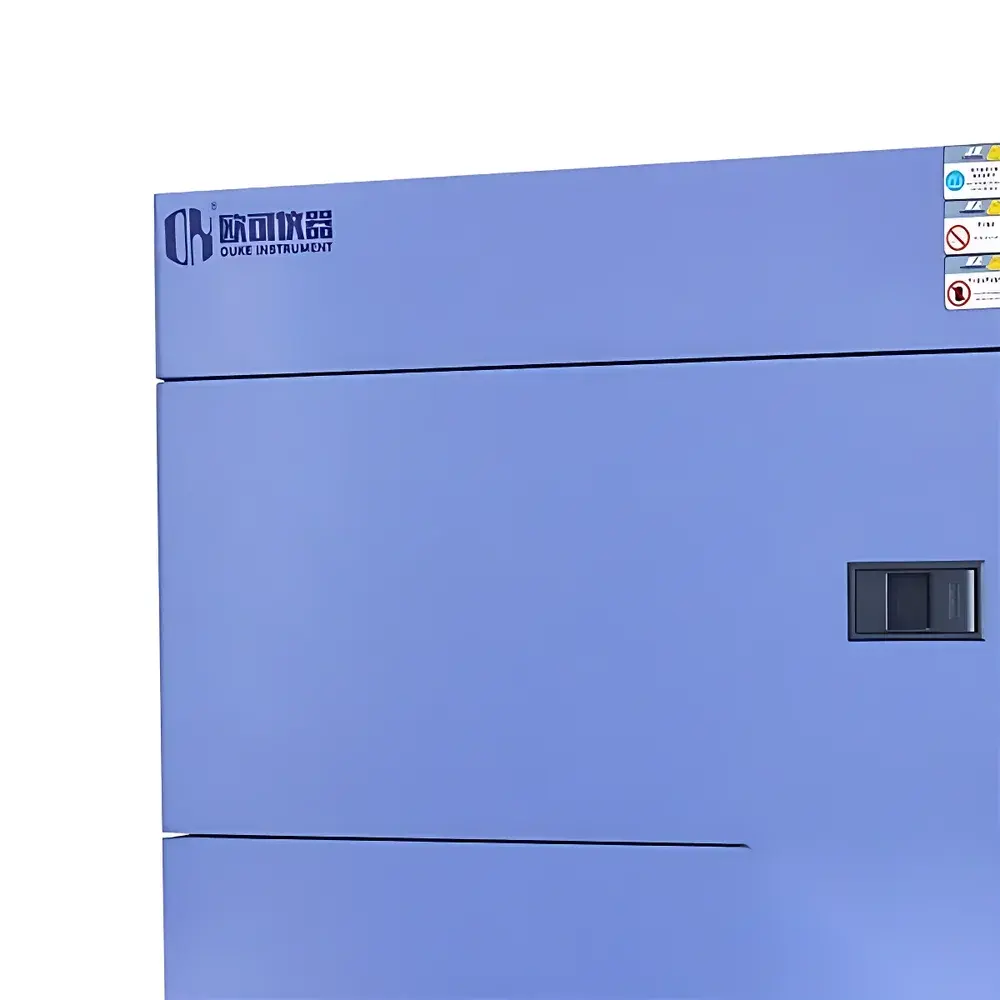
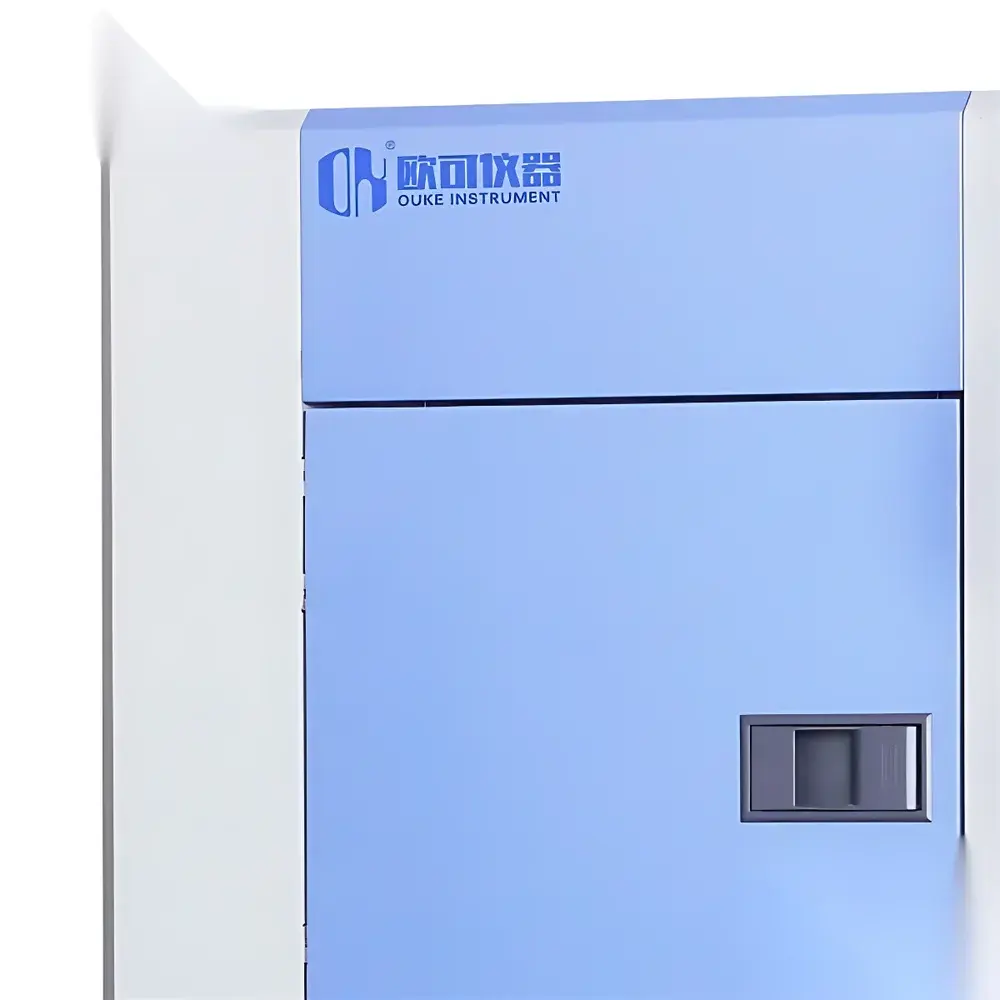
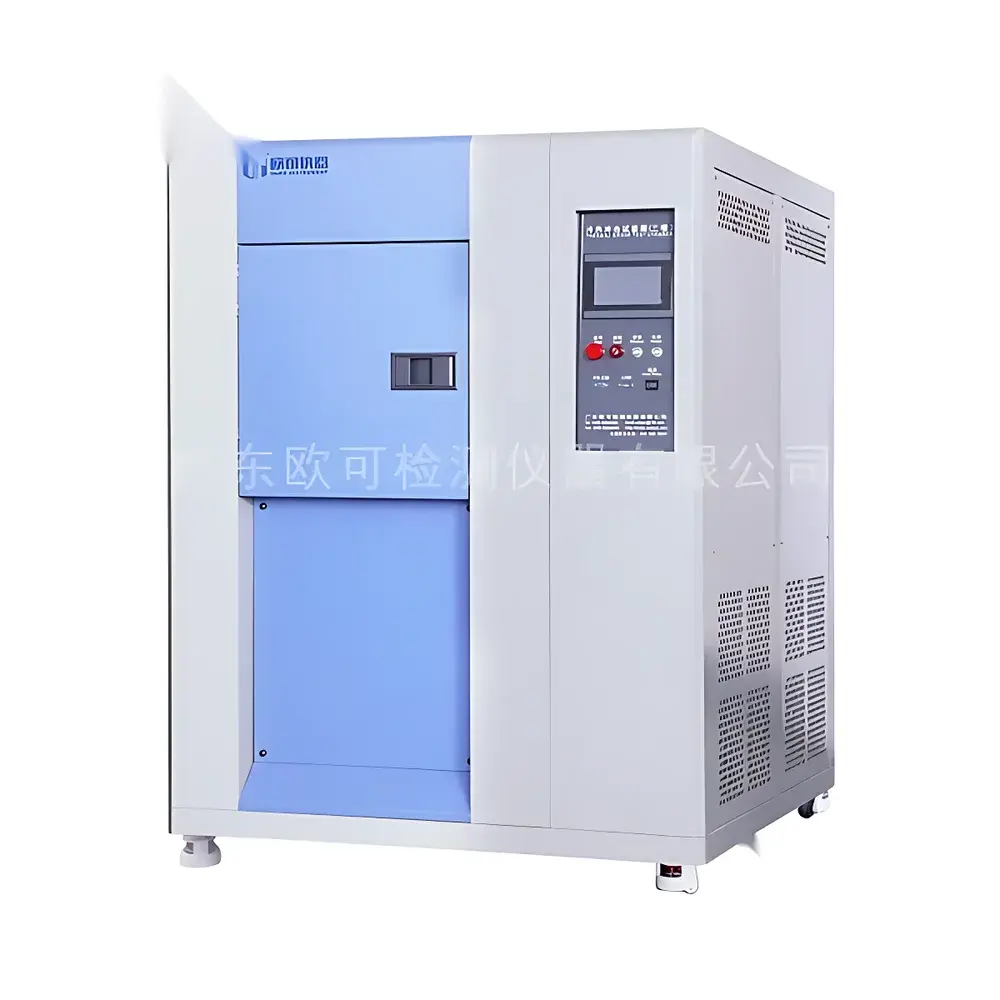
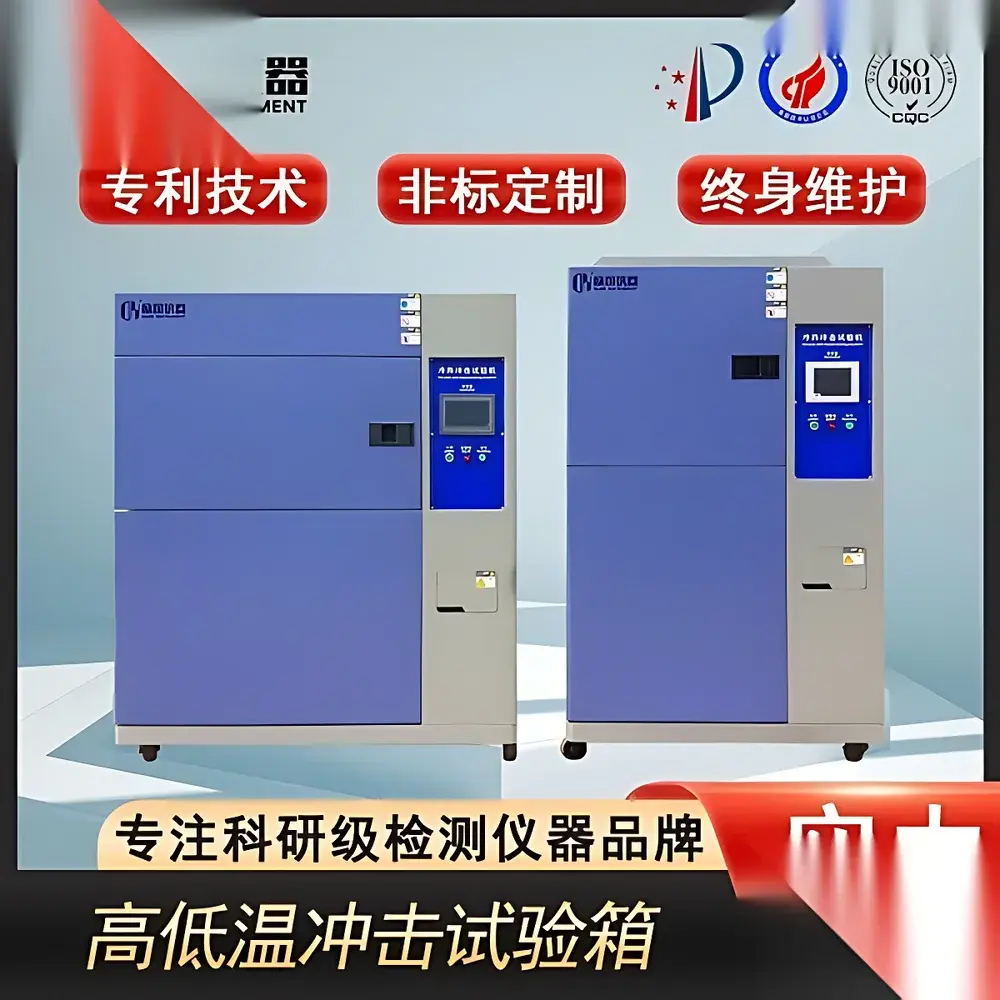
Thermal Shock Test Chamber – Industrial-Grade Rapid Temperature Cycling Environmental Chamber
| Brand | OEM / Custom Brand |
|---|---|
| Origin | Imported |
| Manufacturer Type | Authorized Distributor |
| Price | USD 11,200 (FOB) |
| Temperature Range | -40°C to +150°C / -60°C to +150°C / -70°C to +150°C |
| Temperature Fluctuation | ±0.5°C |
| Temperature Uniformity | ±1.5°C |
| Temperature Deviation | ≤2.0°C |
| Ramp Rate | 3–25°C/min (linear, programmable) |
| Load Capacity | 5–50 kg aluminum mass standard |
| Control System | PID-based BTC (Balance Temperature Control) |
| Refrigeration | Dual-stage mechanical cascade system with R404A/R23 refrigerants |
| Compliance | GB/T 2423.1–2023, GB/T 2423.2–2023, IEC 60068-2-1, IEC 60068-2-2, GJB 1032A–2012, MIL-STD-2164A |
Overview
The Thermal Shock Test Chamber is an industrial-grade environmental test system engineered for accelerated reliability validation of electronic components, aerospace hardware, automotive modules, and high-performance materials under extreme thermal cycling stress. It operates on the principle of rapid, controlled transitions between predefined low-temperature and high-temperature zones—typically via either dual-chamber (hot/cold) or single-chamber (air-blast) configurations—to induce thermal strain and expose latent defects such as solder joint fatigue, delamination, interfacial cracking, and coefficient-of-thermal-expansion (CTE) mismatch failures. Designed to meet stringent qualification requirements in mission-critical sectors, this chamber delivers precise, repeatable, and traceable thermal shock profiles compliant with international environmental testing standards. Its balanced temperature control (BTC) architecture ensures minimal overshoot and stable dwell conditions, enabling statistically valid failure mode analysis during HALT (Highly Accelerated Life Testing) and HASS (Highly Accelerated Stress Screening) protocols.
Key Features
- Programmable linear ramp rates from 3°C/min up to 25°C/min, calibrated against NIST-traceable reference sensors and verified per ASTM E2209–22
- Stainless steel interior (mirror-finish SUS304) and robust exterior (SUS304 or electrostatically coated cold-rolled steel), optimized for corrosion resistance and long-term dimensional stability
- High-density polyurethane (PU) foam + fiberglass insulation (≥120 mm total thickness) minimizing thermal leakage and improving energy efficiency
- Hermetically sealed, heated vacuum double-glazed observation window with anti-fog coating for real-time sample monitoring without thermal disturbance
- Dual-stage cascade refrigeration using Copeland or Tecumseh compressors, paired with environmentally compliant R404A (low-temp stage) and R23 (ultra-low-temp stage)
- Full-capillary automatic load capacity modulation system—eliminating mechanical expansion valve hysteresis and ensuring superior temperature response linearity
- Integrated PT100 platinum resistance temperature sensors (Class A accuracy, ±0.15°C @ 0°C) mounted at multiple spatial locations for uniformity verification
- Touchscreen LCD controller with intuitive GUI, built-in data logging (10,000-point memory), RS232/RS485 interface, and optional Ethernet connectivity for SCADA integration
Sample Compatibility & Compliance
The chamber accommodates standardized thermal mass loads (5–50 kg aluminum blocks) per IEC 60068-2-14 Annex B, ensuring consistent thermal inertia across qualification batches. Internal dimensions are fully customizable—from compact benchtop units (W400 × D500 × H400 mm) to walk-in configurations—to accommodate PCB assemblies, engine control units (ECUs), optical sensors, battery packs, and molded plastic housings. All models conform to ISO/IEC 17025 calibration traceability requirements when operated with certified reference thermometers. Regulatory alignment includes full documentation support for GLP/GMP audits, FDA 21 CFR Part 11-compliant electronic records (with optional audit trail module), and compliance evidence packages for AS9100 Rev D and IATF 16949 certification workflows.
Software & Data Management
The embedded controller firmware supports multi-step thermal shock programs—including dwell time, transition time, cycle count, and fault recovery logic—with password-protected parameter locking. Optional PC-based software (Windows-compatible) enables remote monitoring, real-time graphing, CSV export, statistical process control (SPC) charting, and automated report generation (PDF/Excel) per ISO/IEC 17025 clause 7.8. Data integrity safeguards include cyclic redundancy check (CRC) validation, timestamped event logs, and tamper-evident file encryption. For regulated environments, the system can be configured with electronic signatures, role-based access control (RBAC), and 21 CFR Part 11 audit trails—including user login history, parameter change logs, and alarm acknowledgment records.
Applications
This thermal shock chamber serves critical functions across R&D labs, quality assurance departments, and third-party test houses. Primary use cases include: qualification testing of semiconductor packages (QFN, BGA, CSP) per JEDEC JESD22-A104; environmental stress screening (ESS) of avionics per MIL-STD-810H Method 503.5; thermal cycling validation of lithium-ion battery modules under UN 38.3 Section 38.3.4; material compatibility assessment of adhesives and encapsulants per IPC-9701A; and accelerated aging studies of medical device housings per ISO 10993-12. Its reproducible performance makes it suitable for both incoming inspection protocols and design verification testing (DVT) within APQP and PPAP frameworks.
FAQ
What is the difference between a thermal shock chamber and a standard temperature cycling chamber?
Thermal shock chambers achieve significantly faster transition times (< 15 seconds between zones) and greater ΔT extremes (e.g., −65°C ↔ +175°C) than conventional cycling chambers, inducing higher thermal gradients and more aggressive mechanical stress on test specimens.
Can this chamber be integrated into an existing factory MES or LIMS platform?
Yes—via Modbus TCP or OPC UA protocol extensions (optional add-on), enabling bidirectional communication with manufacturing execution systems for automated test initiation, status reporting, and result archiving.
Is calibration certification included with shipment?
A factory calibration certificate (traceable to NIST or DAkkS-accredited labs) is provided standard; on-site IQ/OQ/PQ validation support and annual recalibration services are available under service contract.
What maintenance intervals are recommended for the refrigeration system?
Compressor oil analysis and filter-drier replacement every 24 months; full refrigerant circuit leak check and pressure test annually; condenser coil cleaning quarterly in high-dust environments.
Does the chamber support non-standard thermal profiles, such as non-linear ramps or hold-and-soak sequences?
Yes—the controller supports up to 99 programmable steps per profile, including variable ramp rates, conditional branching, and external trigger inputs for synchronized stimulus application (e.g., power cycling during temperature transition).



